
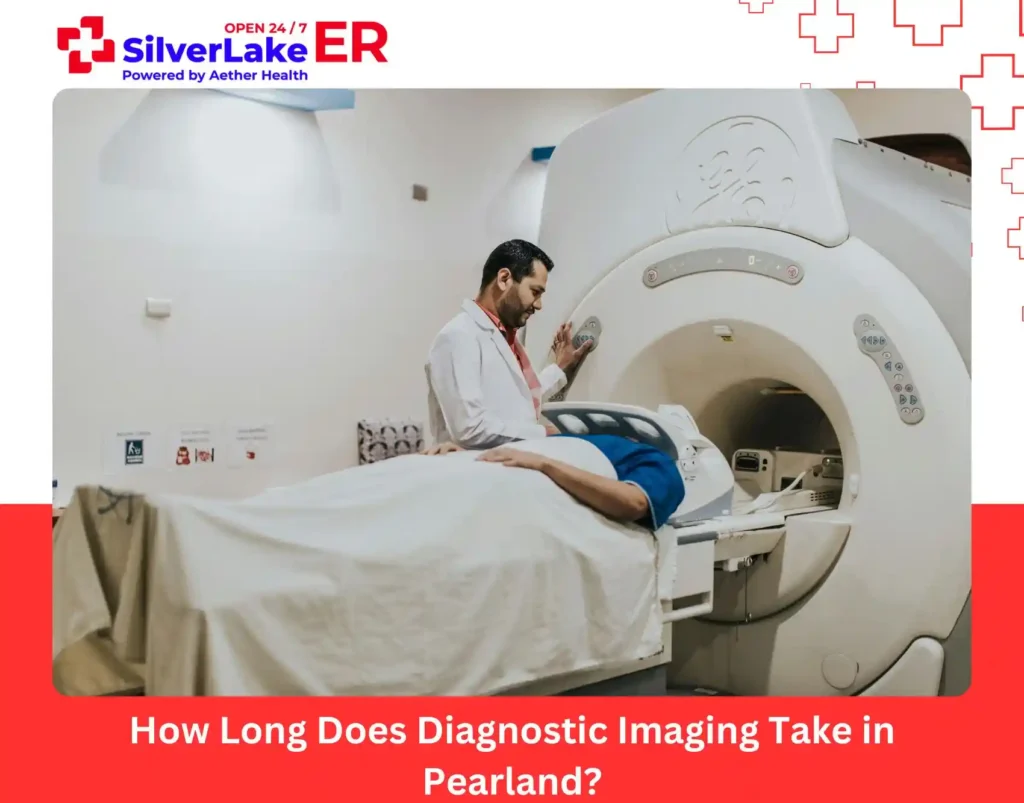
Waiting is one of the hardest parts of any medical situation. You come in with pain or worry, someone says you need imaging, and suddenly you’re wondering how long the whole thing is going to take. The good news is that most diagnostic imaging is faster than people expect, and results are often available within the same visit at a freestanding ER.
This guide breaks down exactly how long each common imaging test takes, what affects your wait time, and when results are typically ready. If you need imaging in Pearland, Aether Health – Silverlake ER provides on-site diagnostic imaging 24 hours a day, without appointments.
Quick Answer
Most diagnostic imaging in Pearland takes between 5 and 45 minutes for the scan itself. X-rays typically take 5-10 minutes. CT scans usually take 10-15 minutes. Ultrasound and echocardiograms range from 20-45 minutes. MRI is the longest, usually 30-60 minutes. Results are typically available within the same visit at a freestanding ER, often within 30-60 minutes of the scan completion. Total time from check-in to results discussion generally runs 60-120 minutes for a straightforward imaging visit.
The Complete Imaging Timeline: From Arrival to Results

Understanding what actually happens during an imaging visit helps set realistic expectations. The visit breaks into three distinct phases.
First, check-in and clinical evaluation. This typically takes 10-30 minutes and includes registration, a brief clinical assessment by a physician or physician assistant, and the decision on which imaging tests you need. This step ends when the imaging order is placed.
Second, the imaging itself. The actual scan takes anywhere from a few minutes for a chest X-ray to about an hour for certain MRI protocols. Preparation for the scan adds a few minutes on either end. During busy periods there may be a short wait between the order being placed and being called back for the scan.
Third, results and discussion. Once the scan is done, the images are reviewed by the emergency physician within minutes, and a formal radiologist read typically follows within 30-60 minutes at a freestanding ER. Your physician then reviews the findings with you and explains what happens next.
Common Imaging Tests: Duration, Uses, and Preparation
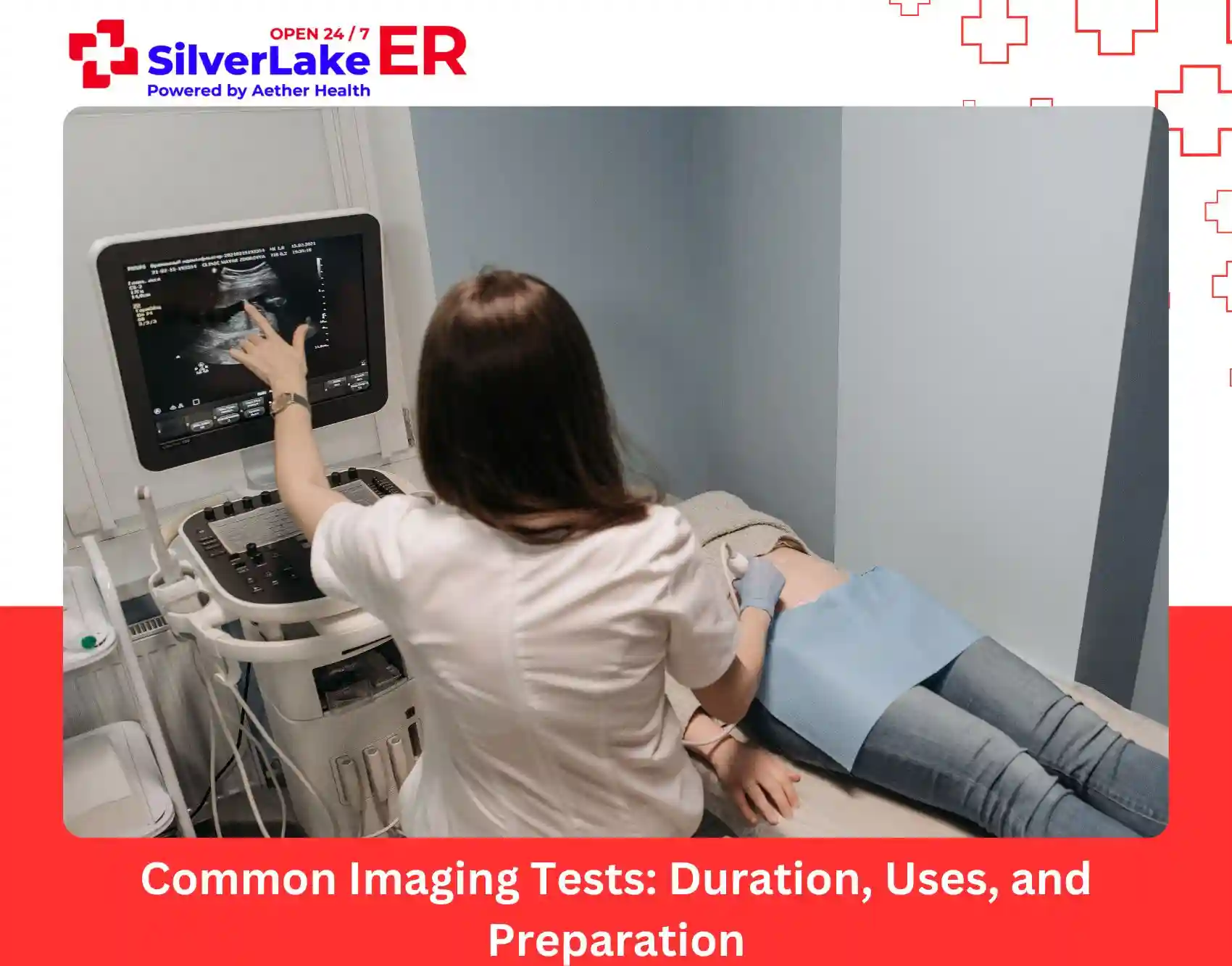
This reference table shows typical durations for the most common imaging tests performed in ER settings. Actual times can vary based on the specific study protocol and patient factors.
| Imaging Test | Typical Duration | Common Uses | Prep Required |
| X-ray | 5-10 minutes | Fractures, chest/lung issues, foreign objects | None |
| CT scan (without contrast) | 10-15 minutes | Head trauma, stroke, internal bleeding, kidney stones | None for most scans |
| CT scan (with contrast) | 20-30 minutes | Blood vessels, tumors, abdominal issues, PE | IV contrast, brief fast may apply |
| Ultrasound | 20-45 minutes | Pregnancy, gallbladder, blood clots, abdominal pain | Fasting for some abdominal scans |
| Echocardiogram | 30-45 minutes | Heart function, structural issues, valve problems | None |
| MRI | 30-60 minutes | Detailed soft tissue, brain, spine, joint injuries | Screening for metal implants |
Why Freestanding ER Imaging Is Often Faster
Traditional hospital ERs often have long imaging queues because they serve high patient volumes and prioritize the most critical cases. Scheduled outpatient imaging centers can take days or weeks for an appointment. Freestanding ERs sit in the middle: they have hospital-grade imaging equipment on-site with much shorter queues. According to RadiologyInfo.org, published jointly by the American College of Radiology and the Radiological Society of North America, the actual scan time is only part of the total wait. Access, availability, and radiologist read time all shape how long you actually spend from check-in to answers.¹
At a freestanding ER, patients typically have their scan started within 30-60 minutes of arrival, and results ready within another 30-60 minutes. That is dramatically faster than the 4-8 hour timeline common at large hospital emergency departments during busy periods.
What Affects Your Wait Time
Actual times vary. Several factors can extend or shorten your visit.
- Patient volume when you arrive. Slower periods mean shorter waits between check-in and scan.
- The type of scan you need. A simple chest X-ray is fast. A multi-region CT with contrast takes longer.
- Whether contrast is required. Contrast administration adds preparation time and post-scan monitoring.
- Complexity of your clinical situation. Multiple tests or complex questions extend evaluation.
- Radiologist availability. Off-hours reads can sometimes take slightly longer than daytime reads.
- Whether lab work is also needed. Many imaging visits also involve blood work, which is often processed in parallel.
When Imaging Results Are Ready
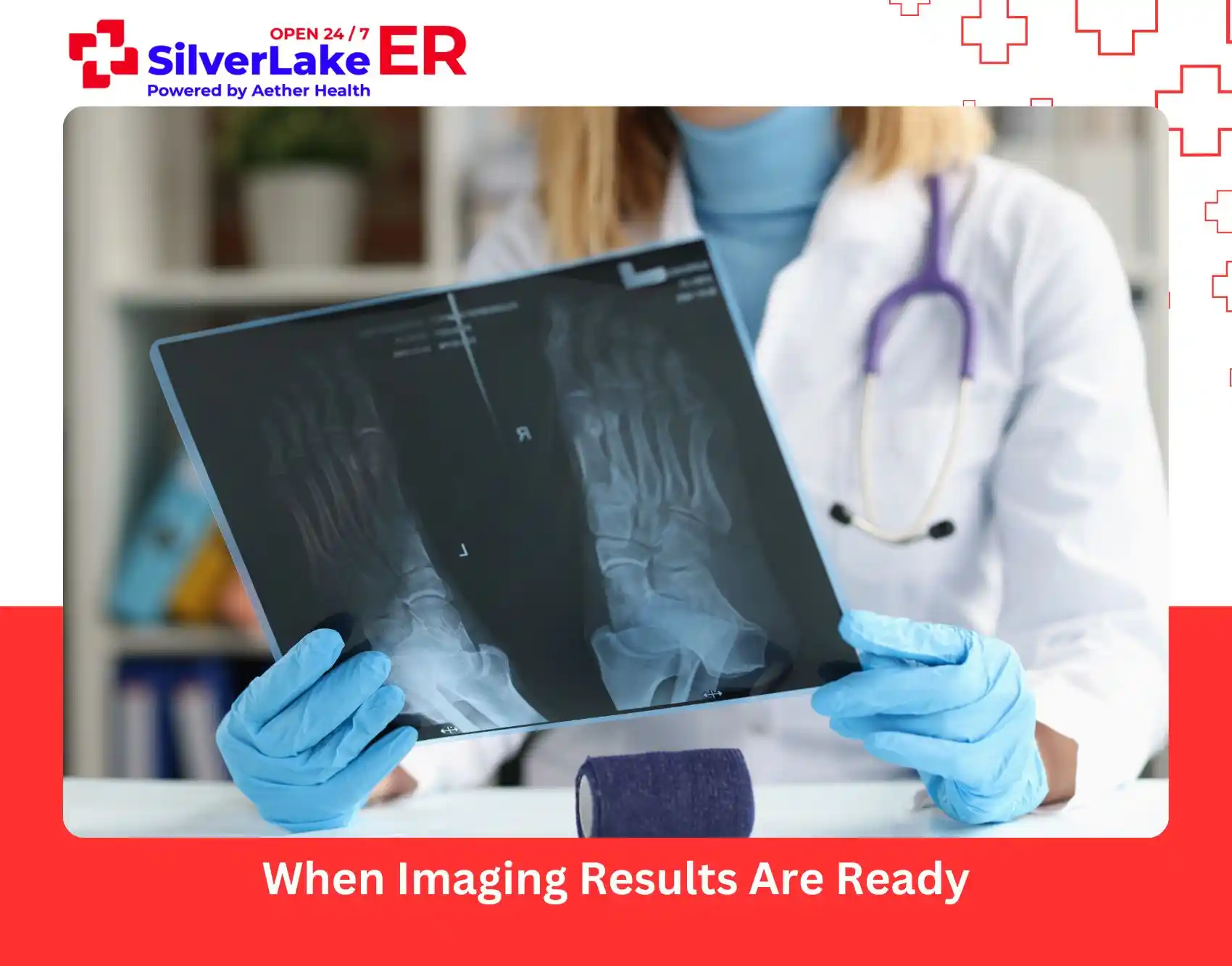
Emergency physicians view the images almost immediately after the scan is complete, allowing rapid clinical decisions. A radiologist review typically follows within 30-60 minutes at a freestanding ER, providing the formal interpretation your physician uses to finalize your care plan. MedlinePlus, the U.S. National Library of Medicine’s patient resource on diagnostic imaging, explains that modern digital systems allow imaging results to move between providers rapidly, so follow-up care can begin without long delays.²
Many imaging visits also include on-site lab testing, which is often processed in parallel with imaging. Combined results are typically ready together, which shortens the overall visit time compared to sequential testing.
Frequently Asked Questions
How long does a chest X-ray take at a freestanding ER?
The scan itself takes 5-10 minutes. From the moment you arrive at the ER, you can typically expect to have the X-ray done and results discussed within 60-90 minutes total, depending on patient volume.
How long does a CT scan take in Pearland?
Most CT scans take 10-15 minutes without contrast, or 20-30 minutes with contrast. Setup adds a few minutes, and initial results are usually available within 30-60 minutes of the scan finishing at a freestanding ER.
Do I need to fast before diagnostic imaging?
Most emergency imaging does not require fasting. Some abdominal ultrasounds and CT scans with contrast may benefit from a brief empty stomach, but in emergency situations imaging usually proceeds regardless. Your physician will tell you if fasting matters for your specific situation.
Can I get diagnostic imaging without an appointment in Pearland?
Yes. Freestanding ERs offer walk-in diagnostic imaging 24/7 with no appointment needed. This is one of the key advantages over outpatient imaging centers, which typically require scheduling days or weeks in advance.
When will I get the official radiology report?
A formal radiologist interpretation is typically completed within 30-60 minutes at a freestanding ER, sometimes faster during quieter periods. The report is used by your physician during your visit and is also sent to any follow-up providers or your primary care doctor.
Need Diagnostic Imaging Near Pearland?
Whether you have a suspected fracture, chest pain, abdominal pain, headache, or another emergency that needs imaging, waiting days for an outpatient appointment isn’t your only option. Our diagnostic imaging services at Silverlake ER provide on-site X-ray, CT, ultrasound, and coordinated MRI with results typically ready within the same visit. Open 24/7 at 2752 Sunrise Blvd, Pearland, TX 77584. Call +1 (713) 528-8703, walk in anytime, or reach out through our contact page for questions about specific imaging capabilities.
Call 911 immediately for life-threatening emergencies including sudden chest pain, stroke signs, severe difficulty breathing, or major trauma. For urgent situations that need imaging but are not life-threatening, walk-in evaluation at a freestanding ER is often the fastest option.
External References Links :
1.RadiologyInfo.org, published jointly by the American College of Radiology and the Radiological Society of North America
2.MedlinePlus, the U.S. National Library of Medicine’s patient resource on diagnostic imaging