
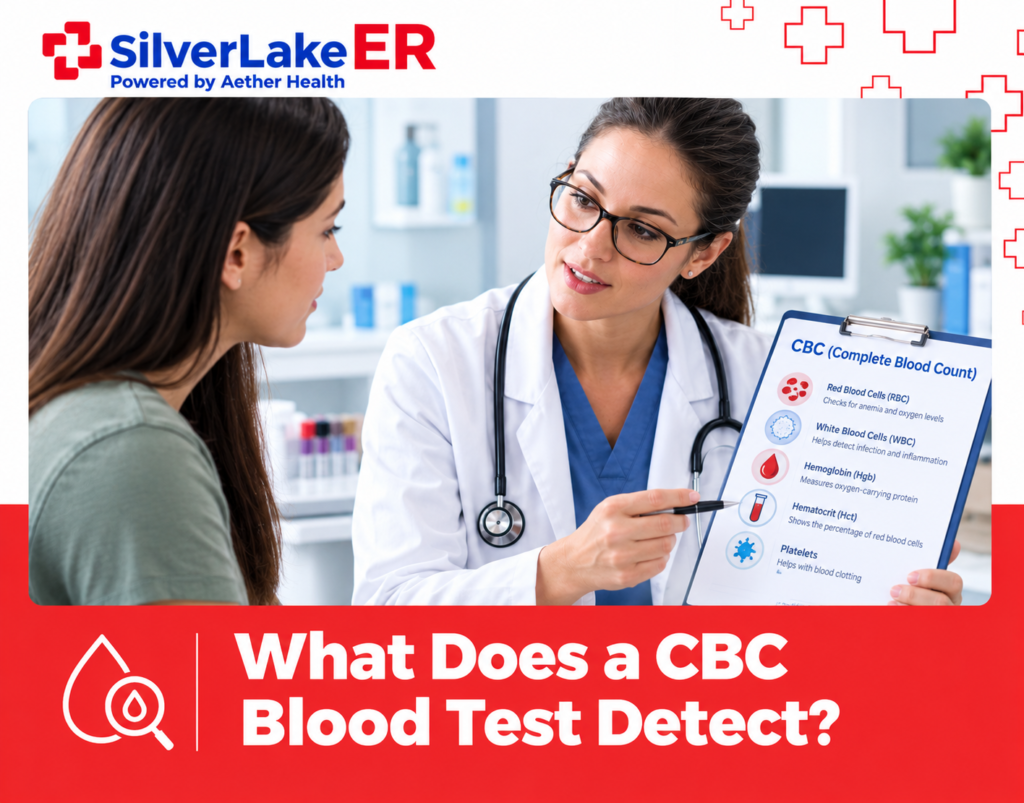
A complete blood count, commonly called a CBC blood test, is one of the most frequently ordered laboratory tests. It provides important information about the cells circulating in your blood and can help healthcare professionals evaluate your overall health.
So, what does a CBC blood test detect?
A CBC measures red blood cells, white blood cells, platelets, hemoglobin, hematocrit, and several other blood-cell characteristics. Abnormal patterns may provide clues about conditions such as anemia, infection, immune disorders, bleeding problems, and certain blood or bone marrow diseases.
However, a CBC alone usually does not confirm a diagnosis. Instead, it gives your healthcare provider information that can guide further evaluation.
What Is a CBC Blood Test?
CBC stands for complete blood count.
Your blood contains several major cellular components:
- Red blood cells
- White blood cells
- Platelets
A CBC measures these cells and related values to give healthcare professionals a broad view of your blood health.
Doctors may order a CBC during a routine checkup or when investigating symptoms such as fatigue, weakness, fever, bruising, bleeding, or signs of infection.
What Does a CBC Measure?
A standard CBC typically includes several measurements.
Red Blood Cell Count
Red blood cells, or RBCs, transport oxygen from your lungs to tissues throughout your body.
A CBC measures how many red blood cells are present in a specific volume of blood.
Abnormal red blood cell measurements may provide clues about conditions including anemia, dehydration, blood loss, nutritional deficiencies, and certain heart, lung, kidney, or bone marrow conditions.
Hemoglobin
Hemoglobin is the oxygen-carrying protein inside red blood cells.
Low hemoglobin is commonly associated with anemia, although additional testing is usually required to determine why anemia is present.
Hematocrit
Hematocrit measures the proportion of your blood volume made up of red blood cells.
Healthcare providers often interpret hematocrit together with hemoglobin and red blood cell measurements.
Mean Corpuscular Volume
Mean corpuscular volume, or MCV, measures the average size of red blood cells.
MCV can be useful when evaluating different patterns of anemia.
For example, red blood cells that are smaller or larger than expected can guide doctors toward particular causes that may require additional testing.
What Do White Blood Cells Tell You?
White blood cells, or WBCs, are part of your immune system and help your body respond to infections and other health problems.
A CBC measures your total white blood cell count.
A high or low white blood cell count can occur for many reasons.
Potential causes may include:
- Infection
- Inflammation
- Immune system conditions
- Certain medications
- Bone marrow disorders
- Some blood cancers
A white blood cell count alone cannot determine the exact cause of an abnormal result.
What Is a CBC With Differential?
Sometimes a provider orders a CBC with differential.
The differential measures or estimates different types of white blood cells, including:
- Neutrophils
- Lymphocytes
- Monocytes
- Eosinophils
- Basophils
Different patterns can provide additional information about immune activity, infections, allergic conditions, inflammation, and some blood disorders.
The results still need to be interpreted alongside symptoms and other medical findings.
What Do Platelets Show on a CBC?
Platelets are small blood components involved in clotting.
When a blood vessel is injured, platelets help form a plug that contributes to stopping bleeding.
A CBC measures how many platelets are present.
Too few or too many platelets may occur with:
- Some infections
- Immune conditions
- Bone marrow disorders
- Certain medications
- Inflammatory conditions
- Some cancers or blood disorders
Abnormal platelet counts may lead to additional testing depending on your medical history and symptoms.
Can a CBC Detect Anemia?
A CBC is one of the primary tests used to identify a pattern consistent with anemia.
Doctors look at several measurements, including:
- Red blood cell count
- Hemoglobin
- Hematocrit
- MCV
- Other red blood cell indices
But a CBC may show that anemia is present without identifying the exact cause.
Further tests might evaluate:
- Iron
- Ferritin
- Vitamin B12
- Folate
- Kidney function
- Reticulocyte count
- Signs of blood loss
The appropriate follow-up depends on the person’s results and medical history.
Can a CBC Detect Infection?
A CBC may provide clues that an infection or immune response is occurring, particularly when white blood cell levels or particular types of white blood cells change.
However, a CBC cannot always tell:
- Where an infection is located
- Which microorganism caused it
- Whether every infection is bacterial or viral
Additional tests, symptoms, physical examination, cultures, or imaging may be needed.
Can a CBC Detect Cancer?
A CBC is not a general cancer screening test.
However, some blood and bone marrow cancers can cause abnormal patterns in blood-cell counts.
Examples may include leukemia or lymphoma.
Importantly, abnormal blood counts are much more commonly caused by conditions other than cancer.
If your results are unusual, your healthcare provider may repeat the CBC, review a peripheral blood smear, or order other tests before reaching any conclusion.
Why Would a Doctor Order a CBC?
A healthcare professional may order a CBC to:
- Assess general health
- Investigate fatigue or weakness
- Evaluate fever
- Look for signs of anemia
- Investigate bruising or bleeding
- Monitor an infection
- Monitor a known blood disorder
- Evaluate treatment side effects
- Monitor medicines that can affect blood cells
CBC testing is also commonly included in routine medical evaluations.
How Is a CBC Performed?
A healthcare professional usually draws a small amount of blood from a vein in your arm.
The sample is collected into a test tube and sent to a laboratory for analysis.
The blood draw itself generally takes only a few minutes.
Usually, no special preparation is required for a CBC alone. If other blood tests are being performed at the same time, however, you may receive additional instructions such as fasting.
What Do Abnormal CBC Results Mean?
An abnormal CBC does not automatically mean something serious is wrong.
Blood-cell counts can be influenced by many factors, including:
- Infection
- Dehydration
- Nutrition
- Medications
- Chronic illnesses
- Recent bleeding
- Pregnancy
- Immune conditions
- Bone marrow conditions
Healthcare providers interpret the entire CBC pattern rather than focusing on one number.
Cleveland Clinic notes that abnormal CBC values can have many causes ranging from common nutritional deficiencies and infections to immune or bone marrow conditions.
Should You Compare Your CBC to Online Normal Ranges?
It is better to use the reference range printed on your own laboratory report.
Laboratories may use different instruments, measurement methods, units, and reference intervals.
Age, sex, pregnancy, altitude, medical history, and other factors may also affect interpretation.
Your healthcare provider can explain whether a value that falls outside the listed range is medically significant.
Frequently Asked Questions
What diseases can a CBC detect?
A CBC may provide clues about anemia, infections, immune disorders, clotting-related problems, and certain blood or bone marrow conditions. It usually cannot establish a final diagnosis by itself.
Does a CBC check iron levels?
No. A standard CBC does not directly measure iron or ferritin. It may show a pattern that suggests iron-deficiency anemia, but iron studies are generally needed to investigate further.
Does a CBC test kidney or liver function?
No. Kidney and liver function are generally evaluated using other blood tests, such as metabolic or organ-specific panels.
Can a CBC tell if you have an infection?
Changes in white blood cells may support suspicion of an infection, but additional information is usually necessary to determine the type and location.
How often should you get a CBC?
There is no single schedule appropriate for everyone. CBC testing depends on age, health conditions, symptoms, medications, and your healthcare provider’s recommendations.
Final Takeaway
A CBC blood test provides a detailed snapshot of your red blood cells, white blood cells, platelets, hemoglobin, hematocrit, and related measurements.
It can help healthcare professionals recognize patterns associated with anemia, infections, immune conditions, bleeding or clotting problems, and certain blood disorders.
However, CBC results should always be interpreted in the context of your symptoms, medical history, and other test results rather than used as a diagnosis on their own.