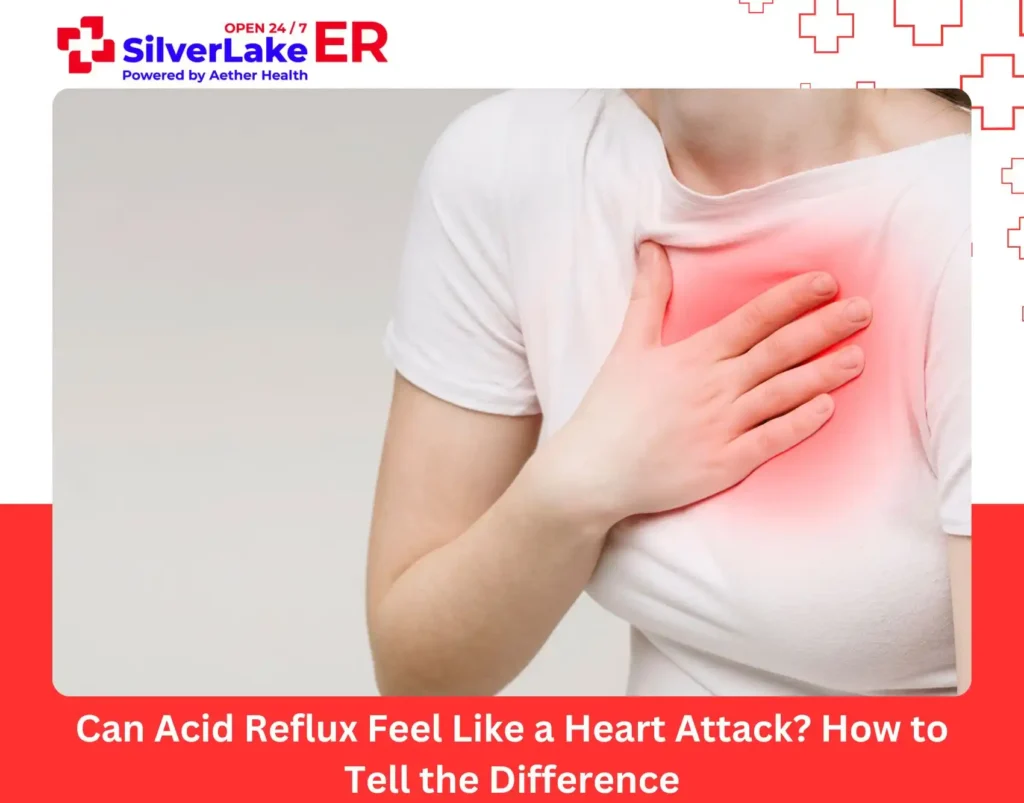
You finish dinner, lean back, and a burning pressure builds in your chest. It climbs toward your throat. Your heart feels like it is racing. For a moment, you are not sure whether to grab an antacid or call 911. This confusion is common because acid reflux and heart attack share an unsettling number of symptoms, and even doctors sometimes need lab tests to tell them apart.
So yes, acid reflux can feel like a heart attack, and the overlap is more significant than most people realize. The esophagus sits behind the heart and shares nerve pathways with it, which is why both conditions can produce chest pressure, burning, and radiating pain. Knowing which clues point to each condition, and when to treat symptoms as cardiac no matter what, can protect your life.
| Quick Answer
Yes, acid reflux can feel like a heart attack. Both conditions can cause chest pressure, burning, radiating pain, and shortness of breath. Reflux pain is usually linked to eating, lying down, or bending over, often improves with antacids, and tends to produce a sour taste or burping. Heart attack pain is more likely to come with sweating, nausea, pain radiating to the arm or jaw, lasting more than a few minutes, and worsening with exertion. When symptoms are severe, prolonged, or come with warning signs, treat it as cardiac and call 911. |
The Short Science: Why Reflux and Heart Attack Overlap

The confusion between reflux and heart attack has a real anatomical reason. The esophagus runs directly behind the heart, and both organs share nerve pathways through the vagus nerve. When either one sends pain signals to the brain, those signals use overlapping routes, which is why the brain cannot always distinguish them. According to the National Institute of Diabetes and Digestive and Kidney Diseases, roughly 20 percent of American adults experience symptoms of acid reflux at least weekly, and chest pain is one of the most common complaints that sends reflux patients to the ER.¹
Acid reflux happens when stomach acid flows backward into the esophagus. The acid irritates the esophageal lining, producing burning pain that can feel exactly like the pressure of a heart attack. Chronic acid reflux is called GERD (gastroesophageal reflux disease).
Studies show that between 30 and 50 percent of patients who arrive at ERs with chest pain are eventually diagnosed with non-cardiac causes, with reflux being the most common.
IN SHORT: The esophagus sits behind the heart and shares nerve pathways with it, which is why reflux can produce chest symptoms that feel strikingly like a heart attack.
5 Signs That Suggest Acid Reflux
These patterns most often point to acid reflux rather than cardiac trouble. One or two can appear in both conditions, so the combination matters more than any single clue.
#1 Burning starts in the lower chest and climbs upward. Reflux pain often starts behind the breastbone and travels up toward the throat. The sensation is a burning fire, not crushing pressure.
#2 Symptoms come on after eating. Reflux is meal-related. If chest symptoms appear within 30 to 60 minutes of eating, particularly after fatty foods, chocolate, citrus, or alcohol, reflux is more likely.
#3 Lying down or bending forward makes it worse. Gravity normally keeps stomach contents down. When you lie flat or bend forward, acid flows backward more easily, intensifying reflux symptoms.
#4 A sour taste, burping, or regurgitation accompanies the pain. These digestive signs almost never occur with a heart attack. If chest discomfort comes with burping or a sour taste, reflux is strongly suggested.
#5 Antacids provide noticeable relief within 15 to 30 minutes. A clear response to over-the-counter antacid medication strongly suggests reflux. Heart attack pain does not respond to antacids. Do not rely on this test alone for severe symptoms.
5 Signs That Suggest a Heart Attack
These signs tilt the odds toward cardiac causes, and any one of them means the symptoms deserve emergency evaluation. The American Heart Association’s heart attack warning signs guide emphasizes that these patterns should trigger a 911 call regardless of whether reflux is also present.²
▶ Chest pressure, squeezing, or heaviness rather than burning. Cardiac pain tends to feel like an elephant sitting on your chest, not a fire.
▶ Pain radiating to the left arm, jaw, neck, back, or upper abdomen. This radiation pattern is a hallmark of cardiac pain.
▶ Cold sweat, nausea, or vomiting alongside the chest discomfort. The combination of sweating plus chest pain is especially concerning.
▶ Shortness of breath that comes with the chest symptoms, especially at rest or with mild exertion.
▶ Symptoms triggered by physical exertion, stress, or exposure to cold air, rather than by eating.
Acid Reflux vs. Heart Attack: Side-by-Side
Use this comparison to match your symptoms against each pattern. Remember that this is a guide, not a replacement for medical evaluation.
| Clue | Acid Reflux | Heart Attack |
| Type of pain | Burning, acidic, climbing | Pressure, squeezing, heaviness |
| Trigger | Eating, lying down, bending | Exertion, stress, cold air |
| Radiates to | Rarely, usually stays in chest/throat | Often arm, jaw, neck, back |
| Associated symptoms | Burping, sour taste, regurgitation | Sweating, nausea, breathlessness |
| Response to antacid | Improves within 15-30 minutes | No change |
| Duration | Minutes to a couple of hours after eating | Lasts longer than a few minutes, persistent |
| When in doubt | Can usually wait and monitor | Call 911 immediately |
The Golden Rule: When in Doubt, Treat It as Cardiac
Even cardiologists cannot always tell reflux from a heart attack based on symptoms alone. The consequences of mistaking a heart attack for reflux are catastrophic, while the consequences of being evaluated for a heart attack that turns out to be reflux are minor. The math favors caution every time.
When symptoms are severe, prolonged beyond a few minutes, or come with any of the heart attack signs listed above, treat the situation as cardiac and seek emergency care. Our heart attack emergency care team at Silverlake ER provides fast EKG, cardiac blood tests, and imaging in one visit to rule out or confirm a cardiac event. Our guide to the 5 warning signs of cardiac arrest covers related cardiac warning patterns that overlap with the heart attack signs above.
IN SHORT: If you cannot confidently tell reflux from a heart attack, assume it is cardiac. Being wrong about reflux is survivable. Being wrong about a heart attack often is not.
Red Flags That Rule Out Reflux
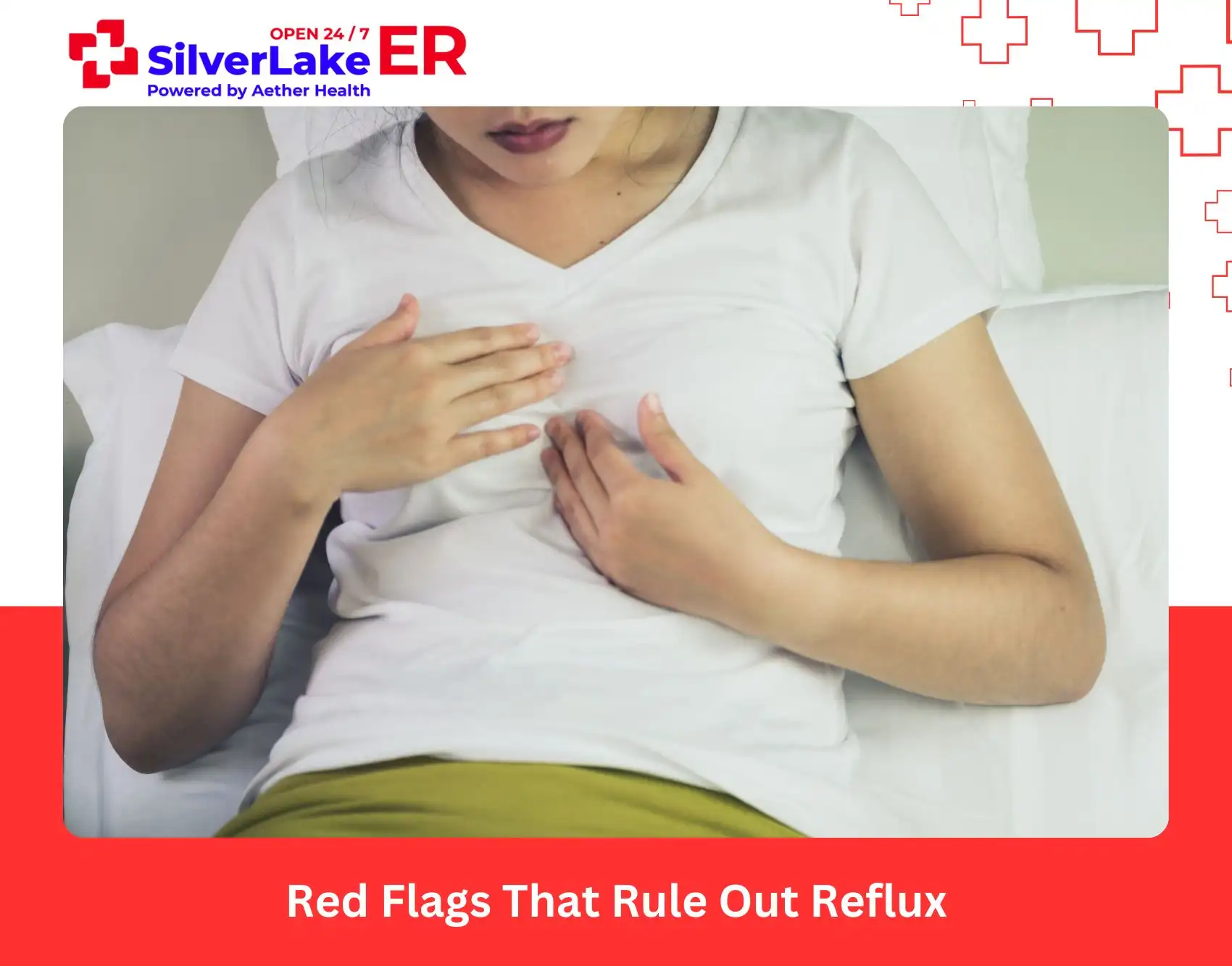
Some symptoms essentially rule out reflux as a safe explanation. If any of these appear, call 911 or come directly to the ER regardless of how the pain started. Our article on what happens when you have a cardiac arrest explains the underlying mechanics that make these signs so dangerous when they occur.
| Call 911 Immediately If You Have Any Of These
These signs are extremely unlikely to be reflux and should be treated as a cardiac emergency until proven otherwise. |
▶ Chest pressure lasting more than a few minutes that does not change with position or antacids.
▶ Pain radiating down the left arm, into the jaw, neck, or upper back.
▶ Cold sweat, pale or clammy skin, or sudden lightheadedness.
▶ Severe shortness of breath with or without chest symptoms.
▶ Chest symptoms triggered by physical activity or emotional stress rather than eating.
▶ A sudden sense that something is seriously wrong.
Frequently Asked Questions
How can doctors tell the difference between acid reflux and a heart attack?
Doctors combine EKG readings, troponin blood tests, and chest X-ray with clinical evaluation. Normal EKG and troponin over several hours rules out heart attack, pointing toward reflux or another non-cardiac cause.
Can acid reflux cause chest pain that lasts for hours?
Yes. Severe reflux can produce chest pain lasting several hours, especially if the esophagus is inflamed or spasming. Prolonged chest pain should still be evaluated to rule out cardiac causes.
Can heartburn cause left arm pain like a heart attack?
Rarely. Severe reflux can produce referred pain in the shoulder or upper back. However, true left arm radiation combined with chest pressure strongly suggests a cardiac event and needs immediate evaluation.
Will an antacid stop heart attack pain?
No. Antacids neutralize stomach acid and have no effect on cardiac pain. If symptoms improve within 15 to 30 minutes of an antacid, reflux is more likely. If they do not, assume cardiac and call 911.
When should I go to the ER for chest pain even if I think it is reflux?
Go immediately if pain lasts longer than a few minutes, radiates to the arm or jaw, comes with sweating or shortness of breath, started with exertion, or feels different from your usual reflux pattern.
Chest Pain You Cannot Explain in Pearland?
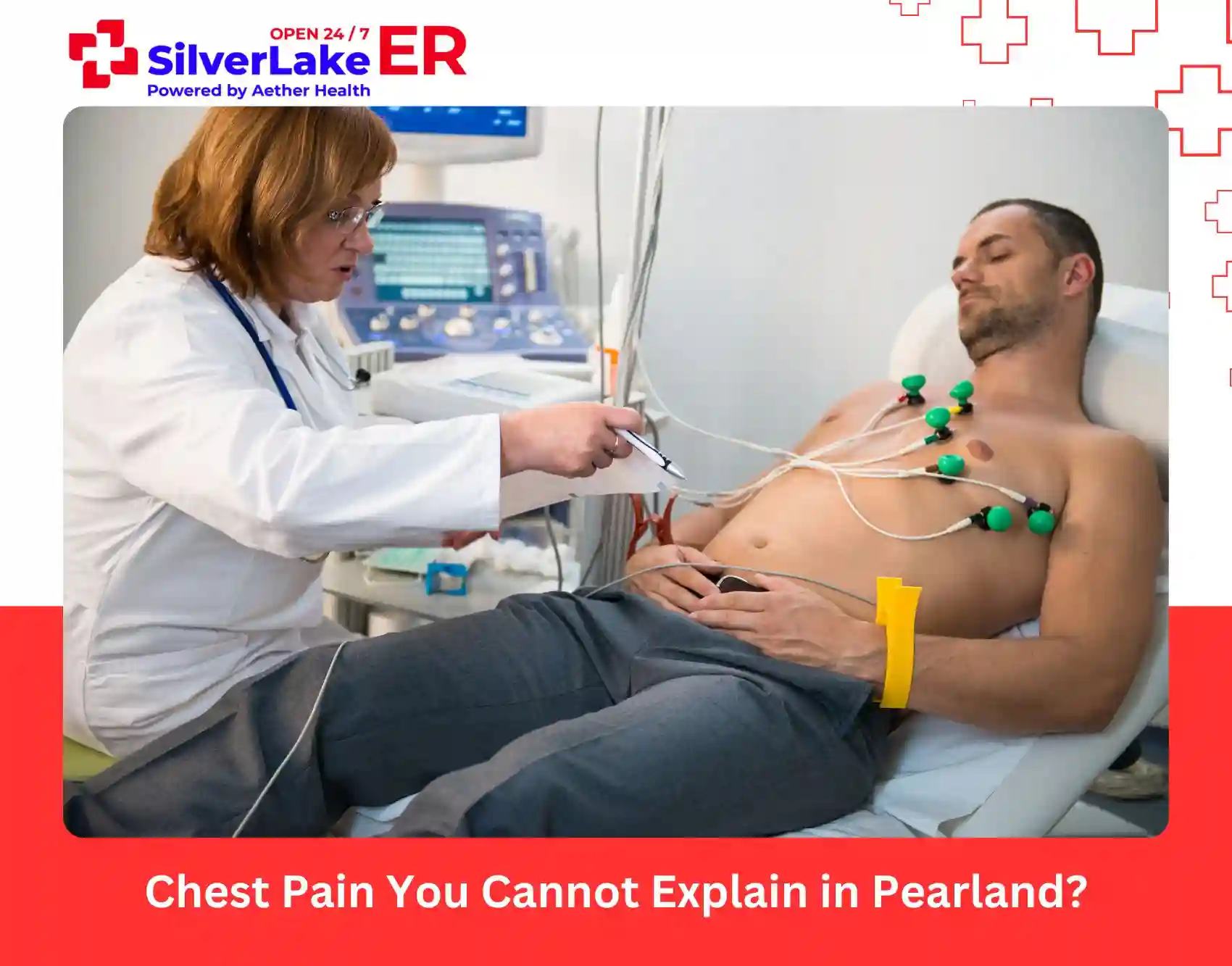
When chest pain does not match your usual reflux pattern, fast evaluation matters more than any home test. Silverlake ER is a freestanding emergency room open 24/7 at 2752 Sunrise Blvd, Pearland, TX 77584, with on-site EKG, cardiac blood tests, imaging, and board-certified emergency physicians. Call +1 (713) 528-8703, walk in anytime, or contact our team with questions.
Call 911 immediately for chest pressure or squeezing lasting more than a few minutes, pain radiating to the arm or jaw, cold sweat with chest symptoms, severe shortness of breath, or chest symptoms triggered by physical activity. When reflux and heart attack blur together, treat it as cardiac. Being safe is never the wrong choice.