
Chemical exposure to the eyes is a medical emergency, and the most important first step is immediate flushing. Even a few seconds of delay can increase the risk of serious eye damage, including vision loss.
This guide explains how long to flush eyes after chemical exposure, why timing matters, and what to do step by step.
How Long to Flush Eyes After Chemical Exposure?
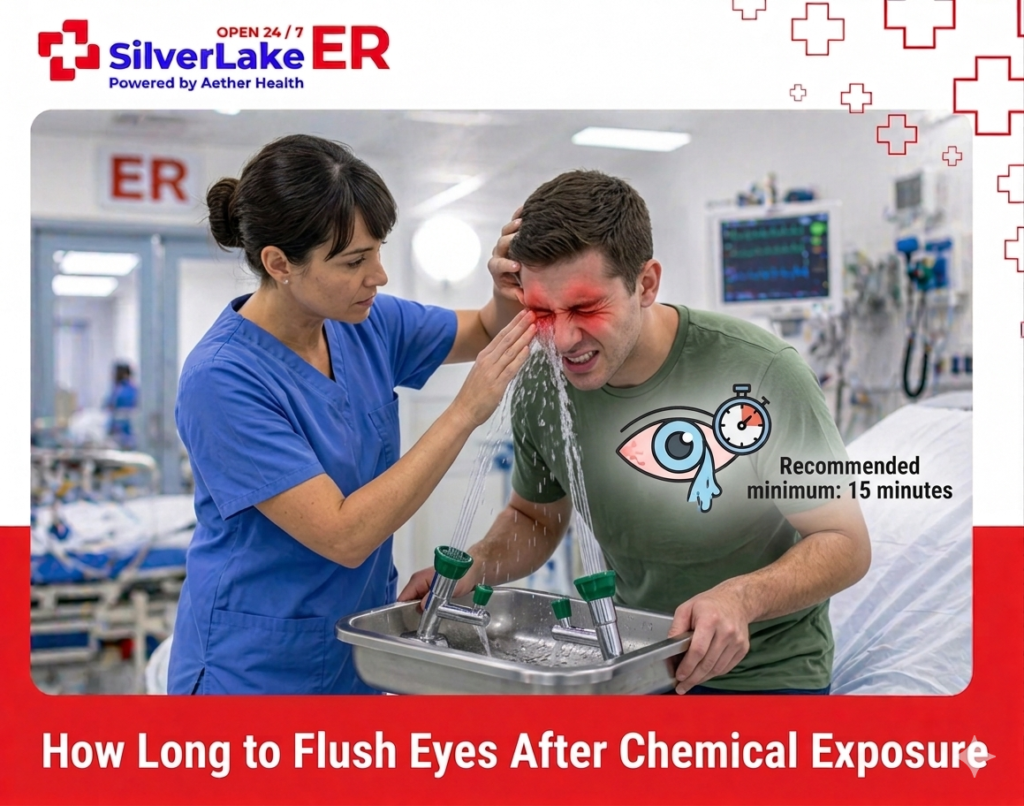
In most situations, you should flush your eyes for at least 15 to 20 minutes continuously after chemical exposure. This is the minimum recommended time to dilute and remove harmful substances from the eye.
However, the exact duration depends on the type of chemical involved:
- Mild irritants (soap, shampoo): 5–10 minutes, but longer flushing is still safer.
- Moderate chemicals (household cleaners): At least 15–20 minutes.
- Strong acids: 20–30 minutes.
- Strong alkalis (bleach, ammonia, drain cleaners): 30–60 minutes or longer.
The safest approach is simple:
Start immediately and continue flushing until medical help is available or advised. In case you feel discomfort, opt for the eye injury emergency at the nearest emergency room.
Why Flushing Time Is So Important
As you have a good idea of how long to flush eyes after chemical exposure, let’s now discuss the timings. Chemical exposures start damaging tissues immediately upon contact with the eye. Immediate chemical contact can injure the surface of the eye (eg, cornea), whereas deeper layers are damaged only if the chemical remains on/in the eyes for several seconds.
Flushing dilutes and of course physically washes the chemical away so that it is less time in contact with the eye. However, the longer the exposure, the higher is the risk of complications like:
- Corneal burns.
- Vision loss.
Some chemicals like alkalies can penetrate deep into the eye and continue to damage it after initial exposure. That’s why flushing times must be longer, even if the symptoms start to get better.
How to Flush the Eyes Correctly: A Patient’s Guide
Good flushing of your eyes is just as essential as fast flushing. Proper technique ensures all the chemicals rinse completely and not be trapped in the upper eyelids.
Start Immediately
Don`t wait to locate the chemical or look for distinctive solutions. Immediately start to flush your eye with clean, lukewarm water. A simple delay can raise the chances of being injured.
Keep Your Eye Open
Hold your eyelids open with your fingers to allow water to reach all parts of the eye. This includes the areas under the upper and lower eyelids where chemicals can get trapped.
Blinking during flushing can also help move water across the eye surface and improve cleaning.
Use a Gentle, Continuous Flow
For liquid filling, it is advisable to deliver a smooth continuous water flow (from sink or shower, or eyewash station). The eyes are best washed with an eye wash solution such as saline, and this should run from the inside to outside corner of the eyes in a very gentle stream.
Do not use high pressure streams because it may also further irritate or damage tissues.
Remove Contact Lenses
If you are wearing contact lenses, remove them as soon as possible during flushing. Contacts can trap chemicals against the surface of the eye and prevent proper rinsing.
If they do not come out easily, continue flushing until they loosen and can be removed safely.
Keep on Flushing for the Entire Time
Continue rinsing for a minimum of 15 to 20 minutes, longer if the chemical requires it. Continue even if the pain or irritation starts to subside quickly.
Often, such flushing must be performed while the person seeks or receives medical assistance.
How Different Chemicals Affect Flushing Time
Flushing time varies depending on the type of chemical, not all chemicals cause the same form of damage.
Mild Irritants
Things like soap or shampoo temporarily hurt but do not penetrate deep. Despite improvement of symptoms quickly, flushing for minutes is still recommended to ensure complete removal.
Moderate Chemicals
The household cleaning products and other similar substances that can cause increased irritation to the eyes, requiring flushing for a significant period of time (at least 15–20 minutes). These chemicals may adhere to the eye surface, which is why rinsing thoroughly is paramount.
Strong Acids
Acids can enter the eye immediately; they can also burn and damage the surface of the eyes. They may not penetrate as deeply as alkalis, but flushing for 20–30 minutes reduces injury and clears away residue.
Strong Alkalis (Most Dangerous)
Anything alkaline, like bleach, ammonia or drain cleaners, is the most damaging because it penetrates deeper into eye tissues and continues to damage them for hours.
These need to be flushed long, often 30 to 60 minutes or more to limit injuries and prevent further injury.
When Should You Stop Flushing?
Stop Flushing Only When:
- You have completed the recommended time based on the chemical.
- A medical professional advises you to stop.
- Emergency care has taken over treatment.
Do not stop just because symptoms feel better. Damage can still be occurring even if pain decreases.
What NOT to Do After Chemical Exposure?
Be careful not to make the situation worse with certain behaviours:
- Do not rub your eyes, as this can spread the chemical.
- Do not use eye drops unless directed by a healthcare professional.
- Do not attempt to neutralize the chemical with another substance.
- Do not delay flushing while looking for special solutions.
- Do not stop flushing too soon.
- Do not stop flushing too soon
The safest and most effective method is always immediate and continuous flushing with water or saline.
When to Seek Emergency Care
Severe chemical exposure to an eye needs medical help and should be taken with utmost seriousness.
Seek immediate medical care or visit the nearest 24/7 emergency room if:
- You are exposed to any chemical, especially strong substances.
- Pain, redness, or blurred vision continues after flushing.
- You experience sensitivity to light or difficulty seeing.
- You are unsure what chemical caused the exposure.
- Both eyes are affected.
Even if symptoms improve, a doctor should examine the eye to ensure there is no hidden damage.
Possible Complications If Not Treated Properly
If chemical exposure is not treated correctly or flushing is delayed, serious complications can occur. These may include:
- Permanent damage to the cornea.
- Scarring that affects vision.
- Increased risk of infection.
- Chronic eye irritation or dryness.
- Partial or complete vision loss.
Prompt and proper flushing significantly reduces these risks.
Tips to Prevent Chemical Eye Injuries
Prevention is always better than treatment. You can reduce the risk of chemical exposure by:
- Wearing protective eyewear when handling chemicals.
- Reading labels and following safety instructions.
- Keeping hazardous substances out of reach of children.
- Using proper ventilation when working with cleaning products.
- Avoiding direct contact with sprays or splashes.
Simple precautions can help protect your eyes from serious injury.
Final Thoughts
So, how long to flush eyes after chemical exposure? The safest answer is: at least 15 to 20 minutes, and longer for stronger chemicals.
The most important thing to remember is that speed and consistency matter. Immediate and thorough flushing can prevent serious damage and protect your vision. When in doubt, continue rinsing and seek medical care without delay.
FAQs
How long should I flush my eyes after chemical exposure?
You should flush your eyes for at least 15–20 minutes, or longer depending on the type of chemical.
Is 10 minutes enough to flush the eyes?
In most cases, 10 minutes is not enough. Longer flushing is recommended to ensure the chemical is fully removed.
Can I use tap water to rinse my eyes?
Yes, clean tap water is safe and effective if saline solution is not available.
Should I stop flushing if my eyes feel better?
No, you should continue flushing for the full recommended time even if symptoms improve.
Do I need to see a doctor after chemical exposure?
Yes, medical evaluation is recommended to check for any hidden damage, even if symptoms seem mild.