- Reviewed by the emergency care team at Aether Health – Silverlake ER | 2752 Sunrise Blvd, Pearland, TX 77584 | +1 (713) 528-8703
Call 911 immediately: If your child or you is having a severe asthma attack struggling to breathe, unable to speak in full sentences, chest retractions (skin pulling in around the ribs), or blue or gray lips or fingertips call 911 now. Severe pediatric and adult asthma attacks can be fatal within minutes. Aether Health – Silverlake ER is open 24/7 with on-site respiratory emergency care for adults and children at 2752 Sunrise Blvd, Pearland, TX 77584.
Yes asthma has a strong hereditary component. But genetics alone don’t determine whether you or your child will develop asthma. If one parent has asthma, a child’s risk is roughly 3–6 times higher than the general population; if both parents have asthma, the risk climbs even higher. However, many children of asthmatic parents never develop the condition, and some people develop asthma with no family history at all. The best way to think about it: genetics load the gun, environment pulls the trigger.
This guide breaks down what genetic research actually shows about asthma inheritance, how family history changes risk, why asthma often travels with allergies and eczema, and what parents with asthma should know about recognizing symptoms early in their children plus when a childhood asthma flare up requires emergency asthma care at Aether Health – Silverlake ER.
Quick Answer: Is Asthma Inherited?
Yes, asthma has a strong genetic component but inheritance isn’t simple. Twin studies suggest genetics accounts for roughly 35–70% of asthma risk. Multiple genes are involved (not a single “asthma gene”), and environmental factors like air pollution, tobacco smoke, infections in infancy, and allergen exposure determine whether genetic risk becomes actual asthma.
With one asthmatic parent, a child’s risk is 25–30%. With both parents affected, risk rises to around 50% or higher. Family history of related atopic conditions hay fever, eczema also raises asthma risk. A severe asthma attack in a child or adult is a medical emergency: call 911 or come to the ER immediately.
Asthma Inheritance Risk at a Glance
Use this table as a quick reference. Below it, each risk category and the underlying genetics get a detailed breakdown.
| Family History | Approximate Asthma Risk | Interpretation |
| No family history | ~8% (general population baseline) | Baseline risk |
| One parent with asthma | 25–30% | 3–4× higher than baseline |
| Both parents with asthma | ~50% or higher | 6× or more higher than baseline |
| Sibling with asthma (no parents) | Elevated above baseline | Shared genetic + environmental factors |
| Family history of eczema or hay fever | Elevated (comparable to asthma history) | Atopic tendency runs in families |
What Genetic Research Actually Shows About Asthma Inheritance
Asthma is what geneticists call a complex trait – meaning it’s influenced by many genes working together with environmental factors, rather than being caused by a single genetic change. For a broader picture of the underlying biology of the disease, our article on what causes asthma disease explains the mechanisms in more depth.
Multiple genes, many small effects
Over the past two decades, genetic studies have identified dozens of genes associated with asthma risk. Each individual gene contributes only a small amount of risk. The combined effect of many genes plus environmental factors determines whether asthma develops.
The genes involved fall into several categories:
- Genes affecting how the immune system responds to allergens.
- Genes that influence airway inflammation.
- Genes involved in airway muscle function.
- Genes affecting how the body processes stress hormones.
- Genes influencing lung development.
Twin studies show the genetic contribution
Studies comparing identical twins (who share 100% of their genes) with fraternal twins (who share about 50%) suggest that genetics accounts for roughly 35–70% of asthma risk. That’s a significant genetic contribution but far from complete determinism. If one identical twin has asthma, the other has an elevated risk of developing it too, but not 100% – meaning environmental factors clearly matter.
Epigenetics where genes and environment meet
Beyond the genes themselves, researchers have found that environmental factors pollution, tobacco smoke, certain infections can change how genes are expressed without changing the underlying DNA. These epigenetic changes can potentially be passed to children and may explain why asthma rates have risen faster than genetics alone can account for.
The Atopic Triad: Why Asthma Travels With Allergies and Eczema
One of the most clinically important patterns in asthma inheritance isn’t just about asthma itself it’s about a genetic tendency called atopy. Atopy is a predisposition for the immune system to overreact to normally harmless substances like pollen, dust, or pet dander.
The three conditions of the atopic triad
- Asthma inflammation and reactivity in the airways.
- Allergic rhinitis (hay fever) inflammation and reactivity in the nose and sinuses.
- Eczema (atopic dermatitis) inflammation and reactivity in the skin.
These three conditions share underlying immune system biology. Someone with a genetic predisposition to atopy is likely to have one or more of them, sometimes all three. They often appear in a sequence known as the “atopic march” starting with eczema in infancy, followed by food allergies or hay fever in early childhood, and then asthma later in childhood.
Why this matters for families
If a parent has any of the atopic conditions not just asthma their child’s risk of developing asthma is higher. If a child has eczema or hay fever, their risk of developing asthma is elevated. Understanding the atopic triad helps families spot patterns early and take symptoms seriously.
Family history tip: When thinking about your child’s asthma risk, consider the full atopic picture asthma, allergies, and eczema not just asthma alone.
Genes Aren’t Destiny: Environmental Factors That Determine Asthma Risk

If genetics were the whole story, asthma rates would be relatively stable over generations. They aren’t. Asthma prevalence has increased significantly in developed countries over the past 50 years a shift far too fast to be explained by changes in the human genome. Environment plays a major role in whether genetic risk becomes actual asthma.
Environmental factors that increase risk
- Air pollution particularly in urban areas with heavy traffic or industrial emissions.
- Tobacco smoke exposure in utero or early childhood one of the most powerful known risk factors.
- Serious respiratory infections in infancy, especially RSV.
- Early life exposure to allergens like dust mites, mold, and cockroaches.
- Living in an area with high humidity and mold growth a real factor along the Gulf Coast.
- Poor ventilation in the home.
- Certain occupational exposures for adults.
- Obesity.
- Chronic stress.
Environmental factors that may reduce risk
- Breastfeeding, which appears to modestly protect against early wheezing.
- Growing up with pets and older siblings the “hygiene hypothesis” suggests early microbial exposure may train the immune system.
- Living in rural areas with less pollution.
- Maintaining a healthy weight.
Why this matters
Environmental factors are the modifiable part of asthma risk. Families with strong asthma history can’t change their genetics, but they can influence the environment their children grow up in reducing tobacco smoke exposure, controlling indoor allergens, seeking medical care for early respiratory infections, and paying attention to air quality.
Early Signs of Asthma in Children of Asthmatic Parents
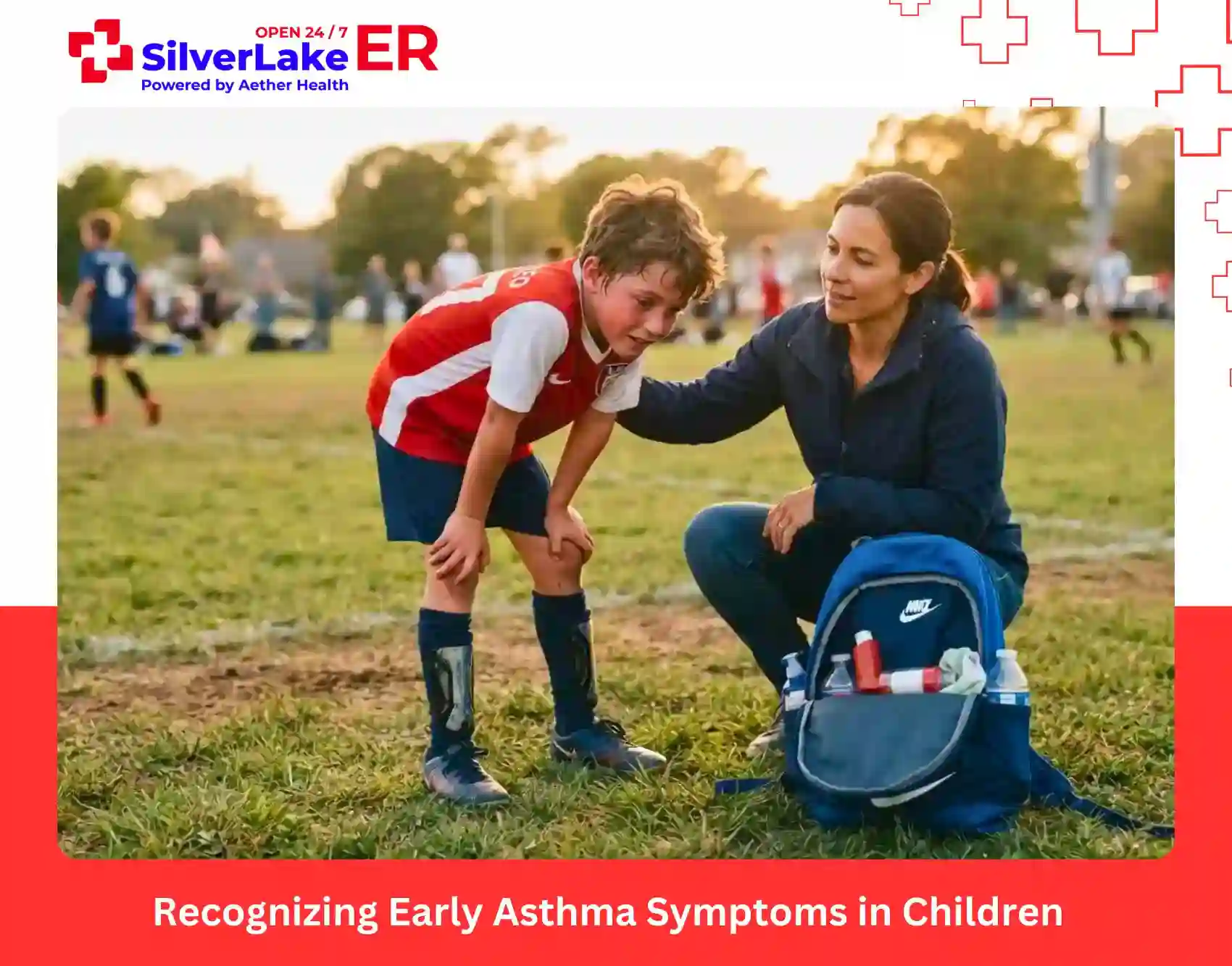
For parents with asthma or any atopic condition knowing what early asthma looks like in a child is one of the most valuable things you can do. Early recognition leads to earlier care and better long term outcomes.
Common early signs in children
- Frequent coughing, especially at night or with exercise.
- Wheezing a whistling sound during breathing.
- Shortness of breath during play or activity.
- Chest tightness or complaints of chest pain.
- Fatigue or reluctance to play.
- Recurring colds that always seem to “go to the chest.”
- Coughing that persists long after a cold has passed.
- Symptoms triggered by exercise, cold air, laughter, or specific allergens.
Age-related patterns
- Infants and toddlers often show up as frequent “wheezy colds,” bronchitis like illnesses, or breathing difficulty during minor respiratory infections.
- Preschoolers increased sensitivity to allergens, seasonal patterns of symptoms, or exercise related coughing.
- School age children more classic asthma presentation with wheeze, cough, and exercise related breathing difficulty.
- Teens sometimes worsening after a period of childhood improvement; often triggered by respiratory infections or new environmental exposures.
Signs a child’s symptoms are becoming an emergency
- Severe difficulty breathing, especially with visible chest retraction (skin pulling in around ribs).
- Blue or grayish lips or fingertips.
- Inability to speak in full sentences or feed normally.
- Unusual drowsiness, confusion, or lethargy during a flare up.
- Rescue inhaler not providing relief.
- Wheezing that gets quieter as breathing becomes more difficult a dangerous sign called “silent chest.”
For families with asthma history: Keep a close eye on respiratory symptoms in your children. Being an alert parent isn’t overreacting it’s being informed. When in doubt about a child’s breathing, get evaluated in an ER.
What Parents With Asthma Can Do to Support Their Kids’ Respiratory Health
You can’t change the genetics you pass to your children, but there’s a lot you can influence. These awareness habits help lower the chance that genetic risk turns into significant asthma and help you spot symptoms fast if they appear.
Environmental awareness
- Never allow smoking or vaping in the home or car.
- Maintain good indoor air quality HEPA filtration, regular vacuuming, minimizing carpet.
- Control humidity to reduce mold and dust mites (30–50% is generally recommended).
- Use allergen-proof covers on children’s mattresses and pillows.
- Wash bedding regularly in hot water.
- Be aware of air quality alerts, particularly in the Houston metro area during ozone season.
Prenatal and infant awareness
- Avoid tobacco smoke exposure during pregnancy one of the strongest known risk factors.
- Breastfeed if possible associated with modest protective effects.
- Take respiratory infections in infancy seriously RSV in particular has been linked to increased asthma risk.
Awareness of broader health effects
Asthma isn’t only a lung condition it can affect broader health over time. Our article on whether mild asthma can cause high blood pressure covers the cardiovascular effects of poorly controlled asthma, and whether sleeping helps asthma explains why nighttime symptoms deserve special attention.
Emergency preparedness
Know the warning signs of severe pediatric asthma flare ups. For families concerned about severity progression, our article on what is stage 4 of asthma explains how asthma severity is classified. Know the location of the nearest 24/7 ER – for Pearland-area families, that’s Aether Health – Silverlake ER. If your child has been diagnosed with asthma, keep their asthma action plan and rescue medication accessible at home, school, and any caregiver locations.
When to Seek Emergency Care for a Suspected Asthma Attack
Whether asthma is genetic or environmental in origin, a severe attack looks the same and requires the same response. Watch for these signs in yourself or your child.
Go to the ER immediately or call 911 if:
- Rescue inhaler isn’t relieving symptoms.
- Inability to speak in full sentences due to shortness of breath.
- Lips or fingernails turning blue or gray.
- Severe chest tightness that feels different from usual.
- Visible chest retractions in a child (skin pulling in around ribs).
- Using rescue medication far more frequently than the action plan allows.
- Drowsiness, confusion, or unusual lethargy during a flare-up.
- Wheezing that gets quieter as breathing becomes more difficult (silent chest).
- Any severe attack in a young child, infant, or elderly adult.
Get evaluated fast: Aether Health – Silverlake ER provides 24/7 severe asthma emergency care for adults and children with continuous oxygen monitoring, nebulizer therapy, on site imaging, and board certified emergency physicians. Call +1 (713) 528-8703 or come to 2752 Sunrise Blvd, Pearland, TX 77584.
How Silverlake ER Evaluates Pediatric and Adult Asthma Emergencies
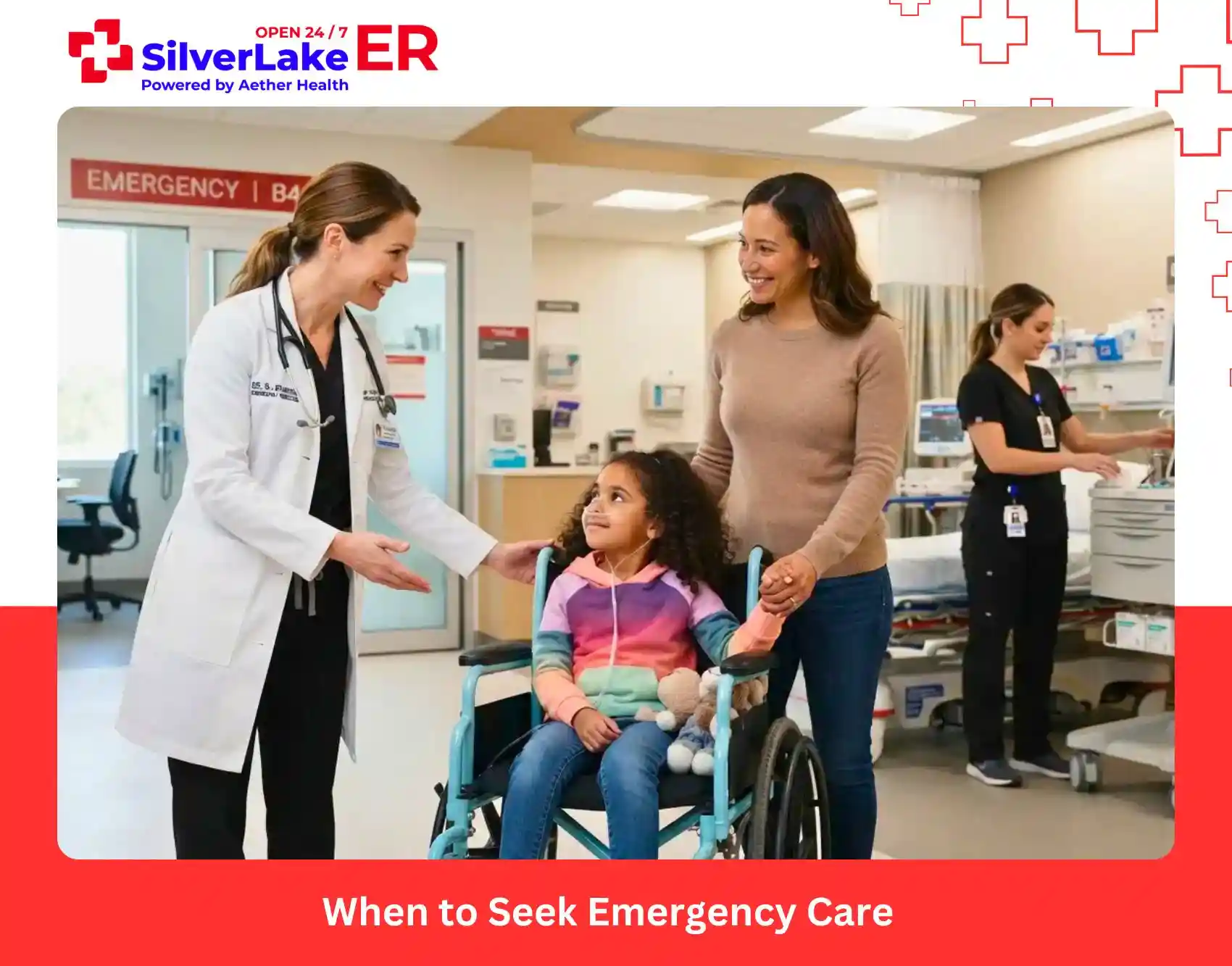
When you come in with a severe asthma flare up child or adult – our 24/7 freestanding ER in Pearland is fully equipped to evaluate breathing, deliver respiratory support, and coordinate care on site with rapid results that determine whether you need immediate intervention, further observation, or admission.
- Rapid respiratory evaluation board-certified emergency physicians assess breathing, oxygen saturation, and lung function within minutes of arrival.
- Continuous oxygen saturation and respiratory monitoring tracks changes in real time throughout your visit.
- Nebulizer therapy and oxygen support delivered immediately to open airways and improve breathing.
- Emergency airway management available when severe attacks require advanced airway support.
- On-site chest X-ray and CT imaging identifies pneumonia, pneumothorax, and other complications.
- Full laboratory services – including arterial blood gas analysis to measure oxygen and CO2 levels.
- Adult and pediatric emergency care under one roof asthma emergencies affect all ages, and family history often means multiple family members need care.
- Direct hospital transfer coordination when admission is needed for further intensive care.
For milder symptoms that don’t rise to the level of a severe attack, our urgent care for mild asthma team can also help.
Frequently Asked Questions
If both my parents have asthma, will I definitely get it?
No. Having two asthmatic parents raises your risk substantially often to around 50% or higher but it doesn’t guarantee you’ll develop the condition. Environmental factors, timing of respiratory infections in early life, and other variables play a significant role in whether genetic predisposition becomes actual asthma.
Can asthma skip generations?
Yes. Because asthma involves many genes plus environmental triggers, it’s not unusual for a family to have asthma in one generation, skip the next, and reappear in the following one. This is more likely when the genetic tendency toward atopy is present but environmental triggers vary between generations.
Is childhood asthma different from adult-onset asthma?
In some ways, yes. Childhood asthma is more often clearly allergic in nature and often runs stronger family patterns. Adult onset asthma more frequently develops from workplace exposures, respiratory infections, or hormonal changes and may have less obvious family patterns. Both types can share underlying genetics, but the triggers and course of illness often differ.
If I have asthma, should I get genetic testing before having children?
Genetic testing for asthma isn’t part of routine care. Because so many genes are involved and environmental factors play such a major role, testing wouldn’t reliably predict your child’s outcome. The most useful thing you can do is share your family history with your child’s pediatrician and stay alert to early respiratory symptoms.
Can my child outgrow asthma if it’s inherited?
Some children do appear to outgrow asthma symptoms as their airways mature even those with strong family history. However, symptoms can also return later in life, especially with new triggers. Inherited asthma isn’t necessarily permanent, but it’s important to work with your child’s care team long term rather than assuming the risk has ended.
Should I go to urgent care or the ER for a child’s asthma attack?
For any severe pediatric asthma attack chest retractions, inability to speak full sentences, no relief from rescue inhaler, blue or gray lips come to the ER, not urgent care. Urgent care clinics typically don’t have the continuous monitoring, emergency airway equipment, or physician expertise for severe pediatric respiratory emergencies. At Aether Health – Silverlake ER, our pediatric asthma emergency care includes board-certified physicians, nebulizer therapy, and on-site imaging with results in minutes.
People Also Ask About Asthma Inheritance
These are the related questions AI search engines and Google’s “People Also Ask” feature commonly surface alongside asthma inheritance queries. Direct answers below.
Is asthma inherited from the mother or father?
Both parents can pass on asthma risk. Some research suggests maternal asthma may carry slightly higher inherited risk than paternal asthma, but the difference is small. What matters more is the overall family pattern including atopic conditions like eczema and hay fever.
Can severe asthma run in families?
Yes. Severe forms of asthma often show stronger family patterns than mild forms. Our article on what is stage 4 of asthma explains what severe persistent asthma looks like and how it differs from milder forms.
At what age does inherited asthma usually start?
Inherited asthma most commonly appears in early childhood – often between ages 2 and 6 – though it can start at any age. Children with strong family history are more likely to develop asthma earlier and to have a longer course of illness. Adult-onset asthma also has genetic influences, but they may be less obvious.
Does having eczema mean my child will get asthma?
Not necessarily, but eczema in infancy or early childhood does raise the risk of developing asthma later. This is part of the “atopic march” the tendency for atopic conditions to appear in sequence. Children with eczema, food allergies, and hay fever have higher rates of asthma development than children without these conditions.
Can environmental changes prevent inherited asthma?
Environmental changes can’t eliminate genetic risk, but they can significantly reduce the chances that genetic risk becomes actual asthma and can reduce severity if asthma does develop. Avoiding tobacco smoke, controlling indoor allergens, treating respiratory infections promptly, and maintaining good air quality are all evidence based strategies.
Is there a genetic test to predict my child’s asthma risk?
Not for routine use. While researchers have identified many genes associated with asthma, no commercial genetic test reliably predicts whether a child will develop asthma. Family history remains the most practical predictor. If asthma runs strongly in your family, discuss it with your pediatrician and stay alert to early respiratory symptoms.
Severe Asthma Flare-Up in Your Child or Yourself? Get Care Fast in Pearland, TX
When a severe asthma attack is happening in a child or adult minutes matter. Aether Health – Silverlake ER provides 24/7 pediatric and adult asthma emergency care with continuous respiratory monitoring, nebulizer therapy, on-site imaging, and board certified emergency physicians usually within 60 minutes of arrival. If your child or you is having a severe flare up, come in.
- Address: 2752 Sunrise Blvd, Pearland, TX 77584
- Phone: +1 (713) 528-8703
- Hours: Open 24 hours, every day of the year
- Contact: Get in touch with our team for questions or directions.
- Insurance: Most commercial plans accepted. No surprise billing.