

The frustrating thing about a back strain is that it rarely tells you how long it’s going to stick around. One person feels fine after a weekend of rest. Another limps through three weeks of soreness. The difference comes down to how severely the muscle or ligament was pulled, how you treat it in those first few days, and a handful of personal factors that most people never think about.
This guide walks through realistic recovery timelines by severity grade, the factors that shorten or lengthen healing, and the red flags that mean your back pain is more than a simple strain. Most back strains heal fully within a few weeks when managed properly. Some take longer, and a small percentage signal something that needs medical imaging to rule out.
Quick Answer
Most back strains last between a few days and six weeks, depending on severity. A mild (Grade 1) strain usually resolves within 1 to 2 weeks. A moderate (Grade 2) strain typically takes 3 to 6 weeks. A severe (Grade 3) strain, where muscle fibers tear substantially, can take 8 to 12 weeks or longer and often needs medical evaluation. If pain worsens, lasts beyond six weeks without improvement, or comes with numbness, weakness, or bladder changes, you can learn more about Silverlake ER, a freestanding emergency room in Pearland open 24/7 for same-day evaluation and imaging.
How a Back Strain Actually Heals
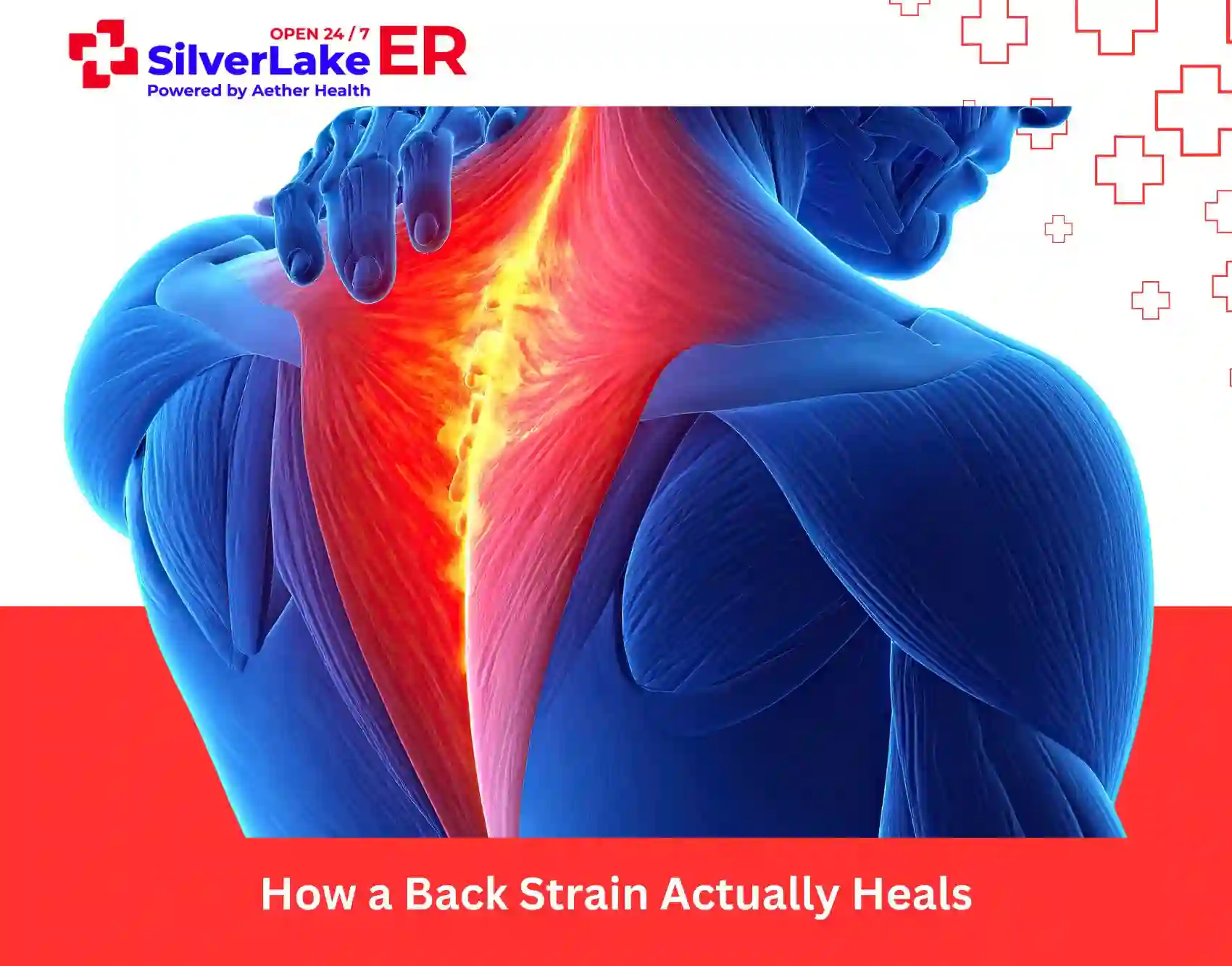
A back strain is a stretched or torn muscle or tendon, usually in the lower back. The healing process goes through three overlapping stages. First, inflammation takes over the injured tissue within hours and lasts a few days. Second, new tissue starts forming over the following one to three weeks as the body repairs the damaged fibers. Third, remodeling happens over weeks to months as the tissue strengthens and reorganizes.
Rushing any one of these stages tends to lengthen recovery overall. Doing too much too soon re-injures the healing tissue. Doing too little lets the muscles weaken and stiffen. The sweet spot is active recovery, gentle movement combined with rest and the right support.
Back Strain Recovery Timeline by Severity Grade
Doctors generally classify back strains into three grades based on how much muscle or ligament tissue is damaged. Knowing which grade you’re likely dealing with helps set realistic expectations for how long your back strain will last.
Grade 1 (Mild Strain). Fewer than 5 percent of fibers are damaged. You feel soreness, mild stiffness, and some discomfort with movement, but you can still walk, sit, and go about most activities. A Grade 1 back strain typically lasts 1 to 2 weeks and responds well to home care including rest, gentle movement, and ice or heat. Most people never see a doctor for this grade.
Grade 2 (Moderate Strain). A larger portion of muscle fibers is torn. Pain is more significant, swelling or bruising may appear, and movement is clearly limited. You may struggle with bending, lifting, or getting out of bed. A Grade 2 back strain typically lasts 3 to 6 weeks. Medical evaluation is worth considering if home care isn’t producing clear improvement within the first week.
Grade 3 (Severe Strain). A complete or near-complete tear of the muscle or tendon. Pain is severe, movement is significantly impaired, and swelling or bruising is often dramatic. Grade 3 strains can last 8 to 12 weeks or longer and sometimes need physical therapy or, rarely, surgical repair. Prompt evaluation with on-site diagnostic imaging helps rule out other serious causes like fractures or disc injuries that can mimic a severe strain.
Back Strain Grades at a Glance

Use this reference to match your symptoms to the likely grade and expected recovery time.
| Severity Grade | Expected Recovery | Signs You’ve Reached This Grade |
| Grade 1 (Mild) | 1 to 2 weeks | Soreness, mild stiffness, full range of motion preserved |
| Grade 2 (Moderate) | 3 to 6 weeks | Noticeable pain, swelling or bruising, limited movement |
| Grade 3 (Severe) | 8 to 12 weeks or longer | Severe pain, significant swelling, major movement loss |
| With red-flag symptoms | Needs immediate evaluation | Numbness, weakness, bladder changes, high fever |
Factors That Shorten or Lengthen Recovery
The grade of your strain sets the baseline, but personal and lifestyle factors push that timeline shorter or longer. The National Institute of Neurological Disorders and Stroke emphasizes that recovery varies substantially from person to person based on these influences.¹
Habits that shorten recovery:
- Starting gentle movement within 1 to 2 days instead of extended bed rest.
- Applying cold during the first 48 hours, then switching to heat.
- Staying hydrated and getting consistent sleep.
- Maintaining a healthy weight to reduce ongoing spinal load.
- Addressing posture habits that contributed to the strain.
Habits that lengthen recovery:
- Returning to heavy lifting, running, or sports before pain has fully resolved.
- Staying in bed for days at a time without any gentle movement.
- Ignoring new pain patterns or pushing through sharp warning signals.
- Chronic stress, which keeps back muscles tense and slows tissue repair.
If your back strain happened during athletics or heavy physical work, our sports injury emergency team provides on-site evaluation and recovery guidance when standard home care is not producing clear improvement.
Red Flags That Mean It’s Not Just a Strain

Most back strains follow the expected recovery timeline for their grade. However, certain warning signs mean your back pain may not be a strain at all. The MedlinePlus patient resource on back injuries identifies these red flags that call for immediate medical evaluation rather than waiting out the recovery timeline.²
- Numbness or tingling in the groin, inner thighs, or saddle area.
- Loss of bladder or bowel control, or new inability to urinate.
- Sudden weakness in one or both legs that was not present before.
- Severe pain following a fall, car accident, or major impact.
- Fever, chills, or unexplained weight loss alongside the back pain.
- Pain that gets steadily worse after a week instead of improving.
- Pain that wakes you from sleep every night and does not ease with position changes.
Frequently Asked Questions
How long does a back strain last if I rest completely?
Complete bed rest actually lengthens recovery for most back strains. Muscles stiffen and weaken, which prolongs pain. Gentle movement within the limits of comfort shortens total recovery time, even in moderate and severe strains.
Can a back strain last for months?
A severe Grade 3 strain can take up to 12 weeks or longer to fully heal. If back pain persists beyond 6 weeks of consistent self-care without improvement, see a doctor to rule out other causes such as disc injuries, fractures, or nerve involvement.
What is the difference between a back strain and a back sprain?
A strain involves muscle or tendon damage. A sprain involves ligament damage. Both have similar symptoms and similar recovery timelines, and both are classified in three grades of severity. The treatment approach is nearly identical for both.
When should I see a doctor for a back strain?
See a doctor if pain worsens after the first week, if red-flag symptoms appear at any point, or if a moderate to severe strain is not showing clear improvement within two weeks. Immediate care is needed for numbness, weakness, or bladder changes.
Can a back strain happen again easily?
Yes. A previously strained back is more vulnerable to re-injury, especially if you return to full activity before full healing or if underlying posture and strength issues are not addressed. Gradual return to activity reduces the risk significantly.
Back Strain Not Healing in Pearland?
Most back strains resolve on their own with time and sensible self-care. When yours does not, prompt evaluation matters. Our back injury emergency evaluation team at Silverlake ER provides on-site imaging, lab work, and same-day assessment 24/7 at 2752 Sunrise Blvd, Pearland, TX 77584. No appointment needed. Call +1 (713) 528-8703 or walk in anytime.
Call 911 immediately for back pain with loss of bladder or bowel control, sudden leg weakness, numbness in the groin or saddle area, or severe pain following major trauma. These signs can indicate serious conditions requiring emergency intervention within hours.