
A broken jaw often needs about six weeks for initial bone healing, with roughly four to eight weeks a common general range. More complex injuries can take longer, and returning to normal chewing or contact sports may require additional time. Your surgeon confirms progress and decides when restrictions can end.
If you suspect a broken jaw after a blow, fall, or accident, seek prompt medical care. Do not wait to see whether pain settles. Call 911 for difficulty breathing, choking, or heavy bleeding.
What is a fractured jaw?
Let’s start identifying what fracture is first.
A broken jaw often needs about six weeks for initial bone healing, with roughly four to eight weeks a common general range. More complex injuries can take longer, and returning to normal chewing or contact sports may require additional time. Your surgeon confirms progress and decides when restrictions can end.
If you suspect a broken jaw after a blow, fall, or accident, seek prompt medical care. Do not wait to see whether pain settles. Call 911 for difficulty breathing, choking, or heavy bleeding.
What causes a fractured jaw?
Broken jaws are frequently caused by:
- Accidental falls, especially those in which one can’t use their hands to catch themselves
- Accidents involving vehicles, including motorcycles and bicycles
- Injury-related to sports
- Incidents at industrial workplaces
- A punch to the jaw or other assaults
Fractured jaws can also quickly happen if one has an osteogenesis imperfecta (OI) genetic condition, which causes brittle bones that break easily.
The jawbone can also be dislocated. A dislocation occurs when the lower jawbone slips out of one of the two TMJs, which link the mandible to the skull.
What are the symptoms of a broken jaw?
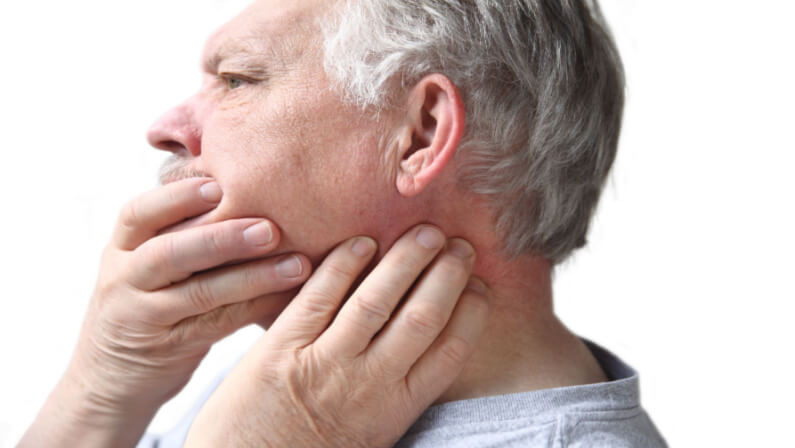
The most obvious signs of a broken jaw are pain, swelling, and bleeding.
Here are other symptoms to look out for:
- Bleeding, which includes oral bleeding
- Breathing problems
- Annoyance when chewing
- Jaw rigidity
- Numbness and facial bruising
- Discomfort brought on by dental issues, such as numb gums or loose teeth
The jaw may hurt and become rigid as the entire face swells. In addition, some people may have trouble breathing due to mouth bleeding because the airways may become blocked by blood flow.
The most discomfort and tenderness can come when one with a fracture speaks or chews. So when experiencing a severe jaw fracture, one might only be able to move the jaw a little or not at all.
It is also typical to have numbness and to bleed from the gums and face. The shape of your face may also change due to the broken bone. The injury’s impact may also result in lost teeth or to become loose.
How is a broken jaw diagnosed?
A broken jaw should be taken as an emergency. Proceed to Aether Health – SilverLake ER.
Aside from an initial physical examination, here are the other test the doctor will ask:
X-rays

Taken to look for fractured or misaligned bones. For mandibular fractures, three different X-ray views can be taken: a posteroanterior view, typically used for angle and ramus fractures; a reverse Towne view, an angled anteroposterior view that is helpful when condylar fragments are displaced; and a bilateral oblique view, typically used to examine the angle and horizontal branch of the mandible.
Ct scan
It helps check for internal bleeding after an accident, other facial fractures, or a fractured upper jaw. This is the preferred diagnostic method today for evaluating and diagnosing mandibular fractures on radiographs.
How is a broken jaw treated
Stable fractures
Some well-aligned fractures can be managed without surgery, using a prescribed diet, activity limits, and follow-up. A fracture that does not need surgery still needs medical supervision.
Surgery and fixation
Displaced or more complex fractures may require surgery to align the bone and hold it with plates or screws. Wires or elastics may be used in selected cases. The treatment team decides how much movement is safe while healing takes place.
Pain medicines and antibiotics
Use the medicines prescribed or approved for you. Antibiotics may be recommended for particular injuries or procedures; they are not something to start independently. Ask about safe pain relief and avoid taking multiple products that contain the same ingredient.
Jaw wiring

The jaw may be only fixed and prevented from moving using jaw wire. This will aid in proper bone healing. A small pair of wire cutters will be provided for you to use in an emergency. You will learn how to use the cutters and when to use them from your healthcare provider.
Antibiotics
If there is an open wound, the doctor will prescribe antibiotics. Antibiotic medications are used to either prevent or treat bacterial infections.
Oral Care
Avoid touching or probing the sutured oral wound with anything sharp. The suture used to close oral wounds is typically resorbable. Sutures are typically removed a week following surgery when the wound has healed.
Smokers must also quit because it will slow wound healing and increase their chance of developing an infection.
For both open and close reduction, the arch bars and wires are typically retained inside the mouth for 4-6 weeks. Patients must exert more effort when brushing since they tend to acquire food particles.
After surgery, patients may find it difficult to brush their teeth vigorously; nevertheless, they can use a soft toothbrush or a child-sized toothbrush.
In order to avoid wound infection, patients are typically instructed to use the antiseptic mouthwash given by the doctor 2 or 3 times per day. In addition, the patient is instructed to rinse with water after every meal to maintain a healthy mouth.
Antiseptic mouthwash lowers the risk of gum disease and wound infection by lowering oral cavity bacteria.
How long does a broken jaw take to heal
The usual recovery discussion centers on several weeks of bone healing, often around six weeks. Your actual timeline depends on the fracture location, alignment, severity, treatment, and whether complications develop.
Pain and swelling may begin improving before the bone is strong enough for normal chewing. Plates and screws hold fragments in position but do not make the bone heal immediately. Follow-up is needed even when you feel better.
For comparison, Cambridge University Hospitals describes approximately six weeks of bone healing after upper-jaw fracture treatment. Lower-jaw injuries also require an individual plan; no general timeline replaces your surgeon’s clearance.
What complications may result from a fractured jaw?
Breathing difficulties may result from a badly broken jawbone, mainly if concomitant face fractures occur.
Wire cutters should always be in one’s possession if the jaws were wired shut during surgery. Also, if one feels like choking or wants to throw up, one might need to cut the wire.
How can you prevent a broken jaw?
The accidents and injuries that result in broken or dislocated jaws frequently cannot be avoided.
However, wearing these might reduce the chances of it:
- When riding motorcycles, bikes, or scooters, skiing, or participating in contact sports, use helmets, facemasks, and mouthguards.
- Protective headgear while working.
- Automobile seat belts.
What should I expect during fractured jaw recovery?
Nursing a fractured jaw can be complex, especially if one undergoes surgery.
Here are the things to expect:
- There will be follow-up checkups.
- Follow all dietary advice and take antibiotics as directed.
- A broken jaw will usually mend with treatment in a month or two.
- Avoid opening your mouth wide for a few weeks as your dislocated jaw heals.
How to manage jaw fracture
The recovery speed of a jaw fracture also depends a lot on how one follows the doctor’s recommendations.
Here’s how to properly manage a jaw fracture at home:
Ice Packs
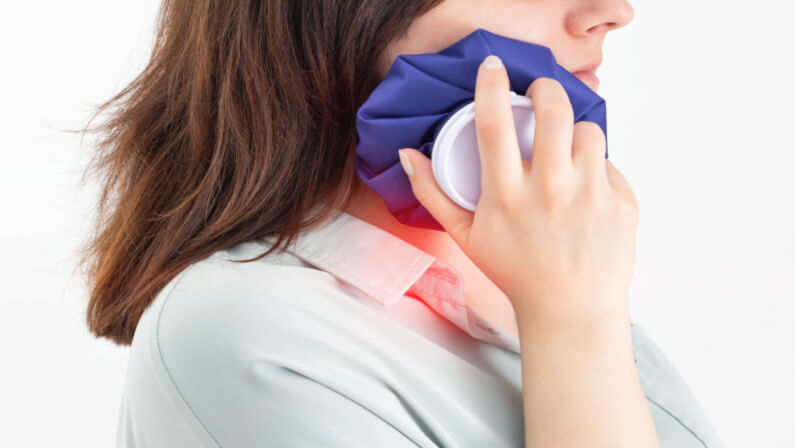
Ice reduces pain and swelling. Ice might also minimize tissue deterioration. Use an ice pack or a plastic bag filled with crushed ice. Before applying it to your face, wrap it in a towel. Then, for 15 to 20 minutes every hour, apply ice or as instructed.
What to expect during broken jaw recovery
The early recovery period
Pain, swelling, and difficulty eating are common concerns after injury or treatment. Use wrapped cold packs if advised and take medication as directed. Contact the treating team if symptoms worsen rather than gradually improve.
While the bone heals
Follow your liquid, soft, or no-chew diet exactly as instructed. Attend appointments to check healing, the bite, and any fixation devices. Do not move to harder foods simply because chewing becomes less painful.
Returning to normal activity
Eating, work, exercise, and sport have different demands. Your team decides when each is safe. Contact sports and activities that risk another facial impact may need a longer restriction than light daily tasks.
How to manage recovery at home
Diet and hydration
Your diet depends on the fracture and treatment. If chewing is restricted, ask how to get enough protein, calories, and fluids through permitted foods or drinks. Feeding methods also depend on your procedure; do not assume a straw or syringe is always appropriate.
Tell your team if you cannot drink enough, are repeatedly vomiting, or are losing substantial weight. A dietitian may help when restrictions make adequate intake difficult.
Oral care
Follow the surgeon’s instructions for gentle tooth cleaning and any prescribed rinse. Do not probe stitches, wipe exposed bone, or attempt to clean inside a fracture. Ask before using a water flosser or another device near the treatment area.
Some stitches dissolve; others need removal. Wires, elastics, and arch bars also have individual removal schedules. Do not loosen or remove them yourself.
Protecting the jaw
Avoid heavy work, contact sports, and movements your team has restricted. Support the jaw during yawning or sneezing only as instructed, without forcing it shut. Avoid smoking or vaping during recovery and ask your clinician for support if needed.
If the jaw is wired or held with elastics
Before leaving care, make sure you understand the emergency plan for vomiting, choking, or breathing difficulty. Your surgeon should explain whether a release tool is needed and exactly how to use it for your device. Keep the prescribed tool accessible.
Call 911 for airway problems and follow the emergency instructions you were given. Contact the treating team immediately if fixation has been released or damaged. MedlinePlus provides additional information on jaw stabilization and emergency care.
When should I call the doctor?
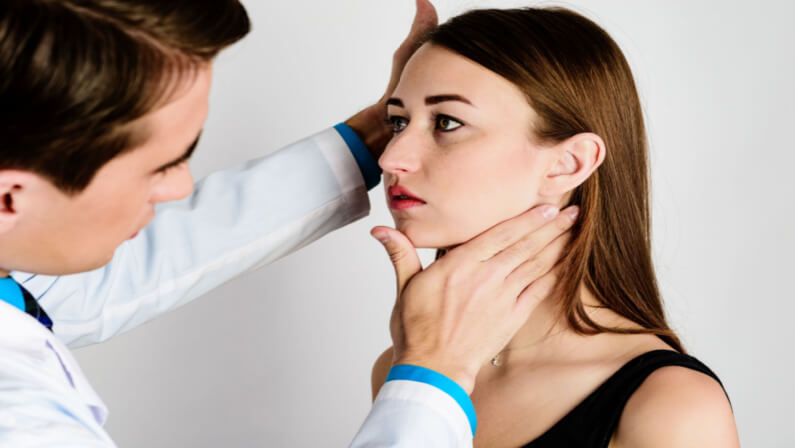
If these symptoms persist, they aren’t ordinary and should not only be managed at home.
Go to Aether Health – SilverLake ER immediately for utmost care.
- Experiencing respiratory problems.
- Feeling dizzy and there’s shortness of breath.
- When coughing or taking deep breaths, there’s chest pain.
- Sneezing blood
- The leg or arm is heated, uncomfortable, and tender. It might appear red and bloated.
Few words from Aether Health – SilverLake ER
A fractured jaw is an emergency that can happen at any time of the day, most unexpectedly. But it’s not a helpless case as there are treatment options, and recovery can be swift if appropriately managed at home, especially after surgery.
One should immediately proceed to get medical help right away. Aether Health – SilverLake ER in Pearland, Texas offers hospital-level treatment from trained emergency personnel physicians. It is a full-service freestanding ER providing urgent medical care 24/7.
Therefore, whether the incident happens at midnight, having health professionals look into it is not a problem with Aether Health – SilverLake ER.
Frequently asked questions
Can a broken jaw heal without surgery
Some stable, well-aligned fractures can, but a clinician must determine whether that approach is safe and supervise recovery.
Can I have a fracture if I can still move my jaw
Yes. Some movement does not rule out a fracture. Pain, swelling, a changed bite, or numbness after trauma needs assessment.
When can I eat normally again
When your treating team confirms it is safe. Reduced pain does not prove that the bone is ready for unrestricted chewing.
Is a fractured jaw the same as a broken jaw
Yes. “Fractured” and “broken” both describe a break in bone. A dislocated jaw is a different injury involving the joint position.