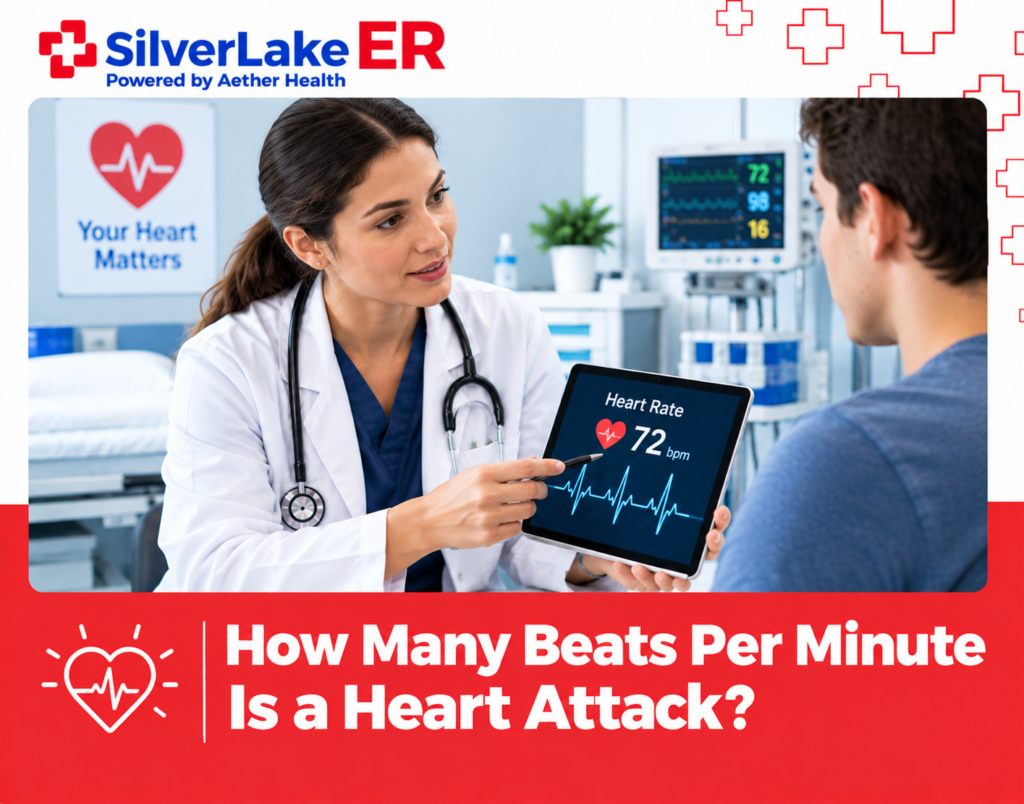
There is no specific number of beats per minute that means you are having a heart attack.
A heart attack can happen while your heart rate is:
- Normal
- Fast
- Slow
- Irregular
Heart rate alone cannot diagnose or rule out a heart attack.
If you have chest pressure, chest pain, shortness of breath, sweating, nausea, unusual weakness, or pain spreading to your arm, shoulder, jaw, neck or back, get emergency medical help.
Do not wait for your pulse to reach a certain number.
What Is a Normal Heart Rate?
For many adults, a typical resting heart rate is about 60 to 100 beats per minute (BPM).
However, there are important exceptions.
A healthy, physically fit person may have a resting heart rate below 60 BPM.
Your pulse may also temporarily increase because of:
- Exercise
- Stress
- Anxiety
- Pain
- Fever
- Caffeine
- Dehydration
- Certain medicines
This means BPM must always be understood in context.
What Heart Rate Happens During a Heart Attack?
There is no single answer.
During a heart attack, one person’s heart rate may rise.
Another person’s pulse may stay within a normal range.
Someone else may develop a slow or irregular heartbeat.
This happens because a heart attack affects blood supply to the heart muscle, and the effect on the heart’s electrical system varies from person to person.
Therefore, you cannot say:
“120 BPM means heart attack.”
You also cannot say:
“My pulse is 75, so I am definitely not having a heart attack.”
Neither statement is reliable.
Can a Heart Attack Cause a Fast Heart Rate?
Yes.
A heart attack can sometimes be associated with a rapid heartbeat or palpitations.
Pain, stress and the body’s emergency response can also raise the heart rate.
However, many other things can cause a fast pulse.
Examples include:
- Exercise
- Anxiety
- Fever
- Dehydration
- Infection
- Anemia
- Thyroid problems
- Heart rhythm disorders
- Certain medications
- Stimulants
This is why a high heart rate by itself does not prove that you are having a heart attack.
Can a Heart Attack Happen With a Normal Heart Rate?
Yes.
A person can have a heart attack even if their pulse appears normal.
This is one of the most important things to understand about this question.
Do not use a smartwatch, fitness tracker or home pulse check to rule out a heart attack.
Those devices may measure heart rate, but a heart attack is a problem with blood flow to heart muscle.
You can have a normal-looking heart rate while that blood flow is seriously reduced or blocked.
Can a Heart Attack Cause a Slow Heart Rate?
It can.
Some heart attacks can interfere with the electrical system that controls heart rhythm.
That may cause a slower heart rate in certain patients.
Again, the important point is that no single pulse pattern is present in every heart attack.
Is 100 BPM a Heart Attack?
Not by itself.
A heart rate above 100 BPM at rest is generally described as tachycardia.
But tachycardia has many possible causes.
A pulse slightly above 100 after exercise, stress or caffeine is very different from a fast heart rate accompanied by chest pain, breathing difficulty or fainting.
Symptoms and medical evaluation matter.
Is 120 BPM a Heart Attack?
A heart rate of 120 BPM does not automatically mean heart attack.
It can occur because of:
- Physical activity
- Anxiety
- Fever
- Dehydration
- Pain
- Heart rhythm problems
- Many other conditions
But if your pulse is 120 while you are resting and you also have chest pain, shortness of breath, fainting or other concerning symptoms, seek urgent medical care.
Is 150 BPM a Heart Attack?
A resting heart rate of 150 BPM is significantly fast and may require medical assessment, particularly if it starts suddenly or is associated with:
- Chest pain
- Shortness of breath
- Weakness
- Dizziness
- Fainting
- Sweating
It does not automatically mean you are having a heart attack.
There are abnormal heart rhythms that can also cause very fast heart rates.
What Are the Main Warning Signs of a Heart Attack?
Instead of looking for one BPM number, pay attention to symptoms.
Heart attack symptoms may include:
- Chest pressure
- Chest squeezing
- Chest fullness
- Chest discomfort
- Chest pain
- Shortness of breath
- Cold sweating
- Nausea
- Vomiting
- Lightheadedness
- Unusual weakness
- Pain or discomfort in one or both arms
- Shoulder discomfort
- Jaw pain
- Neck pain
- Back pain
Symptoms can vary.
Not every person experiences dramatic crushing chest pain.
Can Women Have Different Heart Attack Symptoms?
Women can have chest pain during a heart attack, but other symptoms may also occur.
These can include:
- Shortness of breath
- Nausea
- Unusual tiredness
- Back discomfort
- Jaw discomfort
- Lightheadedness
- Weakness
Anyone with possible heart attack symptoms should seek urgent medical evaluation regardless of sex.
How Is a Heart Attack Actually Diagnosed?
Doctors do not diagnose a heart attack from BPM alone.
Evaluation may include:
ECG or EKG
An electrocardiogram records the electrical activity of your heart.
It can show changes that may occur during certain heart attacks.
Blood Tests
Blood tests can measure markers released when heart muscle is injured.
One important marker is troponin.
Symptoms and Medical History
Healthcare professionals ask:
- When symptoms started
- What the symptoms feel like
- Whether they come and go
- What health conditions you have
- Whether you have heart-disease risk factors
Other Tests
Depending on the situation, doctors may use additional heart imaging or procedures.
Can a Smartwatch Detect a Heart Attack?
A smartwatch can sometimes provide information about:
- Heart rate
- Rhythm alerts
- Activity
But it cannot safely rule out a heart attack.
Even watches that record a simple ECG do not replace a medical 12-lead ECG, clinical examination and appropriate blood testing.
If you have heart-attack symptoms, do not wait for your smartwatch to warn you.
Heart Attack vs. Cardiac Arrest
These terms are often confused.
Heart Attack
A heart attack usually happens when blood flow through a coronary artery becomes severely reduced or blocked.
The heart usually continues beating during a heart attack.
Cardiac Arrest
Cardiac arrest means the heart suddenly stops pumping blood effectively.
A person may collapse, become unresponsive and stop breathing normally.
Cardiac arrest requires immediate emergency action, CPR and an AED when available.
A heart attack can sometimes cause cardiac arrest, but they are not the same condition.
When Should You Call Emergency Services?
Seek emergency help if you develop symptoms such as:
- New or severe chest pressure
- Chest squeezing or heaviness
- Chest discomfort with shortness of breath
- Pain spreading to the arm, jaw, shoulder, neck or back
- Fainting
- Severe unexplained sweating
- Sudden serious breathing difficulty
Do not drive yourself if emergency medical transportation is available.
Most importantly, do not wait until your heart rate reaches a particular BPM.
Frequently Asked Questions
What BPM is dangerous?
There is no one BPM that is dangerous for every person. Heart rate must be interpreted with your age, activity, health conditions, symptoms and heart rhythm.
Does 100 BPM mean a heart attack?
No. A rate above 100 BPM can happen for many reasons and does not diagnose a heart attack.
Does 120 BPM mean a heart attack?
No. However, a resting rate of 120 with chest pain, breathing difficulty, dizziness or fainting needs prompt medical assessment.
Can you have a heart attack at 70 BPM?
Yes. A normal-looking heart rate does not rule out a heart attack.
Does your pulse always increase during a heart attack?
No. It may be fast, normal, slow or irregular.
Can anxiety cause a heart rate over 100?
Yes. Stress and anxiety can increase heart rate. However, do not assume new chest symptoms are only anxiety without appropriate medical evaluation.
The Bottom Line
There is no BPM number that confirms a heart attack.
A heart attack can occur with a normal, fast, slow or irregular pulse.
Instead of waiting for a particular heart-rate reading, pay attention to warning symptoms and seek emergency care when a heart attack may be happening.
Medical content note: If you are experiencing possible heart-attack symptoms now, seek emergency medical help rather than relying on online information or a home heart-rate reading.
Recommended authoritative references for medical review: The American Heart Association lists chest discomfort, shortness of breath, upper-body discomfort and other symptoms among important warning signs and notes that clinicians use ECGs, blood tests and other evaluations when assessing acute coronary syndromes.