Back pain affects roughly 60 percent of women at some point in their lives, and women report it more often than men across almost every age group. That isn’t a coincidence. Female anatomy, hormonal cycles, pregnancy, and certain gynecological conditions all shape the way back pain shows up. Understanding the causes specific to women helps you know when it’s routine and when it needs medical attention.
The causes of back pain in women range from ordinary muscle strain to reproductive-system issues that many people don’t realize can present as back pain. This guide walks through the female-specific factors, groups causes by life stage, and points out red flags that mean it’s time to be evaluated. If your back pain is severe, sudden, or comes with other symptoms, Aether Health – Silverlake ER is open 24/7 in Pearland.
Quick Answer
The most common causes of back pain in women include muscle strain, poor posture, hormonal changes during menstruation, pregnancy-related mechanical stress, endometriosis, uterine fibroids, ovarian cysts, sacroiliac joint dysfunction, osteoporosis (especially after menopause), and stress-related muscle tension. Women also experience back pain from breast size, footwear choices, and carrying children or heavy bags asymmetrically. Any back pain with fever, unexplained weight loss, leg weakness, or bladder changes needs immediate medical evaluation.
Why Back Pain Affects Women Differently
Female bodies are structurally different in ways that matter for back pain. The pelvis is wider and shaped to allow childbirth, which changes how forces move through the lower back. Ligaments in the pelvic region respond to hormonal shifts, becoming looser during menstruation and pregnancy. The reproductive organs sit close to the lower back and share nerve pathways, meaning gynecological problems can radiate as back pain.
Muscle mass and bone density also play a role. Women generally have less muscle around the spine than men and lose bone density more rapidly after menopause. Both factors change how the back handles daily stress and injury. On top of biology, women often carry burdens differently, wear heels, and pick up children in ways that create predictable strain patterns over time.
Back Pain Causes by Life Stage
Different decades bring different causes. Recognizing the patterns typical for your life stage helps narrow down what might be going on.
In your 20s and 30s. Muscle strain from lifting, exercise, or awkward positions leads the list. Hormonal fluctuations before and during menstruation often cause dull, cramping back pain. Endometriosis (tissue similar to the uterine lining growing outside the uterus) can present as chronic low back pain that worsens around menstruation. Career-related sitting and stress add another layer.
During pregnancy and postpartum. The growing weight of the baby shifts the center of gravity forward, straining the lower back. The hormone relaxin loosens ligaments around the pelvis to prepare for delivery, which reduces stability. After delivery, breastfeeding posture, sleep deprivation, and carrying an infant frequently keep the back under strain for months.
In your 40s and perimenopause. Fibroids (non-cancerous uterine growths) become more common and can cause dull, persistent lower back or pelvic pain. Perimenopausal hormonal changes affect ligament laxity and muscle tone. Degenerative disc changes begin. Weight fluctuations and lifestyle shifts add mechanical strain.
After menopause. Bone density loss accelerates, raising the risk of osteoporosis and compression fractures in the spine, which can cause sudden severe back pain. Loss of muscle mass reduces spinal support. Older women may also develop spinal stenosis and osteoarthritis of the spine. New-onset back pain after menopause should always be evaluated.
Back Pain Patterns and Female-Specific Causes
Use this reference to match your symptom pattern against common female-specific causes. It isn’t a diagnostic tool, but it helps you know what to mention when you see a doctor.
| Symptom Pattern | Possible Female-Specific Cause | Level of Concern |
| Dull ache before/during period | Menstrual cramps, hormonal changes | Usually normal, monitor |
| Chronic pelvic and low back pain | Endometriosis, adenomyosis | See a gynecologist |
| Persistent low back and pelvic pressure | Uterine fibroids, ovarian cysts | Schedule an evaluation |
| Sudden severe pain after menopause | Possible compression fracture, osteoporosis | Same-day medical evaluation |
| Low back pain during pregnancy | Mechanical strain, ligament laxity | Discuss with OB provider |
| Back pain with fever or urinary symptoms | Possible kidney infection | Go to the ER |
| Radiating pain down leg with weakness | Nerve compression, possible disc issue | Prompt medical evaluation |
Lifestyle Factors That Add Up
Beyond biological and medical causes, everyday choices influence back pain in women. The Office on Women’s Health highlights how repeated small strains compound over time. Watch for these common contributors.¹
- Wearing high heels regularly, which tilts the pelvis forward and stresses the lumbar spine.
- Large breast size, which changes posture and can strain upper and lower back muscles over years.
- Carrying children or bags always on the same side, creating asymmetric muscle load.
- Sedentary work with prolonged sitting, which weakens core muscles that support the spine.
- Emotional stress that leads to chronic muscle tension in the back and neck.
Bone Health and Back Pain After 50
Osteoporosis is particularly important for women, who lose bone density faster than men after menopause. According to the National Institute on Aging, one in two women over age 50 will experience an osteoporosis-related fracture. Vertebral compression fractures can cause sudden severe back pain, height loss, or a curved upper back, and they sometimes occur without any obvious injury.²
For women with new-onset severe back pain after 50, especially with a history of osteoporosis risk factors, prompt imaging matters. Our on-site diagnostic imaging services can identify compression fractures and other structural causes rapidly.
Red Flags: When Back Pain in Women Needs Emergency Care
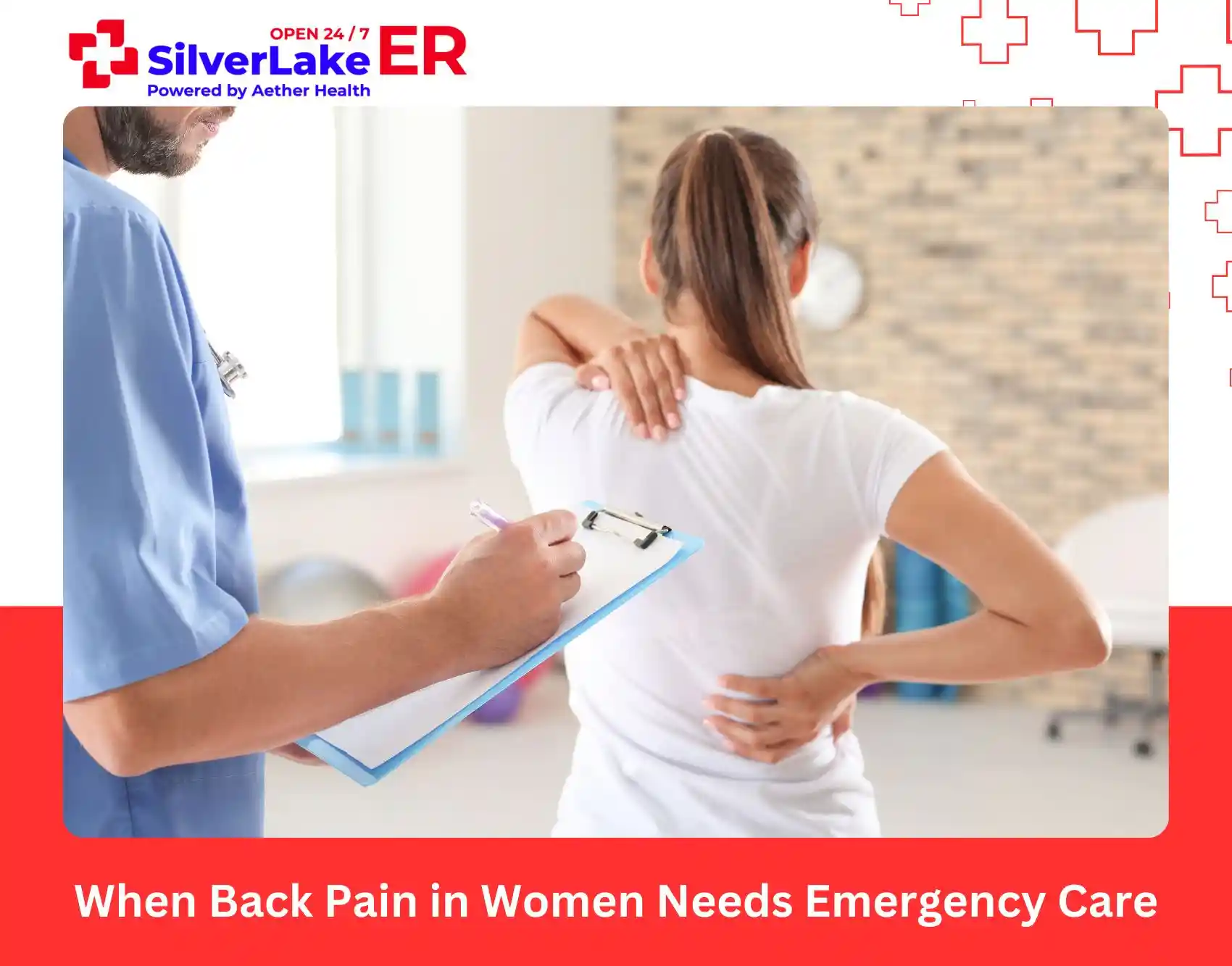
Certain symptom combinations mean back pain isn’t a wait-and-see situation. Any of these signs need same-day medical evaluation.
- Sudden severe back pain after menopause, even without injury.
- Back pain with fever, chills, or burning during urination (possible kidney infection).
- Back pain during pregnancy with vaginal bleeding, contractions, or fluid loss.
- Numbness in the groin or saddle area, or new bladder or bowel changes.
- Sudden weakness in one or both legs.
- Severe back pain following any fall, car accident, or trauma.
- Back pain with unexplained weight loss or persistent night sweats.
Frequently Asked Questions
Why do women get more back pain than men?
Female anatomy (wider pelvis, closer proximity of reproductive organs to the spine), hormonal cycles that affect ligament laxity, pregnancy-related strain, and postmenopausal bone density loss all contribute. Women also tend to have less muscle mass around the spine than men.
Can menstrual periods cause back pain?
Yes. Prostaglandins released during menstruation cause the uterus to contract and can also trigger dull, aching pain in the lower back. This pain typically starts a day or two before your period and eases within the first few days of bleeding.
Is back pain a sign of pregnancy?
Lower back discomfort can be an early pregnancy symptom, but it’s rarely the only or first sign. If you suspect pregnancy, take a pregnancy test rather than relying on back pain alone.
Can endometriosis cause back pain?
Yes. Endometriosis often causes chronic pelvic and low back pain that worsens around menstruation. If you have monthly back pain that has grown more severe over time, ask a gynecologist about endometriosis evaluation.
When should back pain be checked for cancer or serious disease?
Warning signs include back pain with unexplained weight loss, night sweats, fever, new bowel or bladder changes, or pain that wakes you from sleep every night. These warrant prompt medical evaluation, not to alarm you, but because early diagnosis matters if something serious is present.
Concerned About Your Back Pain Near Pearland?
Not all back pain in women is muscular, and knowing when to be evaluated matters. If you had a fall, twist, or lifting injury, our sports injury emergency evaluation team provides on-site imaging and rapid same-day assessment at 2752 Sunrise Blvd, Pearland, TX 77584, 24/7. Call +1 (713) 528-8703 or walk in anytime.
Call 911 immediately for back pain with sudden loss of bladder or bowel control, severe leg weakness, numbness in the groin or saddle area, back pain during pregnancy with bleeding or contractions, or severe back pain following major trauma. These signs can indicate serious conditions requiring emergency intervention.
External References Links :
1.Office on Women’s Health
2.Office on Women’s Health