
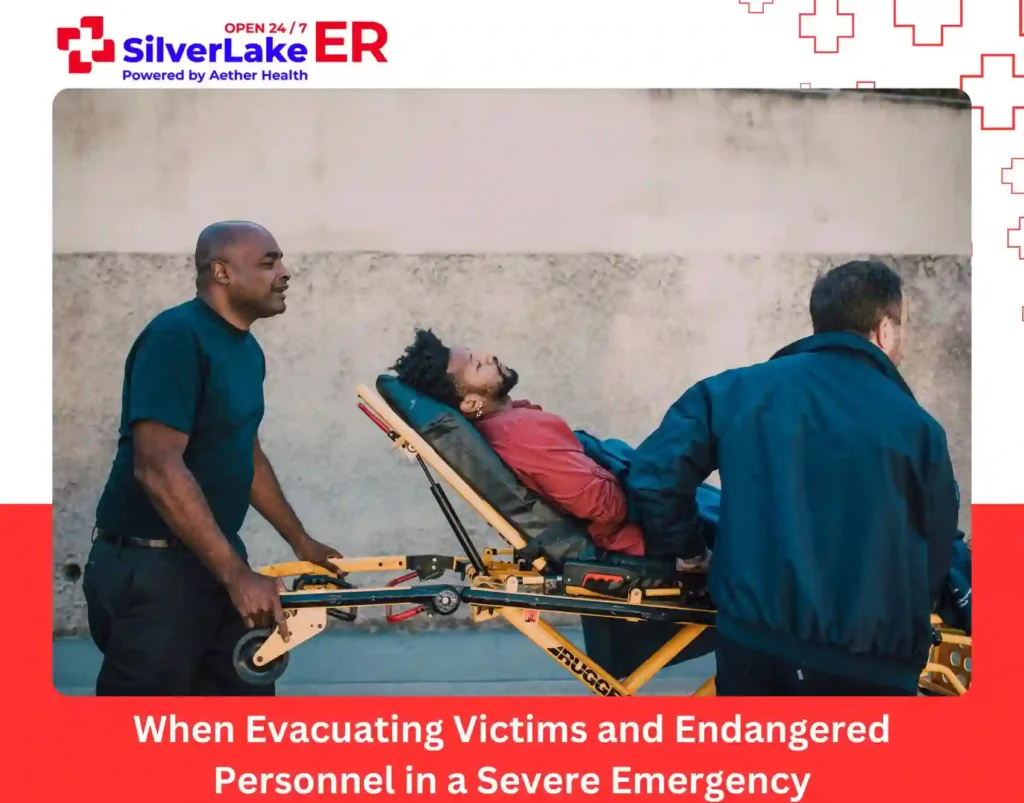
A severe emergency doesn’t give you time to think through what to do. Fire, chemical spill, active threat, structural collapse. Every second spent hesitating is a second victims lose. The decisions you make in the first two minutes shape whether everyone gets out alive.
Knowing what to do when evacuating victims and endangered personnel in a severe emergency isn’t just for first responders. Workplace supervisors, teachers, event organizers, and family members can all be the first person to act. This guide gives you the standard framework, the evacuation priority order, and the specific steps to follow. If you’re near Pearland and need emergency care after an evacuation, Aether Health – Silverlake ER is open 24/7 for severe emergencies.
The Short Answer
When evacuating victims and endangered personnel in a severe emergency, follow the RACE protocol: Rescue anyone in immediate danger, Alarm others by calling 911 and activating the fire or emergency alarm, Contain the hazard by closing doors if safe to do so, and Evacuate along the nearest safe route. Move ambulatory people out first, then those needing assistance, then bedridden or immobile individuals. Never re-enter a dangerous area. Once outside, meet at the designated muster point, provide accurate information to first responders, and get injured victims to emergency medical care.
The RACE Protocol: The Standard Emergency Response Framework
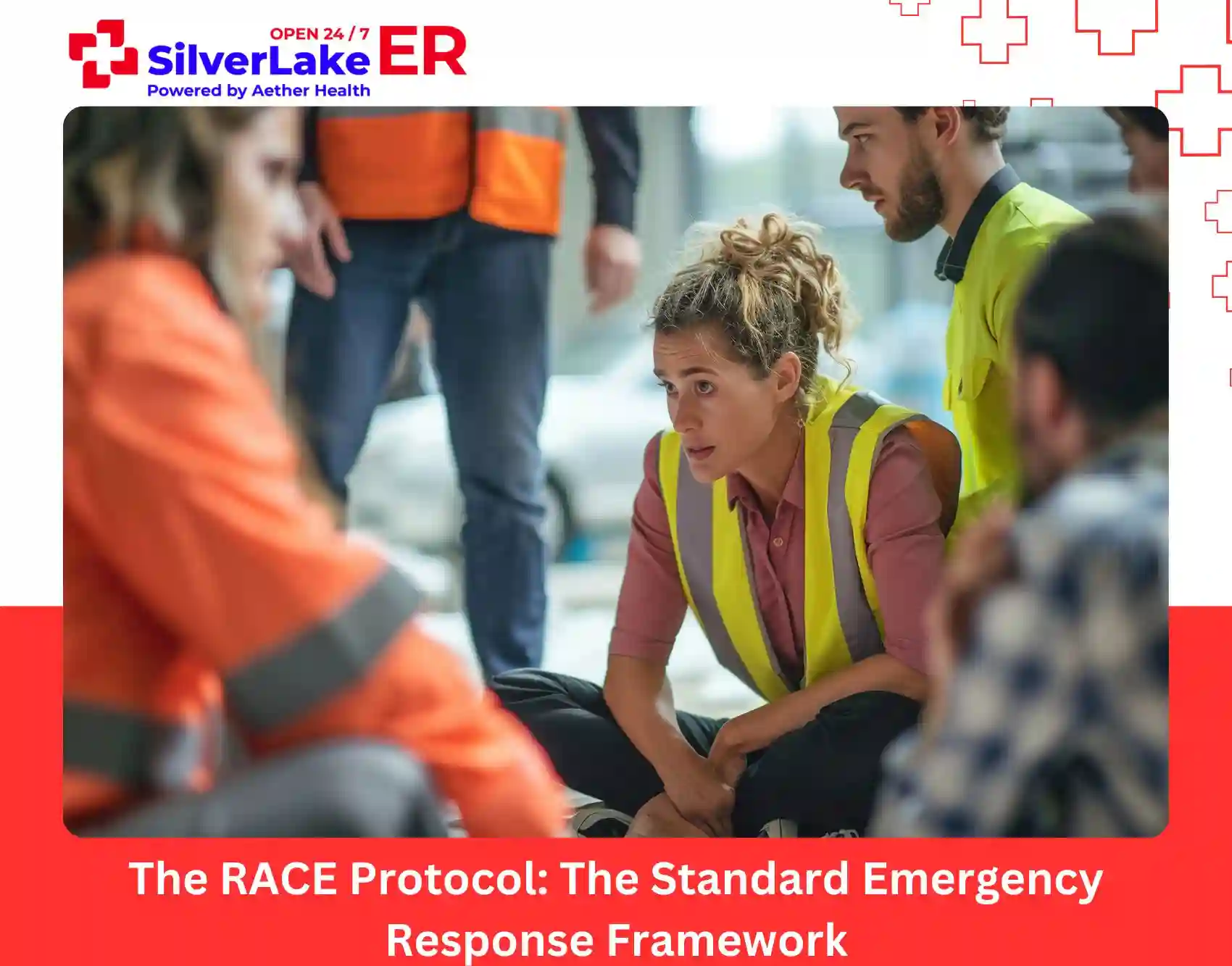
RACE is the emergency response acronym used in nearly every U.S. hospital, workplace, school, and healthcare facility. It gives you a memorable four-step sequence that can be applied to almost any severe emergency. Learn it now, because when a crisis hits, you won’t have time to look it up.
R (Rescue). Move anyone in immediate danger away from the hazard, but only if you can do so safely. This means people directly threatened by fire, chemicals, structural collapse, or an active threat. Do not put yourself at serious risk. A rescuer who becomes a second victim helps no one.
A (Alarm). Alert others and activate the emergency system. Pull the fire alarm, shout to warn people, and call 911 immediately. Give the dispatcher your location, the type of emergency, and the number of victims. Do not hang up until told to.
C (Contain). Close doors and windows behind you as you evacuate to slow the spread of fire, smoke, or chemicals. Never lock exit doors, but do close them behind evacuees.
E (Evacuate). Move everyone along the nearest safe evacuation route to the designated meeting point outside. Use stairs, not elevators. Assist anyone who needs help, and do a headcount once outside.
Evacuation Order: Who Goes First
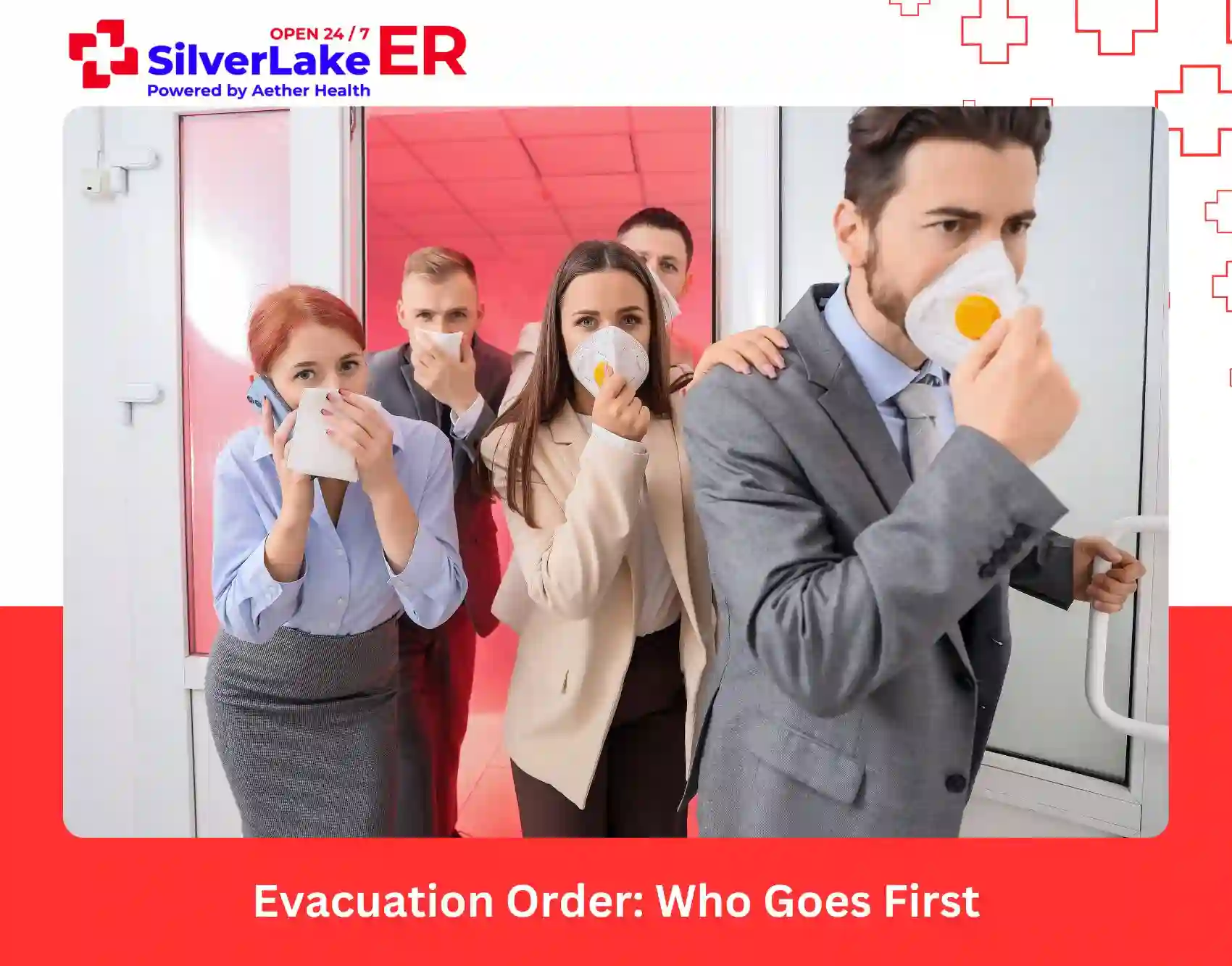
In a severe emergency with multiple people to move, evacuation follows a priority order. This isn’t about who is more valuable, it’s about maximizing the number of people you can safely get out in limited time.
Tier 1: Ambulatory victims. People who can walk out on their own with minimal help. These evacuate first because they need the least resources and free up responders to help others. Direct them to the evacuation route and muster point, then move on.
Tier 2: Non-ambulatory victims. People who can move with assistance, such as those using canes, walkers, or those partially injured. These evacuate second, with one or two helpers each. Use rolling chairs, wheelchairs, or arm carries as appropriate to the situation.
Tier 3: Bedridden or completely immobile victims. People who cannot move themselves at all. These evacuate last because they require the most resources: often multiple people plus specialized equipment like evacuation sheets, sleds, or stretchers. If the situation is too dangerous to move them safely, shelter them behind closed doors and inform first responders of their location.
The 7 Essential Evacuation Steps
The Occupational Safety and Health Administration outlines the following core sequence for workplace emergency evacuation. Adapt it to your specific situation, but follow the sequence.¹
- Assess the immediate threat. Identify what type of emergency it is and where the danger is concentrated. Fire, chemical, active threat, and structural emergencies each require slightly different approaches.
- Activate the alarm and call 911. Alert everyone in the area and get emergency services on the way immediately. Do not delay this step even if you plan to fight a small fire yourself.
- Announce the evacuation clearly. Use clear, direct language. Tell people what to do, which route to take, and where to meet. Confident direction reduces panic.
- Move in evacuation order. Send ambulatory people out first along the safest route, followed by non-ambulatory and bedridden victims with assistance. Assign specific people to help those who need it.
- Close doors behind you. Contain the hazard as you evacuate. Never lock exit doors, but do close them to slow fire, smoke, or contamination spread.
- Assemble at the muster point. Every workplace should have a pre-designated safe meeting spot. Take attendance immediately. Report anyone missing to first responders as soon as they arrive.
- Do not re-enter the danger zone. Wait for first responders to declare the area safe. Even if it looks calmer, structural instability, fire re-ignition, or airborne chemicals may remain.
What to Do Once Victims Are Out
Once evacuation is complete, first responders take over the emergency scene. Your job shifts to supporting them. According to Ready.gov’s official evacuation guidance, the most valuable things you can provide are accurate information (who evacuated, who is missing, what happened), medical background for injured victims, and clear communication that helps responders prioritize.²
For victims with injuries, transport to emergency care is critical. Severe injuries require ambulance transport. Our trauma emergency services team handles multiple casualties with on-site imaging, lab, and hospital transfer coordination.
Common Evacuation Mistakes to Avoid
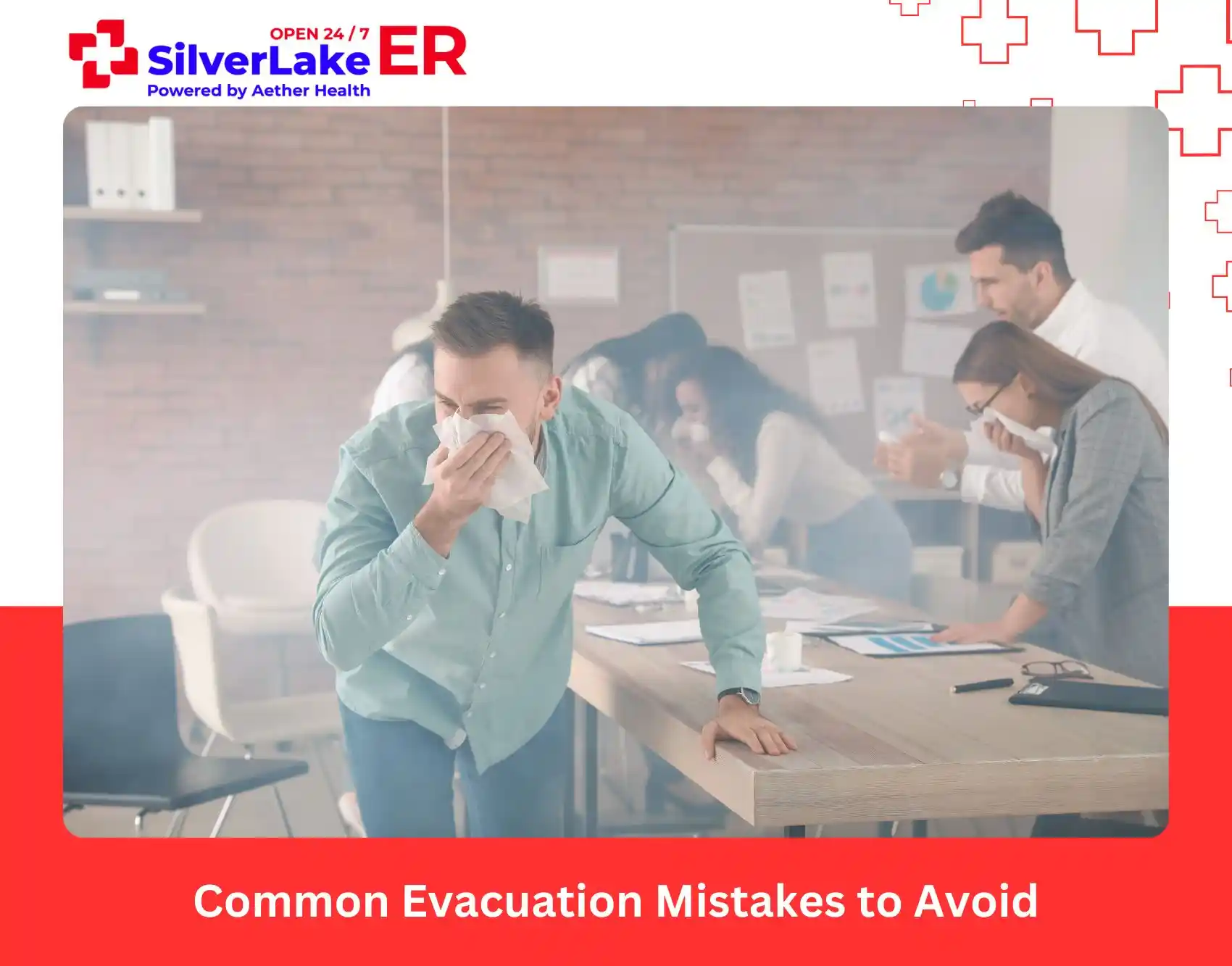
These are the four most common mistakes that turn recoverable emergencies into tragedies.
- Waiting to see if the emergency resolves on its own. When in doubt, evacuate. It is far better to leave unnecessarily than to stay too long.
- Trying to save personal belongings before people. Nothing you own is worth a human life. Leave everything and get out.
- Using elevators during fires or structural emergencies. Elevators can trap you or lose power. Always use stairs unless specifically directed otherwise by emergency personnel.
- Re-entering the building to look for someone. Tell first responders instead. They have the training and equipment to search safely.
Frequently Asked Questions
What is the first thing to do in a severe emergency?
Assess whether anyone is in immediate danger and can be safely rescued. Then activate the alarm and call 911. Announce the evacuation clearly to everyone in the area. Do not skip the call to 911 even if you plan to help victims directly.
When should you shelter in place instead of evacuating?
Shelter in place when the outside environment is more dangerous than staying inside, such as during a chemical release, severe weather, or active outdoor threat. Close windows, seal doors, and wait for official all-clear. Evacuate when the inside danger is greater, such as fire or structural collapse.
How do you evacuate someone who cannot walk?
Options include wheelchairs, rolling office chairs, evacuation sleds, two-person carries, or evacuation chairs designed for stairwells. Assign at least one and preferably two helpers per non-ambulatory person. If safe movement is impossible, shelter them behind closed doors and inform first responders of the location.
What information should you give the 911 dispatcher?
Your exact location including address and floor, the type of emergency, number of victims and their conditions, specific hazards present, and any people who are trapped or unaccounted for. Speak clearly and do not hang up until told to.
Should you attempt to move injured victims yourself?
Only move injured victims if leaving them in place puts them in greater danger, such as a burning building. Improper movement can worsen injuries, especially neck or spinal injuries. If the scene is safe, wait for trained responders to move them properly.
Severe Emergency Near Pearland?
After a severe emergency evacuation, victims often need immediate medical evaluation. Our severe emergency care center is on-site 24/7 at 2752 Sunrise Blvd, Pearland, TX 77584, with board-certified emergency physicians, on-site imaging, and capacity for multiple simultaneous casualties. Call +1 (713) 528-8703 for information or walk in anytime.
Call 911 immediately for any severe emergency requiring evacuation. Rescue only if safe, alarm others, contain the hazard, and evacuate along the nearest safe route. Never re-enter a dangerous area. Let trained first responders handle rescue in unsafe conditions.
External References Links :
1.Occupational Safety and Health Administration
2.Ready.gov’s official evacuation guidance