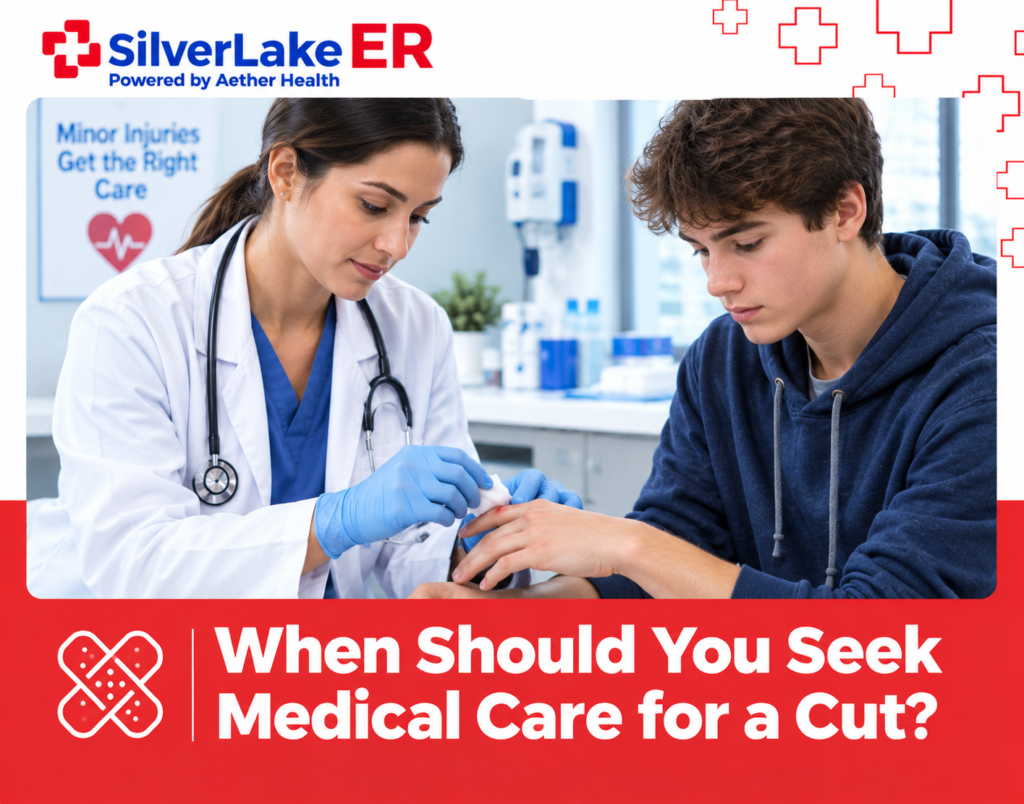
A small cut from cooking, shaving, gardening, or everyday activities can usually be treated at home. However, not every wound is minor. Some cuts require professional medical treatment to control bleeding, reduce the risk of infection, repair damaged tissue, or prevent complications.
Knowing when to seek medical care for a cut can help you decide whether basic first aid is enough or whether you should visit a healthcare provider, urgent care center, or emergency department.
When Can a Cut Usually Be Treated at Home?
Minor cuts and scrapes often heal without medical treatment. Home care may be appropriate when the wound is shallow, bleeding stops with gentle pressure, there is no object embedded in the wound, and you can move and feel the injured area normally.
Basic wound care generally involves washing your hands, controlling bleeding, rinsing the wound with clean running water, covering it with a clean dressing, and monitoring it while it heals.
Most minor cuts begin improving within a few days.
However, you should continue watching the wound because infection or other complications can sometimes develop after the original injury.
Signs a Cut Needs Medical Attention
Several warning signs indicate that a wound should be evaluated by a healthcare professional.
1. The Bleeding Will Not Stop
Apply firm, continuous pressure to the cut using clean gauze or cloth.
If the wound continues to bleed heavily despite direct pressure, medical care may be necessary.
Emergency treatment is especially important if blood is spurting or flowing rapidly, as this may indicate damage to a blood vessel. NHS guidance recommends emergency care for bleeding that cannot be controlled or bright-red blood coming out in spurts.
2. The Cut Is Deep or Very Large
A deep laceration may damage tissues beneath the skin, including muscles, tendons, nerves, or blood vessels.
Seek medical evaluation if:
- The wound is deep or gaping open.
- You can see deeper tissue inside the wound.
- The edges of the cut will not stay together.
- The wound is unusually large.
- The injury exposes fat, muscle, tendon, or bone.
Some deeper wounds may need stitches, skin adhesive, strips, or staples to close properly.
How Do You Know If a Cut Needs Stitches?
A healthcare professional should determine whether stitches are necessary.
A cut may require closure when it is deep, gaping, continues bleeding, or is located in an area where proper healing is particularly important.
Cuts on areas such as the face, hands, joints, or palms may deserve additional attention because they can affect appearance, movement, nerves, or tendons.
Waiting too long can sometimes affect which wound-closure options are appropriate, so seek medical advice promptly if you think a cut might need stitches.
Signs of an Infected Cut
Even a small wound can become infected.
Common signs of wound infection include:
- Increasing pain
- Swelling
- Warmth around the wound
- Pus or drainage
- Worsening skin discoloration or redness around the wound
- Fever
- A bad smell coming from the wound
- Feeling generally unwell
Increasing pain, drainage, warmth, swelling, or spreading skin-color changes around a wound are reasons to contact a healthcare professional.
An infection should not be ignored because it may spread into surrounding tissue or, in some situations, become more serious.
Seek Medical Care If Something Is Stuck in the Cut
Glass, metal, wood, gravel, or another foreign object may remain inside a wound.
Do not aggressively dig into a deep wound to remove an embedded object.
Medical assistance is particularly important when the object is deeply embedded, difficult to see or remove, or when removing it could cause more bleeding or tissue damage.
Large objects embedded in a wound should generally be left in place until medical professionals can evaluate the injury.
What About Cuts From Animal or Human Bites?
Human and animal bites have a greater risk of infection because bacteria may be introduced deep into the wound.
Seek medical advice after a significant bite, particularly from:
- A stray animal
- A wild animal
- A person
- An animal with unknown vaccination status
A healthcare professional can assess the wound and determine whether additional treatment, antibiotics, tetanus vaccination, or rabies evaluation may be necessary.
When Is a Tetanus Shot Needed After a Cut?
Tetanus is another reason wound history matters.
Your healthcare professional may recommend a tetanus booster depending on the type of injury and your vaccination history.
Deep, puncture, contaminated, or dirty wounds deserve particular attention. Mayo Clinic advises medical evaluation when vaccination history is uncertain or when a wound is deep, contaminated, caused by a bite, or contains a foreign object.
Rather than guessing based only on how the cut looks, tell your healthcare provider when you last received a tetanus-containing vaccine.
Loss of Feeling or Movement Is a Warning Sign
A wound can sometimes damage nerves, tendons, muscles, or other structures underneath the skin.
Seek immediate medical evaluation if you experience:
- Numbness near the wound
- Loss of sensation
- Weakness
- Difficulty moving a finger, hand, foot, or other injured body part
These symptoms may indicate more than a superficial skin injury.
Cuts in High-Risk Areas
The location of a wound can also affect whether medical attention is needed.
Cuts involving the following areas may require professional evaluation:
- Face
- Eyes or area near the eyes
- Hands
- Palms
- Major joints
- Neck
- Chest
- Abdomen
- Genitals
Wounds in these areas may involve important nerves, tendons, blood vessels, organs, or cosmetic concerns.
What Should You Do Immediately After Getting a Cut?
For a minor cut:
- Wash your hands.
- Apply gentle but firm pressure if the wound is bleeding.
- Rinse the cut with clean running water.
- Clean the surrounding skin.
- Remove easily removable surface debris with clean tweezers.
- Cover the wound with a sterile dressing or bandage.
- Change the dressing when it becomes wet or dirty.
- Monitor the wound for signs of infection.
Mayo Clinic advises against routinely putting hydrogen peroxide or iodine directly into a minor wound because these substances can irritate tissue.
When Should You Go to an Emergency Department for a Cut?
Seek emergency medical care for a wound if:
- Severe bleeding will not stop.
- Blood is spurting from the wound.
- The wound is extremely deep or large.
- There is a large embedded object.
- You cannot feel or move the injured area normally.
- The injury involves significant trauma.
- You feel faint, weak, confused, or seriously unwell.
When in doubt, it is safer to have a serious wound assessed by a healthcare professional.
Frequently Asked Questions
How do I know if a cut is serious?
A cut may be serious if it is deep, wide, heavily bleeding, contaminated, caused by a bite, associated with numbness or loss of movement, or develops signs of infection.
How long should a cut bleed before I seek medical attention?
Small cuts usually respond to continuous direct pressure. Heavy bleeding that does not stop despite firm pressure should be medically evaluated promptly.
Can a small cut become infected?
Yes. Even small wounds can become infected if bacteria enter damaged skin. Increasing pain, warmth, swelling, drainage, or fever should be evaluated.
Do all deep cuts need stitches?
Not necessarily. The location, depth, size, contamination level, bleeding, and time since the injury all influence how a wound should be treated.
Should I use hydrogen peroxide on a cut?
Routine use directly inside a minor wound is generally not recommended because it may irritate tissue. Clean running water is usually appropriate for rinsing a minor wound.
Final Takeaway
Many minor cuts can be safely managed at home, but uncontrolled bleeding, deep wounds, bites, embedded objects, loss of movement or sensation, signs of infection, and tetanus concerns deserve medical attention.
If you are uncertain about the severity of an injury, a healthcare professional can properly assess the wound and recommend the safest treatment.