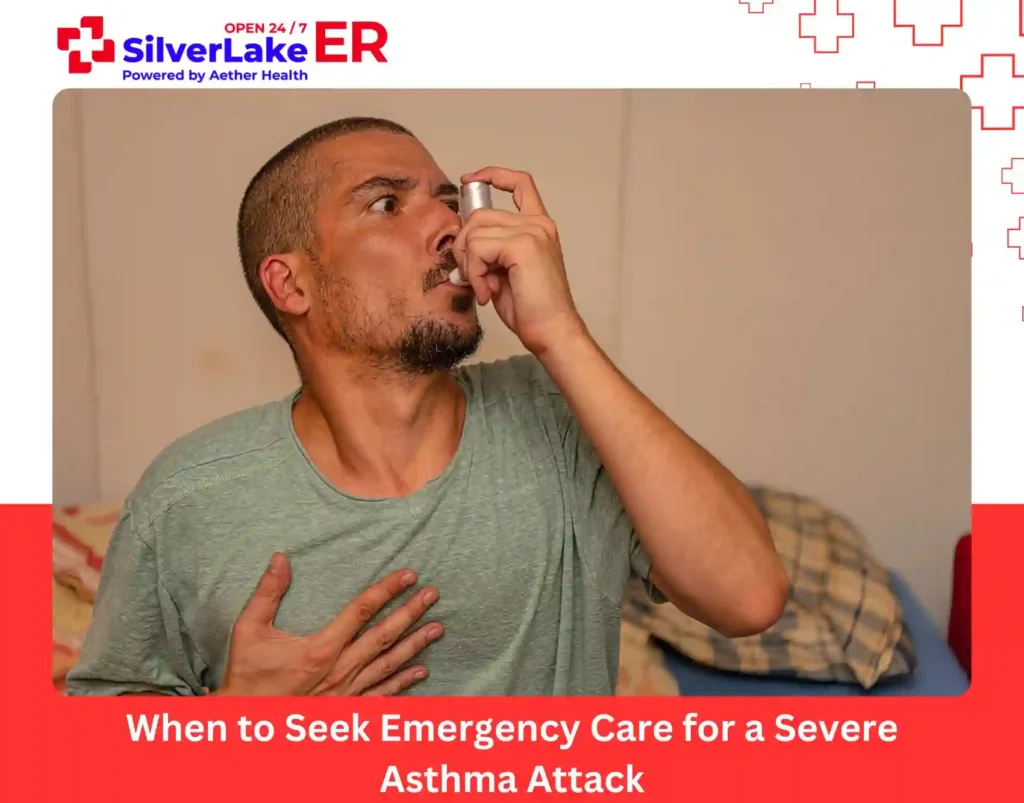
A severe asthma attack doesn’t always look dramatic in its early minutes. That’s what makes it dangerous. People often wait too long, hoping their rescue inhaler will finally kick in, hoping the tightness will ease, hoping they can get through the night. By the time they call 911, the attack has escalated to a critical stage.
Knowing exactly when to seek emergency care for a severe asthma attack is one of the most important skills an asthma patient (or their family) can have. This guide gives you a clear decision framework, specific red-flag signs to watch for, and what happens when you arrive at the ER. If you’re near Pearland and having trouble breathing, Aether Health – Silverlake ER is open 24/7 with dedicated respiratory emergency care.
The Short Answer
Seek emergency care for a severe asthma attack whenever your rescue inhaler isn’t providing relief, you cannot speak in full sentences, your lips or fingertips are turning blue or gray, you feel severe chest tightness, or you’re using neck and chest muscles visibly to breathe. Call 911 for any of these signs. Do not drive yourself. Severe asthma attacks can escalate from breathing difficulty to life-threatening in minutes, and paramedics can begin treatment on the way to the hospital.
The 3-Zone Decision Framework
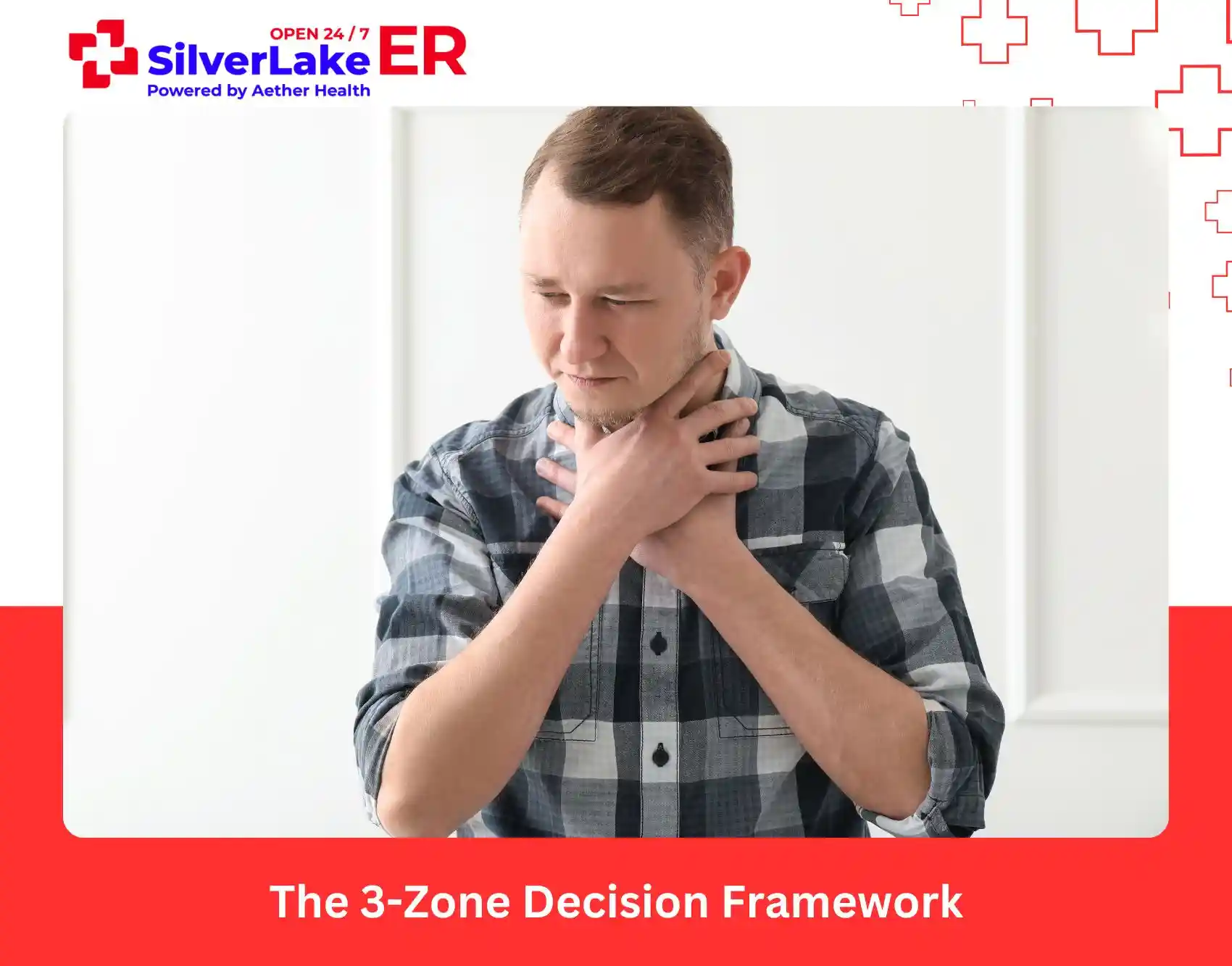
Every asthma action plan uses a green-yellow-red zone system. Understanding which zone you’re in tells you exactly what to do. Use this framework whenever asthma symptoms flare. The National Heart, Lung, and Blood Institute endorses this three-zone approach as the standard for patient self-management.¹
| Zone | What You’re Feeling | What to Do |
| GREEN: Doing Well | Breathing normally, no cough or wheeze, peak flow at 80-100% of your best | Continue daily controller as prescribed. No emergency action needed |
| YELLOW: Caution | Some coughing, wheezing, mild shortness of breath, or peak flow at 50-79% | Use rescue inhaler as directed. Contact your doctor if symptoms don’t improve within an hour |
| RED: Medical Alert | Severe shortness of breath, rescue inhaler not helping, can’t speak full sentences, peak flow below 50% | Call 911 immediately. This is a medical emergency |
The 7 Red Flags That Mean Call 911
If any one of these appears during an asthma attack, treat it as a life-threatening emergency and call 911. Do not wait to see if things improve on their own.
- Rescue inhaler is not providing relief after two doses, or relief lasts only a few minutes before symptoms return.
- Unable to speak in full sentences due to shortness of breath. Only able to say a few words at a time.
- Lips, fingernails, or the area around the mouth turning blue, gray, or ashy in color.
- Visible chest retractions: the skin between the ribs, above the collarbone, or below the breastbone pulls in noticeably with each breath.
- Wheezing that suddenly gets quieter or stops entirely during a severe attack. This is called silent chest, and it means airflow has become dangerously reduced.
- Sitting hunched forward with hands on knees to breathe (called tripod position), extreme agitation, drowsiness, or confusion.
- Peak flow reading in the red zone (below 50% of your personal best) that doesn’t improve with rescue medication.
These red flags apply to any asthma patient during a severe attack, regardless of baseline severity. If any of these signs represent a sudden change from your normal breathing pattern, treat it as an emergency. For background on what triggers airway inflammation in the first place, our guide on what causes asthma disease explains the underlying mechanisms.
What Not to Do During a Severe Asthma Attack
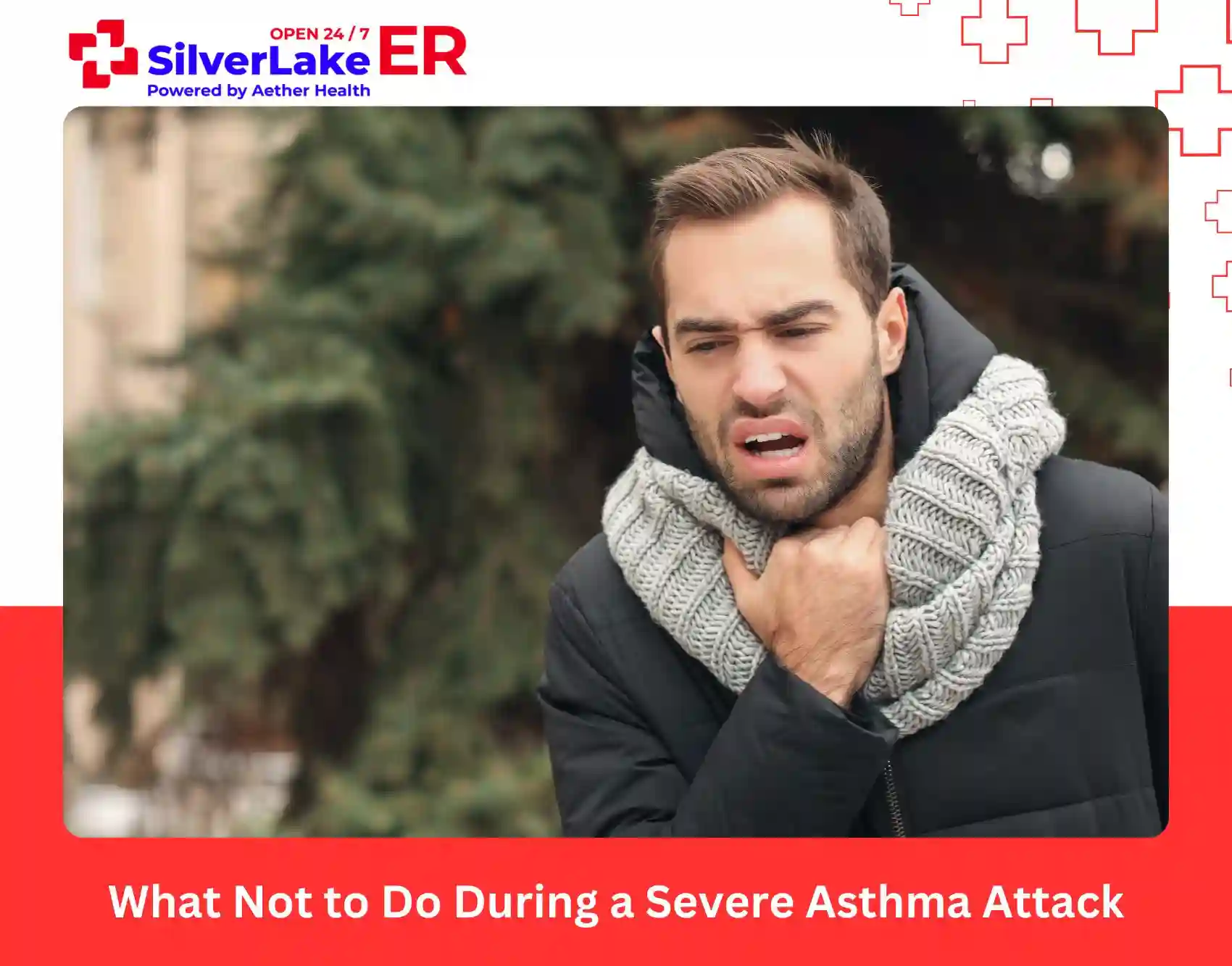
A few common mistakes make severe asthma attacks worse or delay life-saving care. Avoid them.
Do not lie flat. Lying down compresses the diaphragm and makes breathing harder. Sit upright, ideally leaning slightly forward, until help arrives.
Do not drive yourself to the ER during a severe attack. If your breathing suddenly worsens or you lose consciousness behind the wheel, the consequences can be catastrophic. Call 911. Paramedics can start oxygen and nebulizer treatment in the ambulance.
Do not assume a severe attack will pass on its own. Sustained oxygen deprivation stresses the entire cardiovascular system and can raise blood pressure, strain the heart, and reduce circulation to vital organs. During a severe attack, these risks compound quickly, and immediate care is critical.
What to Expect at the ER
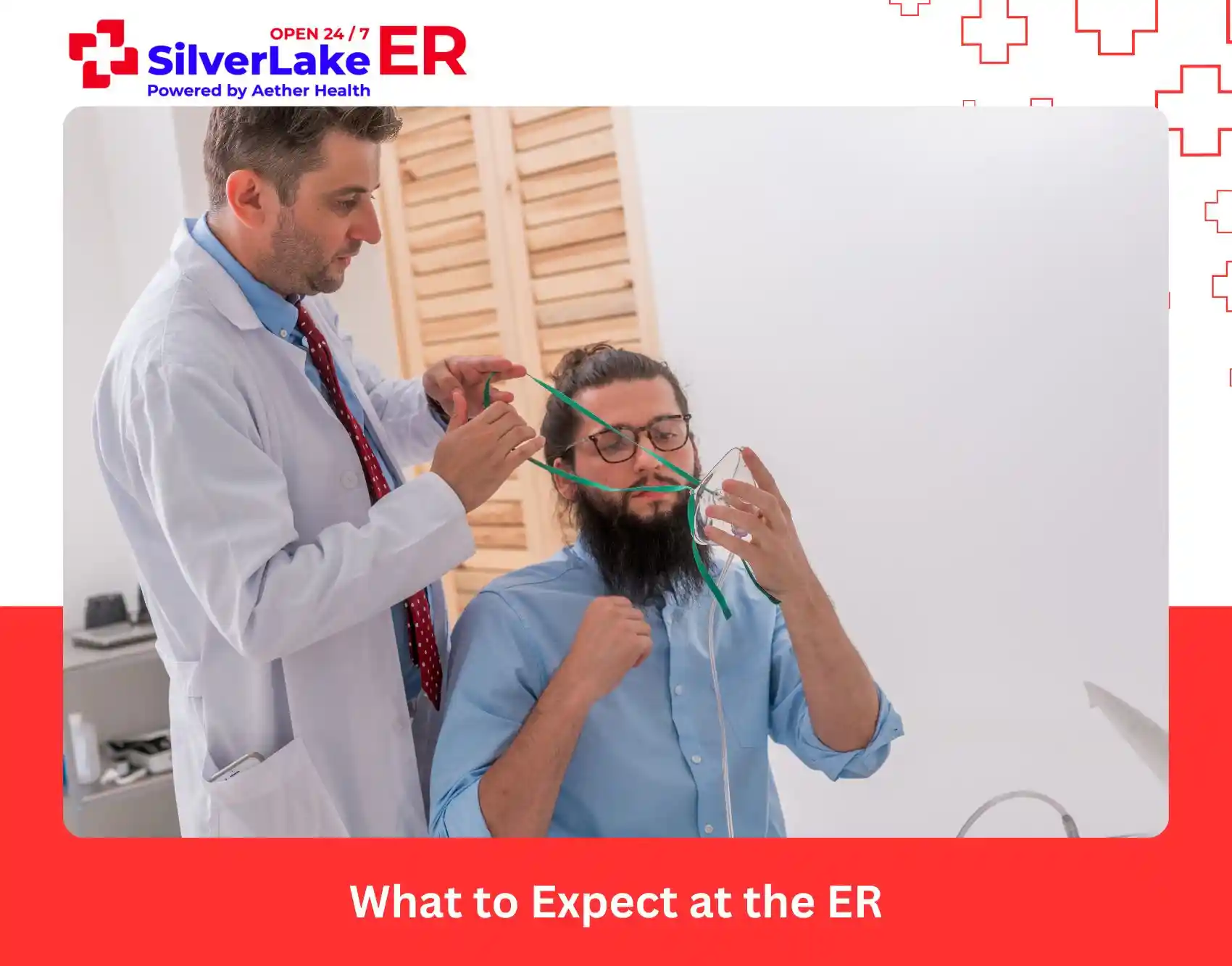
When you arrive at the ER for a severe asthma attack, the response is fast. Triage staff recognize respiratory distress as a top-priority situation, and evaluation typically begins within minutes.
The Asthma and Allergy Foundation of America outlines the typical ER approach: assessment of oxygen saturation and breathing effort, delivery of oxygen if needed, nebulizer treatments to open the airways, and continuous monitoring throughout the visit. Chest X-rays and lab work may be added if the physician suspects complications like pneumonia or a collapsed lung.²
Most patients begin to feel improvement within the first hour of ER treatment. Some are discharged home the same day with follow-up instructions. Others need admission for continued care. Your ER team will keep you informed at every step.
Frequently Asked Questions
How do I know if my asthma attack is severe or just a flare-up?
A flare-up typically responds to your rescue inhaler within 15-20 minutes and eases with rest. A severe attack does not improve with rescue medication, worsens over time, and often involves visible breathing effort. If in doubt, treat it as severe and seek emergency care.
Can a severe asthma attack be fatal?
Yes. Severe asthma attacks account for thousands of deaths in the U.S. each year. Most fatal attacks are ones where the patient waited too long to seek emergency care. This is why recognizing red flags early and calling 911 quickly matters so much.
Should I use my inhaler more times than the label suggests during an attack?
Follow your asthma action plan. Many plans allow additional rescue doses during a severe attack, but exceeding your prescribed limits without medical guidance can be dangerous. If you’re using rescue medication more than the plan allows, you need emergency care.
How is a severe asthma attack different from a panic attack?
Panic attacks can cause shortness of breath and chest tightness, but they don’t produce wheezing, chest retractions, or blue skin color. If you’re uncertain, treat it as an asthma attack. Emergency evaluation can distinguish between the two safely.
What is silent chest and why is it dangerous?
Silent chest is when wheezing stops or becomes very quiet during a severe attack. It sounds like improvement, but it actually means airflow has dropped so low that not enough air is moving to produce a wheeze. This is a critical emergency requiring immediate 911.
Severe Asthma Attack Near Pearland?
Severe asthma attacks need immediate professional evaluation and treatment. Our severe asthma emergency care team is on-site 24/7 at 2752 Sunrise Blvd, Pearland, TX 77584, with continuous respiratory monitoring, nebulizer therapy, and board-certified emergency physicians. Call +1 (713) 528-8703 or walk in anytime.
Call 911 immediately for any severe asthma attack that isn’t responding to a rescue inhaler, involves blue or gray lips, or prevents speaking in full sentences. Do not drive yourself. Paramedics can begin oxygen and treatment on the way.
External References Links :
1. National Heart, Lung, and Blood Institute
2.Asthma and Allergy Foundation of America