

You woke up and it hurt. Or you bent down to tie your shoe and something twinged. Or maybe it’s been a dull ache for weeks and you finally started wondering what’s going on. Lower back pain is one of the most common reasons Americans see a doctor, and roughly 80 percent of adults will experience it at some point.
The good news is that most lower back pain isn’t dangerous and improves within a few weeks. The tricky part is knowing when your specific back pain is routine and when it might be something more serious. This guide walks you through common causes, everyday habits that make things worse, and red flags that mean you should be evaluated. If you’re near Pearland and worried about your back pain, Aether Health – Silverlake ER is open 24/7.
Quick Answer
Lower back pain is most often caused by muscle or ligament strain from lifting, bending, or overuse. Other common causes include herniated discs, sciatica, spinal stenosis, degenerative disc disease, poor posture, sedentary work, sacroiliac joint irritation, and stress-related muscle tension. Most cases improve within a few weeks. However, back pain with numbness in the groin area, loss of bladder or bowel control, sudden severe pain after a fall, fever, or unexplained weight loss should be evaluated at an ER immediately.
Start Here: What Kind of Pain Are You Feeling?

Before figuring out what’s causing your lower back pain, it helps to notice what type of pain you’re actually feeling. Three patterns cover most cases.
A dull, achy pain that gets worse when you move but eases with rest usually points to a muscle or ligament strain. This is the most common category, and it’s usually the least worrying. It often starts after physical activity or a day of unusual movement.
A sharp, shooting pain that travels down one leg points more toward a nerve problem. Herniated discs and sciatica typically produce this pattern. The pain may feel electric or burning, and specific positions can make it much worse or better.
A stiff, deep, radiating discomfort that has built up over weeks or months without any clear injury often points to something chronic, like spinal stenosis or degenerative disc disease. This pattern is more common in adults over 50, and often comes with stiffness after sitting or first thing in the morning.
The 8 Most Common Causes of Lower Back Pain
The National Institute of Arthritis and Musculoskeletal and Skin Diseases reports that lower back pain has dozens of possible causes, but a small handful account for most cases. Here are the eight you’re most likely dealing with.¹
Muscle or ligament strain. By far the most common cause. Sudden lifting, twisting, or unusual physical activity can pull or overstretch the muscles and ligaments in your lower back. Pain typically starts within a day of the activity and eases within one to three weeks.
Herniated or bulging disc. The discs between your vertebrae can bulge outward or rupture, pressing on nearby nerves. This causes pain in the lower back that often radiates down one leg, and sitting for long periods usually makes it worse.
Sciatica. Nerve pain caused by pressure on the sciatic nerve, which runs from your lower back down each leg. The pain is often described as electric, burning, or shooting, and it usually affects just one side.
Spinal stenosis. The spinal canal narrows over time and puts pressure on the nerves inside. Most common after age 50, it often causes a dull ache plus numbness or heaviness in the legs when walking. Bending forward or sitting often eases the pain.
Degenerative disc disease. The discs in your spine lose water and cushioning as you age, which can cause chronic low-grade back pain with occasional sharper flare-ups. Despite the name, this is a normal part of aging for many people.
Poor posture and prolonged sitting. Sitting hunched at a desk for eight hours a day quietly overloads your lower back. This is one of the most common causes of chronic mild back pain in office workers.
Sacroiliac joint irritation. The sacroiliac joints connect your spine to your pelvis. When they get irritated, you feel dull pain low in the back or across the top of the buttocks. Pregnancy, uneven leg length, and overuse are common triggers.
Stress and muscle tension. Chronic stress often shows up in the body as tight muscles, and the lower back is a common target. If your back tightens up during stressful weeks and loosens during relaxed ones, stress may be part of the picture.
Everyday Habits That Make Lower Back Pain Worse
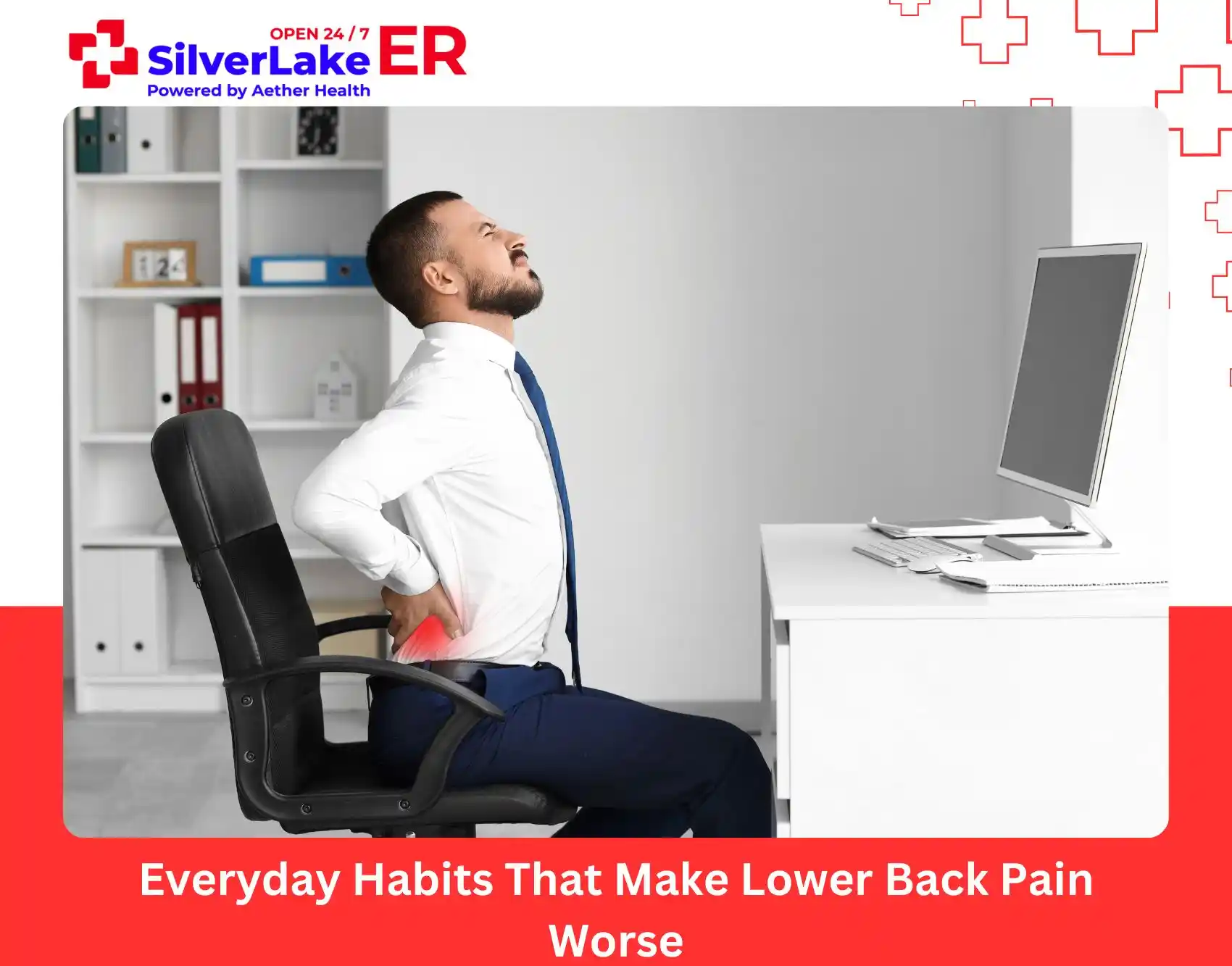
Even when the underlying cause is something you can’t change, certain daily habits keep back pain going or make it worse. Watch for these.
- Sitting for more than 30-45 minutes at a time without standing up or stretching.
- Lifting heavy objects with your back rather than your legs, or twisting while lifting.
- Sleeping on a mattress that is too soft, or in a position that strains your spine.
- Carrying extra weight around your midsection, which increases the load on your lower back.
When Lower Back Pain Is a Red Flag
Most lower back pain is not dangerous, but certain patterns should never be ignored. MedlinePlus, the National Library of Medicine’s patient resource, identifies these red flags that mean you should be evaluated in an ER, not left to see if things improve.²
- Numbness or tingling in the groin, inner thighs, or saddle area.
- New loss of bladder or bowel control, or inability to urinate.
- Sudden severe back pain following a fall, car accident, or other significant trauma.
- Back pain combined with fever, chills, or unexplained weight loss.
- Progressive weakness or numbness in one or both legs.
- Back pain that wakes you up at night and doesn’t ease with position changes.
- Severe pain that isn’t relieved by rest or over-the-counter pain relief.
When to Seek Emergency Care
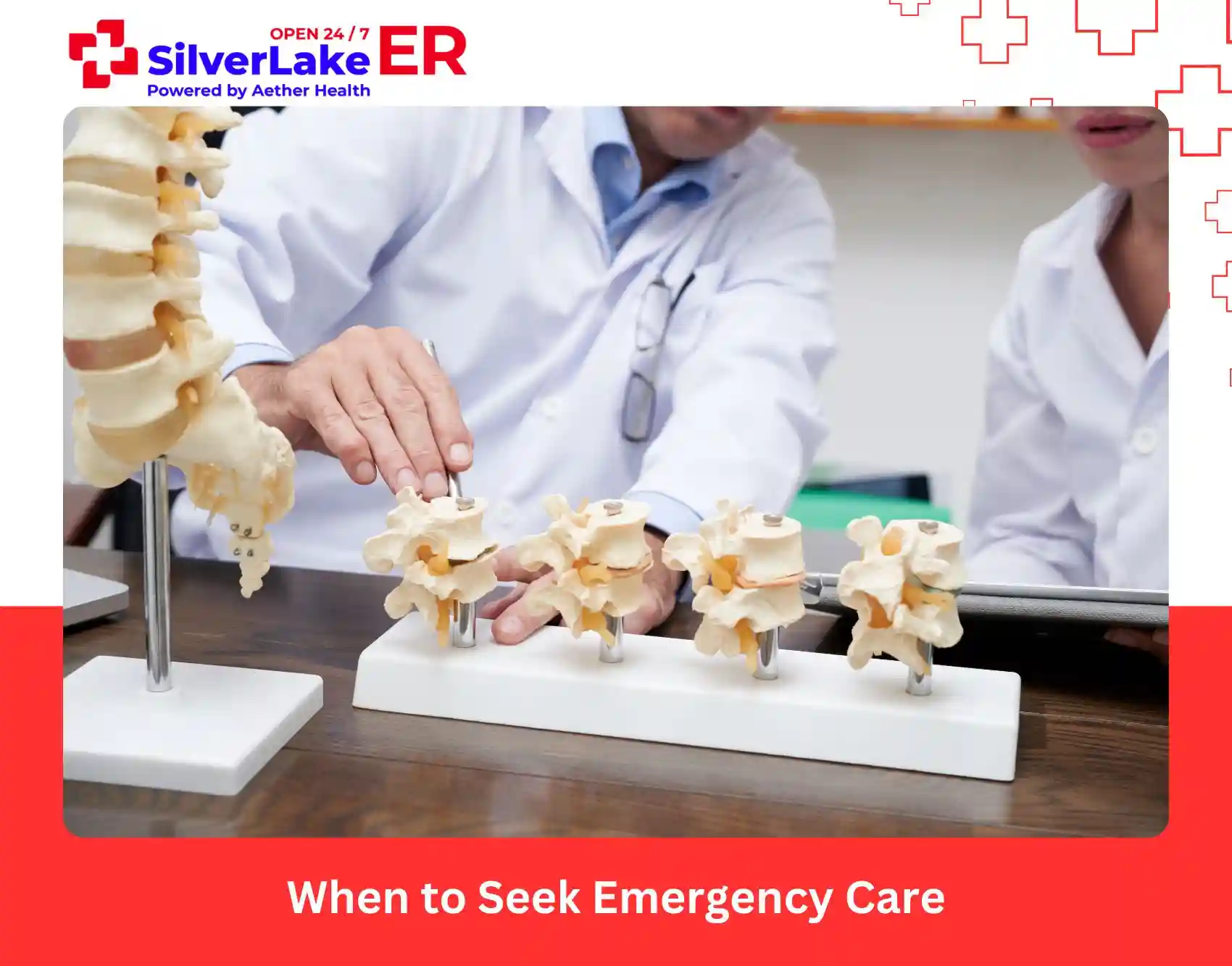
Severe back pain with numbness in the groin area, bladder or bowel changes, and leg weakness can point to cauda equina syndrome, which requires emergency evaluation within hours. Any red flag on the list above deserves same-day medical attention. Our spinal injury emergency team provides on-site imaging and rapid evaluation for severe or suspicious back pain.
For back pain that developed after a fall, accident, or lifting injury, prompt evaluation can rule out fractures and disc injuries that need treatment. Waiting too long can turn a manageable problem into a chronic one.
Frequently Asked Questions
How long should lower back pain last before I see a doctor?
Most muscle-strain back pain improves within one to three weeks. See a doctor if pain persists beyond four weeks or gets worse instead of better. Never wait if you have numbness in the groin, bladder or bowel changes, or new leg weakness.
Can stress really cause lower back pain?
Yes. Chronic stress causes muscle tension throughout the body, and the lower back is one of the most common spots people carry it. If your back pain follows stressful periods, tension may be a significant contributor.
Is walking good or bad for lower back pain?
For most causes, gentle walking helps. It keeps muscles loose and promotes circulation. Avoid walking if it triggers sharp shooting pain down your leg or significantly worsens your symptoms.
Should I use heat or ice for lower back pain?
Ice is typically better in the first 48 hours after a new injury. Heat is generally better for ongoing muscle tension because it relaxes muscles. Some people alternate between the two.
Can lower back pain be a sign of kidney problems?
Yes. Kidney stones and kidney infections can cause pain in the lower back, though it’s usually on one side and higher than typical muscular back pain. Fever, painful urination, or blood in the urine alongside back pain warrants prompt evaluation.
Concerned About Your Lower Back Pain Near Pearland?
If your back pain is severe, came on suddenly after a fall, or comes with any of the red-flag symptoms above, get evaluated the same day. Our back injury emergency care team provides on-site imaging, lab work, and rapid evaluation 24/7 at 2752 Sunrise Blvd, Pearland, TX 77584. Call +1 (713) 528-8703 or walk in anytime.
Call 911 immediately for back pain with sudden loss of bladder or bowel control, new numbness in the groin or saddle area, sudden severe weakness in the legs, or severe back pain following major trauma. These can indicate serious conditions that require emergency intervention within hours.
External References Links : }
1.National Institute of Arthritis and Musculoskeletal and Skin Diseases
2. MedlinePlus, the National Library of Medicine’s patient resource