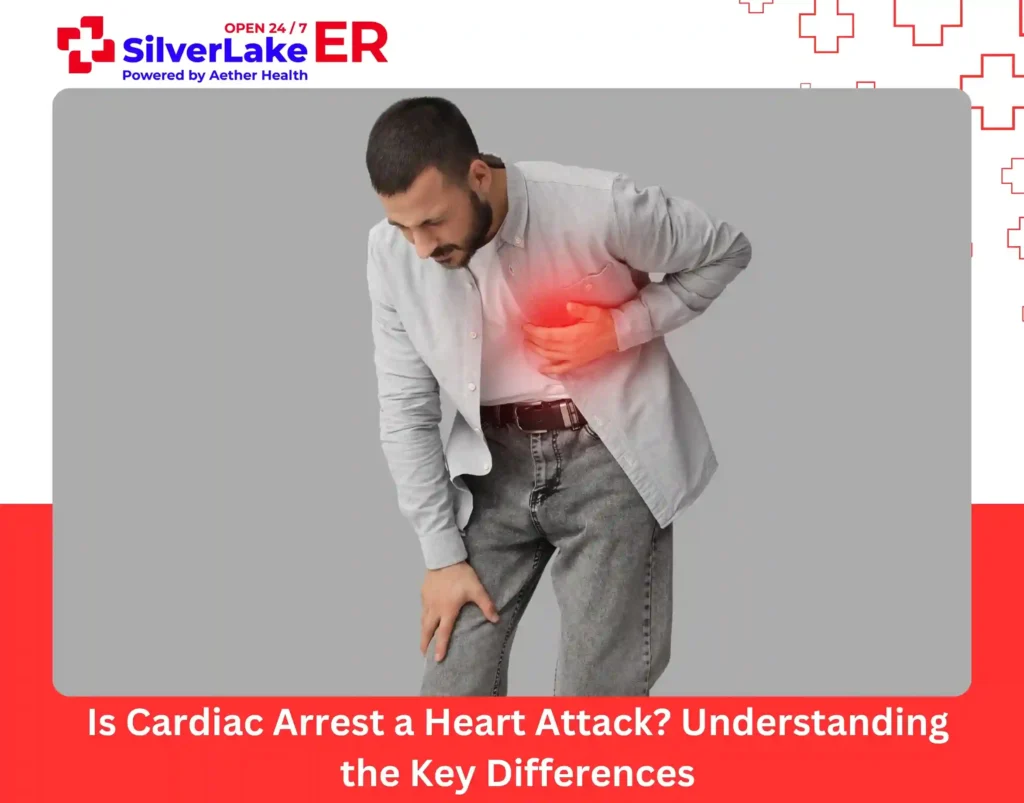
Many people use the terms cardiac arrest and heart attack as if they mean the same thing, but they are actually very different medical conditions. Both are serious and life-threatening, but they happen in different ways and require different types of emergency care.
This comprehensive guide answers ‘is cardiac arrest a heart attack?’ How they differ, how they are connected, and what symptoms to watch for.
Is Cardiac Arrest a Heart Attack?
No, cardiac arrest is not a heart attack.
- A heart attack happens when blood flow to the heart is blocked.
- A cardiac arrest happens when the heart suddenly stops beating.
Both are medical emergencies, but they involve completely different problems inside the heart. If you are experiencing unusual pain in the chest and surrounding, it’s better to opt for a timely heart attack emergency care.
What Is a Heart Attack?
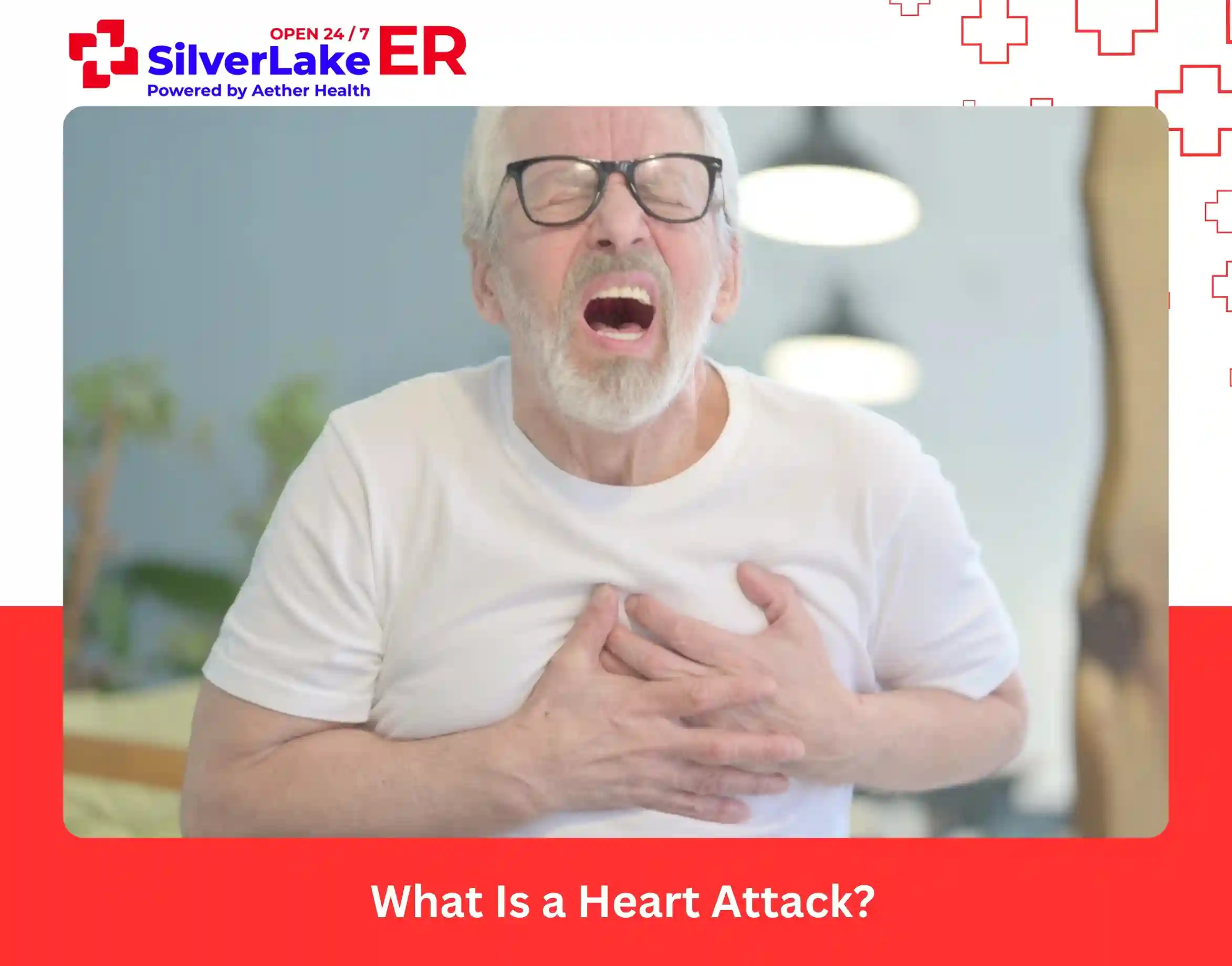
A heart attack (also called myocardial infarction) occurs when blood flow to part of the heart muscle is blocked, usually due to a clot or buildup in the arteries.
Without oxygen-rich blood, the affected part of the heart begins to get damaged or die if not treated quickly.
What Happens During a Heart Attack?
The heart continues to beat, but it is under stress and not getting enough oxygen. This is why symptoms can develop gradually or suddenly.
Common Symptoms of a Heart Attack
- Chest pain or pressure
- Shortness of breath
- Pain in the arm, jaw, or back
- Nausea or vomiting
- Sweating or dizziness
Some heart attacks are mild or even “silent,” especially in women or older adults.
What Is Cardiac Arrest?
Cardiac arrest is a sudden and severe condition where the heart stops beating effectively due to an electrical problem.
Instead of pumping blood, the heart may quiver or stop entirely, preventing blood from reaching the brain and other vital organs.
What Happens During Cardiac Arrest?
- The heart suddenly stops pumping
- Blood flow to the body stops
- The person loses consciousness within seconds
Without immediate treatment, death can occur within minutes.
Common Signs of Cardiac Arrest
- Sudden collapse
- No pulse
- No breathing or gasping
- Loss of consciousness
The Key Difference: Electrical vs Circulation Problem
The simplest way to understand the difference is this:
- Heart attack = Circulation problem (blocked blood flow)
- Cardiac arrest = Electrical problem (heart stops beating)
A heart attack affects the blood supply, while cardiac arrest affects the heart’s rhythm and function.
Can a Heart Attack Cause Cardiac Arrest?
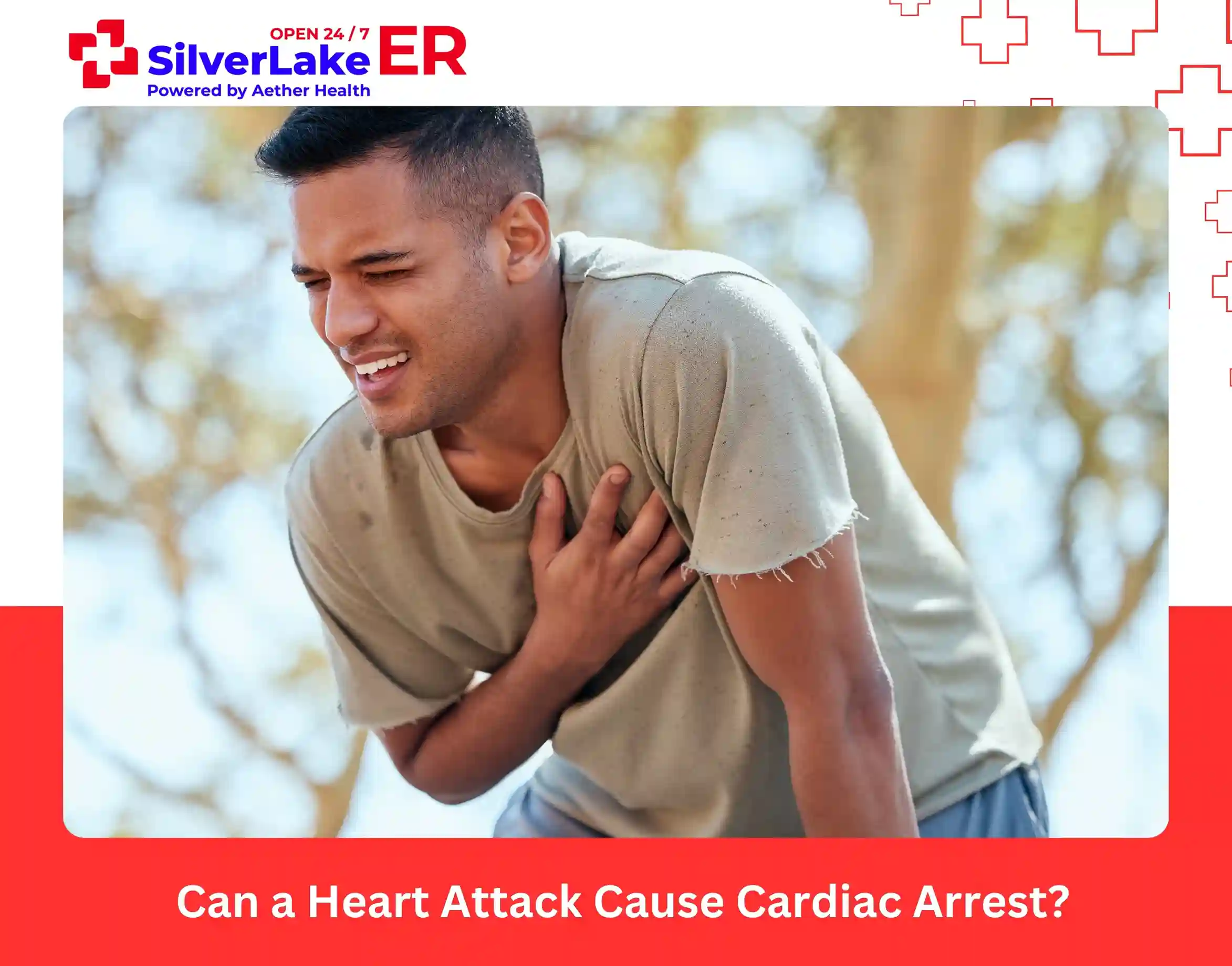
Yes, a heart attack can lead to cardiac arrest.
When blood flow is blocked during a heart attack, it can disrupt the heart’s electrical system, triggering an abnormal rhythm that causes the heart to stop.
However, not all heart attacks result in cardiac arrest. Many people survive heart attacks with proper treatment. Furthermore, stress can cause cardiac arrest and heart attack both.
How Symptoms Differ Between the Two
Heart Attack Symptoms (Gradual or Sudden)
Heart attack symptoms often develop over time and may include discomfort or warning signs.
- Chest pain or tightness
- Shortness of breath
- Nausea
- Fatigue
A person is usually awake and responsive during a heart attack.
Cardiac Arrest Symptoms (Immediate and Severe)
Cardiac arrest symptoms are sudden and dramatic.
- Immediate collapse
- No breathing
- No pulse
- Unresponsiveness
There is no time for warning signs in many cases, making it extremely dangerous.
Which One Is More Dangerous?
Both conditions are serious, but cardiac arrest is immediately life-threatening.
Cardiac arrest requires action within minutes (CPR, defibrillation)
Heart attack allows slightly more time but still requires urgent care
Without immediate treatment, cardiac arrest can lead to death very quickly.
What to Do in Each Situation
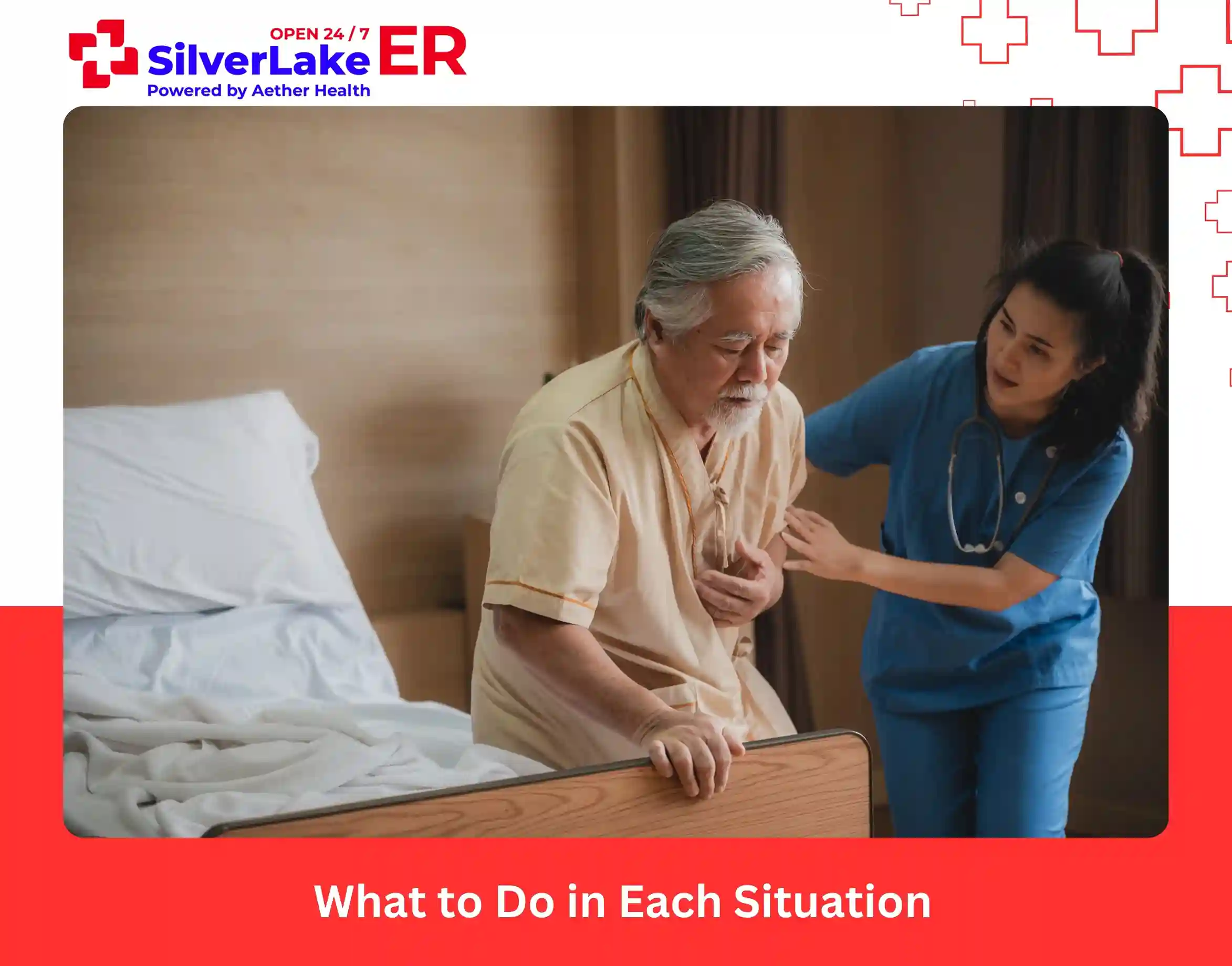
If You Suspect a Heart Attack
- Call emergency services or visit the nearest 24/7 emergency room.
- Keep the person calm and seated.
- Do not delay medical care.
Quick treatment can restore blood flow and reduce heart damage.
- If You Suspect Cardiac Arrest.
- Call emergency services immediately.
- Start CPR right away.
- Use an AED (defibrillator) if available.
Cardiac arrest survival depends on immediate action.
Final Thoughts
So, is cardiac arrest a heart attack?
No, they are two different conditions with different causes and symptoms. A heart attack is caused by blocked blood flow, while cardiac arrest is caused by the heart suddenly stopping due to an electrical issue.
Recognizing the difference can save lives, because each condition requires a different and immediate response.
FAQs
Is cardiac arrest the same as a heart attack?
No, cardiac arrest is when the heart stops beating, while a heart attack is caused by blocked blood flow.
Can you survive cardiac arrest?
Yes, but only with immediate treatment like CPR and defibrillation.
Which is more dangerous, heart attack or cardiac arrest?
Cardiac arrest is more immediately life-threatening because the heart stops completely.
Can a heart attack turn into cardiac arrest?
Yes, a heart attack can trigger cardiac arrest if it disrupts the heart’s rhythm.
Do both conditions require emergency care?
Yes, both are medical emergencies and require immediate treatment.