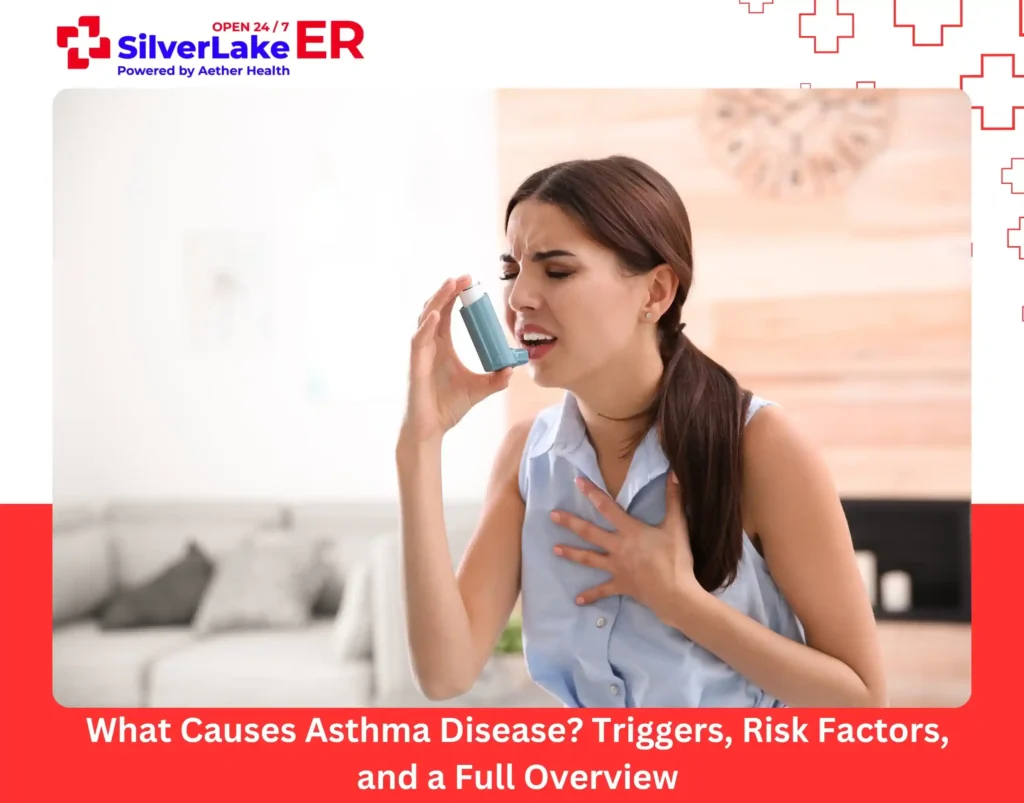
Asthma affects more than 25 million Americans, including roughly 1 in 12 children. It’s one of the most common chronic conditions in the country and one of the most misunderstood. People often ask, “What causes asthma?” expecting a single answer. The truth is more layered: asthma develops because of a combination of genetics, biology, and environment, and once you have it, separate factors trigger the attacks themselves.
This guide explains both halves of the answer: what causes someone to develop asthma in the first place, and what causes an asthma attack to happen on a given day. At Aether Health – Silverlake ER in Pearland, TX, our board-certified emergency physicians treat severe asthma attacks 24/7 but the more you understand the disease, the better equipped you are to recognize warning signs and reduce your risk.
1. What Asthma Actually Is
Asthma is a chronic inflammatory disease of the airways and the tubes that carry air in and out of the lungs. In someone with asthma, these airways are persistently irritated and overly sensitive. When triggered, three things happen at once:
- The airway lining swells, narrowing the passage air must travel through.
- The muscles around the airways tighten, squeezing them further.
- Thick mucus is produced, partially clogging what’s left of the passage.
The result is the classic asthma attack: wheezing, coughing, chest tightness, and shortness of breath. Between attacks, the airways still aren’t fully normal; they remain inflamed and ready to react. This is why asthma is considered a chronic disease, not just an occasional condition.
Key concept: Asthma isn’t just about attacks. It’s a long-term inflammatory state that requires ongoing management even when you feel fine.
2. The Two-Part Answer: Why “Cause” Isn’t One Thing
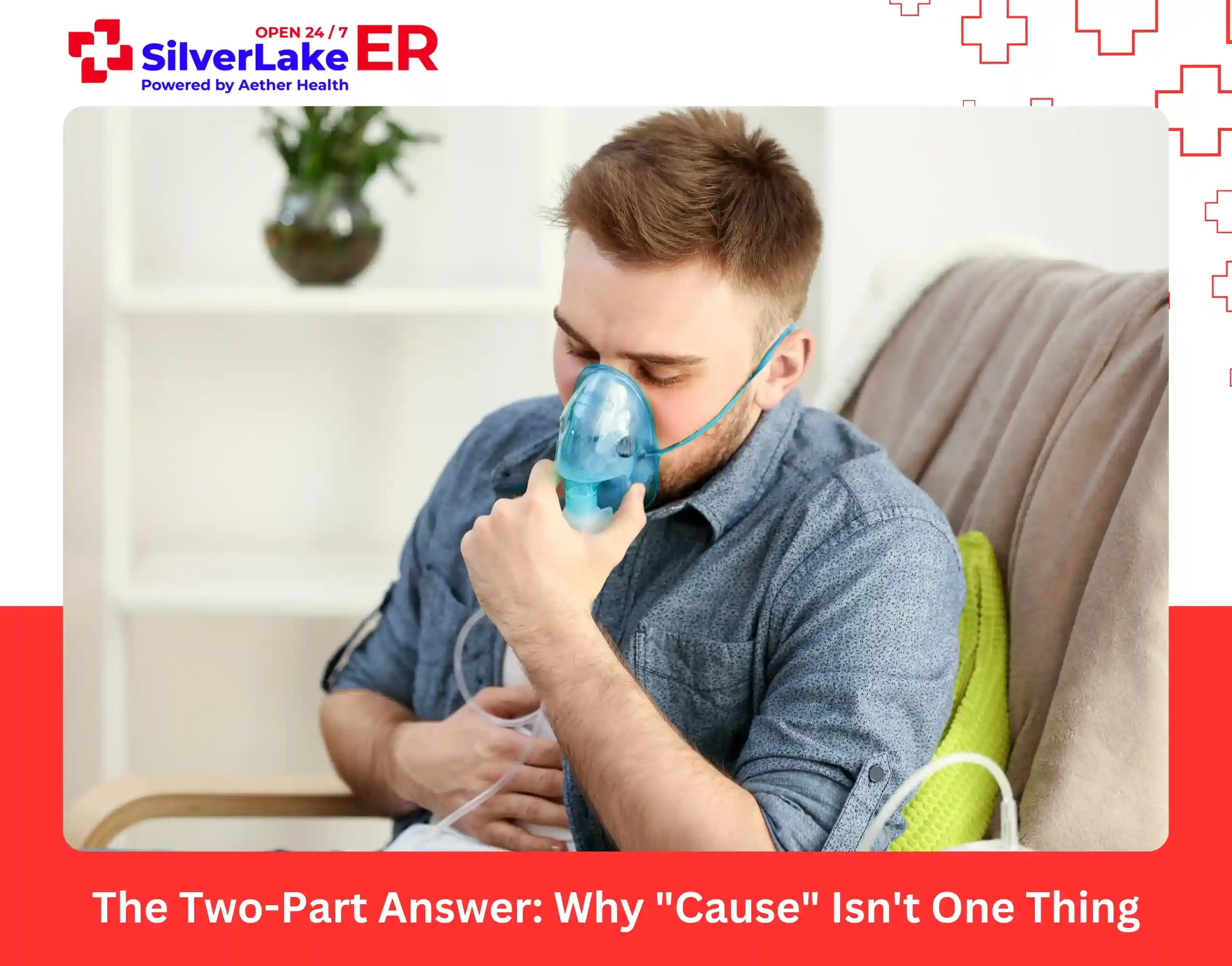
When people ask what causes asthma, they’re usually asking two different questions without realizing it:
- Why did I develop asthma in the first place? This is about underlying causes the genetic, biological, and environmental factors that made your airways susceptible.
- Why am I having an attack right now? This is about triggers the specific exposures or events that activate symptoms in someone who already has asthma.
Both matter, and both are different from risk factors (things that increase your statistical likelihood of developing asthma without directly causing it). Understanding the distinction is the foundation of good asthma management. The next three sections walk through underlying causes, environmental causes, and triggers each one separately.
3. Genetic and Biological Causes
Asthma has a strong hereditary component. If one or both of your parents have asthma, your chances of developing it are significantly higher than someone with no family history. But genetics alone don’t determine your fate they determine your susceptibility.
Family History and Inherited Risk
Children with one asthmatic parent have roughly 3 to 6 times the risk of developing asthma compared to those with no family history. With two asthmatic parents, the risk is even higher. Multiple genes have been identified that influence airway sensitivity and immune system response, though no single “asthma gene” exists.
Atopy: The Tendency Toward Allergic Conditions
Atopy is a genetic predisposition to develop allergic conditions like asthma, eczema, and hay fever. People with atopy tend to have an immune system that overreacts to harmless substances like pollen, dust, or animal dander. The connection is strong enough that doctors often refer to the “atopic triad” asthma, eczema, and allergic rhinitis frequently appearing together in the same person or family.
Immune System Differences
Many asthma cases involve an overactive type-2 immune response, the same immune pathway involved in allergies. The body identifies harmless substances as threats and launches an inflammatory response that affects the airways.
Lung Development and Early Biology
Premature birth, low birth weight, and respiratory infections in infancy can all affect lung development in ways that increase asthma risk later in life. Children whose lungs didn’t fully develop in utero or in early infancy are more likely to have airway sensitivity that persists.
4. Environmental Causes
Genetics load the gun. Environment pulls the trigger. Many people with a genetic predisposition to asthma would never develop it without certain environmental exposures especially in early life.
Air Pollution
Long-term exposure to outdoor air pollution vehicle exhaust, industrial emissions, ozone, particulate matter is strongly linked to higher asthma rates. Children who grow up near major roadways or in heavily polluted areas have measurably higher asthma incidence.
Tobacco Smoke Exposure
Both maternal smoking during pregnancy and secondhand smoke exposure in childhood significantly increase the risk of developing asthma. Tobacco smoke damages developing lungs and primes the airways for chronic inflammation.
Early Childhood Respiratory Infections
Serious viral respiratory infections in infancy particularly RSV (respiratory syncytial virus) and rhinovirus are associated with a higher risk of developing asthma later. The infections may damage developing airways or alter immune system development.
Indoor Air Quality and Allergens
Persistent exposure to indoor allergens dust mites, cockroach particles, mold, pet dander can both cause asthma development and worsen existing asthma. Poor ventilation, damp environments, and older homes can all contribute.
Occupational Exposures
Adult-onset asthma is often triggered by workplace exposures: industrial chemicals, dust from grain or wood, paints and solvents, latex, or flour. This is called occupational asthma and accounts for an estimated 10–15% of adult cases.
Obesity
Obesity, particularly in children, is associated with higher asthma rates. The reasons are still being studied but likely include inflammatory effects of excess body fat, mechanical pressure on the lungs, and metabolic changes affecting airway function.
5. Common Triggers That Set Off Asthma Attacks
Once you have asthma, triggers are what set off symptoms day to day. Triggers don’t cause the disease they activate it. Knowing your personal triggers is the foundation of asthma control.
Allergic Triggers
- Pollen trees, grasses, weeds (seasonal)
- Dust mites (in bedding, carpets, upholstery)
- Pet dander cats, dogs, rodents
- Mold spores (damp areas, basements, bathrooms)
- Cockroach particles
Irritant Triggers
- Tobacco smoke and vaping aerosols
- Air pollution and smog
- Strong odors perfumes, cleaning products, paint
- Smoke from wildfires or fireplaces
- Chemical fumes
Activity and Environmental Triggers
- Exercise, especially in cold air
- Cold, dry air
- Sudden weather changes
- High humidity
Health-Related Triggers
- Respiratory infections cold, flu, COVID-19, sinus infections
- Acid reflux (GERD)
- Certain medications aspirin, NSAIDs, beta blockers in some patients
- Hormonal changes menstruation, pregnancy
Emotional Triggers
- Strong emotions laughter, crying, anger, anxiety
- Stress, both acute and chronic
6. Risk Factors That Increase Your Chances
Risk factors are different from causes. A risk factor doesn’t make you develop asthma it raises your statistical likelihood. Some you can change; some you can’t.
Risk Factors You Can’t Change
- Family history of asthma or allergies
- Personal history of eczema or hay fever
- Being born prematurely or with low birth weight
- Biological sex boys are more likely to develop asthma in childhood; women are more likely to develop it as adults
- Race and ethnicity asthma rates are higher in Black and Puerto Rican communities, often tied to environmental and healthcare access factors
Risk Factors You Can Influence
- Tobacco smoke exposure the single most impactful modifiable factor
- Air pollution exposure where you live and work matters
- Obesity weight management can reduce risk and improve control
- Occupational exposures proper PPE and ventilation reduce occupational asthma
- Indoor allergen exposure regular cleaning, dust mite covers, mold control
7. Types of Asthma (and Why the Cause Varies by Type)
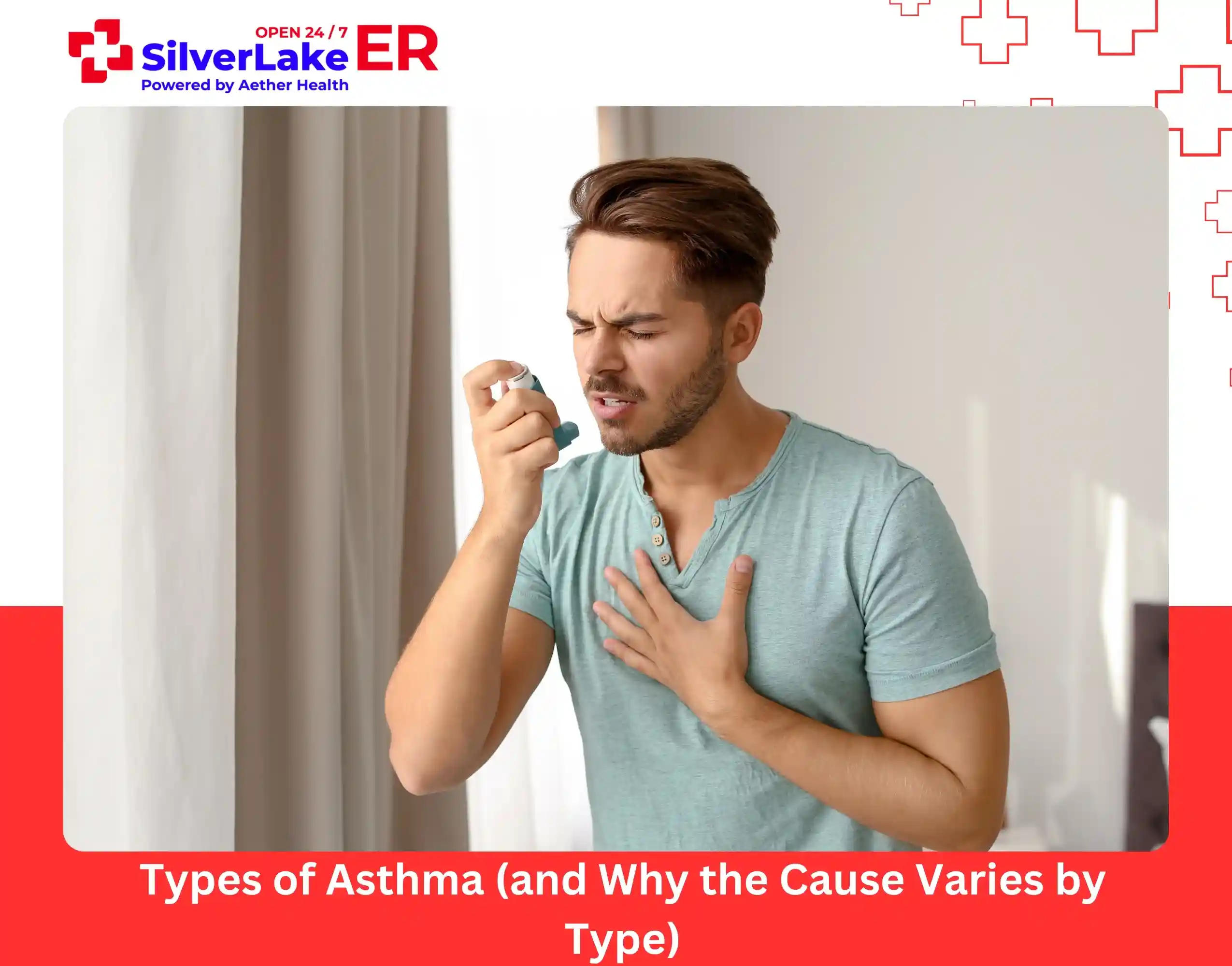
Not all asthma is the same. The cause of asthma in one person can be very different from the cause in another, even when the symptoms look similar.
Allergic (Extrinsic) Asthma
The most common type. Triggered by allergens like pollen, dust mites, mold, or pet dander. Usually starts in childhood and is closely linked to other allergic conditions. People with allergic asthma typically respond well to inhaled corticosteroids and allergen avoidance.
Non-Allergic (Intrinsic) Asthma
Triggered by factors other than allergens respiratory infections, exercise, cold air, stress, or strong odors. More common in adult-onset cases. The underlying immune response is different from allergic asthma, and treatment may need to be tailored.
Exercise-Induced Asthma
Symptoms triggered specifically by physical activity, often worse in cold, dry air. Some people have asthma symptoms only during exercise. This is sometimes called exercise-induced bronchoconstriction (EIB).
Occupational Asthma
Caused by workplace exposures chemicals, dust, fumes, or biological materials. Often improves when the person is away from work for extended periods. Common in healthcare workers, bakers, hairdressers, factory workers, and farmers.
Cough-Variant Asthma
Presents primarily as a persistent dry cough rather than wheezing. Often misdiagnosed because the classic asthma symptoms are absent. Can be a precursor to more typical asthma.
Severe or Refractory Asthma
A subset of patients whose asthma doesn’t respond well to standard treatment. They often require specialized care, biological medications, and pulmonologist oversight. People with severe asthma are at higher risk of life-threatening attacks.
8. Warning Signs of a Serious Asthma Attack
Asthma exists on a spectrum. Some attacks resolve with a few puffs of a rescue inhaler. Others escalate quickly into respiratory failure. Recognizing when an attack has become an emergency can save a life.
Get to an ER Immediately If You Experience:
- Severe shortness of breath or rapid, shallow breathing
- Inability to speak in full sentences
- Lips or fingernails turning blue or gray
- Severe chest tightness or pain
- Rescue inhaler isn’t relieving symptoms
- Symptoms continue to worsen despite medication
- Drowsiness or confusion during an attack
- Wheezing that gets quieter even as symptoms worsen (a dangerous sign it may mean air movement has dropped dangerously)
An asthma attack that doesn’t respond to a rescue inhaler is a medical emergency. Don’t wait it out. Walk into Aether Health – Silverlake ER and you’ll be seen immediately.
9. Emergency Asthma Care at Aether Health – Silverlake ER
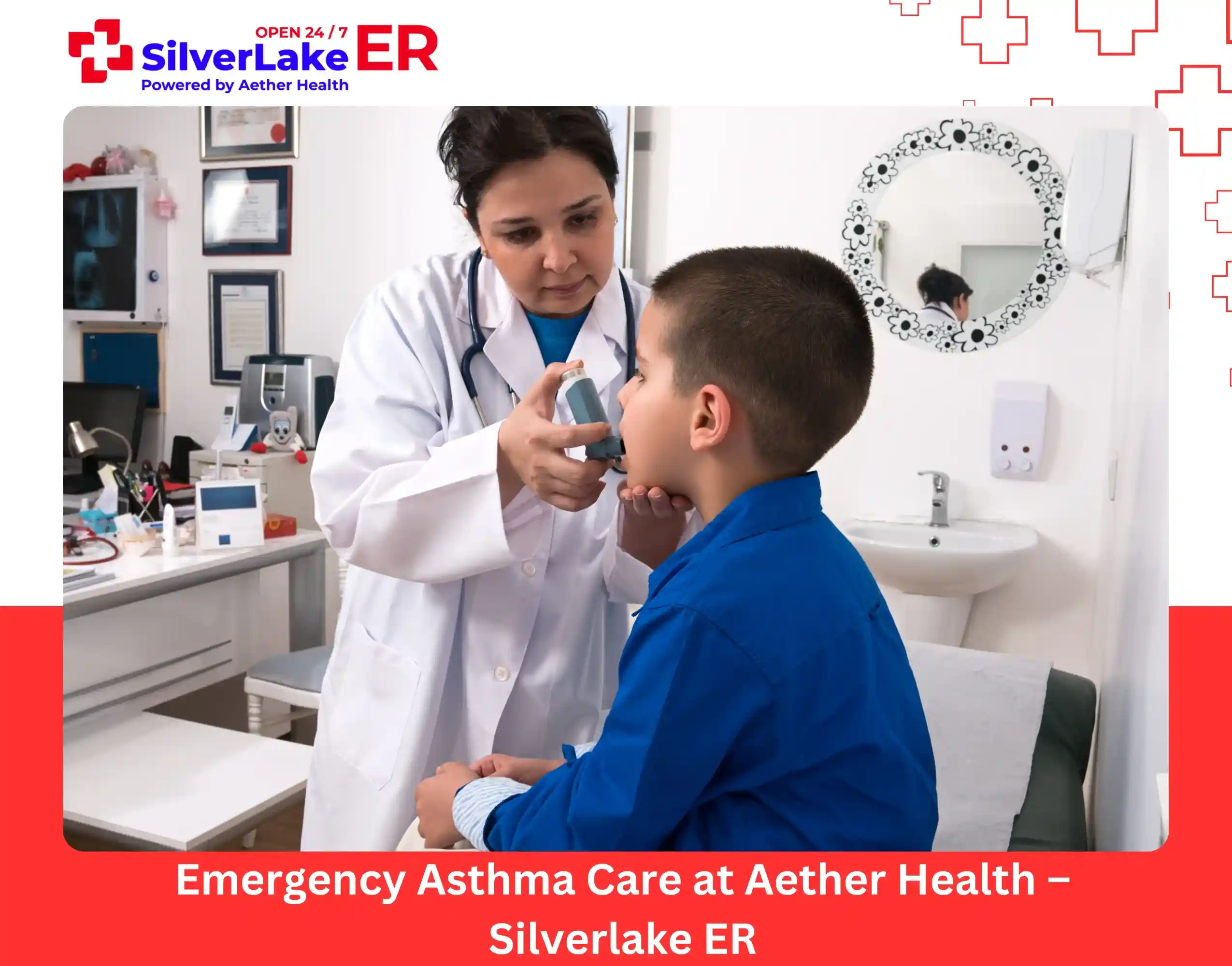
Severe asthma attacks can become life-threatening within minutes. When breathing becomes critically impaired, time matters more than transportation distance. As a full-service freestanding ER in Pearland, TX, Aether Health – Silverlake ER is equipped to deliver hospital-level respiratory emergency care 24/7 without the long waits typical of major hospital emergency departments.
Our asthma emergency capabilities include:
- Rapid evaluation by board-certified emergency physicians
- Continuous oxygen saturation and respiratory monitoring
- Nebulized bronchodilator therapy (albuterol, ipratropium)
- IV corticosteroids for severe inflammation
- Oxygen therapy and emergency airway management
- Chest X-ray and diagnostic imaging on-site
- On-site laboratory for arterial blood gas and infection workup
- Pediatric and adult emergency care under one roof
- Direct hospital transfer coordination when admission is needed
We also operate on a no balance billing policy for insured patients because medical emergencies shouldn’t come with billing ambushes.
Frequently Asked Questions
Can asthma be cured?
Currently, no. Asthma is a chronic condition that can be managed but not cured. The good news is that with proper treatment and trigger management, most people with asthma can lead normal, active lives. Some children appear to outgrow asthma as their airways mature, though some symptoms can return later in life.
Is asthma genetic or environmental?
Both. Most cases involve a genetic predisposition activated by environmental exposures. Having a parent with asthma significantly raises your risk, but it doesn’t guarantee you’ll develop the disease and many people develop asthma without any family history.
Can asthma develop in adulthood?
Yes. While asthma often starts in childhood, adult-onset asthma is increasingly common, especially in women. It can be triggered by respiratory infections, occupational exposures, hormonal changes, or environmental factors.
Can stress alone cause an asthma attack?
Stress doesn’t cause asthma, but it can absolutely trigger attacks in people who already have it. Anxiety and strong emotions can change breathing patterns and increase inflammation in ways that worsen symptoms.
How do I know if my asthma is well controlled?
Well-controlled asthma generally means: minimal daytime symptoms, no nighttime awakenings due to asthma, normal physical activity, no need for rescue inhaler more than twice a week, and no emergency visits. If any of these aren’t true, talk to your physician about adjusting your treatment plan.
Where is Aether Health – Silverlake ER located?
We’re located at 2752 Sunrise Blvd, Pearland, TX 77584, open 24 hours a day, 7 days a week. Call (713) 528-8703 or walk in anytime.
Severe Asthma Attack? Get Emergency Care in Pearland, TX
If you or your child is having an asthma attack that isn’t responding to a rescue inhaler or if breathing is getting worse don’t wait. Walk into Aether Health – Silverlake ER and you’ll be evaluated by a board-certified emergency physician immediately, no appointment or long waits.
📞 Call: (713) 528-8703
📍 Visit: 2752 Sunrise Blvd, Pearland, TX 77584
🌐 Online: sler247.com
🕒 Hours: Open 24/7, 365 days a year
Medical Disclaimer
This article is for general educational purposes only and is not a substitute for professional medical advice, diagnosis, or treatment. Always work with your healthcare provider to develop a personalized asthma action plan. If you or someone near you is experiencing a severe asthma attack, call 911 immediately or go to your nearest emergency room.