
Reviewed by the emergency care team at Aether Health Silverlake ER | 2752 Sunrise Blvd, Pearland, TX 77584 | +1 (713) 528-8703
Call 911 immediately: If you or someone near you is having a severe asthma attack that isn’t responding to a rescue inhaler, cannot speak in full sentences, has blue or gray lips or fingertips, or is losing consciousness call 911 now. Severe asthma attacks can be fatal within minutes. Aether Health Silverlake ER is open 24/7 with on-site respiratory care at 2752 Sunrise Blvd, Pearland, TX 77584.
Asthma isn’t the same for everyone. Doctors classify it into four stages based on how often symptoms occur, how much they affect daily activity, how badly they disrupt sleep, and how much lung function is reduced.
Stage 4 clinically called severe persistent asthma is the most serious category. People with stage 4 asthma face daily symptoms, frequent nighttime flare-ups, significant activity limitation, and a substantially higher risk of life-threatening asthma attacks that require emergency care.
This guide breaks down what stage 4 asthma actually means, how it differs from milder stages, what triggers make it worse, what symptoms to watch for, and when a flare-up crosses into a medical emergency requiring emergency asthma care at Aether Health – Silverlake ER.
Quick Answer: What Is Stage 4 of Asthma?
Stage 4 of asthma also called severe persistent asthma is the most serious classification of asthma. It’s defined by continuous symptoms throughout the day, frequent nighttime awakenings (often more than once a week), significant limitation of physical activity, and lung function (FEV1) that stays below 60% of normal even between attacks. People with stage 4 asthma need daily controller medication and face a substantially higher risk of severe, life-threatening asthma attacks. A rescue inhaler that isn’t working, inability to speak in full sentences, or blue or gray lips are medical emergencies: call 911.
The 4 Stages of Asthma at a Glance
Use this table as a quick reference to understand where stage 4 sits in the overall asthma severity classification. Below it, the detailed breakdown of stage 4 follows.
| Stage | Symptom Frequency | Nighttime Symptoms | Activity Impact |
| Stage 1: Intermittent | ≤2 days per week | ≤2 times per month | No limitation |
| Stage 2: Mild Persistent | >2 days per week but not daily | 3–4 times per month | Minor limitation |
| Stage 3: Moderate Persistent | Daily | More than once a week | Some limitation |
| Stage 4: Severe Persistent | Throughout the day, every day | Often nightly | Extreme limitation |
What Makes Stage 4 Asthma Distinct
Stage 4 asthma isn’t simply stage 3 with worse numbers. Several features make it a qualitatively different category and understanding them helps explain why it requires so much more vigilance.
Symptoms never fully resolve
In earlier asthma stages, symptoms come and go there are stretches of time where the airways feel relatively normal. In stage 4, the underlying inflammation and airway narrowing are always present. Even on “good” days, breathing capacity remains below normal.
Lung function is persistently reduced
Formal lung function testing typically shows FEV1 (forced expiratory volume in one second) below 60% of the predicted normal value in stage 4. That’s a measurable difference from earlier stages, where FEV1 usually remains at or above 80%. Understanding what causes asthma disease helps explain why severe persistent asthma involves this level of chronic airway change.
Higher baseline airway sensitivity
Even mild triggers can cause significant reactions. What might be a nuisance in mild persistent asthma can become a serious flare-up in severe persistent asthma.
Greater risk of life-threatening flare-ups
Stage 4 patients experience severe flare-ups more frequently, and those flare-ups are more likely to escalate to emergencies. Any worsening of baseline symptoms should be taken seriously not treated as “just a bad asthma day.”
Symptoms of Stage 4 Asthma
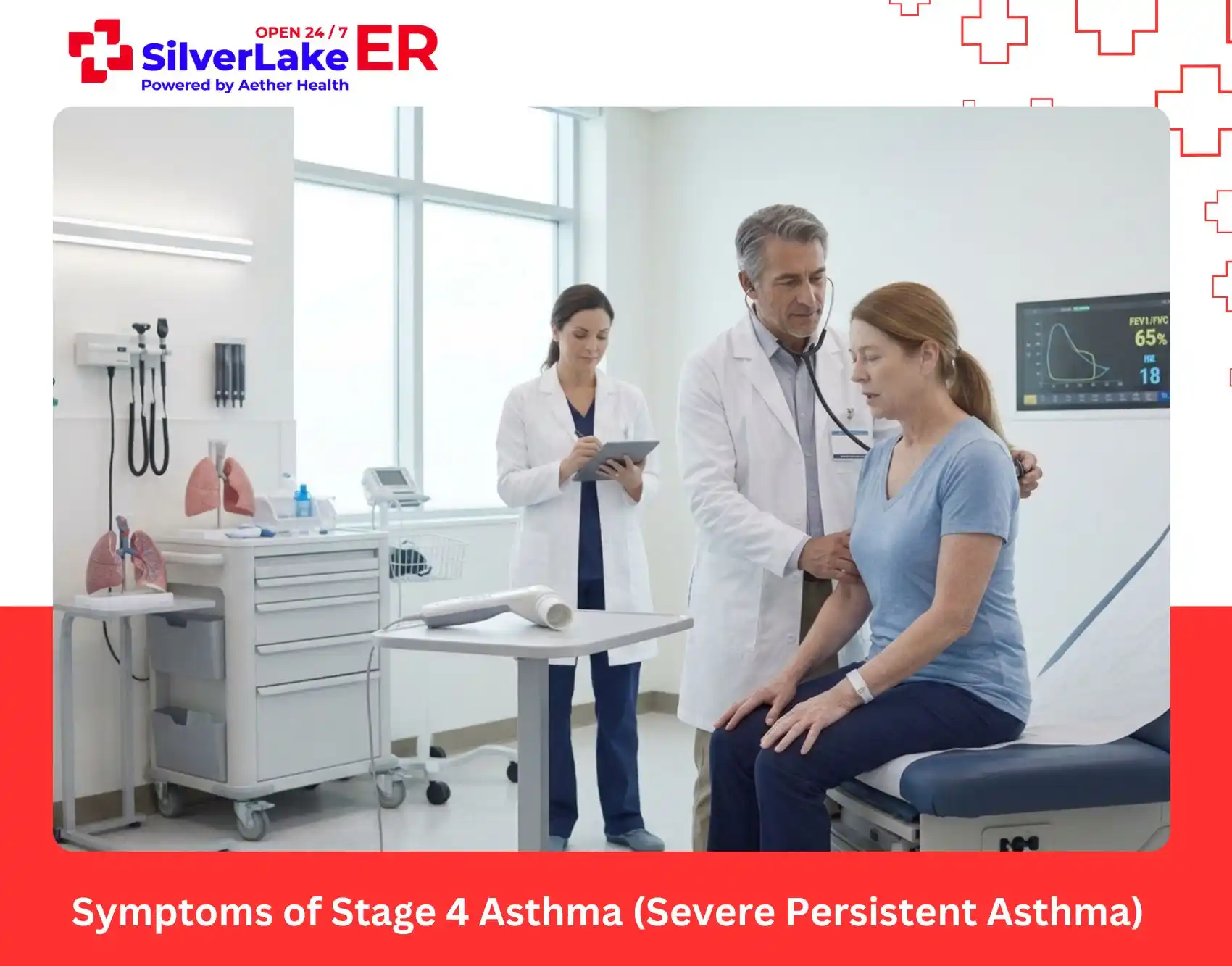
Recognizing the symptom pattern of severe persistent asthma matters for two reasons: awareness of baseline severity, and quick recognition when symptoms worsen beyond that baseline.
Daytime symptoms
- Persistent wheezing throughout the day.
- Chest tightness or a squeezing sensation.
- Shortness of breath at rest or with minimal activity.
- Frequent coughing, especially during exertion or exposure to triggers.
- Fatigue from the sustained effort of breathing.
Nighttime symptoms
Nighttime asthma is particularly common and particularly dangerous in stage 4. Our detailed article on whether sleeping helps asthma explains why symptoms often worsen overnight and what to do about it.
- Waking up several times a week sometimes nightly due to breathing symptoms.
- Coughing that disrupts sleep.
- Difficulty lying flat.
- Morning symptoms that take time to ease after waking.
Activity impact
- Difficulty with everyday tasks like walking uphill, climbing stairs, or carrying groceries.
- Avoidance of exercise due to fear of triggering symptoms.
- Reduced social and work participation.
- Frequent missed school or workdays due to flare-ups.
Triggers That Commonly Affect Stage 4 Asthma
Everyone with asthma has triggers, but stage 4 patients tend to react more strongly and to a wider range of triggers. Knowing your personal triggers is a critical part of managing severe asthma safely.
Environmental triggers
- Air pollution and smog a real issue in the Houston metro area.
- Pollen from trees, grasses, and weeds.
- Dust mites in bedding, carpets, and upholstery.
- Mold spores, especially in humid environments.
- Pet dander.
- Cockroach particles.
Irritant triggers
- Tobacco smoke and vaping aerosols.
- Strong odors perfumes, cleaning products, paint.
- Wood smoke, wildfire smoke, and fireplace smoke.
- Industrial chemical fumes.
Weather and environmental triggers
- Cold, dry air.
- Sudden weather changes.
- High humidity a frequent factor along the Gulf Coast.
- Thunderstorms (a lesser-known but real trigger for some patients).
Health-related triggers
- Respiratory infections cold, flu, COVID-19, sinus infections.
- Acid reflux (GERD).
- Hormonal changes.
- Physical exertion.
- Strong emotions laughter, crying, stress, anxiety.
Risks and Complications of Uncontrolled Stage 4 Asthma
Uncontrolled severe persistent asthma affects more than the lungs. Without close monitoring, several complications become more likely.
Life-threatening asthma attacks
Stage 4 patients are far more likely to have severe attacks that require emergency care or hospitalization. Some attacks can be fatal especially attacks that don’t respond quickly to rescue medications.
Airway remodeling
Long-term airway inflammation can cause permanent structural changes in the airways over time. This is why maintaining good control of asthma even when symptoms feel manageable matters.
Cardiovascular effects
Chronic uncontrolled asthma can affect cardiovascular health. Our article on whether mild asthma can cause high blood pressure covers this connection, and the effects are even more pronounced in severe persistent asthma.
Sleep disruption and downstream effects
Frequent nighttime symptoms disrupt sleep quality, which affects daytime energy, concentration, mood, and overall health. Chronic sleep disruption is a known risk factor for high blood pressure, depression, and cardiovascular disease.
Mental health impact
Living with severe persistent asthma is associated with higher rates of anxiety and depression. The constant vigilance about medication adherence, trigger avoidance, and breathing symptoms can be exhausting. Mental health support is an important part of overall wellbeing for anyone living with severe asthma.
When Stage 4 Asthma Becomes a Medical Emergency
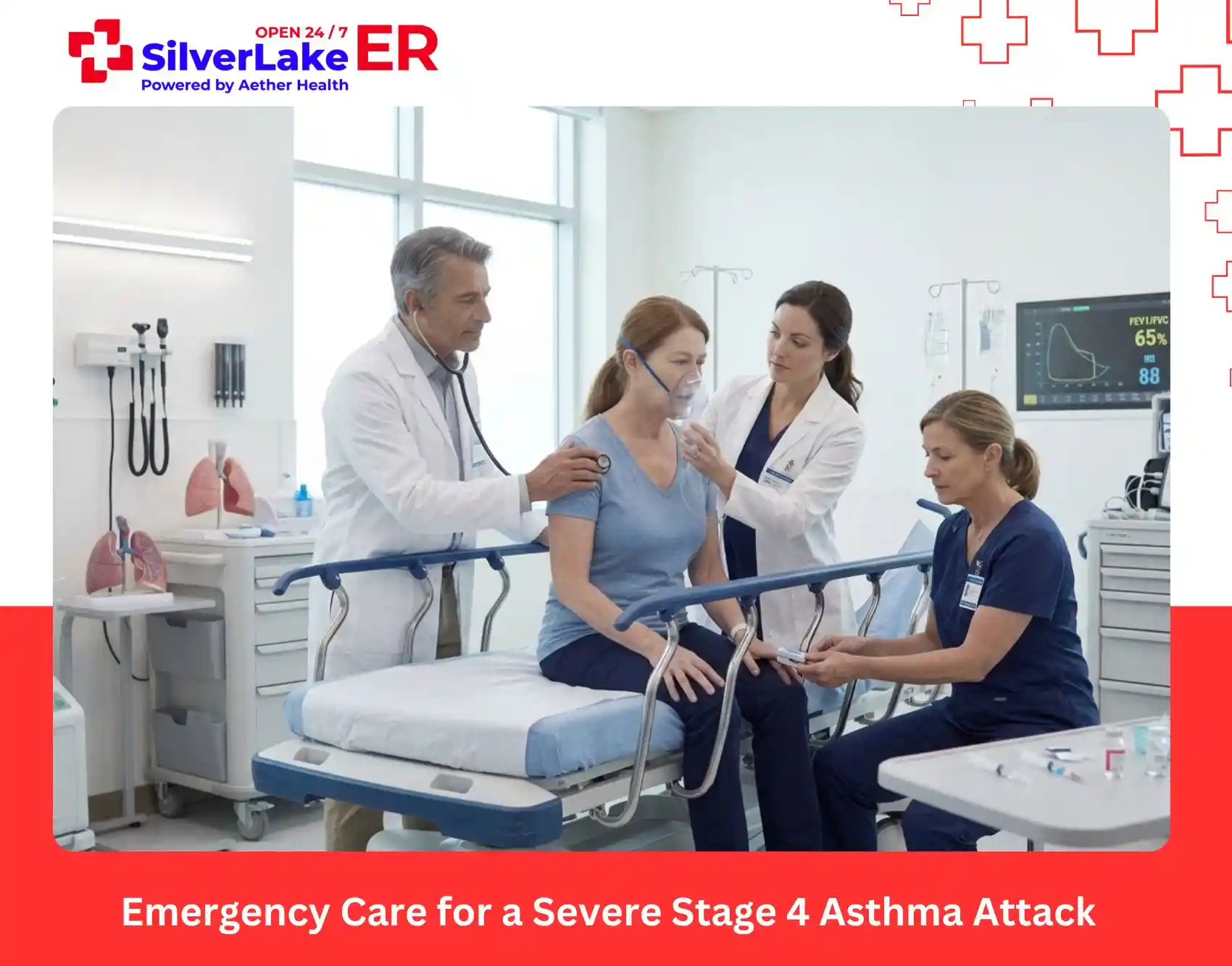
For someone with stage 4 asthma, everyday symptoms are part of life. The critical skill is recognizing when everyday severity has crossed into emergency territory. Watch for these signs.
Go to the ER immediately or call 911 if:
- Your rescue inhaler isn’t relieving symptoms or isn’t relieving them as quickly as usual.
- You can’t speak in full sentences due to shortness of breath.
- Lips or fingernails are turning blue or gray.
- Chest tightness is severe or feels different from usual.
- You feel like you can’t catch your breath even when sitting still.
- You’re using rescue medication far more frequently than your action plan allows.
- Your peak flow reading is in the red zone of your personal action plan.
- You feel drowsy, confused, or unusually tired during a flare-up.
- Wheezing that gets quieter as symptoms worsen a dangerous sign called “silent chest.”
- You feel a sense of impending doom or extreme anxiety about your breathing.
The “silent chest” warning call 911: One of the most dangerous signs during a severe asthma attack is when wheezing gets quieter. This isn’t a good sign. It usually means air movement has dropped so much that there isn’t enough airflow to produce the wheeze. This is a critical medical emergency requiring immediate care.
Get evaluated fast: Aether Health Silverlake ER provides 24/7 severe asthma emergency care with continuous oxygen monitoring, nebulizer therapy, on-site imaging, and board-certified emergency physicians. Call +1 (713) 528-8703 or come to 2752 Sunrise Blvd, Pearland, TX 77584.
Living With Stage 4 Asthma — Awareness Habits
Managing severe persistent asthma is a partnership between the patient and their healthcare team. Certain awareness habits help patients stay alert to changes and respond faster when flare-ups begin.
- Know your baseline. Understand what your “normal” looks like how often you use rescue medication, how far you can walk without symptoms, how often you wake at night. When something changes, catching it early matters.
- Follow your asthma action plan. Every stage 4 patient should have a written action plan from their physician describing what to do at different symptom levels green zone (well), yellow zone (worsening), red zone (emergency).
- Track peak flow. Regular peak flow monitoring provides objective data about how your airways are functioning. A downward trend often precedes a full flare-up by hours or days.
- Identify and avoid personal triggers. Keep a symptom journal to identify patterns.
- Recognize warning signs early. Increased rescue medication use, disturbed sleep, and reduced activity tolerance are all early warning signs of a worsening pattern.
- Know where your nearest 24/7 ER is. For stage 4 patients in the Pearland area, knowing that Aether Health Silverlake ER is open 24/7 with no appointment needed can make a real difference during a severe flare-up.
How Silverlake ER Evaluates Severe Asthma Flare-Ups
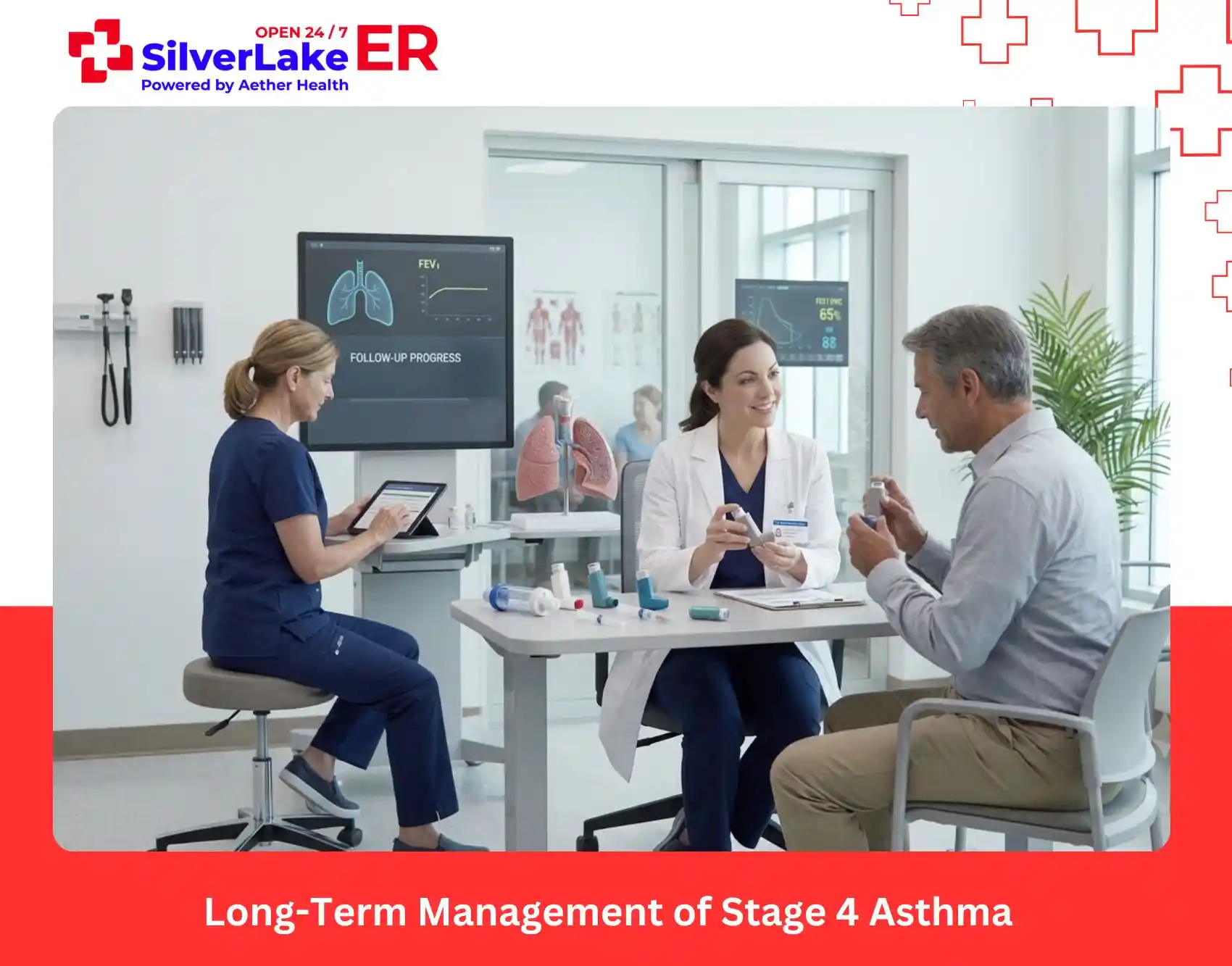
When you come in with a severe asthma flare-up, our 24/7 freestanding ER in Pearland is fully equipped to evaluate breathing, deliver respiratory support, and coordinate care on site with rapid results that determine whether you need immediate intervention, further observation, or admission.
- Rapid respiratory evaluation board-certified emergency physicians assess breathing, oxygen saturation, and lung function within minutes of arrival.
- Continuous oxygen saturation and respiratory monitoring tracks changes in real time throughout your visit.
- Nebulizer therapy and oxygen support delivered immediately to open airways and improve breathing.
- Emergency airway management available when severe attacks require advanced airway support.
- On-site chest X-ray and CT imaging identifies pneumonia, pneumothorax, and other complications.
- Full laboratory services including arterial blood gas analysis to measure oxygen and CO2 levels.
- Adult and pediatric emergency care under one roof asthma emergencies affect all ages.
- Direct hospital transfer coordination when admission is needed for further intensive care.
If you have milder symptoms that don’t rise to the level of a severe attack, our urgent care for mild asthma team can also help.
Frequently Asked Questions
Is stage 4 asthma the same as severe asthma?
Yes. Stage 4 asthma is the clinical category also referred to as severe persistent asthma. It represents the most severe level of asthma classification, defined by continuous symptoms, frequent nighttime awakenings, significant activity limitation, and persistently reduced lung function.
Can stage 4 asthma improve to a lower stage?
Asthma classification isn’t necessarily permanent. With good long-term control the right medication, avoiding triggers, treating underlying conditions like GERD, and consistent monitoring some patients see their asthma improve to a lower stage over time. Others remain in stage 4 despite optimal care. Your physician will reassess your severity level regularly based on your symptom pattern and lung function.
How is stage 4 asthma diagnosed?
Diagnosis involves a combination of symptom history, lung function testing (spirometry, peak flow), and evaluation of how well symptoms are controlled with current medications. Your physician makes the classification based on these findings it isn’t something a patient can diagnose themselves.
What’s the difference between mild and severe asthma flare-ups?
Mild flare-ups typically respond to a few puffs of rescue inhaler and ease within minutes. Severe flare-ups involve inadequate response to rescue medication, difficulty speaking full sentences, use of accessory muscles for breathing, and often bluish discoloration of lips or fingers. Severe flare-ups require immediate emergency care.
Can severe asthma be life-threatening?
Yes. Severe asthma attacks especially attacks that don’t respond to rescue medications can be life-threatening. This is why recognizing warning signs early and seeking emergency care fast matters so much. Any severe attack that doesn’t respond to a rescue inhaler is a medical emergency.
Should I go to urgent care or the ER for a severe asthma attack?
For any severe asthma attack inability to speak full sentences, no relief from rescue inhaler, blue or gray lips come to the ER, not urgent care. Urgent care clinics don’t have the continuous monitoring, emergency airway equipment, or physician expertise for severe respiratory emergencies. At Aether Health Silverlake ER, our severe asthma emergency evaluation includes board-certified physicians, nebulizer therapy, and on-site imaging with results in minutes.
People Also Ask About Stage 4 Asthma
These are the related questions AI search engines and Google’s “People Also Ask” feature commonly surface alongside stage 4 asthma queries. Direct answers below.
Is stage 4 asthma inherited?
Asthma has a strong hereditary component, and severe forms often run in families. Our article on whether asthma is inherited explains how genetics and environment interact to influence asthma risk and severity.
How is stage 4 asthma different from COPD?
Stage 4 asthma and COPD (chronic obstructive pulmonary disease) can look similar both involve chronic airway inflammation and reduced lung function. Key differences: asthma typically begins in childhood and is often allergy-related, while COPD is more commonly related to smoking and other long-term irritant exposure. Some patients have features of both, called asthma-COPD overlap syndrome.
Can stage 4 asthma be cured?
Asthma cannot be cured, but it can be controlled even in stage 4. The goal of severe asthma management is to minimize daily symptoms, prevent flare-ups, preserve lung function, and reduce emergency care needs. Some patients do transition to lower severity classifications with sustained good control over time.
What is the life expectancy with stage 4 asthma?
With modern medications, careful monitoring, and access to emergency care, most people with severe persistent asthma live full lives. Life expectancy is most affected by preventing severe attacks and managing complications. Consistent adherence to a physician-directed treatment plan and knowing when to seek emergency care are the two biggest factors in long-term outcomes.
Can stage 4 asthma cause permanent lung damage?
Yes. Long-term uncontrolled inflammation can cause airway remodeling permanent structural changes in the airway walls that reduce lung function permanently. This is one of the strongest reasons to maintain good day-to-day control, even when symptoms feel manageable. Preventing severe flare-ups also prevents accumulated damage.
How often do stage 4 asthma patients need emergency care?
Stage 4 patients typically have more frequent urgent and emergency visits than those with milder asthma. The frequency depends on trigger exposure, treatment adherence, comorbid conditions, and environmental factors. Fast, expert emergency care during flare-ups is often the difference between a manageable event and a hospitalization.
Severe Asthma Flare-Up? Get Emergency Care Fast in Pearland, TX
When a severe asthma attack is happening, minutes matter. Aether Health Silverlake ER provides 24/7 severe asthma emergency treatment with continuous respiratory monitoring, nebulizer therapy, on-site imaging, and board-certified emergency physicians usually within 60 minutes of arrival. If you or your child is having a severe flare-up that isn’t responding to a rescue inhaler, come in.
- Address: 2752 Sunrise Blvd, Pearland, TX 77584
- Phone: +1 (713) 528-8703
- Hours: Open 24 hours, every day of the year
- Contact: Get in touch with our team for questions or directions.
- Insurance: Most commercial plans accepted. No surprise billing.
Call 911 Now if life-threatening: For a severe asthma attack that isn’t responding to a rescue inhaler, inability to speak in full sentences, blue or gray lips, or loss of consciousness call 911. For urgent but non-emergency asthma concerns, call Aether Health – Silverlake ER at +1 (713) 528-8703 or come to 2752 Sunrise Blvd.