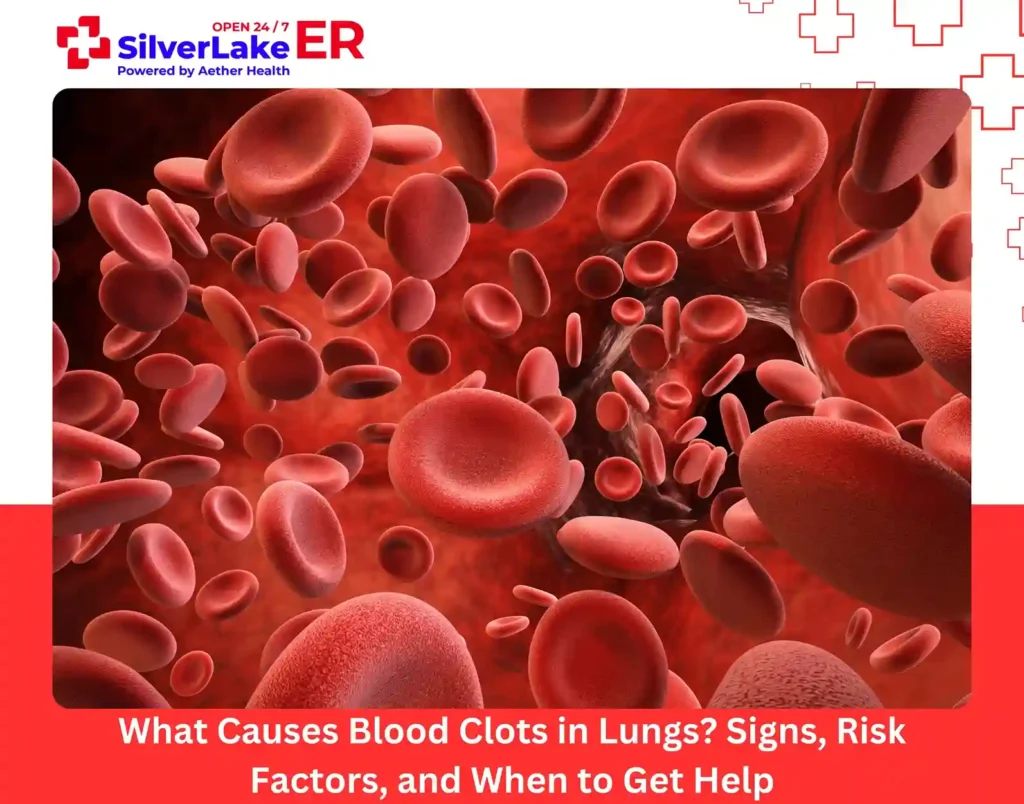
A blood clot in the lungs medically called a pulmonary embolism (PE) happens when a clot lodges in one of the arteries that supply blood to the lungs. The most common cause is a clot that forms in a deep vein, usually in the leg, then breaks loose and travels through the bloodstream until it reaches the pulmonary arteries. Pulmonary embolism is a life-threatening emergency that affects roughly 900,000 Americans each year and causes more than 60,000 deaths.
This guide explains what causes blood clots in the lungs, the warning signs to recognize, the risk factors that increase your likelihood, and what to do if you suspect one.
At Aether Health – Silverlake ER in Pearland, TX, our board-certified emergency physicians diagnose and treat pulmonary embolisms 24/7 and rapid action can mean the difference between recovery and a fatal outcome.
1. The Short Answer: How Blood Clots Reach the Lungs
Here’s what every patient should understand about how lung clots form:
- Most pulmonary embolisms start somewhere else. Roughly 90% originate as deep vein thromboses (DVTs) in the legs or pelvis.
- The clot breaks loose and travels through the venous system, passes through the right side of the heart, and lodges in a pulmonary artery.
- Other less common causes include fat from broken bones, air bubbles from injuries or procedures, tumor cells, or infected tissue (septic emboli).
- Many people have no obvious symptoms beforehand. The first warning sign of a clot can be the pulmonary embolism itself.
- PE is a true medical emergency. Large clots can be fatal within minutes; smaller clots can still cause permanent lung damage.
Bottom line: If you have sudden shortness of breath, chest pain that worsens with deep breathing, or are coughing up blood call 911 or visit nearest Blood Clots Emergency Room immediately. A pulmonary embolism cannot wait.
2. What a Pulmonary Embolism Actually Is
Your lungs receive oxygen-poor blood from the right side of the heart through the pulmonary arteries. This blood absorbs oxygen and releases carbon dioxide before returning to the left side of the heart to be pumped throughout the body. The whole system relies on uninterrupted blood flow through those pulmonary vessels.
A pulmonary embolism happens when a clot or other material blocks one or more of these arteries. The blocked region of lung tissue can no longer participate in gas exchange. Depending on the size and number of clots involved, the consequences range from mild oxygen drops and chest discomfort to complete cardiovascular collapse.
When a large clot blocks a main pulmonary artery, the right side of the heart suddenly has to pump against enormous resistance. Heart strain follows. Blood pressure can crash. Cardiac arrest can follow within minutes. This is why PE is one of the most time-sensitive emergencies in medicine.
3. The Most Common Cause: A Clot That Travels
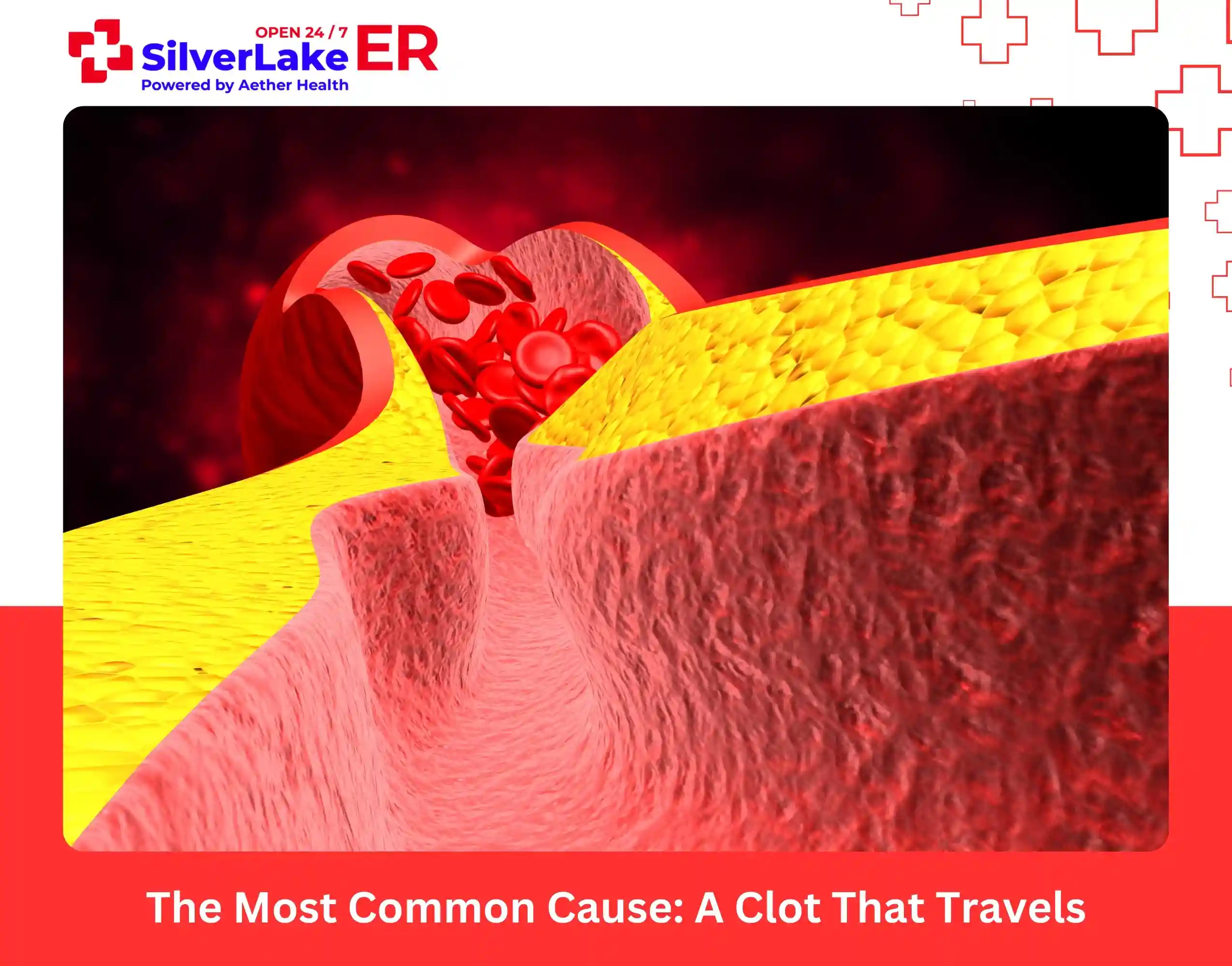
The overwhelming majority of pulmonary embolisms about 9 out of 10 start as deep vein thromboses (DVTs). Understanding this pathway makes everything else about PE prevention and recognition easier to grasp.
Step 1: A DVT Forms in a Deep Vein
DVTs most often form in the deep veins of the leg or pelvis. Common triggers include long periods of immobility (long flights, post-surgery recovery, bed rest), pregnancy, certain medications, cancer, and inherited clotting disorders. Some patients have no symptoms; others experience leg swelling, pain, warmth, or skin discoloration.
Step 2: A Piece Breaks Loose
Clots aren’t always stable. Movement, changes in blood flow, or simple chance can cause a fragment to detach from the original clot. Once free, it becomes an embolus, a moving clot traveling through the bloodstream.
Step 3: It Travels Through the Heart
The embolus follows venous blood flow back to the heart. It enters the right atrium, passes through to the right ventricle, and is pumped out toward the lungs through the pulmonary artery.
Step 4: It Lodges in a Pulmonary Artery
The pulmonary arteries branch into progressively smaller vessels. The clot continues forward until it reaches a vessel too narrow to pass through and gets stuck. The blockage stops blood from reaching the lung tissue beyond it. From there, the medical emergency begins.
Key insight: A pulmonary embolism isn’t a separate disease from DVT it’s the same condition reaching its most dangerous stage. This is why preventing and treating DVTs is also the most effective way to prevent PE.
4. Other Direct Causes of Lung Clots
While DVT is by far the most common cause, several other types of emboli can also block the pulmonary arteries. They’re less frequent but worth knowing.
Fat Embolism
Fat droplets can enter the bloodstream after major trauma particularly long-bone fractures (femur, hip) and pelvic fractures. The fat travels through the venous system and lodges in the lungs. Fat embolism syndrome typically appears 24 to 72 hours after the injury and can cause respiratory distress, confusion, and skin rashes.
Air Embolism
Air bubbles can enter the bloodstream through certain injuries, surgical procedures, IV lines, or rapid changes in pressure (scuba diving). When enough air reaches the pulmonary arteries, it can block blood flow with similar consequences to a blood clot.
Tumor Cell Embolism
Cancer cells from primary tumors can break off, enter the bloodstream, and travel to the lungs. Beyond causing PE-like symptoms, this is also one of the mechanisms by which cancer spreads.
Septic Embolism
Fragments of infected tissue sometimes from infected heart valves (endocarditis) or infected IV sites can break off and travel to the lungs. These cause both blockage and infection at the same time, requiring antibiotic treatment in addition to standard PE care.
Amniotic Fluid Embolism
A rare but serious complication of childbirth where amniotic fluid enters the maternal bloodstream and reaches the lungs. It’s unpredictable, hard to prevent, and a leading cause of maternal mortality in developed countries.
5. Risk Factors That Lead to Lung Clots
Risk factors don’t directly cause pulmonary embolism; they raise the statistical likelihood. Knowing your personal risk profile helps you and your physician make decisions about prevention.
Risk Factors You Can’t Change
- Age Risk rises significantly after 60.
- Family or personal history of clots Previous DVT or PE, or a family history of unexplained clots, dramatically raises risk.
- Inherited clotting disorders Factor V Leiden, prothrombin gene mutations, antithrombin deficiency, protein C or S deficiency.
- Cancer and cancer treatment Certain cancers and chemotherapy regimens are strong PE risk factors.
- Pregnancy and postpartum Hormonal and circulatory changes raise PE risk for up to 12 weeks after delivery.
Risk Factors You Can Influence
- Prolonged immobility Long flights, road trips, bed rest, hospital stays, or surgery.
- Recent surgery Especially orthopedic procedures, abdominal surgery, and major trauma surgery.
- Obesity Extra weight places pressure on veins and increases inflammation.
- Smoking Damages vessel linings and makes blood thicker.
- Estrogen-containing medications Birth control pills and hormone replacement therapy, especially when combined with smoking.
- Heart and lung disease Heart failure, COPD, and other chronic conditions raise PE risk.
- Dehydration Concentrated, slow-moving blood is more prone to clotting.
6. Symptoms and Warning Signs to Know
Pulmonary embolism is sometimes called “the great masquerader” because its symptoms can mimic many other conditions, including heart attack, anxiety, pneumonia, and even just being out of shape. Knowing the patterns can save your life.
Most Common Symptoms
- Sudden shortness of breath at rest or with mild activity
- Sharp chest pain that worsens with deep breathing, coughing, or movement
- Coughing sometimes with blood-streaked sputum
- Rapid heartbeat or palpitations
- Lightheadedness, dizziness, or fainting
- Unexplained sweating
- Sense of impending doom or unusual anxiety
Symptoms Often Found With PE
- Swelling, redness, or pain in one leg (suggesting an underlying DVT)
- Bluish discoloration of the lips or fingertips
- Low blood pressure or signs of shock
- Confusion, especially in older patients
Subtle Signs That Are Easy to Miss
Not every PE looks dramatic. Smaller clots can cause mild symptoms that are easy to dismiss:
- Vague chest discomfort, especially after recent surgery or travel
- Fatigue and exercise intolerance that’s worse than usual
- Mild persistent cough
- Slight breathlessness only with activity
If you have any combination of these symptoms especially after surgery, long travel, or with known clot risk factors get to an ER immediately. PE doesn’t wait, and small clots can rapidly become large ones.
7. How Pulmonary Embolisms Are Diagnosed
Diagnosing PE quickly is essential. At an ER, you can expect a combination of clinical evaluation and rapid imaging:
- Physical examination and history Vital signs, risk factor assessment, and a focused symptom review.
- D-dimer blood test Measures a marker of clot breakdown. Elevated levels can indicate active clotting.
- CT pulmonary angiogram (CTPA) The gold standard imaging test for PE. Uses contrast dye and a CT scan to visualize clots in pulmonary arteries.
- Ultrasound of the legs Identifies an underlying DVT that may be the source of the PE.
- EKG Helps rule out heart attack and may show strain patterns associated with PE.
- Echocardiogram Assesses the strain on the right side of the heart in severe cases.
The whole diagnostic workup can typically be completed within an hour at a well-equipped ER far faster than waiting for outpatient testing.
8. Treatment and Recovery
Treatment depends on the size, location, and severity of the clot, as well as the patient’s overall health.
Anticoagulant Therapy (Blood Thinners)
The mainstay of PE treatment. Drugs like heparin, enoxaparin, apixaban, rivaroxaban, and warfarin prevent the clot from growing and stop new clots from forming while the body’s own systems gradually dissolve the existing clot. Most patients continue anticoagulation for at least 3 months sometimes longer.
Thrombolytic Therapy (Clot-Busters)
Used in severe, life-threatening PE. Drugs like tPA actively dissolve large clots. They carry significant bleeding risks and are reserved for cases where the benefit clearly outweighs the risk typically large “saddle” PEs or patients with cardiovascular collapse.
Catheter-Directed Procedures
For some severe PEs, a catheter is threaded directly into the pulmonary artery to deliver concentrated medication or mechanically remove the clot. This approach is increasingly used in specialized centers.
IVC Filters
When a patient can’t take anticoagulants, an inferior vena cava (IVC) filter may be placed to catch clots traveling from the legs before they reach the lungs.
Recovery
Most patients recover well with appropriate treatment, though recovery can take weeks to months. Many will need to remain on anticoagulants long-term. Some patients develop chronic complications like post-PE syndrome or pulmonary hypertension, which require ongoing specialist care.
9. Emergency Pulmonary Embolism Care at Aether Health – Silverlake ER
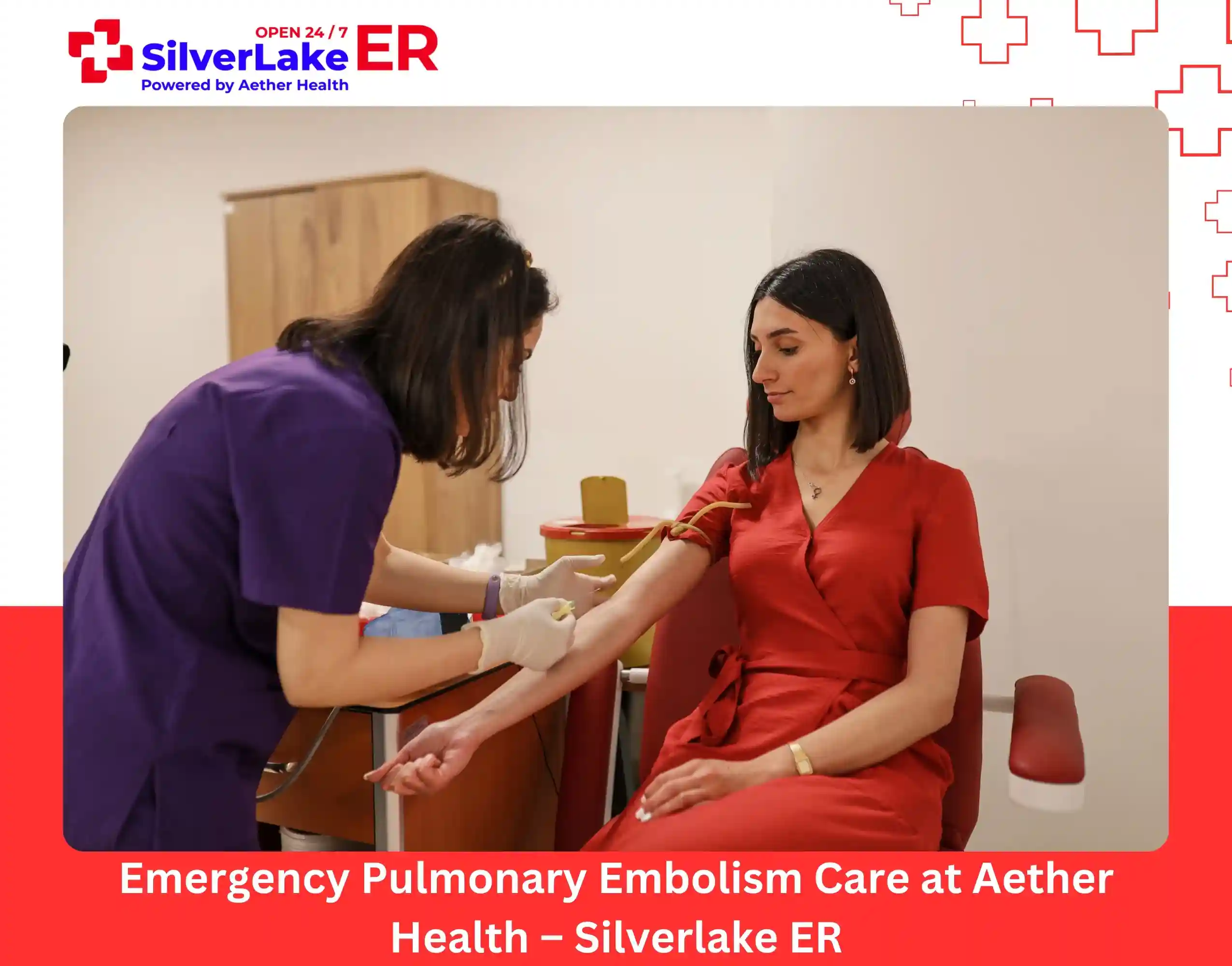
Pulmonary embolism is one of the most time-critical emergencies in medicine. Long ER waits at major hospitals can mean dangerous delays. As a full-service freestanding ER in Pearland, TX, Aether Health – Silverlake ER is equipped to diagnose and stabilize pulmonary embolisms 24/7 without the long waits typical of major hospital emergency departments.
Our PE emergency capabilities include:
- Rapid evaluation by board-certified emergency physicians
- On-site CT imaging for CT pulmonary angiogram (CTPA)
- On-site ultrasound for DVT evaluation
- Full laboratory services including rapid D-dimer testing
- Continuous cardiac, oxygen, and vital sign monitoring
- Anticoagulant therapy and emergency stabilization
- Emergency airway and circulatory support
- Direct hospital transfer coordination for cases requiring admission or specialty intervention
We also operate on a no balance billing policy for insured patients because medical emergencies shouldn’t come with billing ambushes.
Frequently Asked Questions
Can a pulmonary embolism happen without any warning?
Yes. Many people have no symptoms of an underlying DVT before the PE occurs. The first warning sign can be sudden shortness of breath or chest pain. This is part of why awareness of risk factors matters knowing you’re at elevated risk lets you and your physician take preventive steps.
How fast can a pulmonary embolism become fatal?
Large pulmonary embolisms can cause cardiac arrest within minutes. Most fatal PEs occur within the first hour of symptoms. This is why immediate ER evaluation is essential the longer you wait, the higher the risk.
Can pulmonary embolism happen in young or otherwise healthy people?
Yes. While risk rises with age, PE can occur at any age, particularly in patients with inherited clotting disorders, those taking estrogen-containing birth control, pregnant or postpartum women, smokers, or anyone after recent surgery or long travel. PE is not just a disease of older adults.
Is a pulmonary embolism the same thing as a heart attack?
No. A heart attack is caused by a clot blocking an artery that supplies the heart muscle itself. A pulmonary embolism is a clot blocking an artery that supplies the lungs. The two can have overlapping symptoms particularly chest pain and shortness of breath which is why proper diagnostic testing is essential.
Can I prevent a pulmonary embolism?
Largely, yes by preventing the DVTs that cause most PEs. Strategies include staying hydrated, moving regularly (especially during travel), maintaining a healthy weight, not smoking, and following your physician’s post-surgery mobility plans. For those with high risk, anticoagulant medication may be prescribed preventively.
Where is Aether Health – Silverlake ER located?
We’re located at 2752 Sunrise Blvd, Pearland, TX 77584, open 24 hours a day, 7 days a week. Call (713) 528-8703 or walk in anytime.
Suspect a Blood Clot in Your Lungs? Get Seen Immediately in Pearland, TX
If you have sudden shortness of breath, chest pain that worsens with breathing, coughing up blood, or any other warning sign of a pulmonary embolism don’t wait. Walk into Aether Health – Silverlake ER and you’ll be evaluated by a board-certified emergency physician immediately. No appointment, no long waits.
📞 Call: (713) 528-8703
📍 Visit: 2752 Sunrise Blvd, Pearland, TX 77584
🌐 Online: sler247.com
🕒 Hours: Open 24/7, 365 days a year
Medical Disclaimer
This article is for general educational purposes only and is not a substitute for professional medical advice, diagnosis, or treatment. Pulmonary embolism is a medical emergency. If you suspect a blood clot in the lungs, call 911 immediately or go to your nearest emergency room do not wait to see if symptoms improve.