Reviewed by the emergency care team at Aether Health – Silverlake ER | 2752 Sunrise Blvd, Pearland, TX 77584 | +1 (713) 528-8703
Call 911 immediately: If someone is choking and cannot cough, speak, or breathe, call 911 right now and begin back blows and abdominal thrusts. If they lose consciousness, start CPR. Aether Health – Silverlake ER is open 24/7 with on-site airway assessment at 2752 Sunrise Blvd, Pearland, TX 77584.
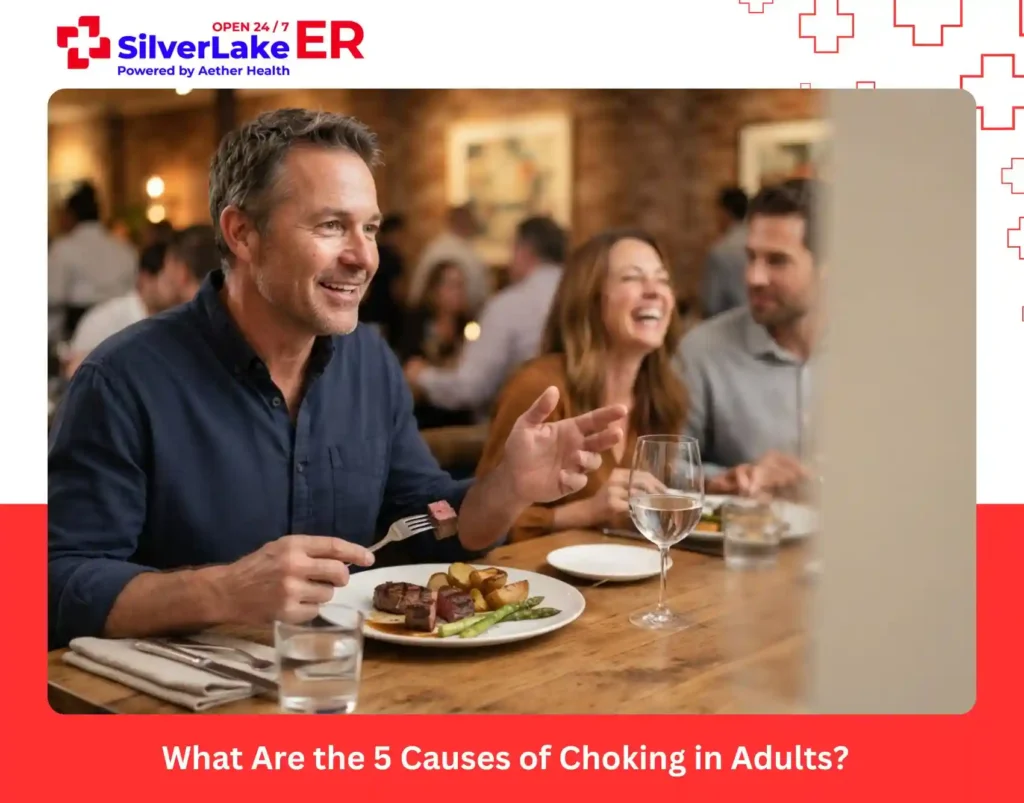
Choking is one of the leading causes of unintentional death in adults over 65 and adults of every age face real risk depending on what they eat, how they eat, and their overall health. Most people think of choking as a childhood emergency, but the truth is that adults choke every day in the United States. Recognizing what causes adult choking is the first step to lowering your risk.
This guide breaks down the five leading causes of choking in adults: food obstruction, eating too fast, alcohol impairment, swallowing disorders, and neurological conditions what each one looks like, why it matters, and when a choking episode needs immediate choking emergency care at Aether Health – Silverlake ER.
Quick Answer: What Are the 5 Causes of Choking in Adults?
The five leading causes of choking in adults are:
(1) Food obstruction: Large, dry, or slippery pieces of food blocking the airway, especially meat, bread, and hot dogs;
(2) Eating too fast: Rushed, distracted, or oversized bites that overwhelm the swallow reflex;
(3) Alcohol impairment: Reduced gag and cough reflexes plus poor swallowing coordination;
(4) Swallowing disorders (dysphagia): Medical conditions that impair the ability to swallow safely; and (5) Neurological conditions: Stroke, Parkinson’s, dementia, ALS, and other conditions that affect swallow muscles and reflexes.
Any severe choking episode is a medical emergency: call 911. Even a choking episode that resolves can cause internal injuries or aspiration pneumonia days later post-choking evaluation is often warranted.
The 5 Causes at a Glance
Use this table as a quick reference. Below it, each cause gets a detailed breakdown so you know what to look for, how to reduce risk, and when to act.
| Cause | What Makes It Dangerous | Level of Urgency |
| 1. Food obstruction | Large, dry, or slippery foods blocking the airway | Active episode call 911 if unable to cough/breathe |
| 2. Eating too fast | Rushed or oversized bites overwhelming the swallow reflex | Active episode call 911 if severe |
| 3. Alcohol impairment | Reduced reflexes and swallowing coordination | High-risk situation supervise closely |
| 4. Swallowing disorders (dysphagia) | Medical condition impairing safe swallowing | Ongoing risk medical evaluation warranted |
| 5. Neurological conditions | Stroke, Parkinson’s, dementia, ALS affecting swallow function | Ongoing high risk caregiver supervision essential |
Cause 1: Food Obstruction
Food is by far the leading cause of adult choking. When a piece of food is too large, too dry, or too slippery to move safely through the airway, it can lodge in the throat and cut off breathing within seconds.
What makes food-related choking so dangerous is how quickly it turns from a normal meal into a life-threatening emergency.
Highest-risk foods for adult choking
- Large chunks of meat, especially steak, roast, and dry poultry.
- Hot dogs, sausages, and other cylindrical foods that can seal the airway.
- Bread particularly dry, dense, or freshly baked loaves that expand when moistened.
- Whole grapes, cherry tomatoes, and other smooth round foods.
- Nuts, popcorn, and hard candies.
- Peanut butter in large spoonfuls.
- Sticky foods like taffy, caramel, or dried fruit.
Why food obstruction matters
Round, smooth foods can seal the airway completely. Dry foods absorb saliva and expand. Sticky foods cling to the airway walls. Large tough chunks of meat resist being broken up by chewing.
Each of these characteristics makes it harder for the body’s natural cough and swallow reflexes to clear an obstruction. Brain damage begins within 4 to 6 minutes of a complete airway blockage which is why immediate first-aid response is critical.
Food choking red flags call 911: The person cannot cough forcefully, cannot speak, is making high-pitched wheezing sounds, has bluish lips or fingertips, or has lost consciousness. Begin back blows and abdominal thrusts while help is on the way.
Cause 2: Eating Too Fast
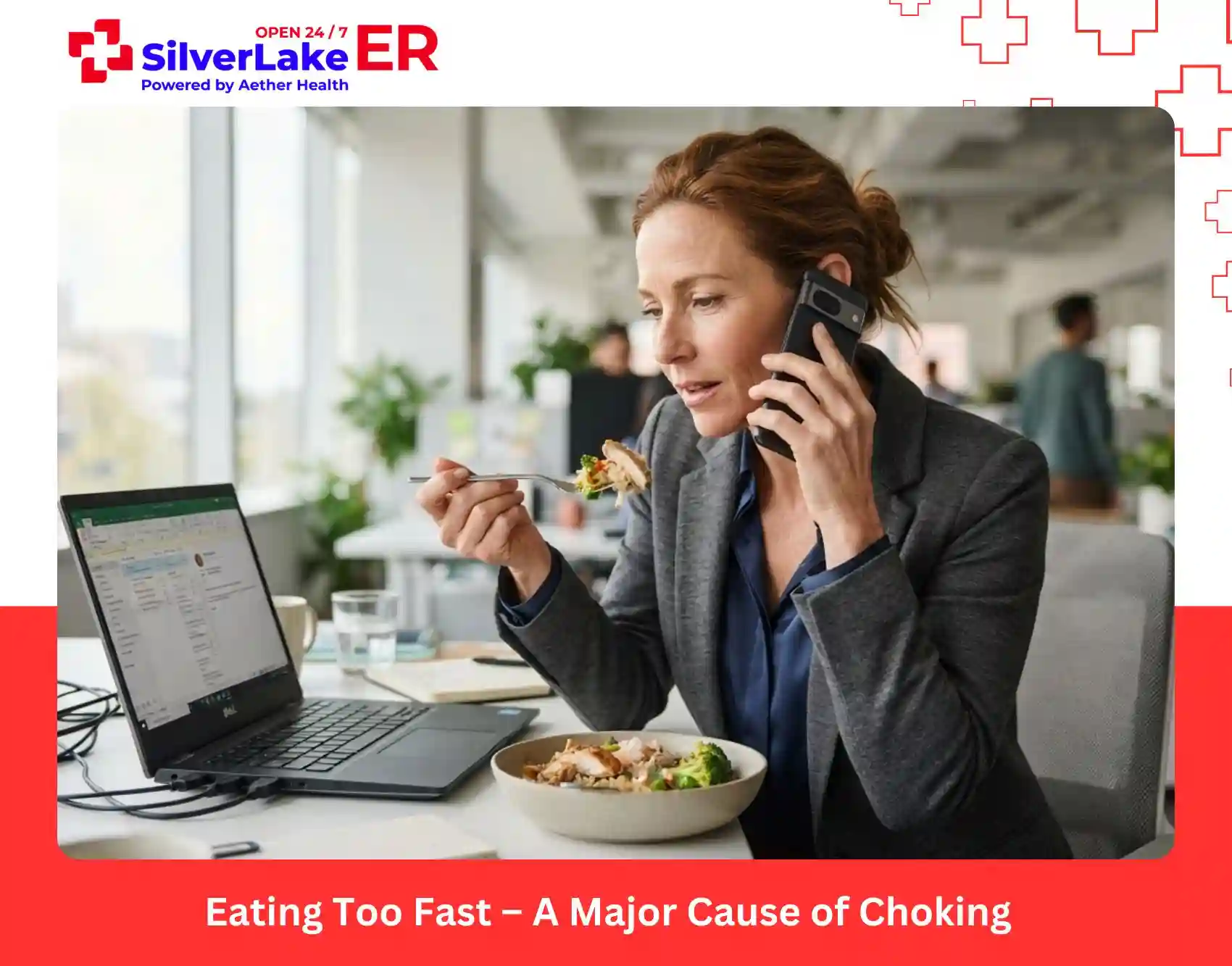
How you eat matters as much as what you eat. Rushed, distracted, or oversized eating patterns are one of the most common causes of choking in otherwise healthy adults. Swallowing safely is a coordinated act the muscles of the mouth, tongue, throat, and airway must work in the right sequence. When you eat too fast, that coordination breaks down.
Common situations that raise risk
- Eating on the go in the car, walking, or between meetings.
- Talking or laughing with food in the mouth.
- Taking oversized bites.
- Not chewing thoroughly before swallowing.
- Eating while watching TV, using a phone, or otherwise distracted.
- Competitive eating or trying to finish a meal quickly.
Why is eating fast a concern?
Food is swallowed before it’s chewed enough. Bites are too large to move safely through the airway. The natural pause between bites which lets the throat reset is skipped.
A large portion of adult choking incidents happen at restaurants, where the combination of a distracting environment, alcohol, larger bites, and talking while eating creates a perfect storm. Being aware of this pattern is one of the simplest ways to lower your risk.
Cause 3: Alcohol Impairment
Alcohol is involved in a significant portion of fatal adult choking incidents. This isn’t just about intoxicated eating, even moderate drinking can measurably affect the reflexes that protect the airway. Alcohol slows the gag and cough responses that normally clear food, impairs the coordinated muscle movements of swallowing, and reduces awareness of how thoroughly food is being chewed.
How alcohol raises choking risk
- Dulls the gag and cough reflex the body’s first line of defense against airway obstruction.
- Impairs coordinated swallowing muscle movements.
- Reduces awareness of chewing thoroughness.
- Slows overall reaction time if choking begins.
- Causes drowsiness, choking risk during sleep is much higher.
Higher-risk alcohol-related situations
- Heavy meal after several drinks.
- Late-night eating after drinking.
- Falling asleep with food or gum in the mouth.
- Vomiting after heavy drinking, especially when lying down.
- Combining alcohol with sedating medications, which older adults often take.
Why alcohol impairment matters
A choking episode that would normally be recoverable becomes life-threatening when the person’s reflexes are dulled. They may not cough forcefully enough to clear the obstruction, may not signal for help, and may not be able to move to a safer position. This is especially dangerous when someone is drinking alone or in a group where others are also impaired.
Cause 4: Swallowing Disorders (Dysphagia)
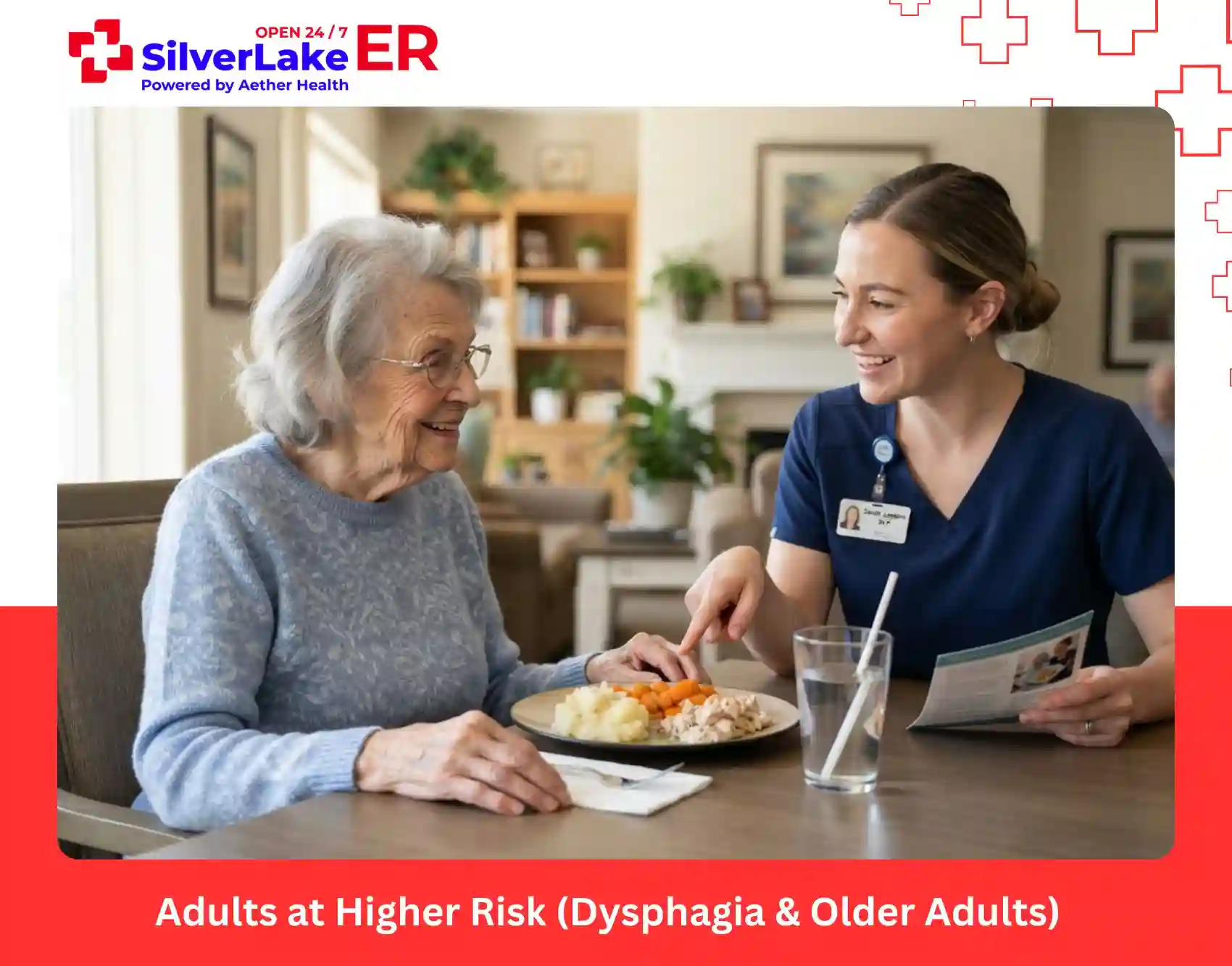
Some adults have an underlying medical condition that impairs the swallow reflex. This is called dysphagia difficulty swallowing and it significantly raises the risk of choking, aspiration (food entering the lungs), and related emergencies.
Dysphagia often develops gradually, so people may not realize their swallowing has become unsafe until an emergency happens.
Signs you may have dysphagia
- Frequent coughing or throat-clearing during or after meals.
- Sensation of food sticking in the throat or chest.
- Needing to swallow multiple times to clear food.
- Regurgitating food or liquid through the nose.
- Recurring pneumonia or lung infections possible aspiration.
- Unintentional weight loss because eating has become difficult.
- Avoiding certain foods because they feel hard to swallow.
Common causes of dysphagia in adults
- Aging swallow muscle weakness increases with age.
- GERD (acid reflux) and its long-term effects on the esophagus.
- Certain neurological conditions (covered in the next section).
- Head and neck cancers or their treatment.
- Structural issues in the throat or esophagus.
Why swallowing disorders matter
Someone with dysphagia may choke on foods that would be perfectly safe for another person. They may not be aware of subtle aspiration food or liquid entering the lungs which can cause pneumonia days after a meal. If you or a loved one has any of the warning signs above, talk to a primary care physician about a formal swallowing evaluation. Awareness of dysphagia changes how safely you can eat day to day.
Cause 5: Neurological Conditions
Several neurological conditions directly affect the muscles and reflexes involved in swallowing. Adults with these conditions face a substantially higher choking risk, and awareness matters both for patients and for caregivers.
Many of these conditions cause gradual worsening of swallow function, so the risk changes over time.
Conditions associated with elevated choking risk
- Stroke is one of the most common causes of new-onset swallowing problems. Both the stroke itself and the post-stroke recovery period carry elevated risk.
- Parkinson’s disease affects the coordinated movement required for safe swallowing. Risk increases as the disease progresses.
- Dementia (including Alzheimer’s) affects both swallow coordination and awareness of eating pace. Late-stage dementia is a major choking risk factor.
- ALS (amyotrophic lateral sclerosis) progressively affects muscles used for chewing and swallowing.
- Multiple sclerosis can affect swallow coordination during flare-ups.
- Muscular dystrophy affects the muscles involved in chewing and swallowing.
- Traumatic brain injury and spinal cord injury may affect the neurological pathways controlling swallowing.
Why neurological conditions matter
Adults with neurological conditions may not experience a choking episode the same way healthy adults do. They may not be able to cough forcefully, signal for help, or move to safety. Caregivers and family members should watch closely during meals, adjust food textures as needed based on medical guidance, and know when a choking episode requires ER evaluation. Silent aspiration food entering the lungs without triggering a cough is particularly common in this group and can cause pneumonia without any obvious choking event.
Who Is Most at Risk for Choking?
Choking can happen to anyone, but certain groups face significantly higher risk. If you or a loved one fits several of these patterns, take extra precautions during meals.
Highest-risk groups
- Adults over 65 die from choking at multiple times the rate of younger adults.
- People with neurological conditions such as stroke, Parkinson’s, dementia, ALS.
- People with a history of dysphagia or aspiration pneumonia.
- People taking sedating medications.
- Adults who eat alone are a fatal risk factor if choking occurs.
- People recovering from head and neck cancers or their treatment.
- People with dentures, especially poorly-fitting ones.
- People with severe acid reflux (GERD).
Warning Signs a Choking Episode Needs ER Evaluation
A common and dangerous assumption is that once a choking episode passes, the emergency is over. Often it’s not. The force required to clear an airway obstruction can cause internal injuries, and food particles left behind can cause serious complications like aspiration pneumonia days later.
Get to emergency care for choking after a choking episode if any of the following apply:
- The person lost consciousness, even briefly.
- Back blows, abdominal thrusts, or CPR were performed.
- Continued coughing, wheezing, or trouble breathing after the object cleared.
- Persistent chest, throat, or abdominal pain.
- Feeling like something is still stuck in the throat or chest.
- Voice change, drooling, or trouble swallowing that continues.
- Vomiting blood or coughing up blood.
- Fever or breathing changes develop hours to days later possible aspiration pneumonia.
- The person is elderly or has a chronic medical condition.
- The person choked while intoxicated or has diminished awareness.
Get evaluated fast: Aether Health – Silverlake ER provides 24/7 choking emergency care with on-site chest X-ray, CT imaging, airway assessment, and board-certified emergency physicians. Call +1 (713) 528-8703 or come to 2752 Sunrise Blvd, Pearland, TX 77584.
Simple Prevention Habits for Adults
None of these habits are dramatic. All of them lower your risk noticeably when practiced consistently.
- Cut high-risk foods into smaller, irregular pieces.
- Chew thoroughly before swallowing and put utensils down between bites.
- Sit upright during meals and never eat lying down.
- Avoid talking, laughing, or moving vigorously with food in your mouth.
- Limit alcohol during meals, especially when eating high-risk foods.
- Avoid distracted eating on TV, phone, or driving during meals.
- Follow food-texture guidance from your care team if you have dysphagia.
- Keep water within reach during meals.
- Supervise meals for anyone with a neurological condition or dementia.
How Silverlake ER Evaluates Choking Emergencies
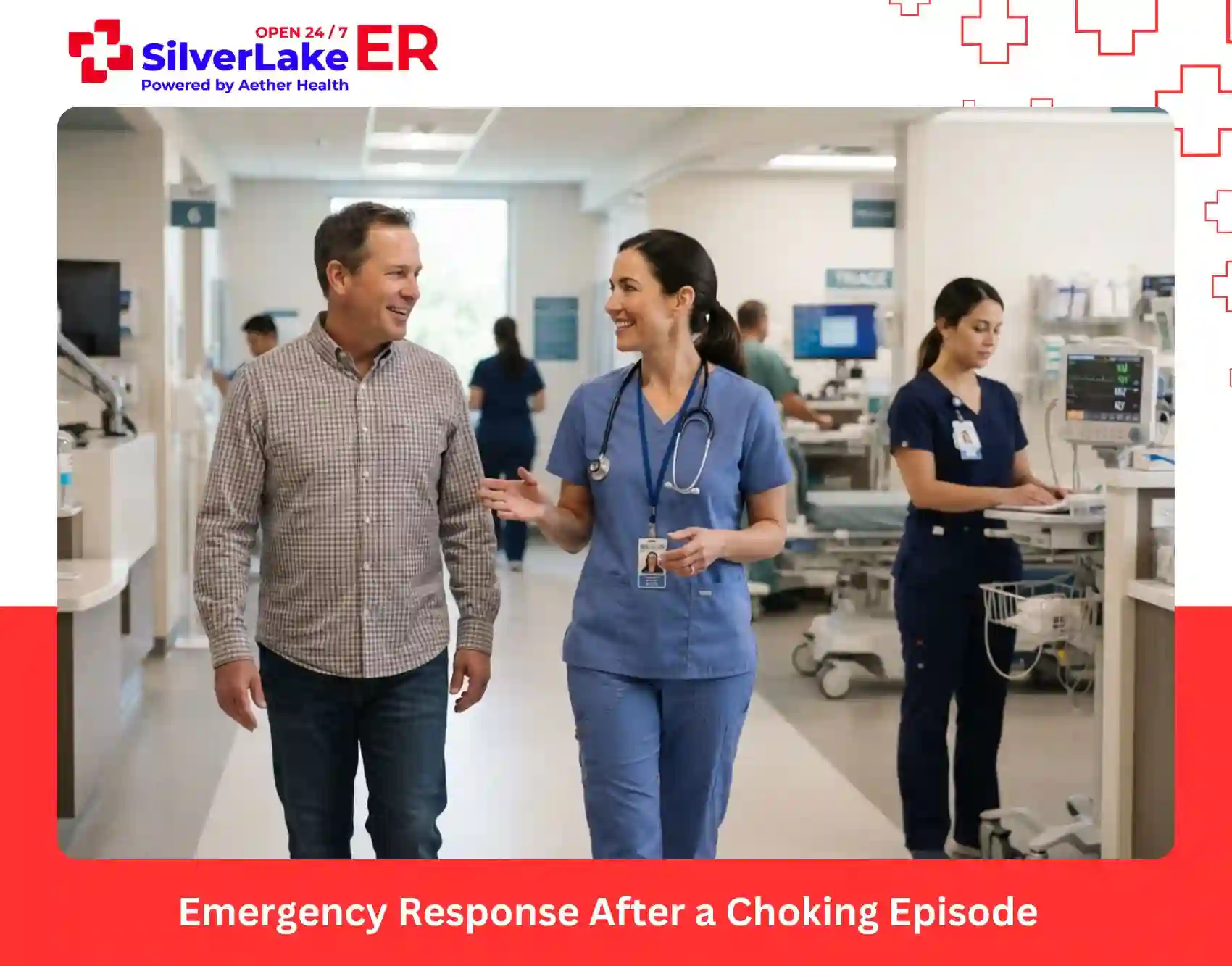
When you come in after a choking episode, our 24/7 freestanding ER in Pearland is fully equipped to evaluate the airway, assess for internal injury, and coordinate care on site with rapid results that determine whether you need immediate treatment, further observation, or specialist follow-up.
- Rapid airway assessment board-certified emergency physicians evaluate breathing, oxygen levels, and voice within minutes of arrival.
- On-site chest X-ray identifies airway swelling, aspiration, or foreign material in the lungs.
- On-site CT imaging available immediately when advanced imaging is needed to rule out serious injury.
- Full laboratory services rapid diagnostic testing for signs of infection or aspiration.
- Continuous cardiac and respiratory monitoring tracks oxygen saturation and vital signs throughout your visit.
- Emergency airway support and oxygen therapy when needed to protect breathing.
- Adult and geriatric emergency care under one roof specialized attention for the highest-risk age group.
- Direct hospital transfer coordination when admission is needed for further care.
If you or a family member has been dealing with recurring choking or aspiration concerns, and you want to be ready to respond effectively, our companion guide on what to do if someone is choking explains the step-by-step first-aid protocols for adults, children, and infants.
Frequently Asked Questions
What is the leading cause of choking deaths in adults?
Food is by far the leading cause of choking deaths in adults. Large pieces of meat, bread, and dry or slippery foods are the most common culprits. Alcohol use during meals significantly raises the risk, and adults over 65 face the highest overall mortality risk from choking.
Why do older adults choke more often?
Several factors combine age-related weakening of swallow muscles, higher rates of neurological conditions like stroke and dementia, medications that affect awareness or reflexes, dental problems that affect chewing, and higher rates of eating alone. Adults over 65 die from choking at multiple times the rate of younger adults.
Does alcohol really increase choking risk that much?
Yes, significantly. Alcohol slows the cough and gag reflexes that protect the airway, impairs the coordination of swallowing muscles, and reduces awareness of how thoroughly food is being chewed. It’s involved in a meaningful percentage of fatal adult choking incidents, and the risk goes up sharply when alcohol is combined with sedating medications or heavy meals.
What is dysphagia and how do I know if I have it?
Dysphagia is a medical term for difficulty swallowing. Common signs include frequent coughing during meals, food feeling stuck in the throat or chest, needing to swallow multiple times, regurgitating food, or unintentional weight loss because eating has become difficult. If any of these are happening consistently, it’s worth talking to your primary care physician about a formal swallowing evaluation.
Should I go to the ER after a choking episode even if I feel fine?
Yes, in several scenarios if you lost consciousness, if back blows or abdominal thrusts were performed on you, if you have persistent coughing, chest pain, or trouble breathing, if you feel like something is still stuck, or if you’re elderly or have a chronic medical condition. Complications from a choking episode can develop over hours to days, and a precautionary visit to Aether Health – Silverlake ER for choking evaluation rules them out.
Should I go to urgent care or the ER for choking concerns?
For any post-choking symptoms or airway concerns, come to the ER not urgent care. Urgent care clinics do not have the on-site imaging (chest X-ray, CT), airway equipment, or physician expertise to evaluate for aspiration, internal injury, or airway swelling. At Aether Health – Silverlake ER, our choking emergency evaluation includes board-certified emergency physicians, on-site imaging, and full airway assessment.
People Also Ask About Adult Choking
These are the related questions AI search engines and Google’s “People Also Ask” feature commonly surface alongside adult choking queries. Direct answers below.
Can you choke to death silently, without making noise?
Yes. A complete airway obstruction prevents air from moving which means the person cannot cough, gasp, or make sound. This is often called “silent choking” and is the most dangerous type. Signs include hands at the throat, panicked facial expression, bluish lips or fingertips, and inability to speak. Recognize these signs immediately and begin first aid.
What are the signs of aspiration pneumonia after choking?
Aspiration pneumonia can develop hours to days after a choking episode. Signs include fever, worsening cough (especially producing colored or bloody sputum), chest pain, shortness of breath, and fatigue. It’s especially common in older adults and people with dysphagia or neurological conditions. Any of these signs after a choking episode warrants ER evaluation.
Can drinking water while choking help?
No, trying to drink water while choking can make things worse. If the airway is blocked, water can’t get past the obstruction and adds to the aspiration risk. The correct response is back blows and abdominal thrusts (Heimlich maneuver), and calling 911. Do not offer food, water, or anything by mouth to a person who is actively choking.
How long can someone survive without oxygen from choking?
Brain damage typically begins within 4 to 6 minutes of complete airway obstruction. Death can occur within 6 to 10 minutes without intervention. This is why immediate first-aid response and calling 911 without delay are so critical. Every second counts.
Is there a difference between choking and airway obstruction?
Choking is a form of airway obstruction specifically caused by a foreign object (usually food) blocking the airway. Other causes of airway obstruction include swelling from allergic reactions, injury, infections, or tumors. All are medical emergencies, but the immediate response differs. For food-related choking, back blows and abdominal thrusts are the standard first response.
Can I hurt someone by giving abdominal thrusts if they aren’t choking?
Abdominal thrusts (Heimlich maneuver) can cause rib fractures, internal injury, or bruising even when performed correctly. This is one reason post-choking ER evaluation is recommended when abdominal thrusts have been performed. That said, when someone is actively choking, the risk of injury from thrusts is far outweighed by the risk of not intervening. Perform first aid if needed, then get evaluated afterward.
Post-Choking Concerns or Airway Emergency? Get Evaluated Fast in Pearland, TX
When choking is involved, time matters more than anything else. Aether Health – Silverlake ER provides 24/7 choking emergency care and airway evaluation with on-site chest X-ray, CT imaging, airway assessment, and coordinated specialist follow-up usually within 60 minutes of arrival. If you or someone you love just had a choking episode, come in for evaluation.
- Address: 2752 Sunrise Blvd, Pearland, TX 77584
- Phone: +1 (713) 528-8703
- Hours: Open 24 hours, every day of the year
- Contact: Get in touch with our team for questions or directions.
- Insurance: Most commercial plans accepted. No surprise billing.