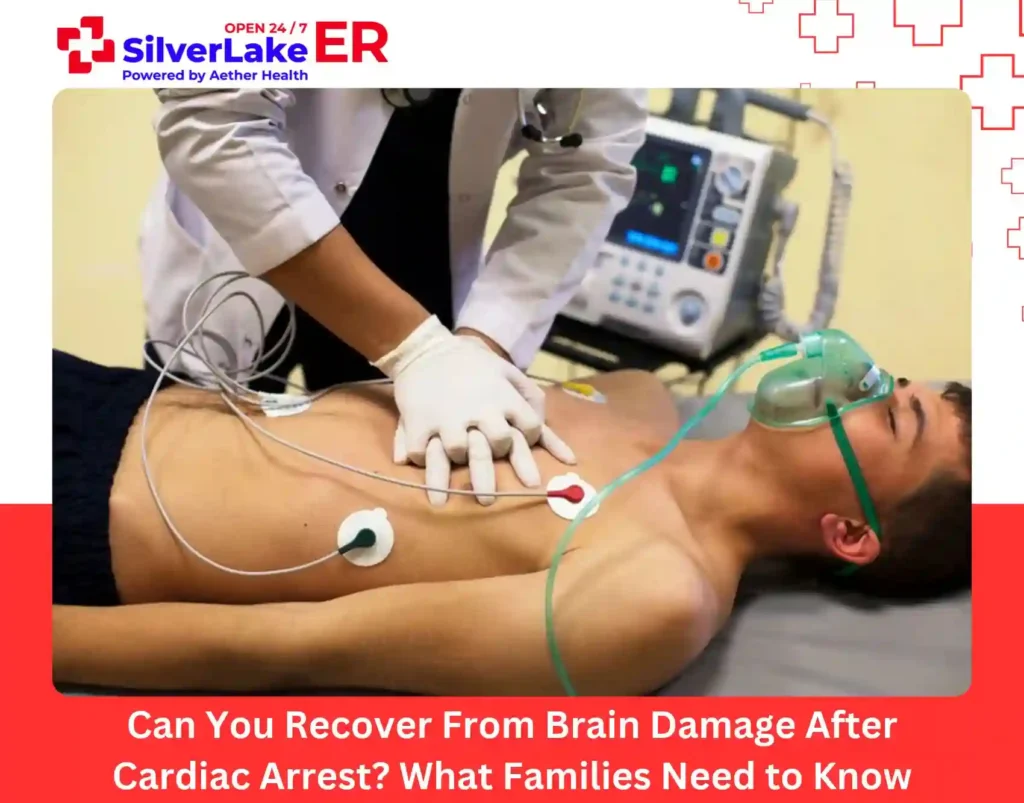
When someone you love survives a cardiac arrest, the first relief of hearing they are alive quickly gives way to a harder question. Can you recover from brain damage after cardiac arrest, and if so, how much of them is coming back? The honest answer is more hopeful than many families expect, though it also requires patience and realistic expectations. Brain recovery after cardiac arrest is one of the most studied areas in modern emergency medicine.
Meaningful recovery is possible, even common, for patients who received prompt CPR and advanced cardiac care. Outcomes vary widely based on how long the brain went without oxygen, how quickly resuscitation began, the patient’s age, and the care received in the first 72 hours. Understanding the specific variables that shape recovery helps families prepare and recognize what progress looks like.
| Quick Answer
Yes, recovery from brain damage after cardiac arrest is possible, though the degree of recovery depends on several factors. The most important is time to CPR: brain cells begin dying within 4 to 6 minutes without oxygen. Patients who received bystander CPR within 2 to 3 minutes often recover full or near-full brain function. Longer downtime generally means more significant brain injury. Modern cooling protocols, intensive neuro-ICU care, and months of rehabilitation can substantially improve outcomes even in cases of moderate brain injury. |
What “Brain Damag After Cardiac Arrest” Actually Meanse
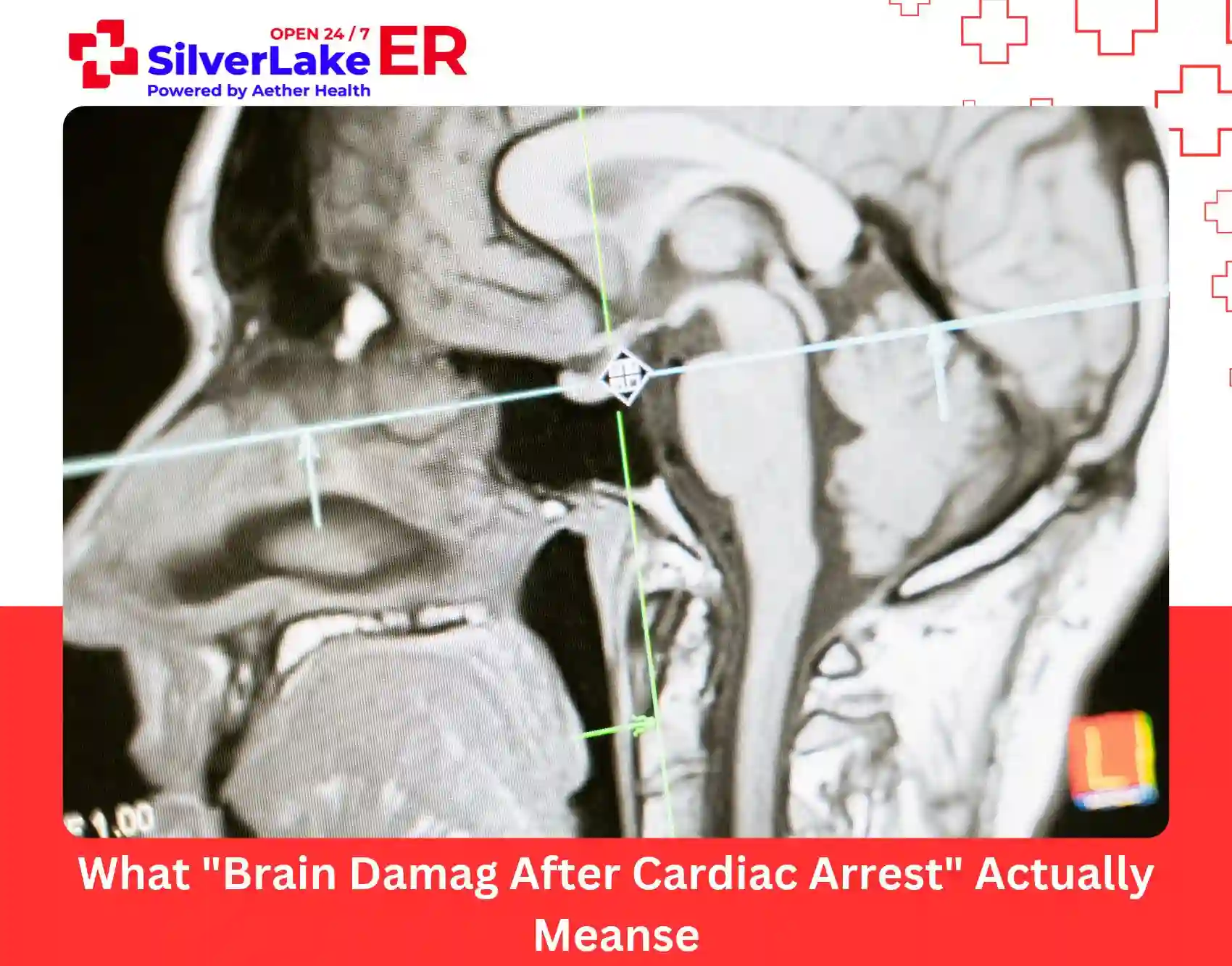
When the heart stops pumping, blood stops flowing. The brain, which uses about 20 percent of the body’s oxygen despite being only 2 percent of its weight, runs out of oxygen first. The resulting injury is called hypoxic brain injury (reduced oxygen) or anoxic brain injury (complete absence of oxygen). The National Institute of Neurological Disorders and Stroke explains that cerebral hypoxia produces a spectrum of injuries ranging from mild cognitive changes to severe permanent damage, depending on how long oxygen was absent.
The damage is not uniform across the brain. The hippocampus (memory), the cerebral cortex (thinking and movement), and the cerebellum (balance and coordination) are most vulnerable because they consume the most oxygen. This is why survivors often have specific memory, movement, or cognitive challenges rather than global disability.
Brain cells begin dying after 4 to 6 minutes without oxygen. Permanent damage usually begins around 10 minutes. These time windows define most cardiac arrest outcomes.
IN SHORT: Brain damage after cardiac arrest comes from oxygen loss. The longer the brain goes without oxygen, the more severe the injury, though specific regions are affected first before global damage occurs.
The 5 Variables That Determine Recovery
Not every cardiac arrest survivor has the same outcome, and understanding why helps set realistic expectations. These five variables account for most of the difference between recoveries.
VARIABLE 1 Time from arrest to CPR. The single biggest predictor of recovery. Survivors who received bystander CPR within 2 to 3 minutes have dramatically better outcomes. Each minute without CPR reduces survival chances by roughly 10 percent.
VARIABLE 2 Total downtime before pulse returns. The duration from when the heart stopped to when effective circulation was restored. Shorter downtimes mean less cumulative oxygen deprivation and typically better recovery.
VARIABLE 3 Age and baseline health. Younger patients with fewer chronic conditions generally recover more completely. Healthy brain tissue tolerates injury better, and younger people have stronger neuroplasticity to compensate for lost function.
VARIABLE 4 Cause of the cardiac arrest. A reversible cause like a shockable arrhythmia often has better outcomes than non-cardiac causes such as drowning or drug overdose. The underlying cause also affects recurrence risk.
VARIABLE 5 Quality of post-arrest ICU care. The first 72 hours in intensive care matter enormously. Temperature management, blood pressure control, oxygen levels, and neurological monitoring shape how much initial injury becomes permanent.
Time to CPR and Likely Outcomes
This reference connects time from cardiac arrest to CPR with typical neurological outcomes. These are general patterns, and individual recoveries vary widely based on the other variables above.
| Time to CPR | Likely Outcome | What It Means |
| Under 2 minutes | Excellent recovery potential | Full or near-full brain function usually possible |
| 2 to 4 minutes | Good recovery potential | Most cognitive function typically returns |
| 4 to 6 minutes | Variable recovery | Some brain injury likely, significant recovery possible |
| 6 to 10 minutes | Moderate to severe injury | Persistent neurological deficits common |
| Over 10 minutes | Severe injury expected | Significant lasting damage likely |
What Recovery Actually Looks Like Over Time
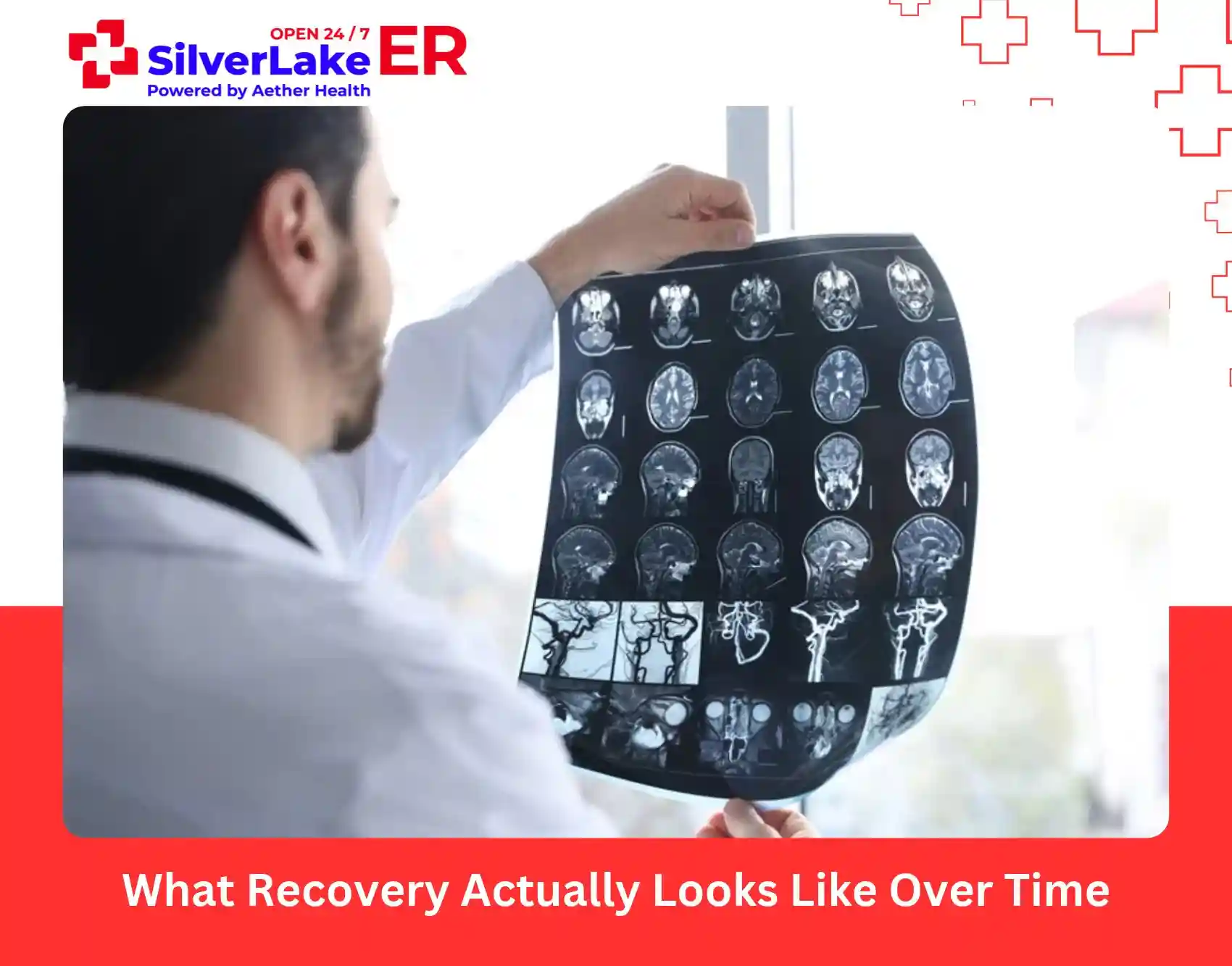
Recovery from brain damage after cardiac arrest unfolds in stages. Families should expect progress to be measured in weeks and months, not days. Our guide to why cardiac arrest happens explains the underlying mechanisms that shape both initial injury and long-term recovery.
First 24 to 72 hours: patients are typically unconscious and may be cooled to around 89 to 93 degrees Fahrenheit. This therapeutic hypothermia reduces brain swelling. Family members usually see little visible progress during this window.
First week: as cooling ends and sedation lifts, doctors assess neurological function. Some patients wake up quickly. Others remain in a coma. Neurological signs on standard scales start to emerge.
First three months: active recovery phase. Patients may regain speech, movement, and cognition in steps. Rehabilitation does most of its work during this window, with progress often visible week by week.
Six months and beyond: slower but continued improvement through neuroplasticity. Meaningful gains can continue for at least a year, sometimes longer, with consistent rehabilitation.
Signs of Recovery to Watch For
Recovery often happens in small signs before dramatic breakthroughs. Family members and caregivers who know what to look for can celebrate progress and help the medical team recognize it.
- Eye opening to voice or touch, even without clear awareness yet.
- Following simple commands, such as squeezing a hand or wiggling toes.
- Recognizing familiar faces or voices, even subtly.
- Improved breathing without ventilator support.
- Return of swallowing reflexes and ability to eat.
- Speaking words or phrases, even if speech is halting.
- Moving limbs purposefully rather than reflexively.
- Improvements in memory, attention, or orientation to date and place.
Comprehensive cardiac emergency care during the acute phase gives patients the best shot at these recovery markers. Our cardiac arrest emergency care team at Silverlake ER coordinates stabilization, hypothermia protocols, and transfer to specialized neuro-ICU care when needed.
When New Symptoms After Cardiac Arrest Need Emergency Care
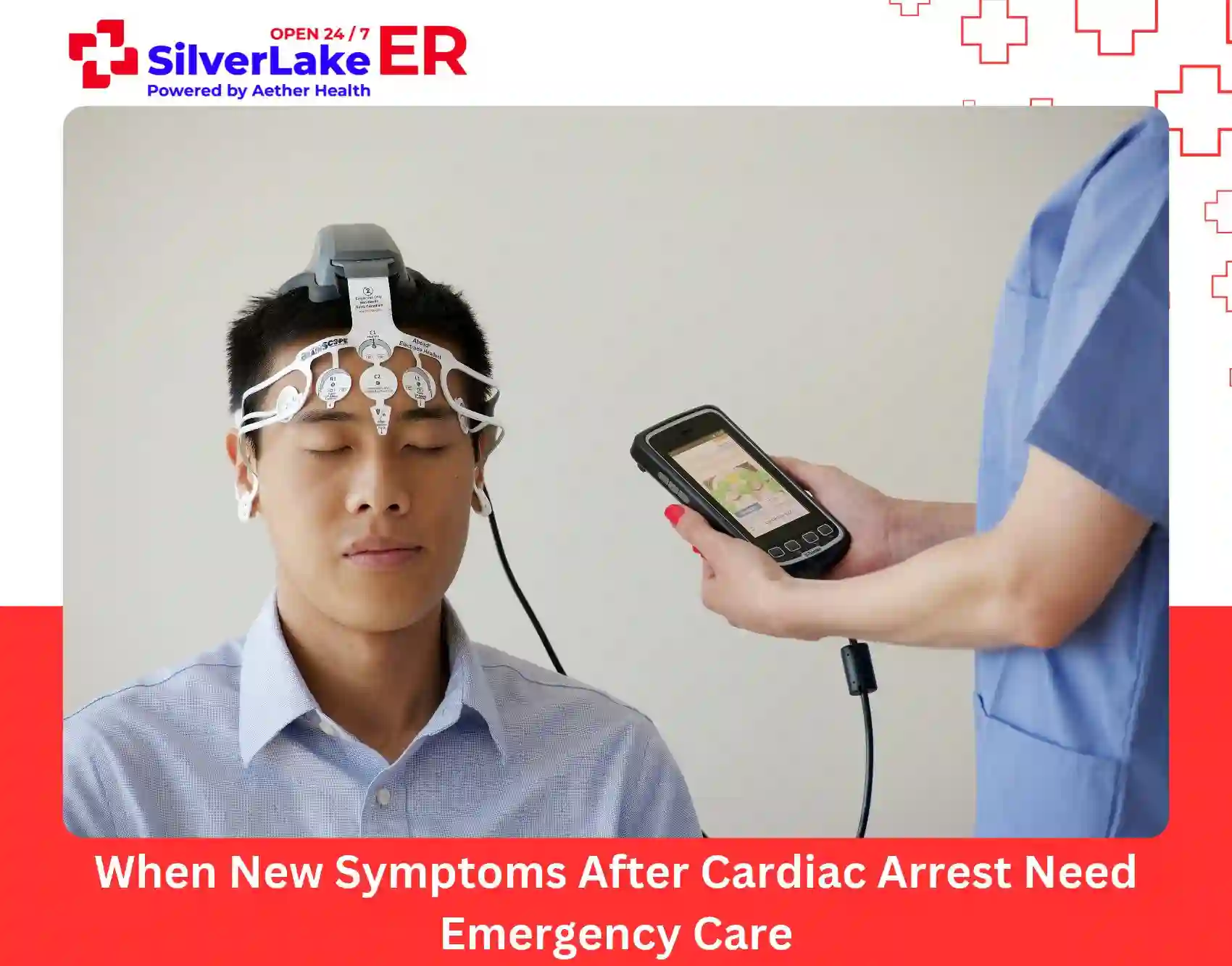
Even after a good initial recovery, new symptoms can emerge in the weeks and months that follow. Some are expected parts of recovery. Others signal a complication that needs immediate medical evaluation.
| Call 911 or Come to the ER Immediately
These signs can indicate a new cardiac event, stroke, or other serious complication in a cardiac arrest survivor. Do not wait to see if they improve. |
▶ New or returning chest pain, pressure, or heart palpitations.
▶ Sudden one-sided weakness, facial drooping, or slurred speech (possible stroke).
▶ Severe shortness of breath, especially at rest or with mild activity.
▶ New seizures or loss of consciousness.
▶ Sudden confusion, severe headache, or vision changes.
▶ Fever with new breathing difficulty (possible pneumonia or infection).
Post-arrest survivors remain at elevated risk for recurrent cardiac events, strokes, and arrhythmias. For new chest symptoms, our chest pain emergency care team provides on-site EKG, cardiac blood tests, and imaging in one visit.
Frequently Asked Questions
How long does brain damage after cardiac arrest usually take to improve?
Most measurable improvement happens within the first three to six months. However, gains can continue for a year or longer with consistent rehabilitation. The pace slows over time, but meaningful progress does not simply stop at any fixed point.
What is the difference between hypoxic and anoxic brain injury?
Hypoxic brain injury means the brain received reduced oxygen. Anoxic brain injury means oxygen was absent entirely. Cardiac arrest typically produces anoxic injury that can transition to hypoxic as circulation is partially restored during CPR.
Can someone in a coma after cardiac arrest still wake up?
Yes, many do. Waking depends on the severity of brain injury and the care received in the first 72 hours. Some patients wake within days. Others take weeks. Prognostic testing usually clarifies outlook within the first 5 to 7 days.
Does therapeutic hypothermia really help with brain recovery?
Yes. Cooling the body to around 89 to 93 degrees Fahrenheit for 24 hours after cardiac arrest reduces brain swelling and slows cellular damage. Multiple studies show it significantly improves neurological outcomes when used within the first several hours.
What does rehabilitation after cardiac arrest involve?
Rehab typically combines physical therapy (movement, strength, balance), occupational therapy (daily living skills), speech therapy (language and swallowing), and cognitive therapy (memory, attention, problem-solving). The specific mix depends on which brain regions were affected.
Cardiac Emergency Support in Pearland
Fast, high-quality emergency care during a cardiac arrest is the single greatest gift you can give to brain recovery. Silverlake ER is a freestanding emergency room open 24/7 at 2752 Sunrise Blvd, Pearland, TX 77584, with cardiac emergency capabilities, on-site imaging and lab, and board-certified physicians. Call +1 (713) 528-8703, walk in anytime, or get in touch with questions about our emergency cardiac care.
Call 911 immediately for sudden collapse, no breathing or gasping breaths, no pulse, or unresponsive person. Start hands-only CPR right away while someone calls 911. Every minute without CPR reduces survival and brain recovery chances by about 10 percent.