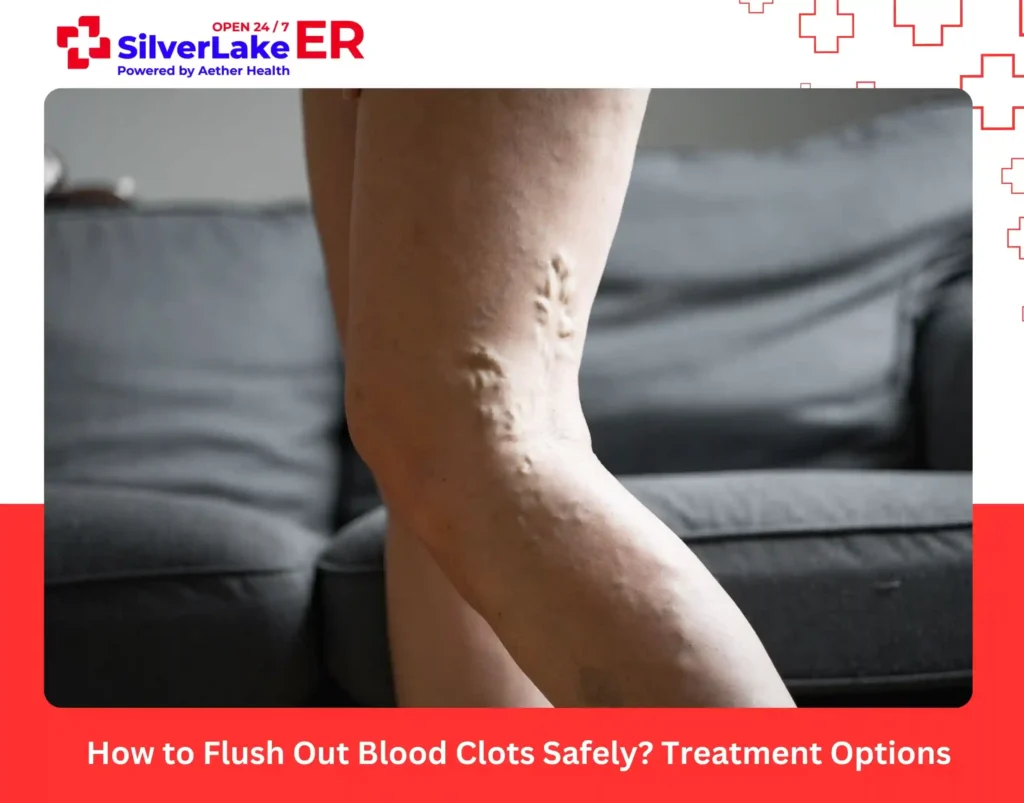
Blood clots cannot be safely “flushed out” at home. The only effective and proven ways to dissolve or remove a dangerous clot are medical treatments — anticoagulant medications (blood thinners), thrombolytic therapy (clot-busting drugs), catheter-based procedures, and in some cases, surgery. Supportive lifestyle factors like hydration, movement, and a heart-healthy diet help the body work alongside treatment, but they do not replace it.
This guide explains how blood clots are actually treated, what the body does on its own, what supportive habits genuinely help, and what to avoid. At Aether Health – Silverlake ER in Pearland, TX, our board-certified emergency physicians diagnose and treat blood clot emergencies 24/7 — because when it comes to dangerous clots, the difference between recovery and a fatal outcome often comes down to how quickly real treatment begins.
1. The Short Answer: What Patients Need to Know
Here’s the evidence-based truth that every patient should hear before reading further:
- Dangerous blood clots — DVTs, pulmonary embolisms, arterial clots — require medical treatment. There is no proven home method that safely dissolves them.
- The body has its own clot-clearing system (fibrinolysis), but it isn’t reliable enough to handle large or fast-growing clots.
- Medical treatments work by stopping the clot from growing (anticoagulants) or actively dissolving it (thrombolytics, catheter-directed treatment, surgery).
- Supportive lifestyle factors — hydration, movement, diet — help the body alongside treatment but never replace it.
- Many “natural clot remedies” found online are unproven or unsafe, and some can dangerously interact with prescribed medications.
Bottom line: If you suspect a blood clot, don’t try to treat it at home. Get medical evaluation immediately. The cost of being wrong about a clot is severe — and the right treatment is straightforward when started early.
2. Important: Why “Flushing Out” Isn’t a DIY Job
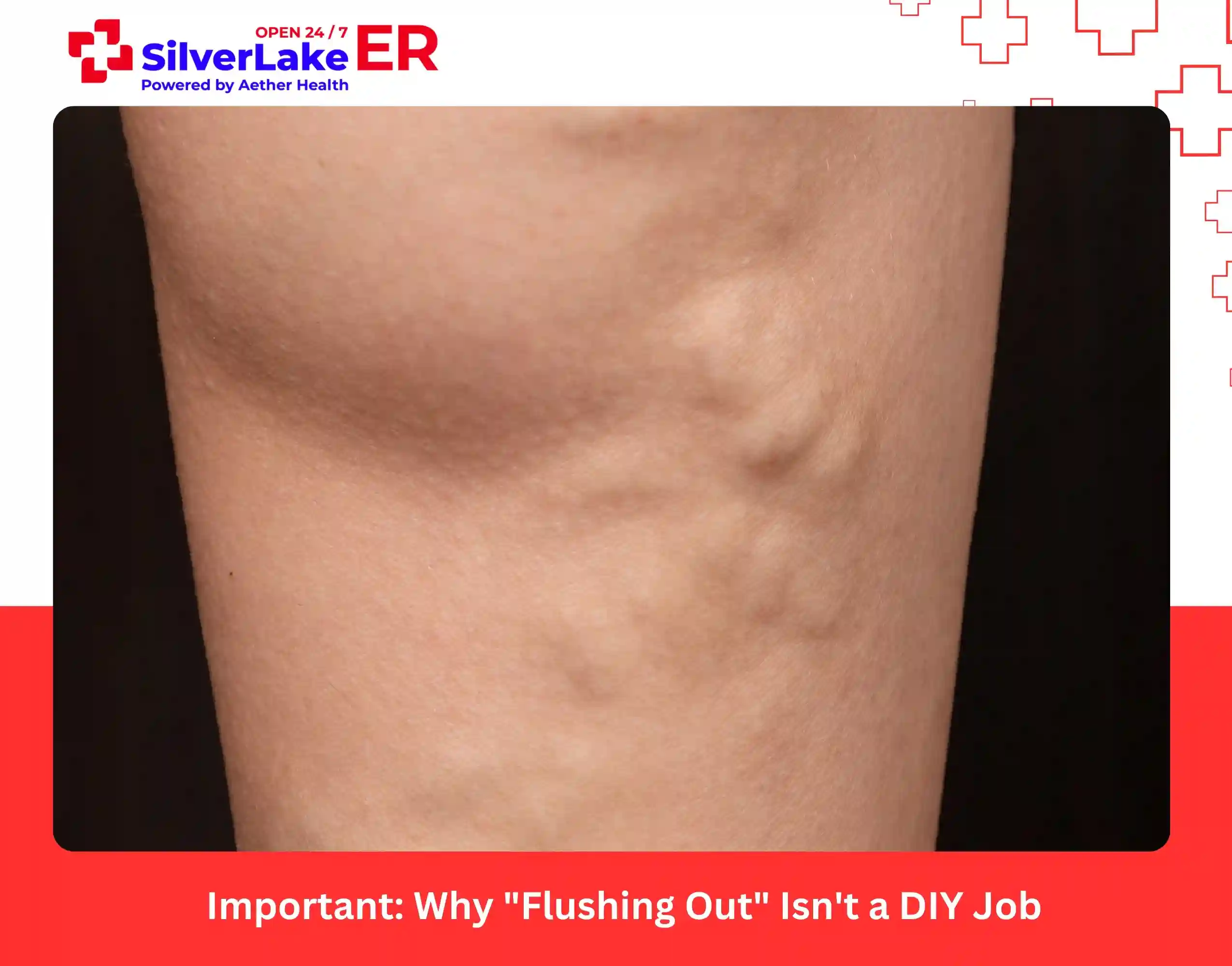
Searching online for “how to flush out blood clots” turns up an alarming amount of dangerous advice — herbal protocols, hydration cures, exercise plans, and supplement stacks that promise to dissolve clots naturally. The reality is sobering: there is no proven, safe way to dissolve a dangerous blood clot at home. Attempting to do so wastes time during a medical emergency and can directly worsen the outcome.
Why Home Treatment Fails
- Dangerous clots are in deep veins, arteries, or lungs — places no oral remedy can selectively reach
- Treatment requires precise dosing of medications that can otherwise cause life-threatening bleeding
- Diagnosis itself requires imaging — you usually can’t tell what type of clot you have or where exactly it is
- Time is the enemy with clots, and waiting for natural remedies to “work” lets the clot grow or travel
What This Article Will Show You Instead
The rest of this guide explains the medical treatments that actually work, the supportive lifestyle habits that help your body alongside treatment, and the prevention strategies that stop clots from forming in the first place. If you have a clot, this is the playbook. If you don’t, this is how to keep it that way.
3. How the Body Naturally Clears Clots
Your body does have a built-in clot-clearing system called fibrinolysis. Understanding how it works clarifies why medical treatment is usually still needed.
When a clot forms, your blood contains an enzyme called plasmin (and its precursor, plasminogen). Plasmin’s job is to break down the fibrin mesh that holds clots together. Over time — typically weeks to months — fibrinolysis gradually dissolves small clots and clears their components from circulation.
This system works reasonably well for:
- Small surface clots in superficial veins
- Clots that form to seal minor injuries
- Bruises and small hematomas
It struggles or fails with:
- Large clots in deep veins or arteries
- Clots that grow faster than the body can break them down
- Clots in patients with clotting disorders or those on certain medications
- Clots positioned in dangerous locations — pulmonary arteries, coronary arteries, brain arteries
Medical treatment essentially gives the body’s clot-clearing system the support it needs — either by stopping new clot formation while fibrinolysis catches up, or by directly assisting the breakdown with powerful medications or procedures.
4. Medical Treatments That Actually Dissolve or Remove Clots
Treatment depends on the clot’s size, location, type, and how long it’s been there. A board-certified physician chooses the approach based on those factors and the patient’s overall health.
Anticoagulants (Blood Thinners)
The most common treatment. Drugs like heparin, enoxaparin, warfarin, apixaban, rivaroxaban, and dabigatran don’t break down existing clots — they stop them from growing and prevent new ones from forming while the body’s own fibrinolysis system gradually dissolves the existing clot. Most patients with a confirmed DVT or PE stay on anticoagulation for at least 3 months — sometimes longer.
Anticoagulants require careful management. Doses must be precise. Some require regular blood monitoring. They increase bleeding risk, which is why they’re prescribed and managed by physicians — never started or stopped on your own.
Thrombolytic Therapy (Clot-Busters)
Powerful medications — most commonly tissue plasminogen activator (tPA) — that actively dissolve clots within hours. These are typically reserved for life-threatening situations: large pulmonary embolisms, heart attacks, ischemic strokes within the treatment window. Because thrombolytics carry significant bleeding risk, they’re used only when the benefit clearly outweighs the risk and only in supervised medical settings.
Catheter-Directed Procedures
For some severe clots, doctors thread a thin catheter through the blood vessels directly to the clot. From there, they can deliver concentrated thrombolytic medication locally (reducing bleeding risk) or mechanically remove the clot using specialized devices. This approach is increasingly common for severe DVTs, major pulmonary embolisms, and stroke.
Inferior Vena Cava (IVC) Filters
For patients who can’t take anticoagulants — or who continue forming clots despite treatment — a small filter can be placed in the inferior vena cava (the body’s main vein returning blood from the lower body to the heart). The filter catches clots before they can reach the lungs, while allowing blood to flow through normally.
Surgical Thrombectomy
In severe cases where other treatments aren’t possible or haven’t worked, surgeons can directly remove a clot. This is more invasive than catheter-directed approaches and is reserved for specific scenarios — typically large, immediately life-threatening clots.
Compression Therapy and Supportive Care
After a DVT, graduated compression stockings, leg elevation, and gradual mobility are often part of the recovery plan to reduce swelling and prevent long-term complications like post-thrombotic syndrome.
Important: Anticoagulants and thrombolytics work by interfering with how blood clots — which means they carry real bleeding risks. They are powerful, effective tools when used correctly under medical supervision. They are dangerous when used incorrectly.
5. Supportive Lifestyle Factors That Help
Once you’re under medical treatment for a clot — or are at high risk for one — certain lifestyle factors genuinely help your body work alongside the medical interventions. These do not replace treatment, but they make treatment more effective and reduce the risk of complications and recurrence.
Stay Well Hydrated
Dehydration thickens the blood and slows circulation, making clot formation and growth more likely. Adequate water intake helps maintain healthy blood flow and supports the body’s natural clearance processes. Aim for consistent hydration throughout the day, especially when traveling, recovering from illness or surgery, or in hot weather.
Move Consistently
Movement activates the calf muscle pump, which keeps venous blood flowing back to the heart. After a DVT diagnosis, your physician will give specific guidance on safe activity levels — typically encouraging gradual mobility rather than bed rest. Long-term, regular physical activity is one of the most effective ways to reduce clot recurrence.
Eat for Vascular Health
A heart-healthy diet supports circulation and reduces inflammation:
- Leafy greens and antioxidant-rich produce
- Omega-3 sources like salmon, sardines, walnuts, and flaxseed
- Whole grains over refined carbohydrates
- Olive oil instead of saturated fats
If you’re on warfarin specifically, talk to your physician about consistent vitamin K intake — leafy greens contain vitamin K, which interacts with warfarin’s effectiveness. Consistency matters more than avoidance.
Maintain a Healthy Weight
Excess weight places pressure on veins and increases inflammation — both contribute to clot risk. Even modest weight loss can reduce recurrence risk and improve recovery.
Stop Smoking
Smoking damages blood vessel linings and makes blood thicker and more likely to clot. Quitting is one of the highest-impact changes a clot patient can make.
Limit Alcohol
Heavy alcohol use affects clotting factors and can interact with anticoagulant medications. Discuss alcohol use with your physician if you’ve been prescribed blood thinners.
A Note on Supplements
Many websites recommend turmeric, ginger, garlic, fish oil, vitamin E, or other supplements as “natural blood thinners.” While some of these compounds do have mild blood-thinning properties, they are not regulated, are not dose-controlled, and can dangerously interact with prescribed anticoagulants — sometimes causing severe bleeding. Always tell your physician about every supplement you take. Never substitute supplements for prescribed treatment.
6. What NOT to Try at Home
The internet is full of dangerous advice on “natural” clot treatment. Some of the most common myths to ignore:
- Aspirin alone for treatment of a known DVT or PE. Aspirin is not strong enough to treat venous clots. Using it instead of prescribed anticoagulants is dangerous.
- Massaging the affected area. Massaging a leg with a suspected or diagnosed DVT can dislodge the clot and cause a pulmonary embolism. Never massage a swollen, painful leg.
- Hot baths or heating pads on the affected area. Heat increases circulation locally and can theoretically promote clot movement. Stick to your physician’s guidance.
- Vigorous exercise without medical clearance. Some movement is good. Heavy exertion in the early days after a DVT or PE can be dangerous. Follow your physician’s mobility plan.
- Stopping prescribed anticoagulants early. Many people feel fine and stop blood thinners before the full course is done. This dramatically raises the risk of clot recurrence.
- Self-prescribing high-dose supplements. Megadoses of vitamin E, fish oil, garlic, or turmeric can interact dangerously with prescribed anticoagulants.
7. How to Prevent Clots from Forming in the First Place
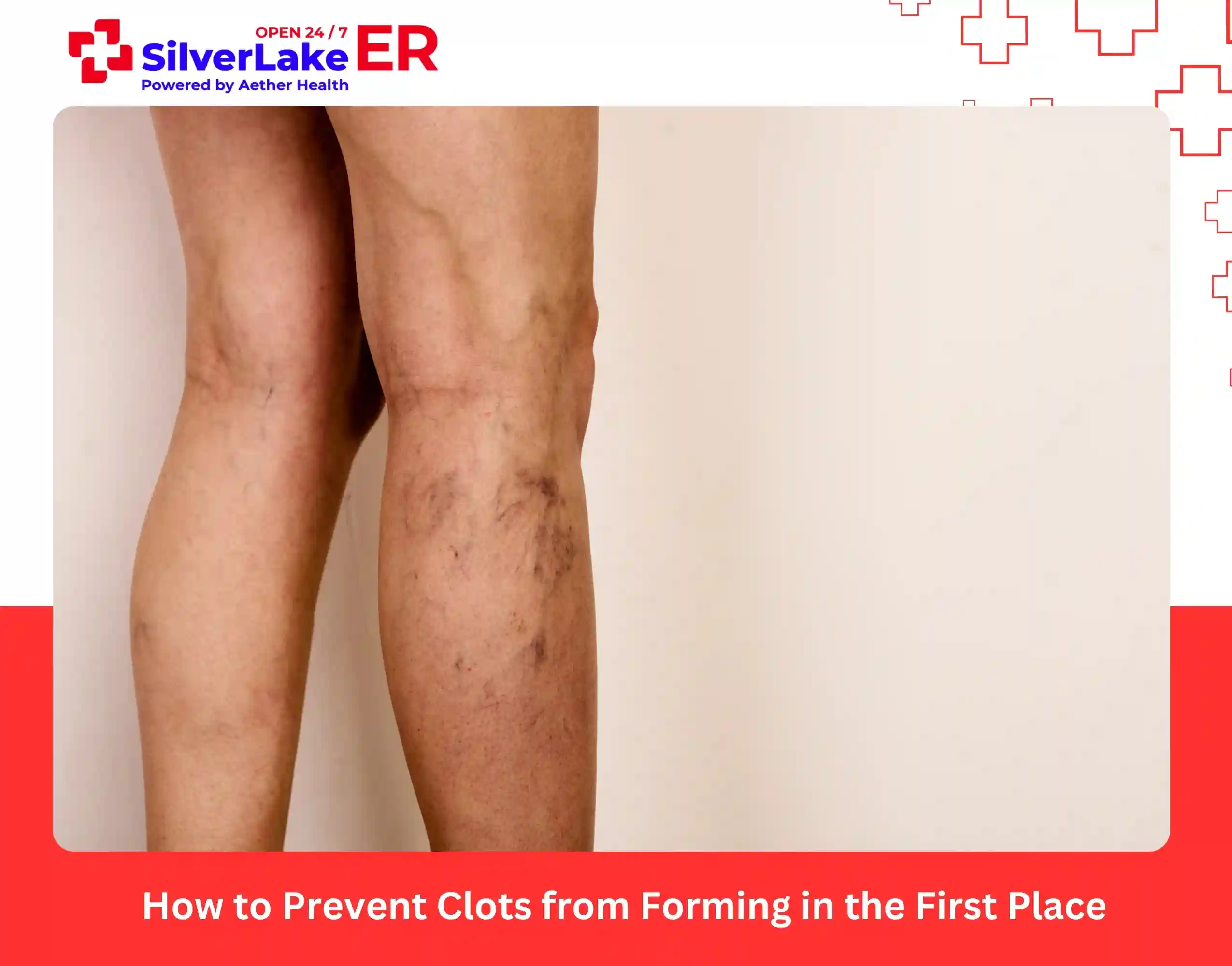
Prevention is far easier — and safer — than treatment. The most effective strategies are the lifestyle ones already mentioned, applied consistently and especially during high-risk situations.
Everyday Prevention
- Move regularly — every 60 minutes if sitting for long periods
- Stay well hydrated
- Maintain a healthy weight
- Don’t smoke
- Manage underlying conditions — blood pressure, cholesterol, diabetes
High-Risk Situations
- Long flights or drives: walk every 1–2 hours, do calf pumps, stay hydrated
- Post-surgery: follow your surgeon’s mobility plan and take prescribed prophylactic anticoagulants exactly as directed
- Pregnancy and postpartum: discuss clot risk with your OB
- Hospitalization or extended bed rest: ask about clot prevention protocols
For people at significantly elevated risk — prior DVT, certain genetic conditions, active cancer — physicians may prescribe preventive anticoagulation. This is one of the most effective ways to stop a clot before it starts.
8. Warning Signs You Need Emergency Care Immediately
Don’t wait to see if symptoms resolve. If you have any of these signs, get emergency care now.
Signs of a DVT — Same-Day ER Visit
- Swelling in one leg (rarely both)
- Pain, tenderness, or cramping in the calf or thigh
- Skin that feels warm to the touch
- Reddish or bluish discoloration
Signs of a Pulmonary Embolism — Call 911
- Sudden shortness of breath
- Sharp chest pain that worsens with deep breathing
- Coughing up blood
- Rapid heartbeat or palpitations
- Lightheadedness or fainting
Signs of an Arterial Clot — Call 911
- Chest pain or pressure (possible heart attack)
- Sudden weakness or numbness on one side of the body (possible stroke)
- Slurred speech or sudden confusion
- Sudden severe headache
- Sudden vision changes
When in doubt, get evaluated. The cost of a precautionary ER visit is small. The cost of a missed clot can be catastrophic.
9. Emergency Blood Clot Care at Aether Health – Silverlake ER

Blood clots are time-sensitive emergencies. The longer a clot is left untreated, the higher the risk of permanent damage or death. As a full-service freestanding ER in Pearland, TX, Aether Health – Silverlake ER is equipped to diagnose and stabilize clot-related emergencies 24/7 — without the long waits typical of major hospital emergency departments.
Our capabilities include:
- Rapid evaluation by board-certified emergency physicians
- On-site diagnostic imaging including CT scans and ultrasound for clot detection
- Full laboratory services including rapid D-dimer testing and clotting workup
- Anticoagulant therapy initiation and emergency stabilization
- Continuous cardiac, oxygen, and vital sign monitoring
- Emergency airway and circulatory support
- Direct hospital transfer coordination for cases requiring admission, thrombolytic therapy, or specialty intervention
We also operate on a no balance billing policy for insured patients — because medical emergencies shouldn’t come with billing ambushes.
Frequently Asked Questions
Can a blood clot be dissolved naturally without medication?
Small, superficial clots can sometimes dissolve naturally through the body’s fibrinolysis system. Dangerous clots — DVTs, pulmonary embolisms, and arterial clots — generally cannot be safely dissolved without medical treatment. Trying to wait them out is one of the most common reasons clot-related deaths happen.
How long does it take for medication to dissolve a blood clot?
It depends on the medication and the clot. Thrombolytic drugs (clot-busters) can dissolve clots within hours but are used only in life-threatening situations. Anticoagulants work differently — they prevent the clot from growing while the body’s own systems gradually dissolve it over weeks to months. Most DVT patients see significant improvement within days of starting treatment.
Are turmeric, garlic, or other supplements safe “natural blood thinners”?
Some have mild blood-thinning effects, but they aren’t dose-controlled and can interact dangerously with prescribed anticoagulants. They are never a substitute for medical treatment of a known clot, and you should always tell your physician about every supplement you take.
Can drinking water flush out blood clots?
No. Staying hydrated supports healthy circulation and is a good habit for everyone — but no amount of water will dissolve a dangerous clot. Hydration is helpful alongside medical treatment, not in place of it.
If I’m on blood thinners, when can I stop them?
Only when your physician says so. Many people feel fine after a few weeks and stop on their own — which dramatically raises the risk of clot recurrence. Most DVT and PE patients need at least 3 months of anticoagulation, and some need longer or indefinite therapy. This decision is always physician-guided.
Where is Aether Health – Silverlake ER located?
We’re located at 2752 Sunrise Blvd, Pearland, TX 77584, open 24 hours a day, 7 days a week. Call (713) 528-8703 or walk in anytime.
Suspect a Blood Clot? Get Evaluated Immediately in Pearland, TX
If you have leg swelling, sudden shortness of breath, chest pain, or any other warning sign of a blood clot — don’t wait, and don’t try to treat it at home. Walk into Aether Health – Silverlake ER and you’ll be evaluated by a board-certified emergency physician immediately. No appointment, no long waits.
📞 Call: (713) 528-8703
📍 Visit: 2752 Sunrise Blvd, Pearland, TX 77584
🌐 Online: sler247.com
🕒 Hours: Open 24/7, 365 days a year