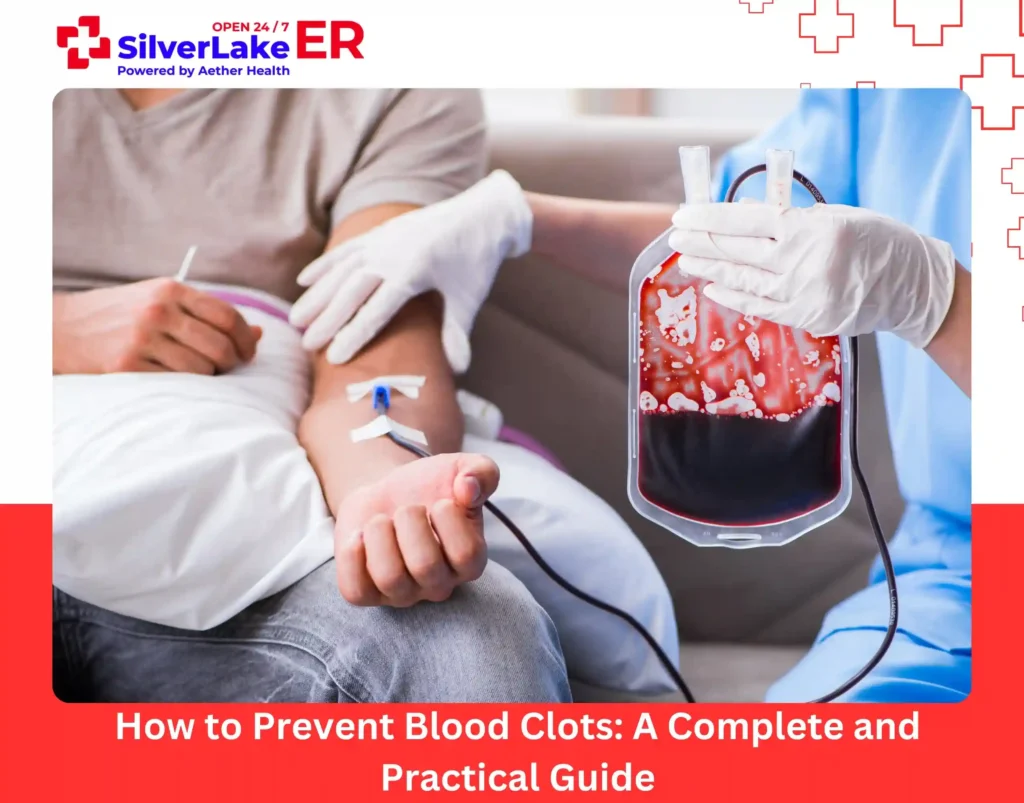
Blood clots can form silently and become dangerous if they block blood flow or travel to vital organs like the lungs. While clotting is a natural process that helps stop bleeding, unwanted clots, especially in the legs or lungs can lead to serious conditions such as deep vein thrombosis (DVT) or pulmonary embolism.
The good news is that many blood clots are preventable. This comprehensive guide explains how to prevent blood clots in daily life and high-risk situations.
Why Blood Clots Form
Blood clots usually develop when one or more of the following occur:
- Blood flow slows down.
- Blood vessels are damaged.
- The blood becomes more likely to clot.
These factors often happen during long periods of inactivity, after surgery, or due to certain medical conditions. Getting to know this helps explain why prevention focuses on keeping blood flowing and reducing risk factors.
Who Is at Higher Risk?
Some people have a higher chance of developing blood clots. You may be at increased risk if you:
- Sit or lie down for long periods.
- Have recently had surgery or injury.
- Are pregnant or recently gave birth.
- Take hormonal medications (like birth control).
- Have a history of blood clots.
- Smoke or are overweight.
Being aware of your risk level is the first step toward prevention. Plus, if you have instances that indicate blood clot, you should opt for the blood clot emergency care for timely evaluation and treatment.
How to Prevent Blood Clots in Daily Life
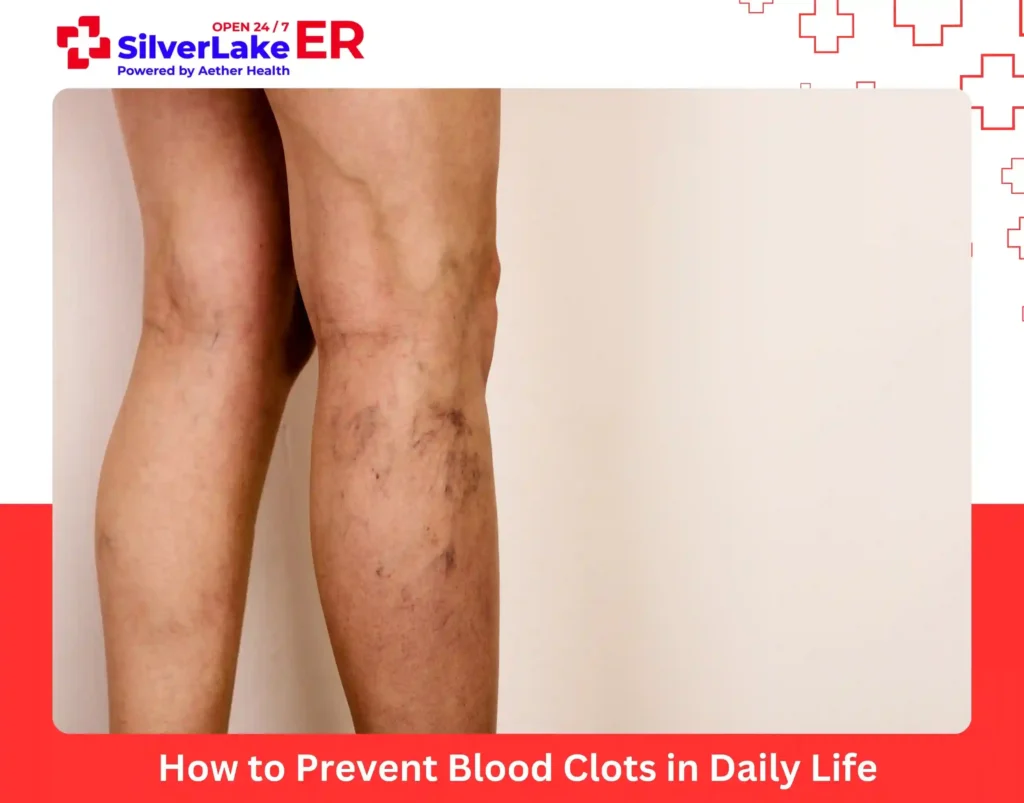
Stay Physically Active
Regular movement is one of the most effective ways to prevent blood clots. Physical activity helps maintain healthy circulation and prevents blood from pooling in the legs.
Even simple activities like walking, stretching, or standing regularly can make a significant difference. If you have a desk job, try to move around every hour to keep blood flowing.
Avoid Long Periods of Sitting
Sitting for extended periods slows blood flow in the legs, increasing the risk of clot formation.
If you must sit for long hours:
- Stand up and walk every 1–2 hours.
- Stretch your legs regularly.
- Flex and move your feet while seated.
This is especially important during long travel or sedentary work.
Stay Hydrated
Dehydration can make blood thicker and more likely to clot. Drinking enough water throughout the day helps maintain proper blood consistency and circulation.
Avoid excessive caffeine or alcohol, as they can contribute to dehydration.
Maintain a Healthy Weight
Excess weight puts pressure on veins and can slow circulation, particularly in the lower body. Maintaining a healthy weight improves blood flow and reduces overall clotting risk.
Quit Smoking
Smoking damages blood vessels and increases the tendency of blood to clot. Quitting smoking is one of the most important steps you can take for overall vascular health.
Blood Clots Prevention During Travel
Long trips, especially flights or car rides are a common risk factor for blood clots.
To reduce your risk:
- Stand and walk whenever possible.
- Stretch your legs while seated.
- Wear loose, comfortable clothing.
- Stay hydrated.
- Avoid crossing your legs for long periods.
For high-risk individuals, doctors may recommend compression stockings during travel.
Blood Clots Prevention After Surgery or Illness
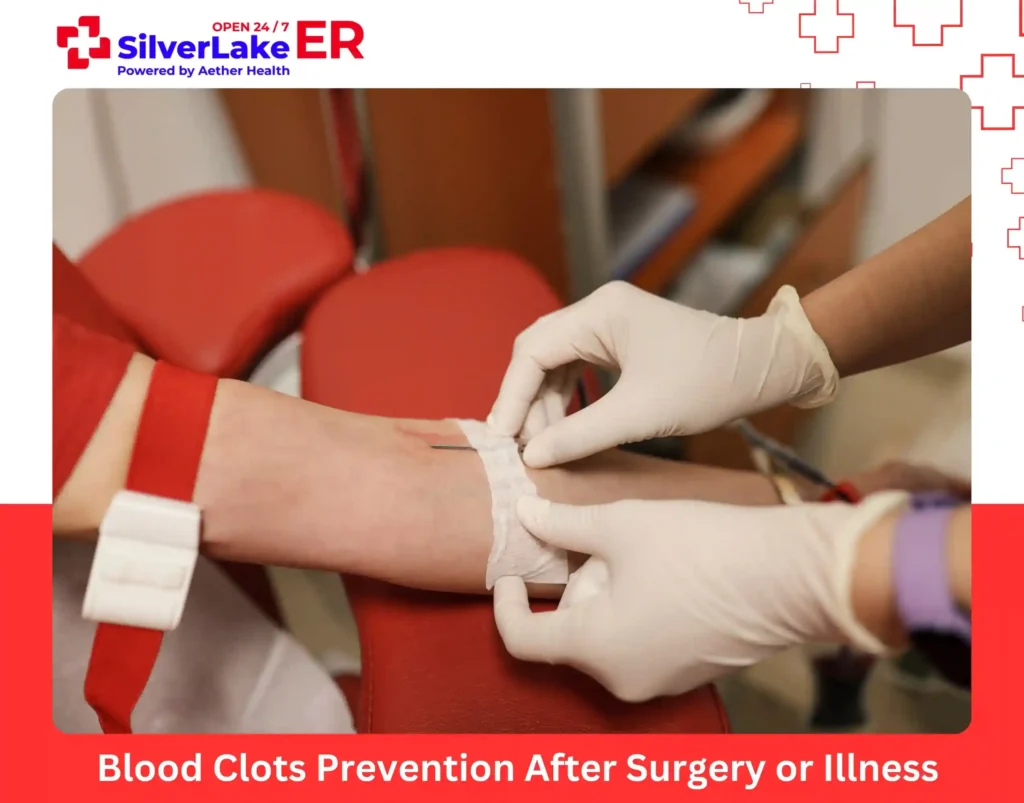
After surgery or during recovery from illness, the risk of blood clots increases due to reduced mobility.
Follow Medical Advice
Doctors may recommend:
- Blood-thinning medications.
- Compression stockings.
- Early movement and physical therapy.
Following these instructions carefully is essential for prevention.
Start Moving as Soon as Possible
Even small movements, such as sitting up or walking short distances, can significantly improve circulation and reduce clot risk.
Compression Stockings and Medical Prevention
Compression stockings help improve blood flow in the legs by applying gentle pressure.
They are especially useful for:
- People with limited mobility.
- Those recovering from surgery.
- Individuals with a history of clots.
These should be used as directed by a healthcare provider.
Lifestyle Changes That Reduce Risk
Long-term prevention involves maintaining a healthy lifestyle.
Eat a Balanced Diet
A diet rich in fruits, vegetables, and whole grains supports healthy blood vessels and circulation.
Exercise Regularly
Consistent physical activity keeps the cardiovascular system functioning efficiently.
Manage Chronic Conditions
Conditions like diabetes, high blood pressure, and heart disease should be properly managed to reduce clot risk.
Warning Signs to Watch For
Even with prevention, it’s important to recognize symptoms of a possible blood clot.
Seek medical attention if you notice:
- Swelling in one leg.
- Pain or tenderness.
- Warm or discolored skin.
- Sudden shortness of breath.
- Chest pain.
Early detection can prevent serious complications.
When to Talk to a Doctor
You should consult a doctor or visit a nearby 24/7 emergency room if:
- You have a history of blood clots.
- You are planning surgery or long travel.
- You have multiple risk factors.
- You notice any unusual symptoms.
A healthcare provider can recommend personalized prevention strategies based on your risk level.
Final Thoughts
So, how to prevent blood clots?
The most effective approach is to stay active, maintain healthy circulation, and manage risk factors. Simple habits like moving regularly, staying hydrated, and following medical advice can make a significant difference.
Blood clots are often preventable, and small daily actions can greatly reduce your risk of serious complications.
FAQs
What is the best way to prevent blood clots?
Staying active, avoiding long periods of sitting, and staying hydrated are the most effective ways.
Can drinking water prevent blood clots?
Yes, proper hydration helps keep blood from becoming too thick.
Are blood clots preventable?
Many blood clots can be prevented with lifestyle changes and medical care when needed.
Who is most at risk for blood clots?
People who are inactive, recovering from surgery, pregnant, or have a history of clots.
Do compression stockings help prevent blood clots?
Yes, they improve circulation and are often recommended for high-risk individuals.