
Few medical terms get confused more often than medical imaging vs diagnostic imaging. You hear one from your doctor, another on your insurance form, and sometimes a third from the hospital’s billing office. The three documents may describe the exact same test, yet somehow use different labels for it. If you have ever stared at a radiology order feeling lost in the jargon, you are not alone.
Below is a plain-language Q&A that walks through every question patients actually ask about medical imaging vs diagnostic imaging. Each question is answered the way a radiology nurse would explain it to a friend, with the small technical distinctions noted where they matter and the everyday reality where they do not.
THE ONE-LINE ANSWER
Medical imaging and diagnostic imaging describe the same tests more than 95 percent of the time. Medical imaging is the broader umbrella term, while diagnostic imaging specifically refers to using those tests to identify a condition.
So, Are These Two Terms Really the Same Thing?
Almost always, yes. In nearly every clinic, hospital, and ER visit, the two phrases describe the same tests performed by the same technicians and reviewed by the same radiologists. The MedlinePlus patient resource on diagnostic imaging groups them together under the single heading of imaging, which reflects how most medical professionals actually use the terms day to day.¹
A hospital’s Medical Imaging Department and a clinic’s Diagnostic Imaging Center usually offer identical services. The equipment is the same. The staff training is the same. Even insurance billing treats them the same way, assigning codes based on the specific test performed rather than which term labels the department.
What Exactly Is Medical Imaging, Then?
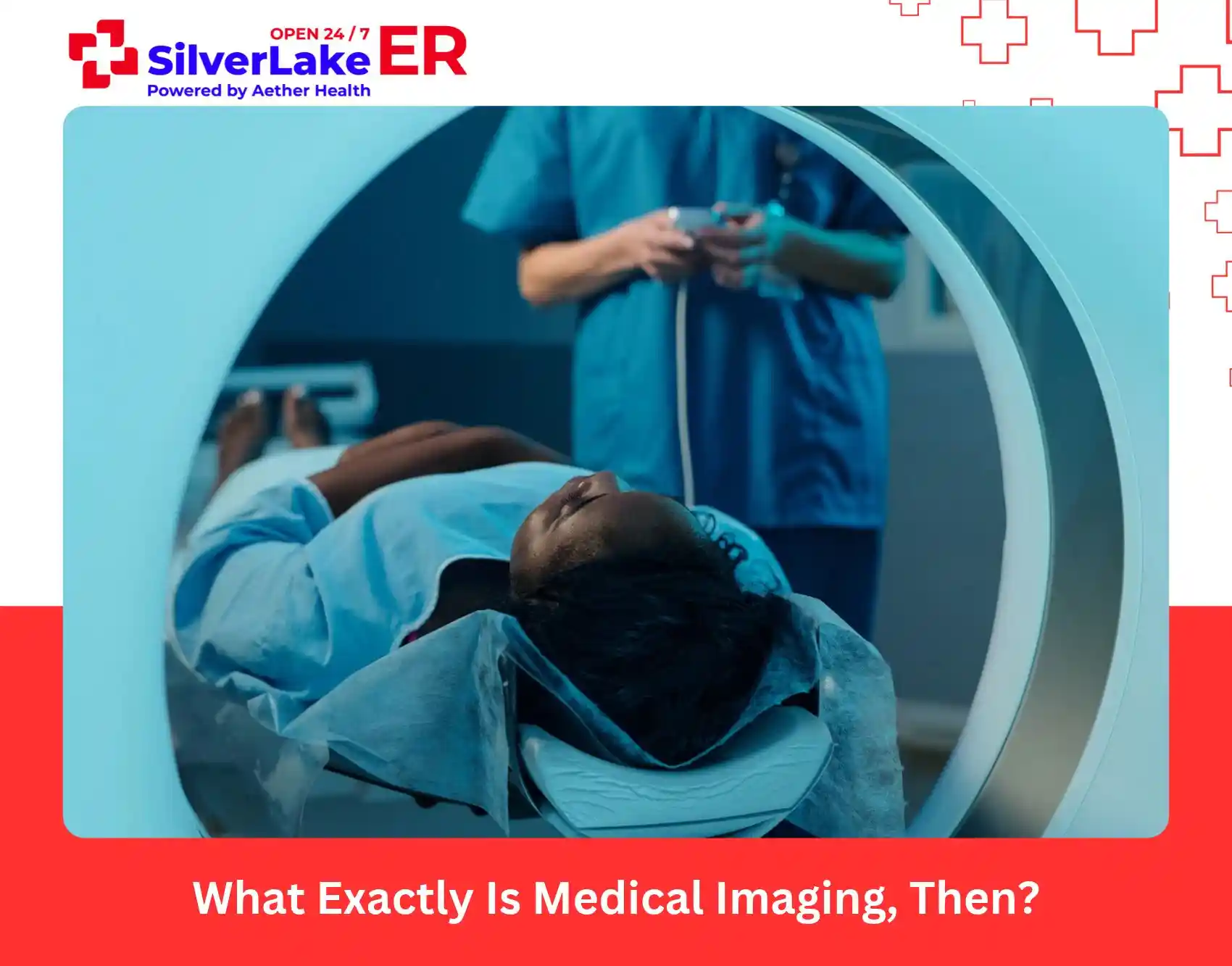
Medical imaging is the umbrella term that covers every use of imaging technology in medicine. That includes diagnosis, screening, treatment planning, procedure guidance, monitoring response to therapy, and research. If an imaging machine produces a picture of the body for any medical purpose, that falls under medical imaging.
The term appears most often in hospital department names, textbooks, academic papers, and medical school curricula. Professional organizations and equipment manufacturers prefer medical imaging because it describes the full field without limiting it to any single purpose.
And What About Diagnostic Imaging? How Is It Different?
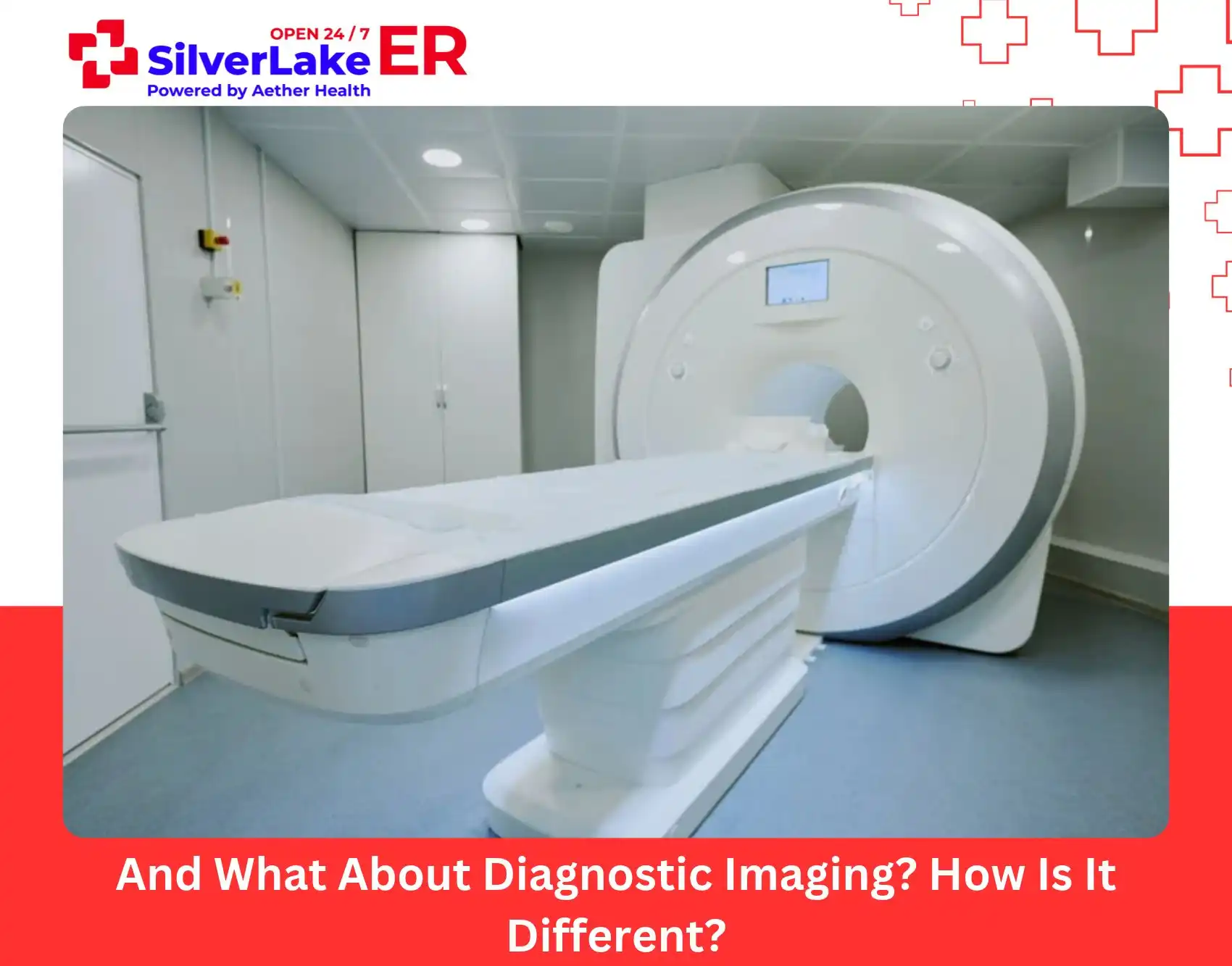
Diagnostic imaging is the specific subset of medical imaging that is used to identify or confirm a medical condition. Every diagnostic imaging test is a medical imaging test, but not every medical imaging test qualifies as diagnostic imaging. The difference comes down to the purpose of the scan.
When your doctor orders a CT scan to figure out what is causing your abdominal pain, that is diagnostic imaging. When a radiologist uses a CT scan to guide a needle biopsy, that is medical imaging but technically not diagnostic imaging, because the purpose has shifted from diagnosing to treating.
Where Is the Real Difference, In Practice?
Three technical distinctions separate the terms when precision matters. These rarely affect patients directly, but they are the reason the two words exist alongside each other.
DISTINCTION 1 Medical imaging is the parent category. It includes every imaging-related activity in medicine, from diagnosis and screening to therapy guidance and research. It is the whole family of uses.
DISTINCTION 2 Diagnostic imaging focuses purely on identifying conditions. It describes imaging performed to answer the question of what is causing a symptom. Once the purpose shifts to treating or monitoring, the test is no longer diagnostic imaging in the technical sense.
DISTINCTION 3 Interventional imaging sits apart from both labels. Image-guided procedures like biopsies, catheter placements, and tumor ablations use the same equipment but qualify as interventional rather than diagnostic imaging.
Who Uses Which Term and When?
Different people in healthcare prefer different terms. Recognizing the patterns helps you understand what you are reading on orders, reports, and insurance paperwork.
| Who Says It | Which Term They Prefer | Why |
| Hospitals and health systems | Medical imaging (department names) | Broader, more academic |
| Physicians writing orders | Diagnostic imaging (order forms) | Specifies the purpose |
| Radiologists in reports | Diagnostic or interventional imaging | Describes what the scan accomplished |
| Insurance companies and billing | Imaging services (catch-all) | Neutral, procedure-code driven |
| Patients and families | X-ray, CT, MRI, ultrasound (specific tests) | Focuses on the actual test |
Why Does Nobody Agree on These Terms?
The confusion is historical. Imaging in medicine began purely as a diagnostic tool when X-rays entered clinical use in the late 1890s. Over the next century, advances in ultrasound and other modern imaging modalities expanded imaging into treatment planning, screening, surgical guidance, and continuous monitoring. The vocabulary grew unevenly.²
Medical imaging became the umbrella that accommodated the expanding scope. Diagnostic imaging survived as the label for the original purpose. Hospitals, insurers, and medical schools adopted whichever term fit their context, and the terminology never fully converged. Today most patients encounter both terms within the same visit and neither one is technically wrong.
Which Tests Fall Under Both Labels?

Six categories of tests account for most imaging you will ever encounter, regardless of which term your paperwork uses.
X-ray is the oldest and most common. It uses low-dose radiation to produce images of bones and chest structures. Quick, inexpensive, and still the workhorse of emergency medicine.
CT scan uses rotating X-ray beams and computer reconstruction to build cross-sectional slices of the body. It is especially good for head trauma, internal bleeding, and abdominal pain.
MRI uses magnetic fields and radio waves to produce highly detailed images of soft tissue. It excels at brain, spine, joint, and tumor visualization. Our emergency care for fractures team coordinates MRI when complex bone or ligament injuries need deeper evaluation.
Ultrasound sends sound waves into the body and captures the echoes. No radiation. Ideal for pregnancy, gallbladder, blood flow, and real-time bedside evaluation.
Echocardiogram is a specialized ultrasound of the heart that shows chamber function and blood flow patterns in motion. Core to cardiac emergency workup.
Nuclear medicine uses tiny amounts of radioactive material to produce functional images showing how organs work. Bone scans, cardiac perfusion studies, and some cancer evaluations use this technology.
What Does This Mean for Me as a Patient?
For practical purposes, almost nothing. The terminology difference does not change the test you receive, the quality of the images, or the accuracy of the results. What matters is whether the facility performing your imaging has the equipment, staffing, and speed your situation needs.
Freestanding ERs combine fast on-site imaging with full emergency capabilities. For major injuries, our trauma emergency services at Silverlake ER combine imaging with physician evaluation and specialist coordination in a single location. Our diagnostic imaging services at Silverlake ER include on-site X-ray, CT, ultrasound, and coordinated MRI, available 24 hours a day without appointments, with results typically ready within the same visit.
Frequently Asked Questions
Is one term more professional than the other?
Not really. Medical imaging is slightly more common in academic and institutional settings. Diagnostic imaging shows up more in clinical order forms and physician notes. Both are standard and professional in every context you will encounter.
Will my insurance cover the same tests under both names?
Yes. Insurance plans cover specific imaging procedures based on their billing codes, not on whether a provider calls the service medical imaging or diagnostic imaging. Coverage terms remain the same across both labels.
If my doctor says medical imaging but my order says diagnostic imaging, is that a problem?
No. The mismatch happens often and does not indicate an error. The specific test ordered (CT, MRI, X-ray) is what matters, not which umbrella term labels it. Your radiologist and billing office will process it correctly regardless.
Does a freestanding ER offer the same imaging as a hospital?
Equipment and protocols are the same at both. The difference is access and speed. Freestanding ERs usually offer shorter wait times, same-visit results, and walk-in access without the appointment delays common at outpatient imaging centers.
Who actually reads my imaging results?
A radiologist, a physician trained specifically in imaging interpretation, writes the final report. Emergency physicians also view images immediately during ER visits to make time-sensitive clinical decisions before the formal report is issued.
Need Imaging Services in Pearland?
Call it medical imaging. Call it diagnostic imaging. When you need it fast, the name matters less than the capability. Silverlake ER is a freestanding emergency room at 2752 Sunrise Blvd, Pearland, TX 77584, with on-site imaging, board-certified physicians, and 24/7 walk-in access. Call +1 (713) 528-8703, walk in anytime, or contact our team with questions about our imaging capabilities.
Call 911 immediately for life-threatening emergencies including sudden chest pain, stroke signs, severe difficulty breathing, major trauma, or loss of consciousness. For symptoms that need imaging but are not life-threatening, walk-in evaluation at a freestanding ER is often the fastest option.