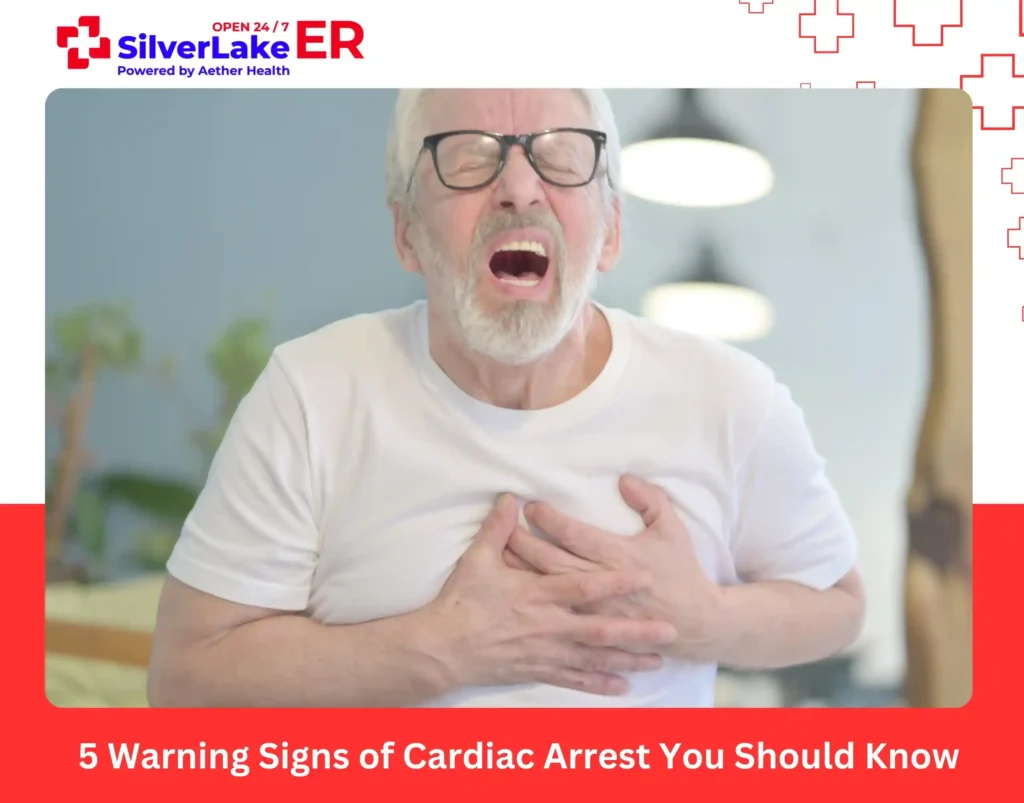
Cardiac arrest is one of the most time-sensitive medical emergencies — and one of the most misunderstood. Most people picture it as a sudden, unpredictable event with no warning. The reality is different: research shows that more than half of cardiac arrest victims experience warning signs in the hours, days, or even weeks before the event. Recognizing them can be the difference between a near miss and a fatal outcome.
Here are the 5 warning signs of cardiac arrest you should know:
- Sudden chest pain or pressure — especially with exertion or stress
- Severe, unexplained shortness of breath — at rest or with mild activity
- Unexplained fainting or near-fainting — the single most predictive warning sign
- Heart palpitations or a racing heartbeat — especially if recurrent
- Sudden collapse and unresponsiveness — the moment-of-arrest sign
This guide explains each warning sign, what makes it serious, and what to do if you or someone you love experiences them. At Aether Health – Silverlake ER in Pearland, TX, our board-certified emergency physicians evaluate cardiac warning signs 24/7 — and early evaluation can stop cardiac arrest before it happens.
1. Sign #1: Sudden Chest Pain or Pressure
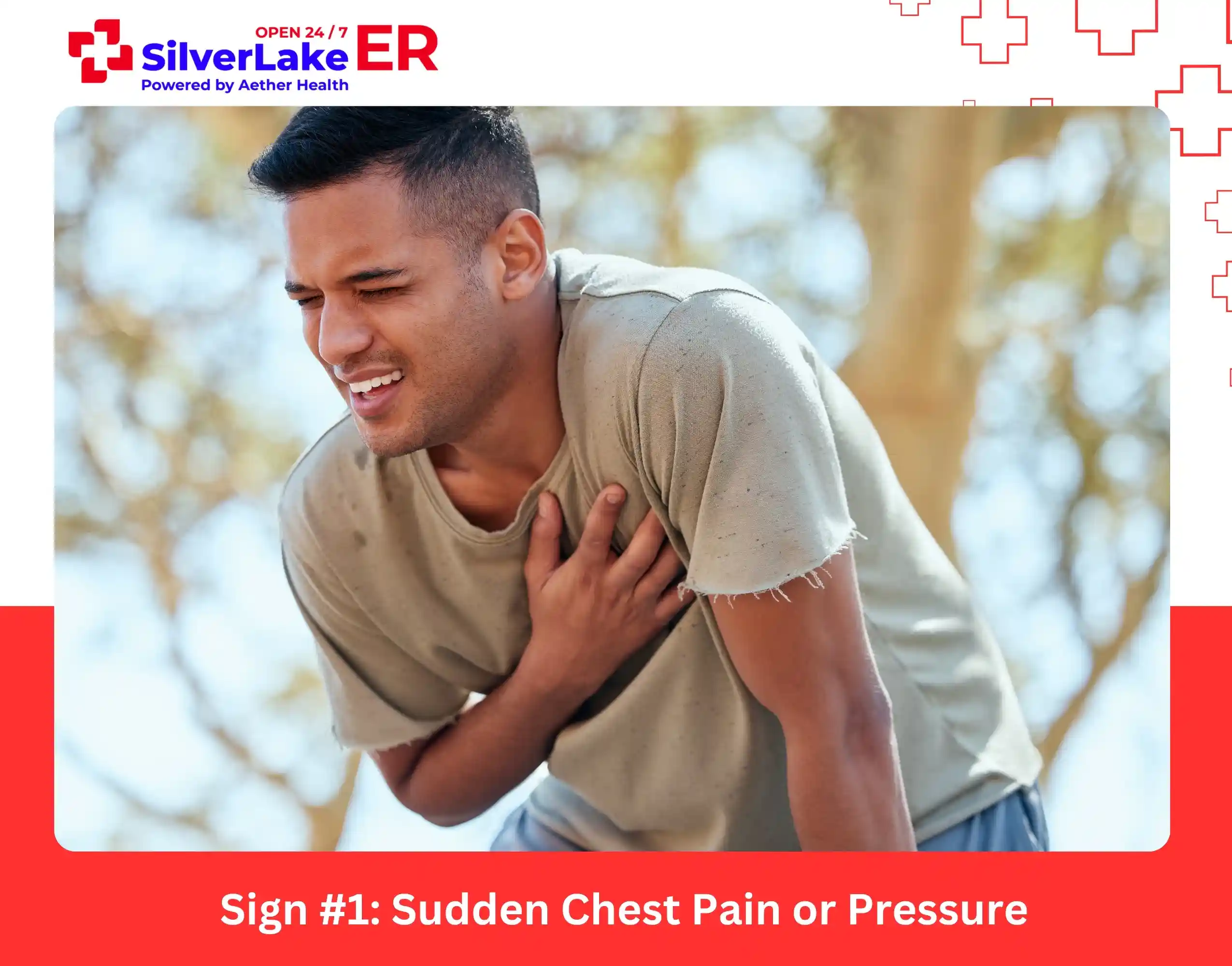
Chest discomfort is the most common warning sign of an impending cardiac event. It doesn’t always feel like the dramatic, crushing pain you see in movies. It can be subtle — a heaviness, tightness, squeezing, or fullness in the center of the chest.
What to Look For
- Pressure, squeezing, or fullness in the chest — sometimes mistaken for indigestion
- Pain that radiates to the arm (often left), jaw, neck, back, or upper abdomen
- Discomfort that lasts more than a few minutes, or comes and goes
- Pain that worsens with physical activity and eases with rest
- Chest discomfort accompanied by sweating, nausea, or shortness of breath
Why It Matters
Chest pain often indicates that the heart muscle isn’t getting enough oxygen — usually because of a blocked or narrowed coronary artery. This is the same underlying problem that causes most heart attacks, and a heart attack can trigger cardiac arrest. Treating the chest pain early prevents the cascade.
What People Get Wrong
Many people — especially men — try to “walk it off” or attribute chest pain to stress, indigestion, or muscle strain. Women often experience chest pain differently: as pressure or discomfort rather than sharp pain, and sometimes without any chest symptoms at all. If chest discomfort is new, unusual, or recurrent, get evaluated. It costs nothing to be wrong about it. It can cost everything to be right.
2. Sign #2: Severe, Unexplained Shortness of Breath
Shortness of breath can have many causes — anxiety, deconditioning, asthma, lung disease. But sudden, unexplained shortness of breath is a major warning sign for cardiac problems and deserves immediate medical attention.
What to Look For
- Trouble catching your breath at rest or with mild activity
- Shortness of breath that wakes you up at night
- Sudden worsening of your normal exercise tolerance
- Difficulty breathing while lying flat that improves when sitting up
- Shortness of breath paired with chest discomfort, sweating, or lightheadedness
Why It Matters
When the heart isn’t pumping effectively, fluid can back up into the lungs, making it harder to breathe. The body also senses reduced oxygen delivery to tissues and triggers a breathing response. Cardiac shortness of breath often appears alongside other warning signs — but it can also be the first or only symptom, especially in women, older adults, and people with diabetes.
What People Get Wrong
Many people dismiss new breathlessness as a sign of being out of shape, gaining weight, or getting older. If your normal breathing pattern changes suddenly — especially without a clear cause — don’t write it off.
3. Sign #3: Unexplained Fainting or Near-Fainting
Fainting (syncope) and near-fainting are among the most predictive warning signs of cardiac arrest — and yet they’re often dismissed as benign. Multiple studies have found that a recent fainting episode is one of the strongest predictors of sudden cardiac arrest in the following weeks and months.
What to Look For
- Sudden loss of consciousness without obvious cause
- Brief blackouts or “missing time”
- Severe lightheadedness or near-fainting, especially with exertion
- Fainting during exercise or strenuous activity (a major red flag)
- Fainting without warning, or with only a few seconds of dizziness beforehand
Why It Matters
Fainting can happen when the heart momentarily fails to pump enough blood to the brain. This may be caused by a brief abnormal heart rhythm — the same kind of rhythm that, if it doesn’t self-correct, can become cardiac arrest. Cardiac syncope (fainting from a heart cause) carries a significantly higher risk of sudden cardiac death than other types of fainting.
What People Get Wrong
Most fainting is benign — caused by dehydration, standing up too fast, or temporary blood pressure drops. But cardiac fainting often has specific features: it happens with exertion, it has no warning, or it happens to someone with known heart disease or a family history of sudden cardiac death. Any unexplained fainting deserves medical evaluation. Fainting during exercise is an emergency until proven otherwise.
Key fact: If you’ve had an unexplained fainting episode, don’t wait for your next regular doctor’s appointment. Get evaluated promptly. This is one of the most overlooked warning signs of cardiac arrest.
4. Sign #4: Heart Palpitations or Racing Heartbeat
Palpitations — the sensation of your heart pounding, fluttering, skipping, or racing — are common and usually harmless. But some palpitations are warning signs of dangerous heart rhythm problems that can lead to cardiac arrest.
What to Look For
- Sudden, sustained rapid heartbeat (often >100 beats per minute at rest)
- Sensation of the heart “flipping” or skipping beats repeatedly
- Palpitations paired with chest pain, shortness of breath, or dizziness
- Palpitations that don’t resolve within a few minutes
- Episodes that occur with exertion or wake you from sleep
Why It Matters
Some palpitations represent abnormal heart rhythms (arrhythmias) like atrial fibrillation, ventricular tachycardia, or supraventricular tachycardia. Many arrhythmias are manageable. But certain ventricular arrhythmias can deteriorate into ventricular fibrillation — the chaotic rhythm that causes most cardiac arrests.
What People Get Wrong
Anxiety, caffeine, dehydration, and stress all cause palpitations that are usually harmless. The key is distinguishing benign palpitations from dangerous ones. Palpitations are concerning when they’re sustained, recurrent, paired with other symptoms (chest pain, fainting, severe shortness of breath), happen during exertion, or occur in someone with known heart disease or family history of sudden cardiac death.
5. Sign #5: Sudden Collapse and Unresponsiveness
This isn’t a warning sign in the same sense as the others — it’s the moment cardiac arrest itself occurs. But it’s listed here because every minute counts from this point on, and the first 60 seconds of recognition determine whether someone survives.
What to Look For
- Sudden collapse with no warning — often mid-activity or mid-conversation
- Unresponsiveness when shaken, called by name, or pinched
- No normal breathing — or only gasping, gurgling, or snoring-like breaths
- No detectable pulse
- Skin that turns pale, gray, or bluish, especially around the lips and fingertips
What to Do — Immediately
- Call 911. Or have someone nearby do it while you start CPR.
- Start hands-only CPR. Push hard and fast in the center of the chest — about 100 to 120 compressions per minute, roughly 2 inches deep.
- Use an AED if one is available. Public AEDs are designed for bystanders and provide voice instructions.
- Don’t stop until paramedics arrive. Or until the person starts breathing normally.
Immediate bystander CPR can double or triple the chances of survival. For every minute that passes without CPR, survival rates drop by roughly 10%. This is the warning sign that can’t be ignored or rationalized.
Critical: Agonal breathing — irregular gasping or gurgling — is often mistaken for normal breathing. It’s a reflex of cardiac arrest, not a sign that the person is okay. If they’re unresponsive and only gasping, start CPR.
6. Other Warning Signs Worth Knowing
The 5 signs above are the most common and most predictive. But cardiac warning signs can include several others that are easy to overlook — particularly in women, older adults, and people with diabetes.
- Sudden severe sweating, especially cold sweats unrelated to exercise or heat
- Unusual or extreme fatigue, especially with normal activity
- Nausea or vomiting paired with chest or arm discomfort
- Sudden weakness or dizziness that doesn’t resolve quickly
- Indigestion-like discomfort that doesn’t respond to antacids
- A vague sense of impending doom or unusual anxiety
Women in particular often present with atypical symptoms — fatigue, nausea, jaw or back pain, or shortness of breath without chest pain. These atypical patterns are part of why women’s cardiac events are more often missed or diagnosed late.
7. Why Most People Miss the Warning Signs
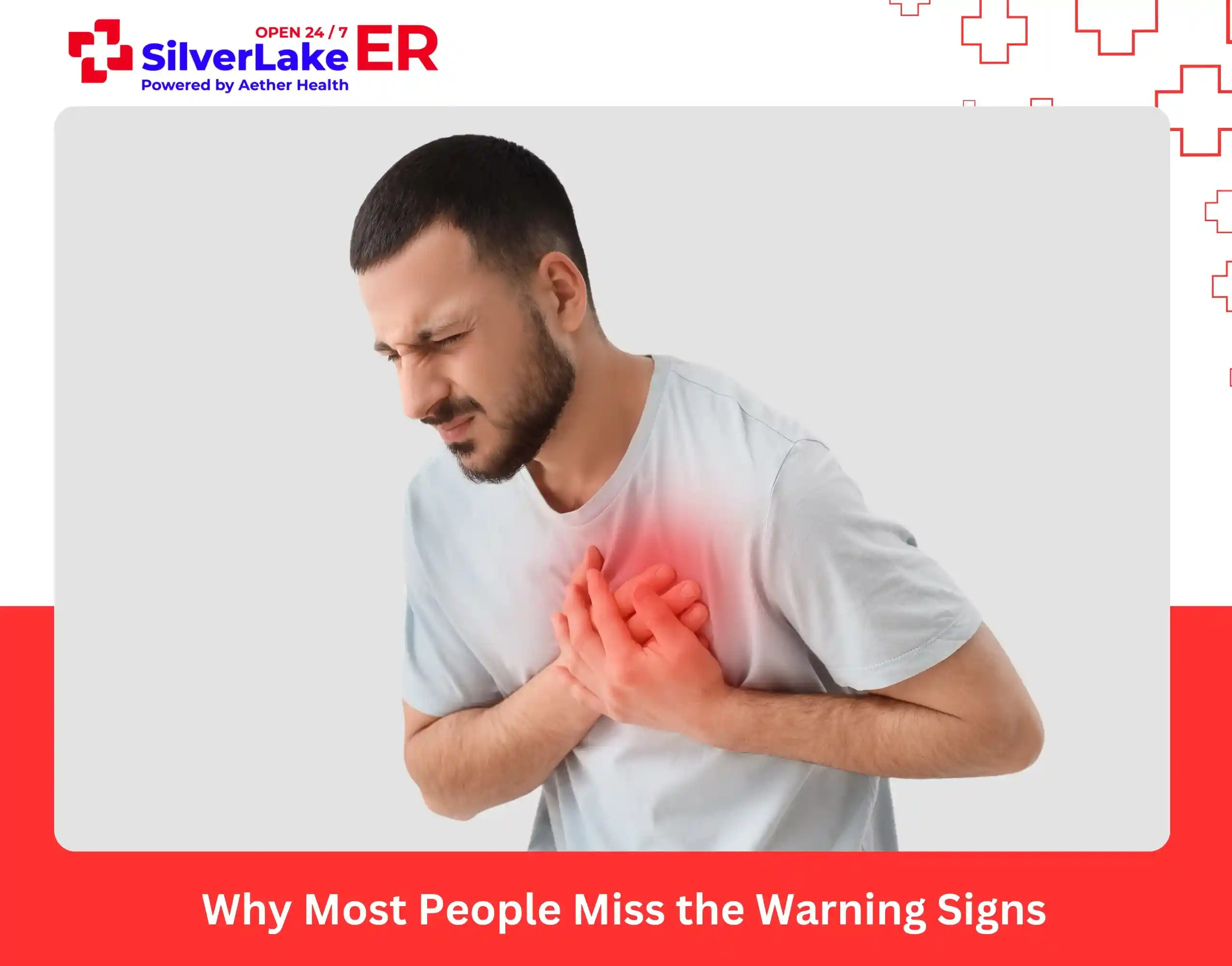
Cardiac arrest warning signs are often missed for the same handful of reasons. Knowing them can help you push past denial — your own or someone else’s.
- The symptoms feel manageable. Most cardiac warning signs aren’t dramatic. Mild chest pressure or a few episodes of breathlessness can easily seem like indigestion, stress, or being out of shape.
- The symptoms come and go. Intermittent symptoms are easier to dismiss than persistent ones. People reassure themselves when the chest pain stops — even though it returns.
- Denial is a built-in response. “I don’t have time for this.” “It’s probably nothing.” These reactions are common and dangerous.
- Symptoms don’t match the stereotype. Especially for women and people under 60, cardiac symptoms can look subtle — fatigue, nausea, jaw discomfort — and don’t fit the chest-clutching image of a heart attack.
- Fear of overreacting. Many people avoid the ER because they’re worried about wasting time or money. A precautionary ER visit is far better than a missed warning.
8. What to Do If You Notice Warning Signs
If you or someone you love is experiencing any of these warning signs — especially if they’re new, unusual, or recurrent — take action.
If There’s an Active Emergency
Collapse, unresponsiveness, severe chest pain, or sudden severe shortness of breath are emergencies. Call 911 immediately or get to an ER right away. Start CPR if the person is unresponsive and not breathing normally.
If the Warning Signs Are Less Acute
Recurrent chest discomfort, unexplained fainting, recurring palpitations, or worsening shortness of breath don’t always require a 911 call — but they do require prompt medical evaluation. Walk into an emergency room or contact a cardiologist within days, not weeks. Many cardiac arrests are preceded by warning signs that could have been investigated.
Know Your Family History
If you have a parent or sibling who experienced sudden cardiac death — especially before age 50 — your risk is significantly higher. Tell your doctor and consider genetic counseling and cardiac screening.
9. Emergency Cardiac Care at Aether Health – Silverlake ER
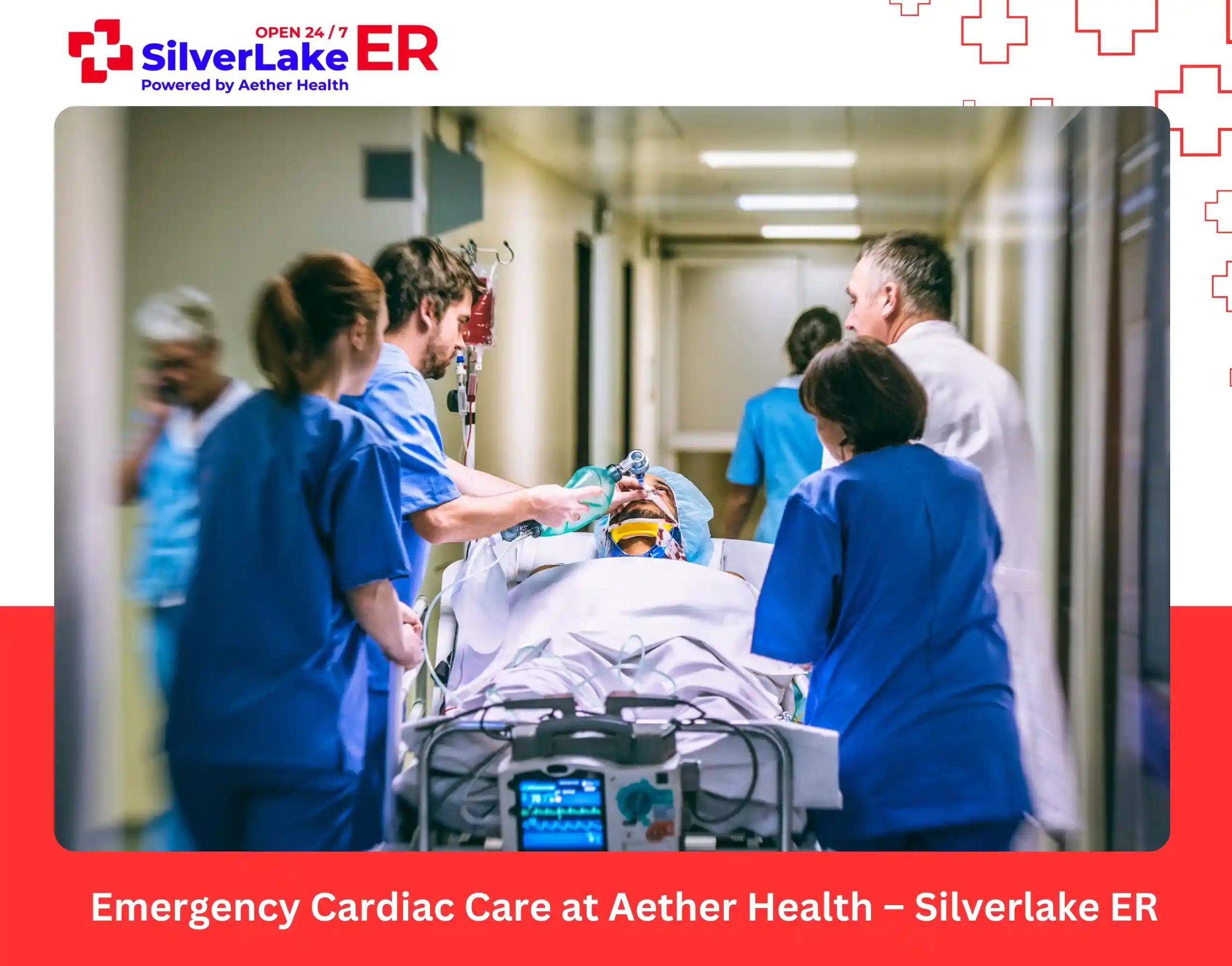
Cardiac warning signs need fast evaluation. Long ER waits at major hospitals can mean dangerous delays — particularly when the underlying cause is an unstable heart rhythm that could progress to cardiac arrest. As a full-service freestanding ER in Pearland, TX, Aether Health – Silverlake ER is equipped to deliver hospital-level cardiac emergency care 24/7 — without the long waits typical of major hospital emergency departments.
Our cardiac evaluation capabilities include:
- Rapid evaluation by board-certified emergency physicians
- On-site EKG and continuous cardiac monitoring
- Advanced Cardiac Life Support (ACLS) protocols
- On-site laboratory for rapid cardiac enzyme testing (troponin)
- Diagnostic imaging including chest X-ray and CT scans
- Defibrillation and emergency airway management
- Stabilization and direct hospital transfer coordination for advanced cardiac care
We also operate on a no balance billing policy for insured patients — because medical emergencies shouldn’t come with billing ambushes.
Frequently Asked Questions
How long before cardiac arrest do warning signs appear?
Warning signs can appear anywhere from a few minutes to several weeks before cardiac arrest. Research shows more than half of cardiac arrest victims experience some warning sign in the 4 weeks leading up to the event — most commonly chest pain or shortness of breath in the 24 hours before.
Are cardiac arrest warning signs different in women?
Yes. Women are more likely to experience atypical symptoms — fatigue, nausea, jaw or back pain, shortness of breath without chest pain, or vague indigestion-like discomfort. This is part of why cardiac events in women are more frequently missed or diagnosed late. Any unusual or persistent symptom in a woman with cardiac risk factors deserves evaluation.
Can cardiac arrest happen with no warning signs at all?
Yes. About 40–50% of cardiac arrest victims have no recognized warning signs before the event. This is one reason why knowing CPR, having AEDs in public places, and being trained to recognize sudden collapse all matter so much. Even when warning signs are absent, fast bystander response is what saves lives.
Should I go to the ER for chest pain, or wait to see my doctor?
For new, unusual, or severe chest pain — especially if paired with shortness of breath, sweating, or radiating discomfort — go to the ER immediately. Waiting for a scheduled doctor’s appointment when cardiac symptoms are present is a major cause of preventable cardiac deaths.
Can young, healthy people have warning signs of cardiac arrest?
Yes. Cardiac arrest in young, otherwise healthy people is often caused by inherited electrical disorders, structural heart abnormalities (like hypertrophic cardiomyopathy), or conditions affecting young athletes. Any unexplained fainting during exercise, recurrent palpitations, or family history of sudden cardiac death in someone under 50 warrants medical evaluation regardless of age or fitness level.
Where is Aether Health – Silverlake ER located?
We’re located at 2752 Sunrise Blvd, Pearland, TX 77584, open 24 hours a day, 7 days a week. Call (713) 528-8703 or walk in anytime.
Cardiac Warning Signs? Get Evaluated Immediately in Pearland, TX
If you or someone you love is experiencing chest pain, shortness of breath, fainting, palpitations, or any other cardiac warning sign — don’t wait for it to escalate. Early evaluation can prevent cardiac arrest before it happens. Walk into Aether Health – Silverlake ER and you’ll be evaluated by a board-certified emergency physician immediately — no appointment, no long waits.
📞 Call: (713) 528-8703
📍 Visit: 2752 Sunrise Blvd, Pearland, TX 77584
🌐 Online: sler247.com
🕒 Hours: Open 24/7, 365 days a year