
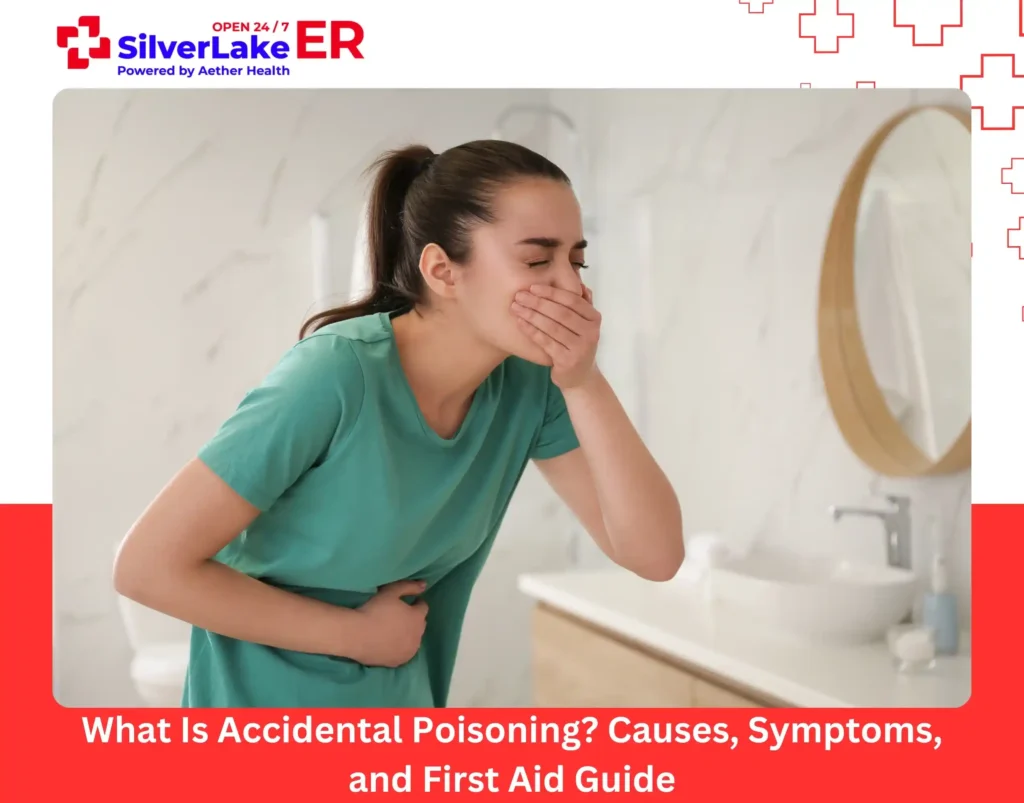
Accidental poisoning is one of the most common and most preventable medical emergencies in the United States. According to the CDC, poisoning is the leading cause of injury-related death in the country, accounting for more emergency room visits than motor vehicle accidents. The majority of these cases happen at home, often with everyday products that no one expected to be dangerous.
Knowing what accidental poisoning is, how to spot it quickly, and what to do in the first few minutes can save a life. This guide walks you through the causes, symptoms, and emergency first aid steps in plain language. At Aether Health – Silverlake ER in Pearland, TX, our board-certified emergency physicians treat poisoning emergencies 24/7 but the faster the right response begins at home, the better the outcome.
1. What Accidental Poisoning Actually Is
Accidental poisoning is harmful exposure to a substance that wasn’t intended to cause harm. The exposure may come from swallowing, breathing in, absorbing through the skin, or being injected with something toxic. The word “poison” is broader than most people think it includes medications taken in the wrong dose, household cleaners, carbon monoxide, pesticides, certain plants, alcohol, recreational drugs, contaminated food, and even some cosmetics.
It’s worth clarifying what accidental poisoning is not:
- It’s different from intentional poisoning, which involves deliberate harm and requires both medical and protective intervention.
- It’s different from foodborne illness, which is caused by bacteria, viruses, or parasites in food. Foodborne illness is technically a form of poisoning, but the treatment approach is usually different.
- It’s different from an allergic reaction, which is your immune system overreacting to a substance, not the substance itself being toxic.
Key point: “Accidental” doesn’t mean “minor.” An accidental medication overdose, carbon monoxide leak, or chemical exposure can be just as life-threatening as any other medical emergency.
2. How Poisons Enter the Body (Routes of Exposure)
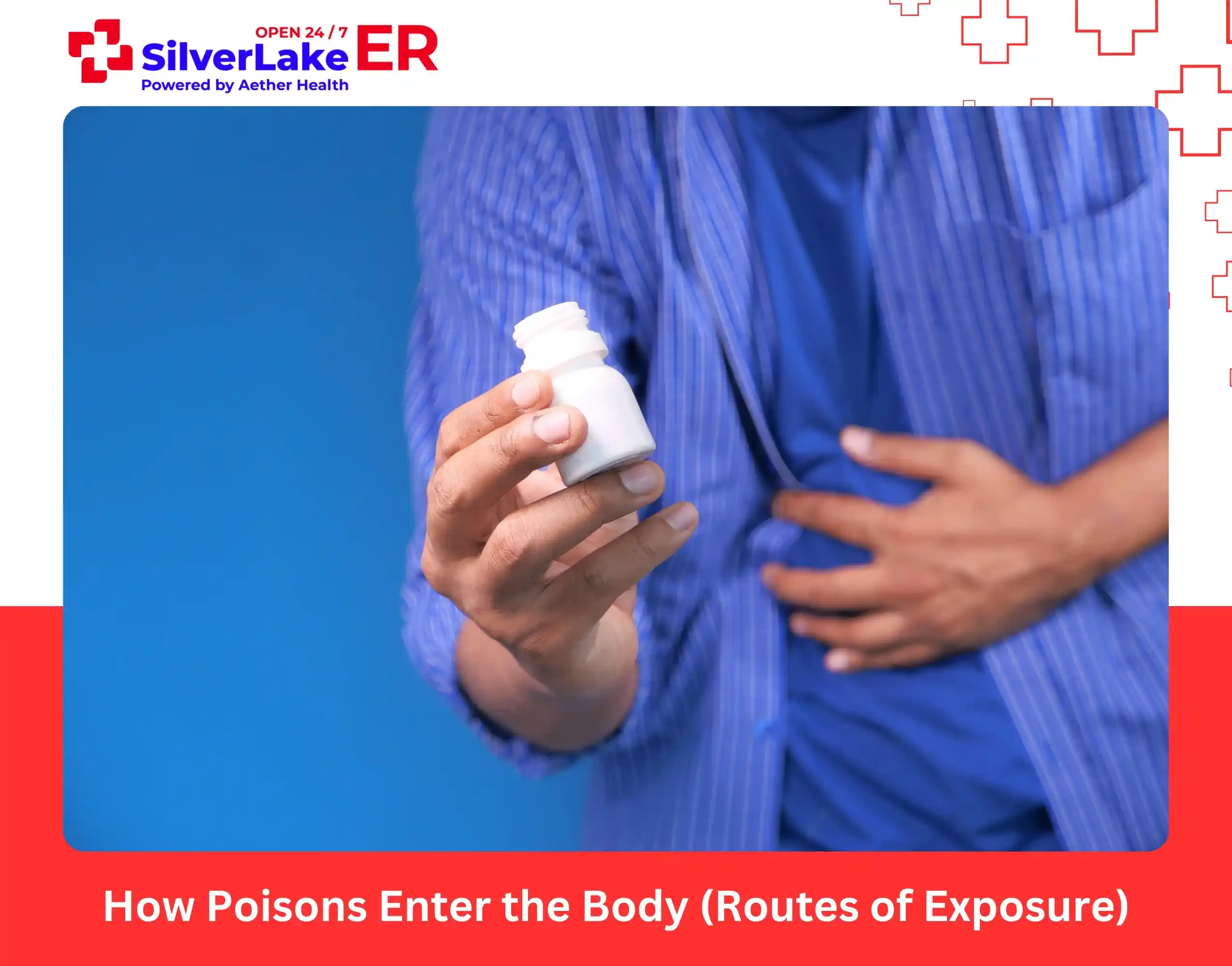
Every poisoning case starts with a route how the toxic substance got into the body. The route shapes both the symptoms and the first aid response.
Ingestion (Swallowing)
The most common route, especially in children. Examples: swallowing medication, drinking cleaning products, eating toxic plants, accidentally consuming spoiled or contaminated food.
Inhalation (Breathing In)
Toxic gases and fumes enter through the lungs and reach the bloodstream within seconds. Examples: carbon monoxide from faulty heaters or generators, chlorine gas from mixing cleaning products, smoke inhalation, or fumes from paint and solvents.
Skin or Eye Contact (Absorption)
Some substances are absorbed through the skin or eyes. Examples: pesticide splashes, industrial chemicals, certain solvents, and some plant oils (poison ivy is irritation, not absorption but stronger plant toxins can be absorbed).
Injection or Sting (Less Common but Serious)
Includes accidental needlestick injuries and venomous bites or stings from insects, spiders, or snakes. These deliver toxins directly into the bloodstream.
3. Common Causes of Accidental Poisoning by Group
Accidental poisoning looks different depending on who’s affected. Knowing the most common causes for each group helps you prevent and recognize exposure faster.
Children (Under Age 6)
Roughly half of all poison control calls involve young children. Their natural curiosity, small body size, and tendency to put things in their mouths make them especially vulnerable. The most common culprits:
- Adult medications mistaken for candy
- Household cleaners and detergent pods
- Vitamins and supplements, especially iron tablets
- Personal care products (mouthwash, lotions, nail polish remover)
- Plants and berries from house or yard
- Button batteries and small magnets
Teens and Adults
For adults, poisoning is more often related to mistakes with medication or chemical exposure at work or home:
- Medication errors wrong dose, wrong drug, or harmful combinations
- Alcohol poisoning
- Accidental opioid overdose
- Carbon monoxide from generators, vehicles, or faulty appliances
- Pesticide or chemical exposure at home or work
- Recreational drug contamination
Older Adults (65+)
Older adults face a unique set of risks, often linked to managing multiple medications:
- Taking the wrong medication or double-dosing
- Dangerous interactions between prescriptions
- Confusion between similar-looking pills
- Carbon monoxide exposure (often undetected for longer)
- Accidental ingestion of cleaning products mistaken for drinks
4. Symptoms by Type of Poisoning
Symptoms vary widely depending on what the substance is, how much was involved, and how it entered the body. Some symptoms appear in seconds. Others can take hours to show up. Watch for these general patterns:
Symptoms of Ingested Poisoning
- Nausea, vomiting, or diarrhea
- Stomach pain or cramping
- Burns or redness around the mouth or lips
- Drooling or difficulty swallowing
- Unusual breath odor (chemical, sweet, or fruity)
- Confusion, drowsiness, or unresponsiveness
Symptoms of Inhaled Poisoning
- Headache often the first sign of carbon monoxide exposure
- Shortness of breath or chest tightness
- Dizziness or lightheadedness
- Confusion or trouble concentrating
- Nausea or vomiting
- Cherry-red skin or pale, bluish skin
- Loss of consciousness
Symptoms of Skin or Eye Exposure
- Burning, redness, or blistering of the skin
- Severe eye pain, tearing, or blurred vision
- Itching or rash spreading beyond the contact area
- Swelling at the site of contact
Severe Warning Signs Call 911 Immediately
- Difficulty breathing or no breathing
- Seizures or convulsions
- Loss of consciousness
- Severe burns to the mouth, throat, or skin
- Irregular heartbeat or chest pain
- Sudden confusion, agitation, or hallucinations
5. First Aid: What to Do in the First 5 Minutes
The right first aid depends entirely on what kind of poisoning is happening. Acting fast but acting correctly is what saves lives.
Step 1: Get to Safety and Stay Calm
If the source is still active fumes, a chemical spill, a gas leak move yourself and the affected person out of the area immediately. Don’t become a second victim. Get to fresh air. If safe, open windows and doors.
Step 2: Check Responsiveness and Breathing
If the person is not breathing, not responding, or having seizures: call 911 immediately and begin CPR if trained. These are emergencies that can’t wait.
Step 3: Identify the Poison (If Possible)
Quickly note what the person was exposed to. Look for empty bottles, spilled containers, leaves, plant parts, or strong odors. If you can safely take the container or product label with you to the ER, do it this helps emergency physicians choose the right antidote or treatment faster.
Step 4: Call Poison Control or 911
If the person is awake, alert, and not in obvious distress, call Poison Control: 1-800-222-1222. They’re available 24/7, free, and staffed by trained specialists. If there are severe symptoms trouble breathing, unconsciousness, seizures, severe pain call 911 or go directly to the emergency room.
Step 5: Specific First Aid Based on Exposure
- If swallowed: Do not induce vomiting unless Poison Control or a medical professional tells you to. Rinse the mouth with water if appropriate. Keep the person sitting upright.
- If inhaled: Move the person to fresh air immediately. Loosen tight clothing. Watch breathing closely. Call 911 if breathing is difficult or the person is confused.
- If on the skin: Remove contaminated clothing. Rinse the affected area with running water for at least 15–20 minutes. Don’t scrub.
- If in the eyes: Rinse the eyes with lukewarm water for at least 15–20 minutes, keeping the eyelids open. Don’t rub the eyes. Seek emergency care immediately.
6. What NOT to Do in a Poisoning Emergency
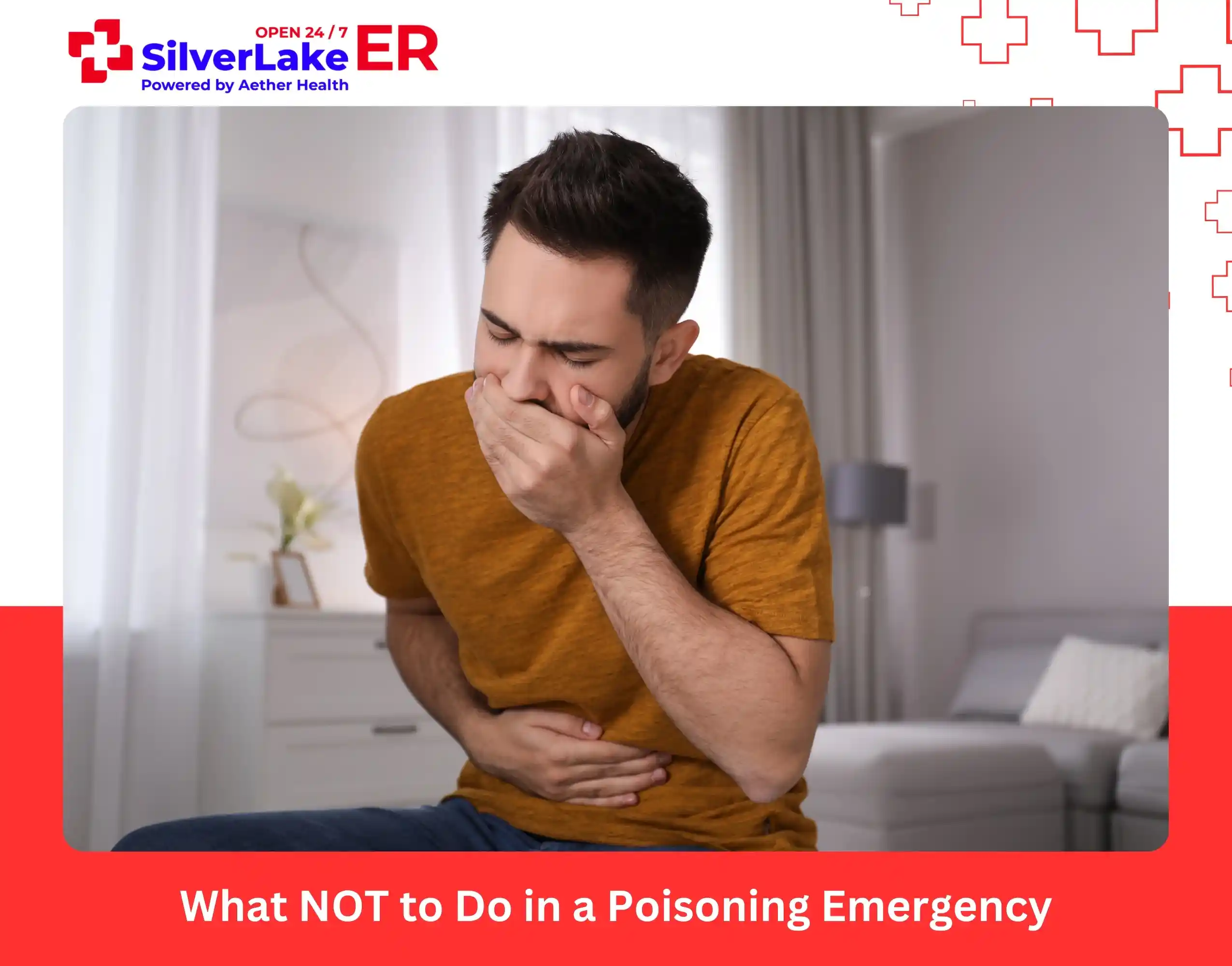
Some of the most common first-aid instincts are actually dangerous. The following used to be recommended but are now known to do more harm than good in most cases.
- Do not induce vomiting. It can cause additional damage, especially if the substance is corrosive (like bleach or drain cleaner) or a petroleum product. Vomiting also raises the risk of choking and aspiration.
- Do not use syrup of ipecac. It’s no longer recommended by medical authorities and can make treatment harder.
- Do not give milk, food, or water without medical guidance. Different poisons require different responses. Adding the wrong liquid can speed absorption.
- Do not wait to see if symptoms improve. Some poisons especially carbon monoxide and acetaminophen cause delayed symptoms that look mild at first and become severe hours later.
- Do not give activated charcoal at home. It has real uses in the ER under medical supervision, but it can be harmful without proper assessment.
7. Poison Control vs. ER: When to Call Which
Knowing where to direct your call saves time and gets the right help faster.
Call Poison Control (1-800-222-1222) When:
- The person is awake, alert, and stable
- Symptoms are mild or unclear
- You’re not sure if a substance is dangerous
- You need expert guidance before taking action
- You suspect exposure but the person has no symptoms yet
Call 911 or Go to the ER Immediately When:
- The person is unconscious or unresponsive
- Breathing is difficult, slow, or absent
- There are seizures or convulsions
- Severe pain, burns, or chemical exposure to the eyes
- The person has swallowed a corrosive substance (acid, alkali, bleach)
- There’s been an opioid or medication overdose
- Carbon monoxide exposure is suspected
- Symptoms are getting worse, even slowly
When in doubt, get to an emergency room for accidental poisoning. At Aether Health – Silverlake ER, you’ll be evaluated by a board-certified emergency physician immediately no appointment, no long waits.
8. Emergency Poisoning Treatment at Aether Health – Silverlake ER
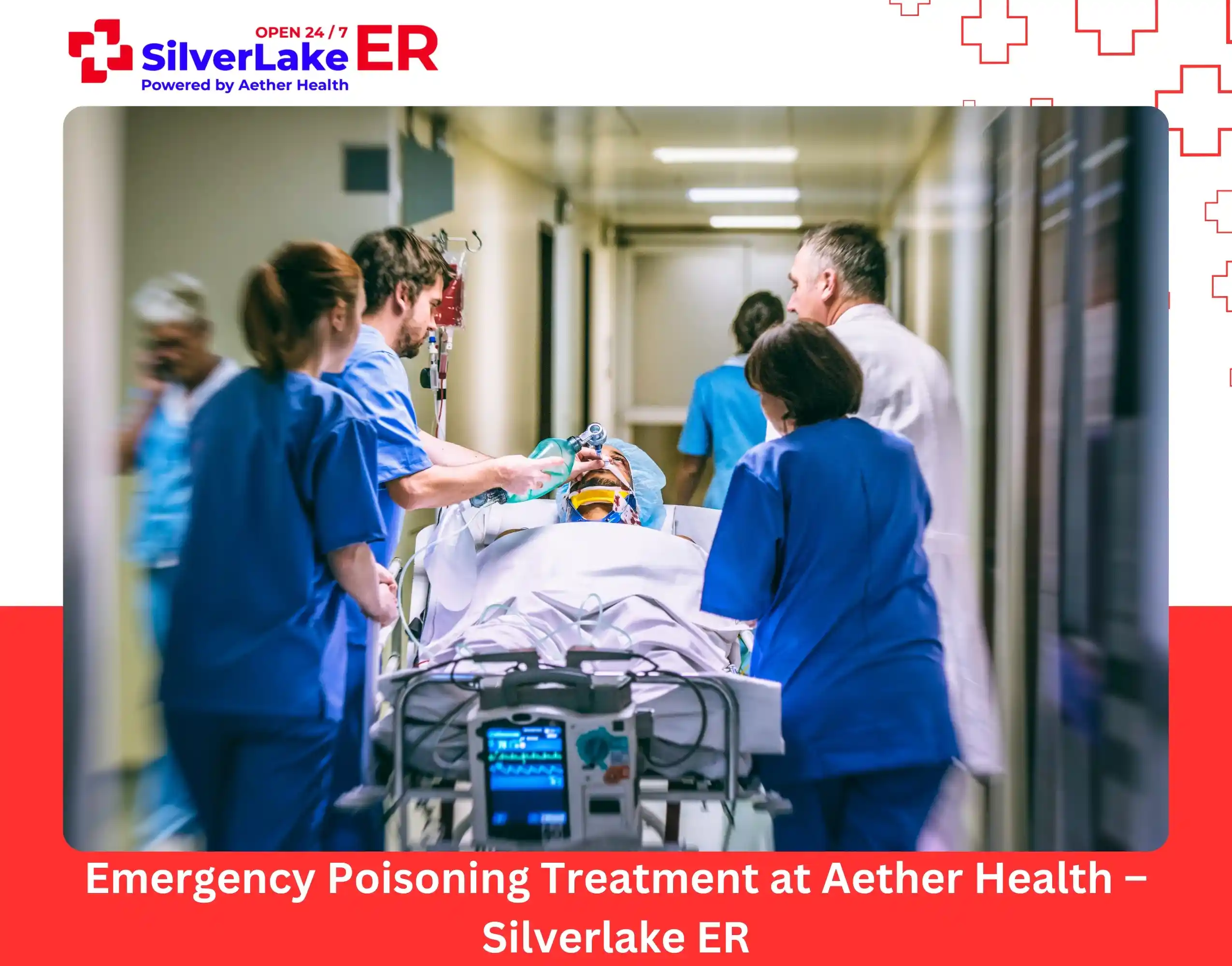
Poisoning is one of the most time-sensitive medical emergencies. Every minute matters for stopping absorption, neutralizing the substance when possible, and supporting vital functions while the body clears the toxin. As a full-service freestanding ER in Pearland, TX, Aether Health – Silverlake ER is equipped to deliver hospital-level emergency poisoning care around the clock without the long waits typical of major hospital ERs.
Our poisoning emergency capabilities include:
- Rapid clinical evaluation by board-certified emergency physicians
- On-site laboratory for toxicology, blood chemistry, and drug-level testing
- Diagnostic imaging including CT scans and X-rays
- Activated charcoal administration under medical supervision when appropriate
- IV fluid therapy and antidote administration
- Continuous cardiac, respiratory, and oxygen monitoring
- Emergency airway management and stabilization
- Direct coordination with regional poison control specialists
- Direct hospital transfer when admission is needed
We also believe medical emergencies shouldn’t come with billing ambushes. Aether Health – Silverlake ER operates on a no balance billing policy for insured patients so you can focus on recovery, not unexpected bills.
Frequently Asked Questions
What is the difference between accidental poisoning and food poisoning?
Food poisoning is technically a type of poisoning, but it’s caused by bacteria, viruses, or parasites in contaminated food. Accidental poisoning usually refers to toxic substances chemicals, medications, gases that weren’t meant to be consumed at all. The two are treated differently in the ER.
How fast do poisoning symptoms appear?
It depends entirely on the substance. Some, like cyanide or certain pesticides, cause symptoms within seconds. Others, like acetaminophen overdose or carbon monoxide, can have a delayed onset of several hours which is part of what makes them so dangerous. When in doubt, seek medical evaluation immediately, even if the person seems fine.
Should I make someone vomit if they’ve swallowed something toxic?
No. Inducing vomiting is no longer recommended in nearly all poisoning cases. It can cause more damage, especially with corrosive substances, and can lead to choking. Call Poison Control or 911 for guidance.
Is carbon monoxide poisoning really common?
Yes carbon monoxide poisoning sends more than 100,000 Americans to the ER each year. It’s colorless, odorless, and tasteless, which is why every home should have a working CO detector. Symptoms include headache, dizziness, nausea, and confusion often mistaken for the flu.
What number should I call for poisoning emergencies in Texas?
For non-life-threatening exposures, call the national Poison Control hotline at 1-800-222-1222. For severe symptoms trouble breathing, unconsciousness, seizures call 911 or come directly to Aether Health – Silverlake ER at 2752 Sunrise Blvd, Pearland, TX 77584. We’re open 24/7.
Suspect Accidental Poisoning? Get Help Immediately in Pearland, TX
If you or someone you love has been exposed to a toxic substance, time matters. Walk into Aether Health – Silverlake ER and you’ll be evaluated by a board-certified emergency physician right away no appointment, no long waits.
📞 Call: (713) 528-8703
☎ Poison Control: 1-800-222-1222 (24/7, free, nationwide)
📍 Visit: 2752 Sunrise Blvd, Pearland, TX 77584
🌐 Online: sler247.com
🕒 Hours: Open 24/7, 365 days a year
Medical Disclaimer
This article is for general educational purposes only and is not a substitute for professional medical advice, diagnosis, or treatment. Poisoning emergencies require immediate professional assessment. If you suspect any exposure, call Poison Control at 1-800-222-1222 or 911 immediately, or go directly to your nearest emergency room.