Cardiac arrest can strike without warning and when it does, every second matters. In the United States, more than 350,000 people experience sudden cardiac arrest outside of a hospital each year, and survival rates remain dangerously low when bystanders don’t act fast. Understanding why cardiac arrest happens isn’t just academic; it’s the difference between recognizing a life-threatening emergency and missing it.
At Aether Health – Silverlake ER in Pearland, TX, our board-certified emergency physicians treat cardiac emergencies around the clock. This guide explains what cardiac arrest is, what causes it, who is most at risk, and what you should do if you or someone near you shows the warning signs.
1. What Cardiac Arrest Actually Is (and How It Differs from a Heart Attack)
Cardiac arrest is a sudden, electrical malfunction of the heart that causes it to stop pumping blood effectively. Within seconds, the brain is starved of oxygen. Within minutes, brain damage and death become likely without intervention.
A heart attack is not the same thing and this distinction matters because the response is different. A heart attack is a circulation problem: a blocked artery cuts off blood supply to part of the heart muscle. The person is usually still conscious and breathing. Cardiac arrest is an electrical problem: the heart’s rhythm collapses, and the person typically loses consciousness within seconds. A heart attack can trigger cardiac arrest, but they are distinct medical events.
Quick rule: If the person is awake and complaining of chest pain likely heart attack. If the person has collapsed, isn’t breathing normally, and isn’t responsive, likely cardiac arrest. Call 911 or get to an ER immediately in either case.
2. The Underlying Mechanism: Why the Heart Suddenly Stops
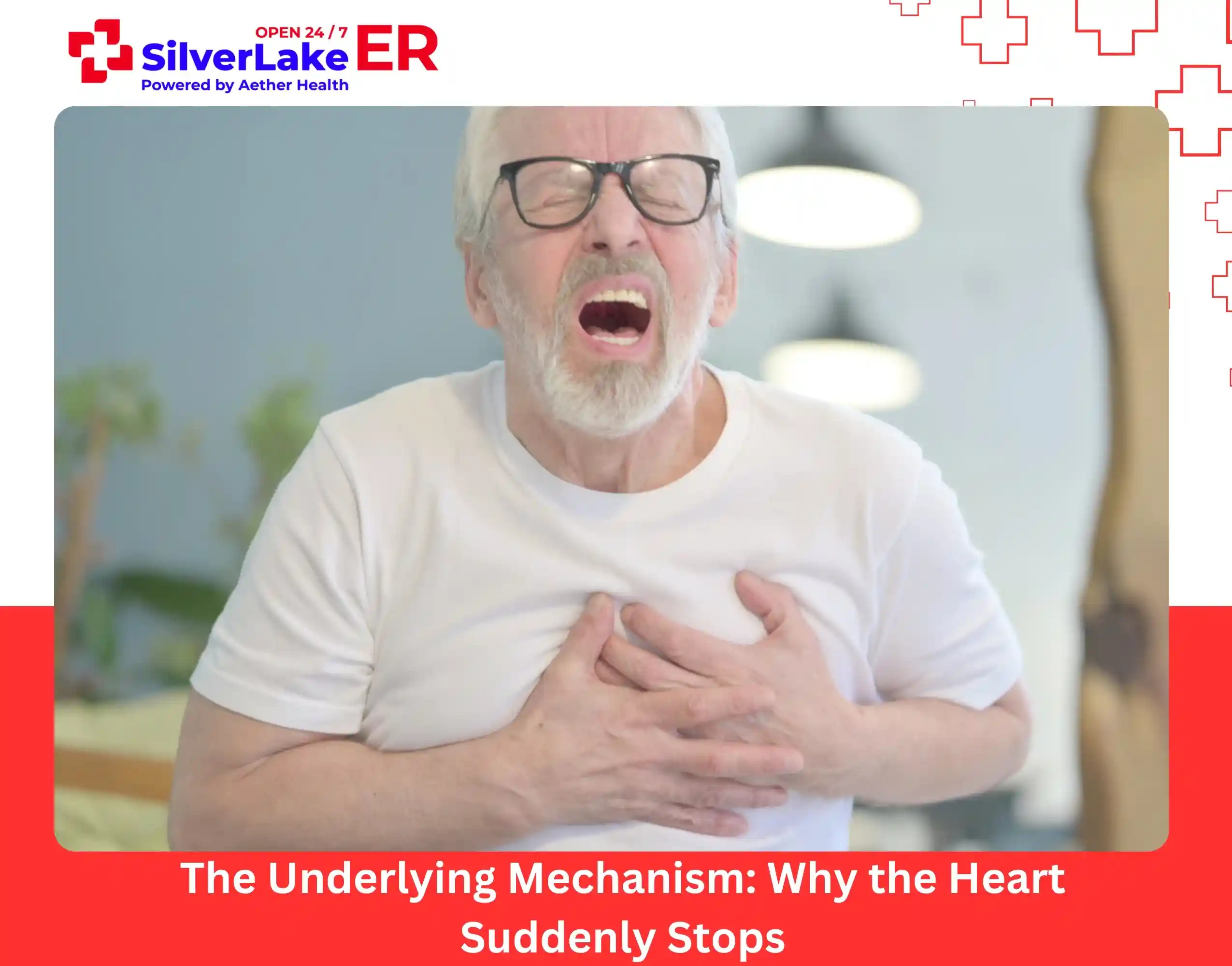
The heart runs on electricity. A small cluster of cells called the sinoatrial node sends rhythmic electrical signals that tell the heart chambers when to contract. When that signaling system fails usually through an abnormal rhythm called ventricular fibrillation or ventricular tachycardia the heart can no longer pump blood. It quivers instead of contracting.
This is why cardiac arrest is so time-sensitive. The only reliable way to restart a normal rhythm in most cases is defibrillation a controlled electrical shock delivered by an AED or by emergency medical equipment in an ER. For every minute that passes without CPR or defibrillation, the chance of survival drops by roughly 10%.
3. Primary Causes of Cardiac Arrest
Cardiac arrest isn’t a disease in itself it’s the final event triggered by an underlying condition. The most common medical causes include:
Coronary Artery Disease
By far the leading cause. When fatty plaque narrows or blocks the arteries supplying the heart, the heart muscle becomes damaged and electrically unstable. Most adult cardiac arrest cases trace back to coronary artery disease, often in people who didn’t know they had it.
Heart Attack (Myocardial Infarction)
A heart attack damages heart tissue, and damaged tissue can disrupt the heart’s electrical signals. In the hours and days after a heart attack, the risk of cardiac arrest is significantly elevated.
Cardiomyopathy and Enlarged Heart
When the heart muscle is thickened, stretched, or weakened, it becomes more prone to dangerous rhythms. Hypertrophic cardiomyopathy is a leading cause of cardiac arrest in young athletes.
Heart Valve Disease
Leaking or narrowed heart valves force the heart to work harder, which over time can enlarge or weaken the heart muscle and trigger arrhythmias.
Congenital Heart Defects
Some people are born with structural heart abnormalities that put them at lifelong risk, even if the defect was surgically corrected in childhood.
Electrical Conduction Disorders
Conditions like Long QT syndrome, Brugada syndrome, and Wolff-Parkinson-White syndrome disrupt the heart’s electrical system directly and can cause cardiac arrest even in otherwise healthy young people.
Other Triggers
- Severe blood loss or trauma
- Drug overdose, especially opioids and stimulants
- Drowning or choking
- Electrocution
- Major electrolyte imbalances (potassium, magnesium)
- Severe respiratory failure
4. Risk Factors That Increase Your Chances
A cause is what triggers cardiac arrest in the moment. A risk factor is what makes you more likely to develop the underlying conditions in the first place. Some are within your control. Some aren’t.
Risk Factors You Can’t Change
- Age Risk rises sharply after 45 for men and 55 for women.
- Family history A close relative with heart disease or sudden cardiac death significantly raises your risk.
- Previous cardiac event A history of heart attack, arrhythmia, or heart surgery increases the likelihood of cardiac arrest.
- Sex Men have a higher overall risk, though risk for women rises after menopause.
- Genetic conditions Inherited arrhythmia syndromes can cause cardiac arrest in young, otherwise healthy people.
Risk Factors You Can Change
- High blood pressure Chronic hypertension damages arteries and the heart muscle over time.
- High cholesterol Drives the plaque buildup that underlies coronary artery disease.
- Smoking and tobacco use Damages blood vessels and dramatically raises cardiac arrest risk.
- Diabetes Roughly doubles the risk of heart disease and cardiac arrest.
- Obesity and sedentary lifestyle Both contribute to most of the other risk factors on this list.
- Heavy alcohol use and recreational drugs Especially stimulants like cocaine and methamphetamine.
- Sleep apnea Untreated, it puts repeated strain on the cardiovascular system every night.
5. Warning Signs in the Minutes and Days Before
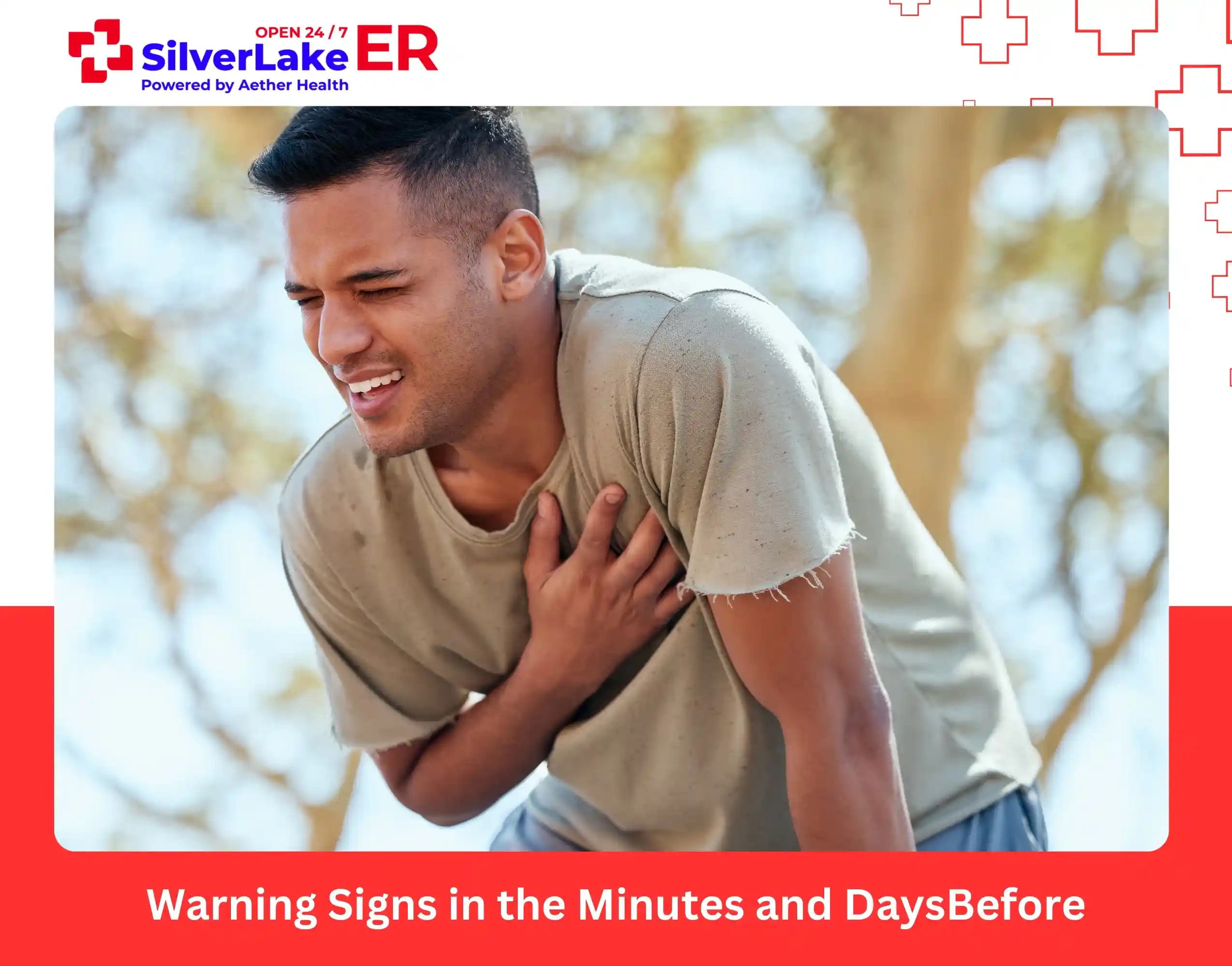
Cardiac arrest is often described as sudden, but research shows that more than half of people experience warning symptoms in the hours, days, or even weeks before. Learning to recognize them can save a life.
Immediate Signs (Seconds Before Collapse)
- Sudden loss of consciousness
- No pulse or no normal breathing
- Gasping, gurgling, or agonal breathing
- Sudden collapse with no responsiveness
Early Warning Signs (Hours to Weeks Before)
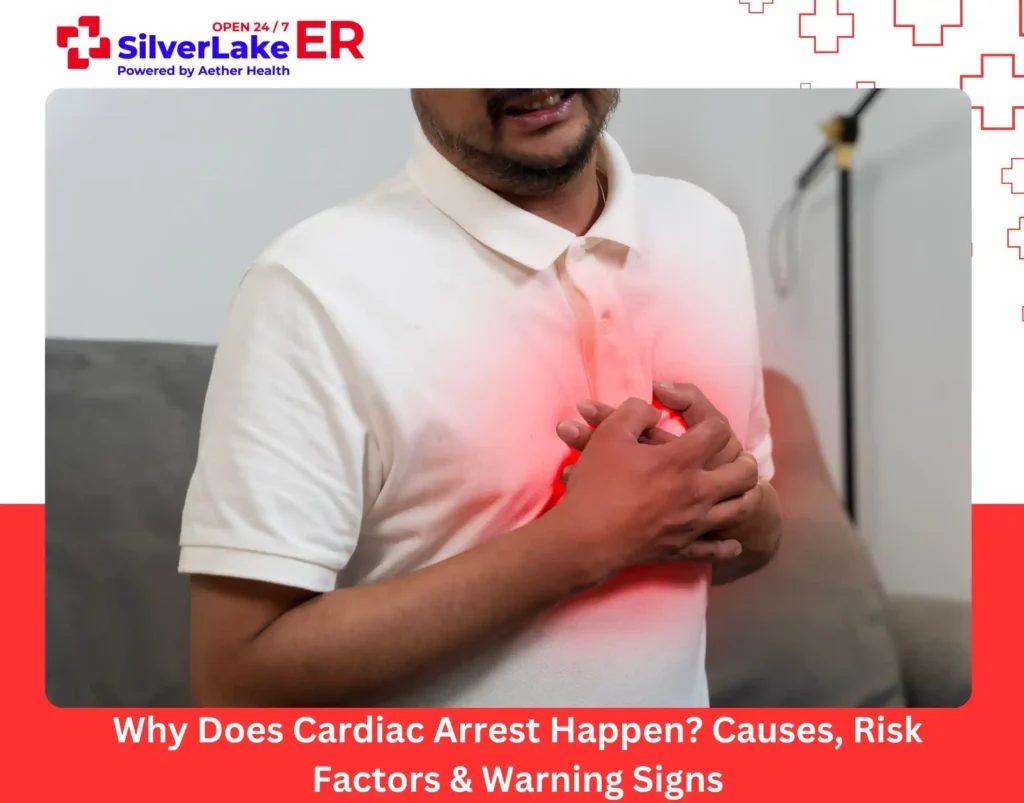
- Chest pain, pressure, or discomfort
- Unexplained shortness of breath
- Heart palpitations or a racing heartbeat
- Sudden, severe dizziness or lightheadedness
- Unexplained fainting episodes
- Extreme, unexplained fatigue
- Nausea or vomiting paired with any of the above
If you or someone you know is experiencing any of these warning signs, don’t wait. Get to an emergency room. At Aether Health – Silverlake ER, there’s no wait time walk in 24/7 and you’ll be seen immediately.
6. What to Do If Someone Goes Into Cardiac Arrest
Acting in the first few minutes is what saves lives. If you see someone collapse and they are unresponsive and not breathing normally:
- Call 911 immediately. Don’t wait to confirm what’s happening, get help moving.
- Start CPR. Push hard and fast in the center of the chest about 100 to 120 compressions per minute, roughly 2 inches deep. Hands-only CPR is effective and doesn’t require mouth-to-mouth.
- Use an AED if available. Automated External Defibrillators are designed for bystanders. Turn it on, follow the voice prompts, and let it analyze the rhythm.
- Don’t stop until help arrives. Continue CPR until paramedics take over or the person starts breathing normally.
Studies consistently show that immediate bystander CPR can double or triple survival rates from out-of-hospital cardiac arrest.
7. How Aether Health – Silverlake ER Responds to Cardiac Emergencies
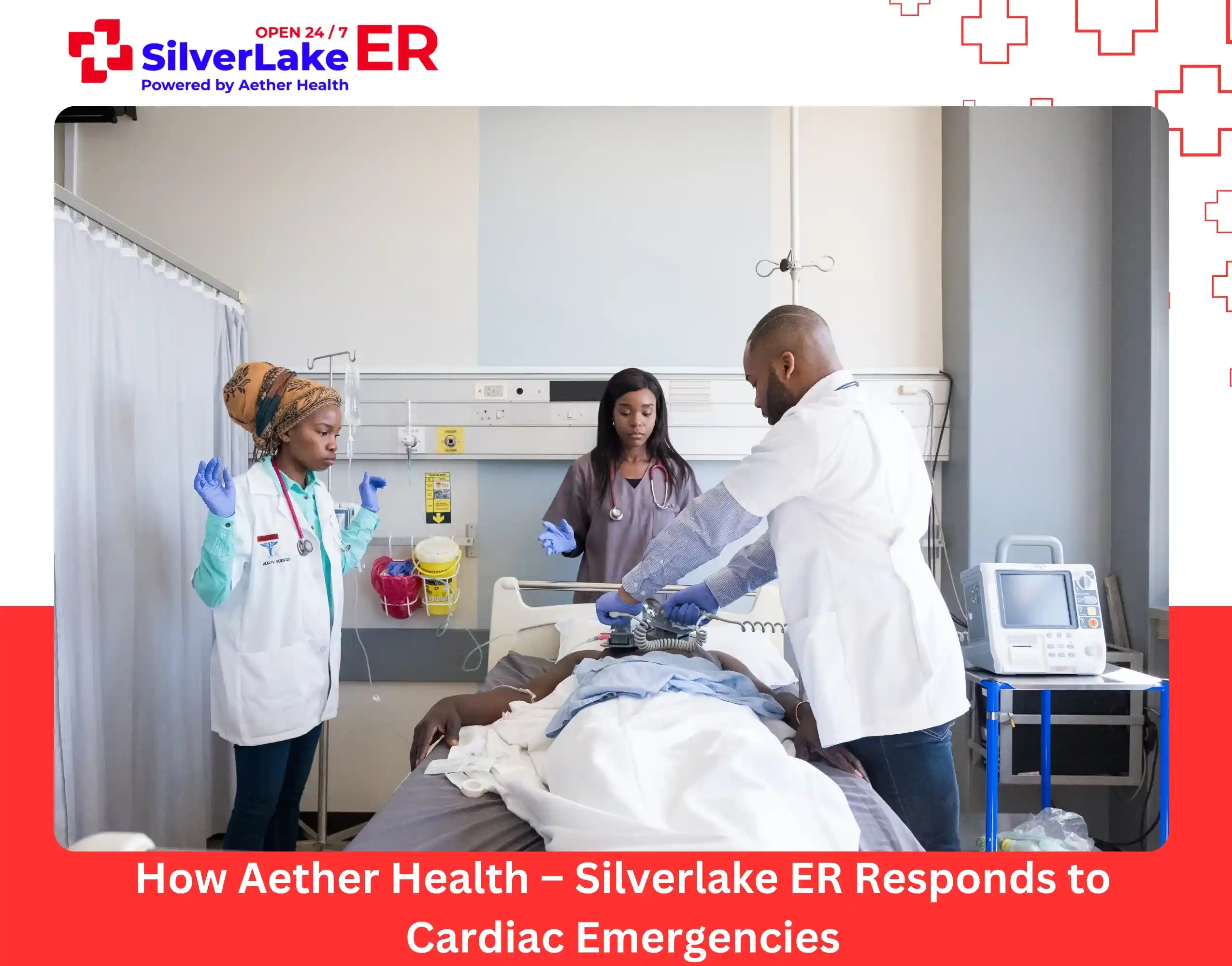
When a patient arrives in cardiac distress, every second of delay matters. As a full-service freestanding ER in Pearland, TX, Aether Health – Silverlake ER is equipped to deliver hospital-level cardiac emergency care without the long waits typical of hospital emergency departments.
Our cardiac emergency capabilities include:
- Advanced Cardiac Life Support (ACLS) protocols
- On-site EKG and continuous cardiac monitoring
- Defibrillation and emergency airway management
- On-site laboratory for rapid cardiac enzyme testing
- Diagnostic imaging including CT scans
- Board-certified emergency physicians on duty 24/7
- Direct hospital transfer coordination when admission is needed
We also believe medical emergencies shouldn’t come with financial ambushes. Aether Health – Silverlake ER operates on a no balance billing policy, so insured patients aren’t blindsided by surprise charges after the fact.
Frequently Asked Questions
Can cardiac arrest happen to someone who seems healthy?
Yes. Some people experience cardiac arrest as the first symptom of an underlying heart condition they never knew they had. This is especially true for young people with inherited electrical or structural heart disorders.
Is cardiac arrest survivable?
Survival depends almost entirely on how quickly CPR and defibrillation are delivered. With immediate bystander CPR and rapid AED use, survival rates can exceed 40%. Without intervention, survival drops sharply within minutes.
Can stress or strong emotion cause cardiac arrest?
Severe emotional stress can trigger cardiac events, including a condition called stress-induced cardiomyopathy. Stress alone rarely causes cardiac arrest in healthy people, but it can be a triggering factor in those with underlying heart disease.
Should I go to the ER for chest pain even if I’m not sure it’s serious?
Yes. Chest pain is one of the most common warning signs of an impending cardiac event. It’s always better to be evaluated and reassured than to wait. At Aether Health – Silverlake ER, walk-in patients are seen immediately no appointment, no waiting room delays.
Where is Aether Health – Silverlake ER located?
We’re located at 2752 Sunrise Blvd, Pearland, TX 77584, open 24 hours a day, 7 days a week. Call (713) 528-8703 or walk in anytime.
Get Emergency Cardiac Care in Pearland, TX 24/7
If you or someone you love is experiencing chest pain, shortness of breath, fainting, or any warning sign of a cardiac emergency don’t wait. Walk into Aether Health – Silverlake ER and you’ll be seen by a board-certified emergency physician immediately.
📞 Call: (713) 528-8703
📍 Visit: 2752 Sunrise Blvd, Pearland, TX 77584
🌐 Online: sler247.com
🕒 Hours: Open 24/7, 365 days a year
Medical Disclaimer
This article is for general educational purposes only and is not a substitute for professional medical advice, diagnosis, or treatment. If you or someone near you is experiencing a medical emergency, call 911 immediately or go to your nearest emergency room.