Choking is a sudden and dangerous emergency where a person’s airway becomes blocked, stopping oxygen from reaching the lungs. In many cases, the person cannot speak or call for help, which makes recognizing visual signs extremely important.
One of the most important and widely recognized indicators is the universal sign for choking. This comprehensive guide explains what is the universal sign for choking, why it matters, how to recognize it, and what actions to take immediately.
What Is the Universal Sign for Choking?
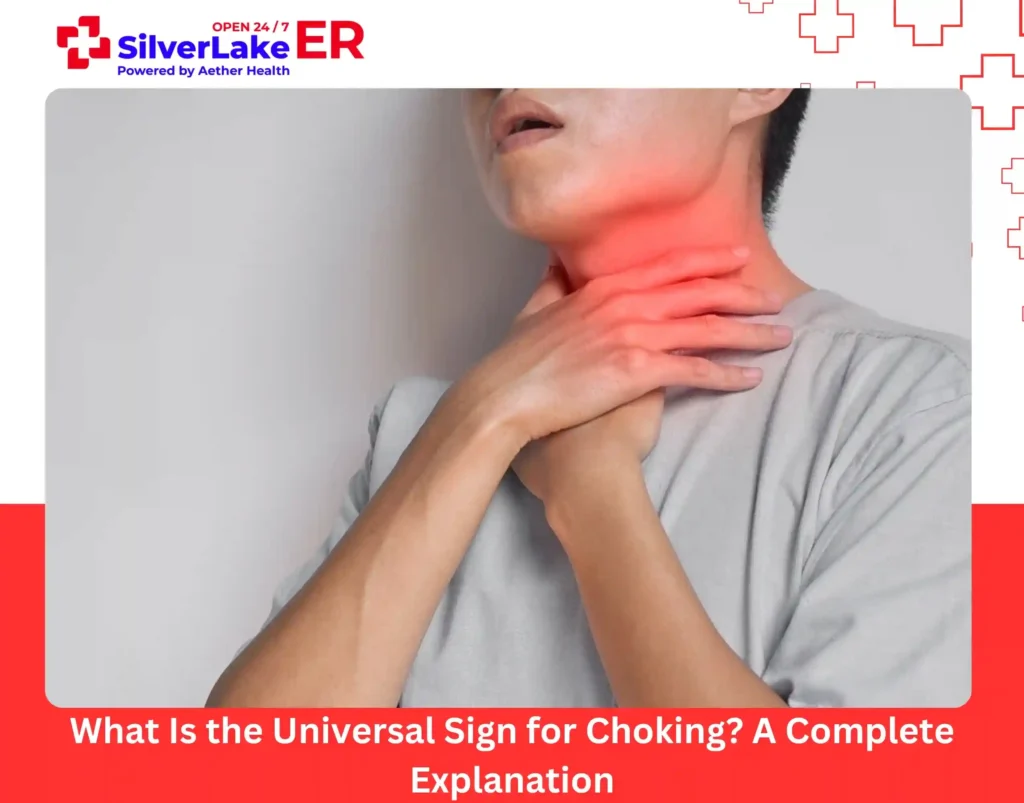
The universal sign for choking is when a person clutches their throat with one or both hands.
This gesture is instinctive and widely understood across the world. A person experiencing choking often:
- Place their hands around their throat.
- Looks distressed or panicked.
- May be unable to speak or make sound.
This sign is a silent but urgent signal that the airway is blocked and the person needs immediate help.
Medically, choking is known as Choking, and recognizing this sign quickly is critical to providing timely assistance.
Why the Universal Choking Sign Is So Important?
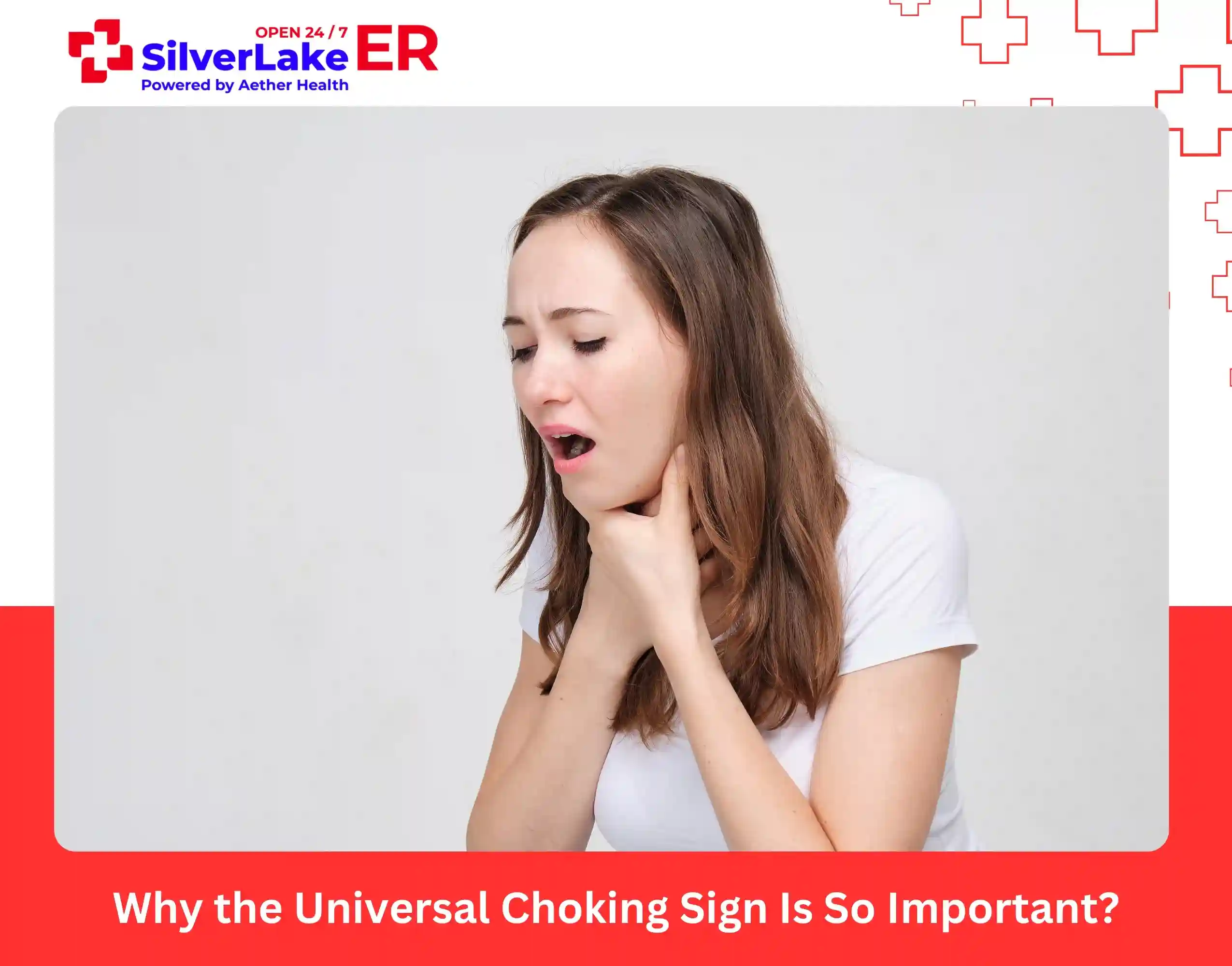
In a choking emergency, time is extremely limited. A person may only have a few minutes before oxygen deprivation leads to serious complications. During this time, they often cannot communicate verbally, which makes visual cues essential.
The universal choking sign plays a critical role because it:
- Acts as a clear, silent signal of distress.
- Eliminates confusion in crowded or noisy environments.
- Allows bystanders to respond without needing verbal confirmation.
- Helps initiate immediate first aid.
In many real-life situations such as restaurants, schools, or public places, this simple gesture is often the first and only warning sign that something is wrong. Recognizing it quickly can make the difference between life and death. If you are unsure whether its distress or choking, always go for the choking medical emergency care for timely evaluation and treatment.
Physical and Behavioral Signs That Accompany Choking
While clutching the throat is the most recognizable sign, choking is usually accompanied by several other physical and behavioral symptoms. These signs help confirm the severity of the situation.
A person who is choking may also:
- Struggle to breathe or gasp for air.
- Be unable to talk or produce sound.
- Show weak or ineffective coughing.
- Develop a bluish tint around the lips or face due to lack of oxygen.
- Appear anxious, panicked, or confused.
- Lose consciousness if the blockage is not relieved.
These symptoms occur because the body is not receiving enough oxygen, which affects both physical function and mental awareness. The combination of these signs with the universal choking gesture clearly indicates a medical emergency.
The Partial vs Severe Choking
Not all choking situations are the same, and understanding the difference between partial and severe choking is essential for choosing the right response.
Partial Choking
In partial choking, the airway is only partly blocked. This means some air can still pass through.
The person may:
- Be able to cough forcefully.
- Speak or make sounds.
- Breathe with difficulty but still manage airflow.
In this situation, the best approach is to encourage the person to keep coughing. Coughing is the body’s natural defense mechanism and is often effective in clearing the obstruction without further intervention.
Severe Choking
In severe choking, the airway is almost or completely blocked.
The person may:
- Be unable to speak or cough.
- Show the universal choking sign clearly.
- Struggle intensely to breathe.
- Quickly become weak or unconscious.
This is a life-threatening emergency that requires immediate first aid. Waiting or hesitating can lead to serious consequences within minutes.
What to Do When You See the Universal Choking Sign
Recognizing the sign is only the first step. Taking the correct action immediately is what saves lives. Here’s what you need to do if someone is choking:
Step 1: Respond Without Delay
As soon as you see the universal choking sign, approach the person and assess the situation. If they cannot speak or breathe, begin first aid immediately. Do not wait for the situation to worsen.
Step 2: Encourage Coughing if Possible
If the person can still cough strongly, encourage them to continue. Stay close and observe carefully. If their ability to cough weakens or stops, move to active intervention.
Step 3: Deliver Back Blows
Back blows are often the first hands-on method used to remove the blockage.
To perform them:
- Stand slightly behind the person.
- Support their chest with one hand.
- Lean them forward so gravity helps.
- Deliver firm blows between the shoulder blades.
These blows create pressure and vibrations that may dislodge the object from the airway.
Step 4: Perform the Heimlich Maneuver
If back blows are not effective, perform abdominal thrusts using the Heimlich maneuver.
This involves:
- Standing behind the person.
- Wrapping your arms around their waist.
- Placing a fist just above the navel.
- Delivering quick inward and upward thrusts.
This action forces air out of the lungs, which can push the object out of the airway.
Repeat these steps in cycles until the obstruction is cleared or the person becomes unconscious.
What If the Person Becomes Unconscious?
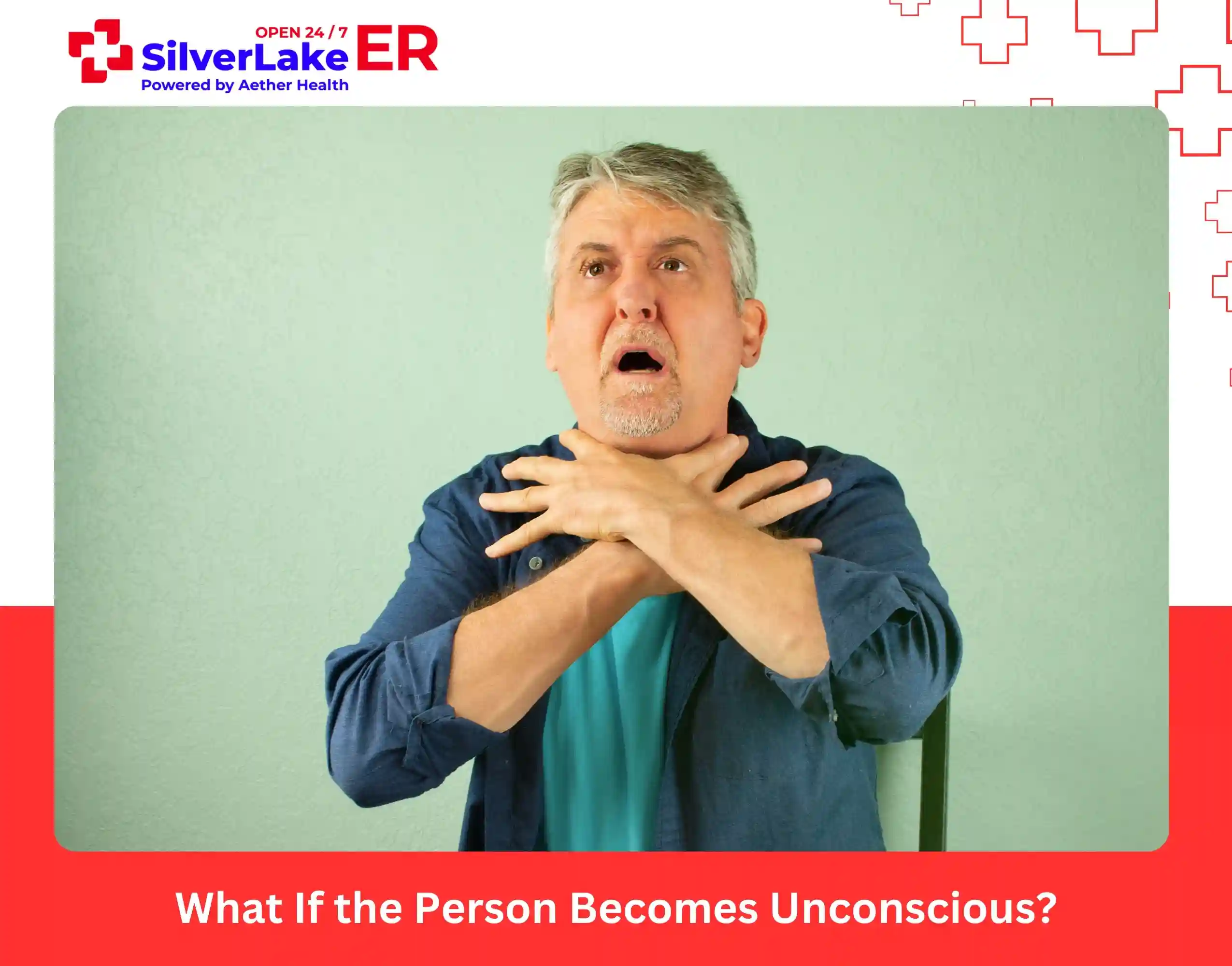
If the airway remains blocked, the person may collapse due to lack of oxygen.
In this situation:
- Carefully lower them to the ground.
- Call emergency services immediately.
- Begin CPR.
Chest compressions can help create pressure that may dislodge the object. Before giving rescue breaths, check the mouth for visible obstructions and remove them if possible.
Continue CPR until professional help arrives.
Choking in Children and Infants
Children (Over 1 Year)
Children may show the same universal choking sign as adults, but their smaller size requires careful handling.
Use:
- Back blows.
- Abdominal thrusts.
Apply controlled force appropriate to their size to avoid injury.
Infants (Under 1 Year)
Infants usually cannot perform the universal choking sign clearly, so caregivers must rely on other signs such as:
- Sudden silence or inability to cry.
- Difficulty breathing.
- Bluish skin.
For infants:
- Deliver 5 back blows while supporting the head.
- Follow with 5 chest thrusts.
Abdominal thrusts should never be used on infants.
Common Causes of Choking
Choking often occurs during everyday activities, especially eating.
Common causes include:
- Eating too quickly.
- Not chewing food properly.
- Talking or laughing while eating.
- Small objects in children’s mouths.
Certain foods like nuts, grapes, and hard candies are particularly risky because they can easily block the airway. In severe cases, you should always visit the 24/7 nearest emergency care or a hospital for the timely intervention of an expert physician.
How To Prevent Choking Emergencies
Preventing choking is always better than responding to it.
Effective prevention includes:
- Eating slowly and chewing food thoroughly.
- Avoiding distractions while eating.
- Cutting food into small pieces for children.
- Keeping small objects out of reach of young children.
- Supervising children during meals.
These simple habits can significantly reduce the risk of choking incidents.
Final Thoughts
So, what is the universal sign for choking?
It is the instinctive act of clutching the throat, signaling that a person cannot breathe and needs immediate help.
Recognizing this sign quickly and responding with the correct first aid steps can save a life. Immediate action is critical in every choking emergency.
FAQs
What is the universal sign for choking?
It is when a person grabs their throat with one or both hands to signal they cannot breathe.
Why do people hold their throat when choking?
It is an instinctive reaction that helps communicate distress when they cannot speak.
Can someone choke without showing the sign?
Yes, especially infants or unconscious individuals may not show it clearly.
What should you do if you see this sign?
Act immediately by giving back blows and performing abdominal thrusts.
Is choking always an emergency?
Severe choking is life-threatening and requires immediate action.