
Choking blocks the airway and stops oxygen from reaching the lungs. It is a medical emergency that requires immediate action. A person can lose consciousness within minutes if help is delayed, so knowing exactly what to do can save a life.
This guide explains what to do when someone is choking, with clear steps, detailed explanations, and practical guidance for adults, children, and infants.
What Is Choking?
Choking happens when an object, most often food gets stuck in the throat or windpipe and blocks airflow. This prevents oxygen from reaching the lungs and brain.
Medically, this is known as Choking, and it can quickly become life-threatening if the blockage is not removed. Even a partial blockage can worsen suddenly, especially if the object shifts position.
The most common causes include:
- Poorly chewed food.
- Eating too quickly.
- Talking or laughing while eating.
- Small objects in children.
Because the airway is essential for breathing, any blockage must be treated immediately. That’s why you should immediately visit the nearest medical facility for choking medical emergency care.
Signs That Someone Is Choking
Recognizing choking early is critical because quick action improves the chances of success.
A person who is choking may:
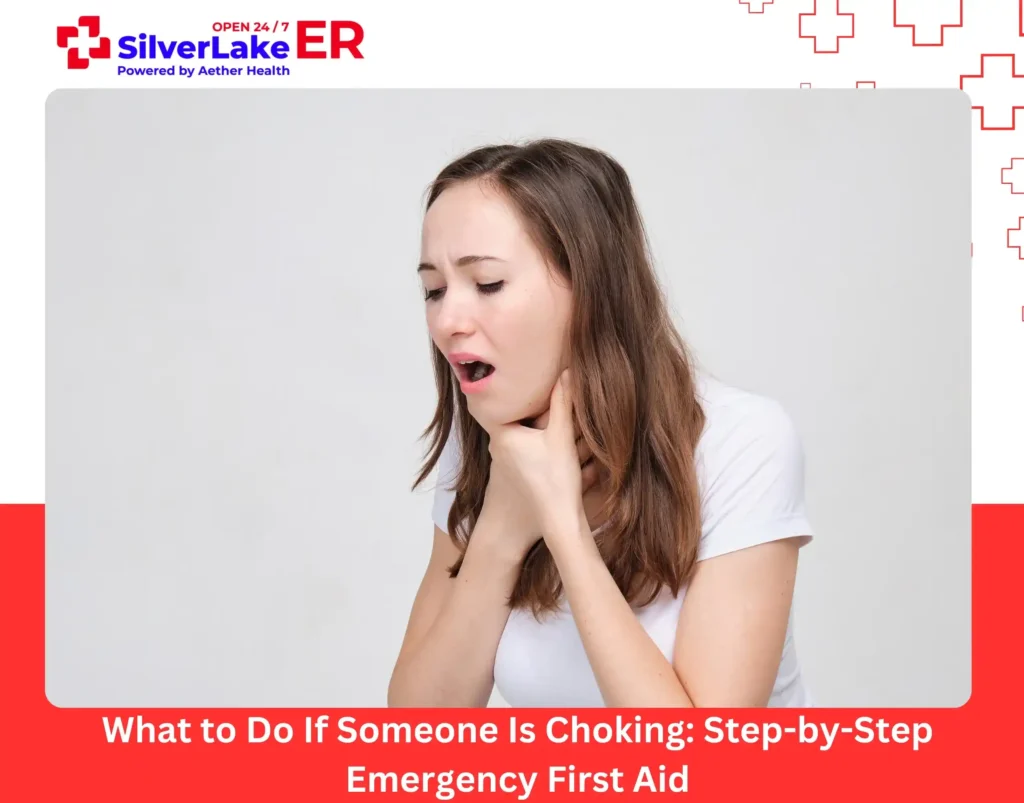
- Be unable to speak, cry, or make sound.
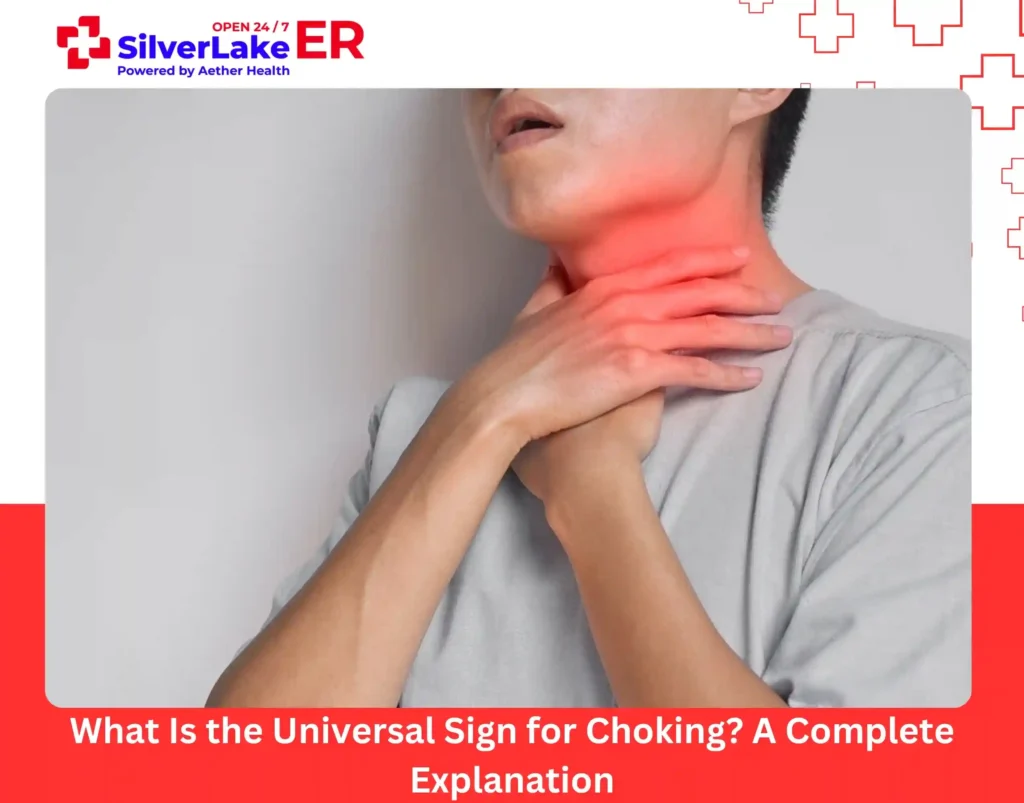
- Grab their throat (universal choking sign).
- Struggle to breathe or gasp.
- Turn blue or pale, especially around the lips.
- Show panic or distress.
- Collapse if the blockage is severe.
If the person can cough strongly, the airway is only partially blocked. In that case, encourage them to keep coughing, as this is the body’s natural way of clearing the airway.
However, if they cannot cough, speak, or breathe, treat it as a severe emergency and act immediately.
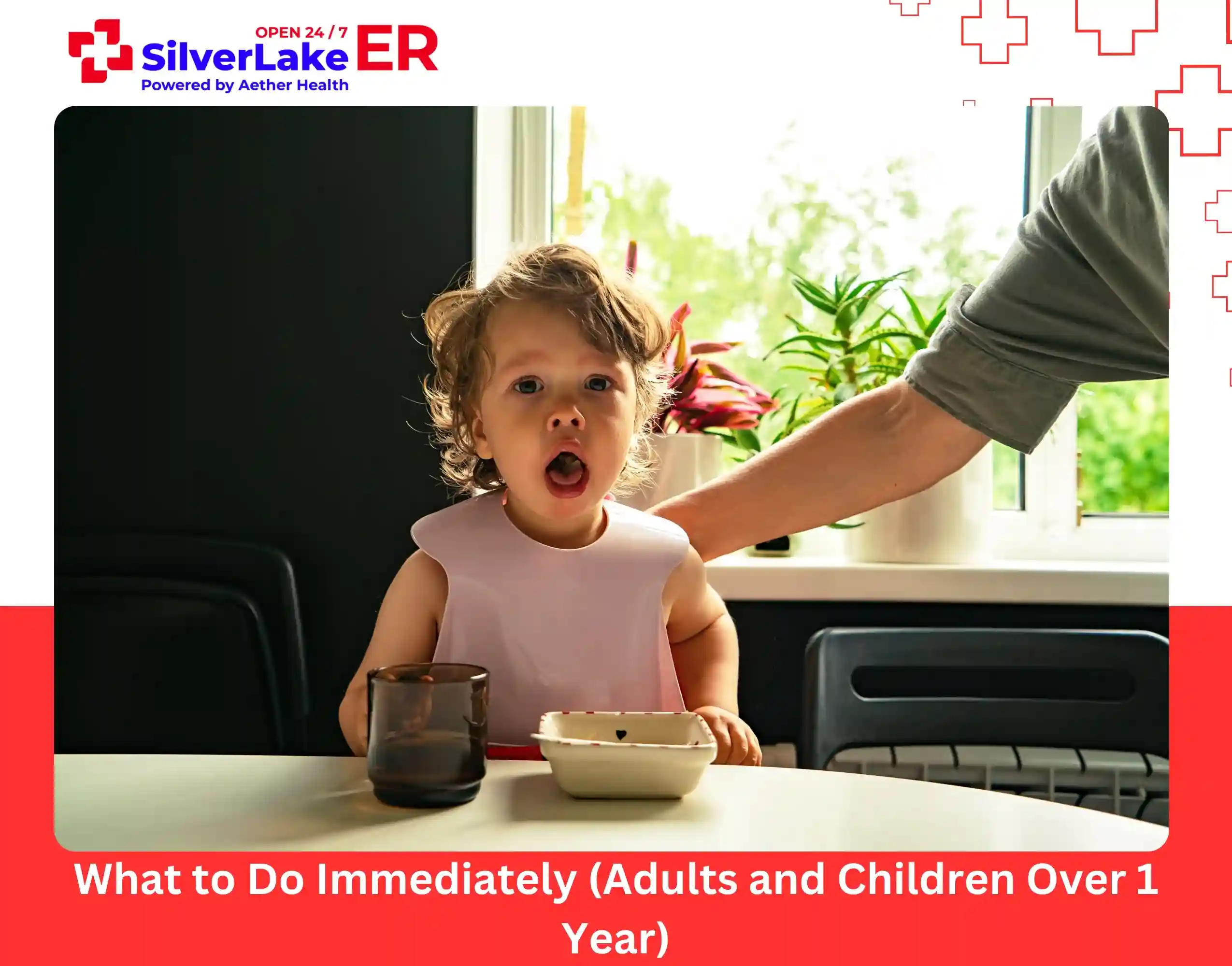
What to Do Immediately (Adults and Children Over 1 Year)
Step 1: Confirm the Situation Quickly
Ask the person if they are choking. If they cannot answer or are clearly struggling to breathe, do not waitstart first aid right away.
Time is critical because oxygen supply to the brain is limited.
Step 2: Encourage Effective Coughing
If the person is still able to cough forcefully, let them continue. A strong cough can generate enough pressure to remove the object naturally.
Stay close and monitor them carefully. If the cough becomes weak or stops, move to active intervention.
Step 3: Give Back Blows
Back blows are often the first physical step to dislodge the obstruction.
To perform:
- Stand slightly behind the person.
- Support their chest with one hand.
- Lean them forward so the object can come out.
- Deliver firm blows between the shoulder blades using the heel of your hand.
These blows create vibrations and pressure that may force the object out of the airway.
Step 4: Perform Abdominal Thrusts
If back blows do not work, perform abdominal thrusts, also called the Heimlich maneuver.
Steps:
- Stand behind the person.
- Wrap your arms around their waist.
- Place a fist just above the navel.
- Grasp the fist with your other hand.
- Push inward and upward with quick thrusts.
This movement forces air from the lungs upward, creating pressure that can push the object out.
Repeat back blows and abdominal thrusts in cycles until:
- The object is expelled.
- The person can breathe again.
- Or they become unconscious.
What to Do If the Person Becomes Unconscious
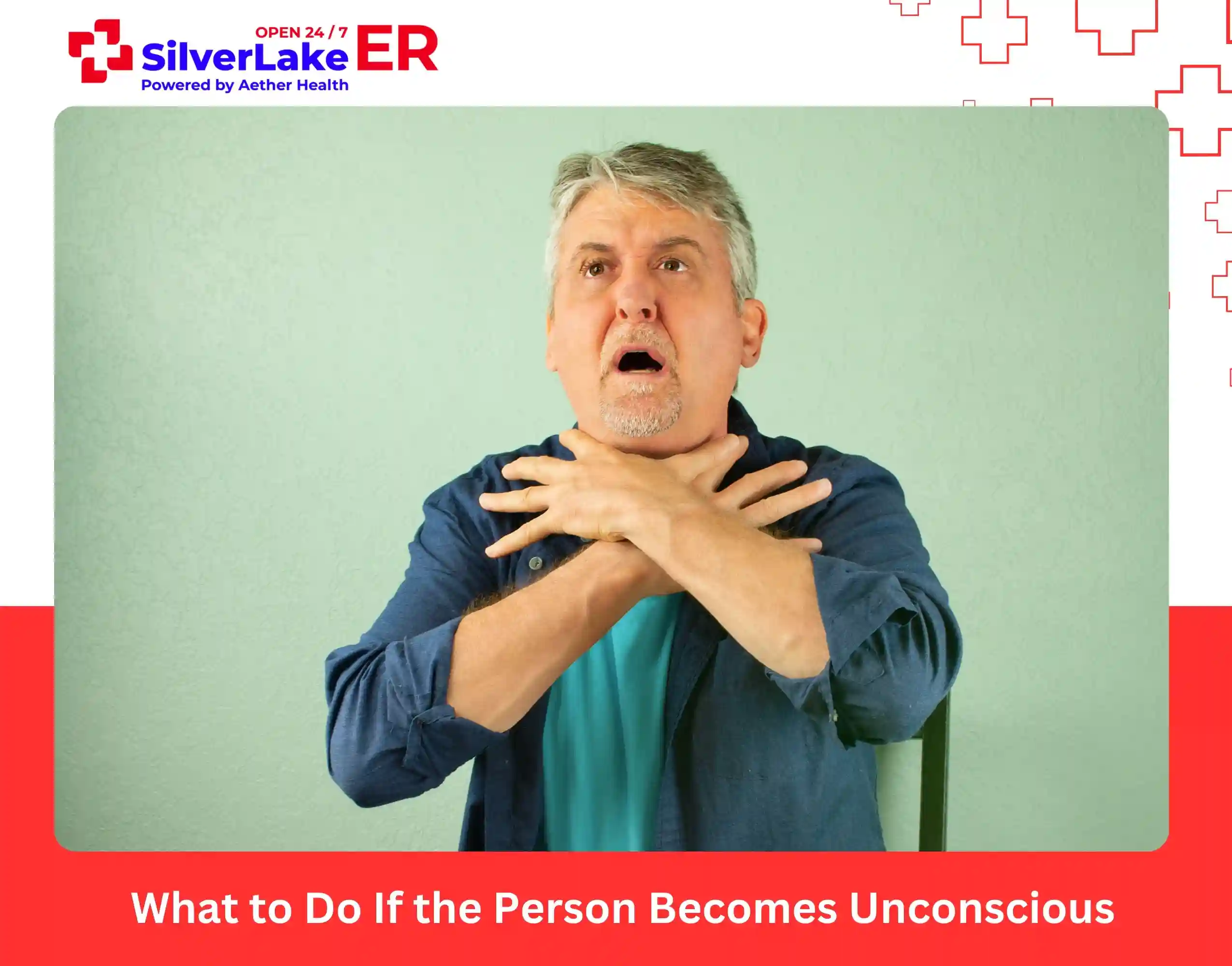
If the person collapses, the situation becomes more critical.
You should:
- Carefully lower them to the ground.
- Call emergency services immediately.
- Begin CPR.
Chest compressions may help dislodge the object by creating pressure inside the chest. Before giving rescue breaths, check the mouth for any visible object and remove it carefully if you can see it.
Continue CPR until professional help arrives.
What to Do for Infants (Under 1 Year)
Infants require a different approach because their bodies are fragile and abdominal thrusts can cause harm.
Steps for infants:
- Hold the baby face down along your forearm.
- Support the head and neck securely.
- Deliver 5 firm but gentle back blows between the shoulder blades.
If the object does not come out:
- Turn the baby onto their back.
- Use two fingers to give 5 chest thrusts in the center of the chest.
These actions create enough pressure to help clear the airway safely.
Repeat until the airway is clear or help arrives.
What NOT to Do
Incorrect actions can make the situation worse, so it’s important to avoid common mistakes.
Do not:
- Interfere if the person is coughing effectively.
- Perform blind finger sweeps in the mouth.
- Give water or food.
- Delay calling for emergency help in severe cases.
These mistakes can push the object deeper or delay proper treatment.
When to Call Emergency Services
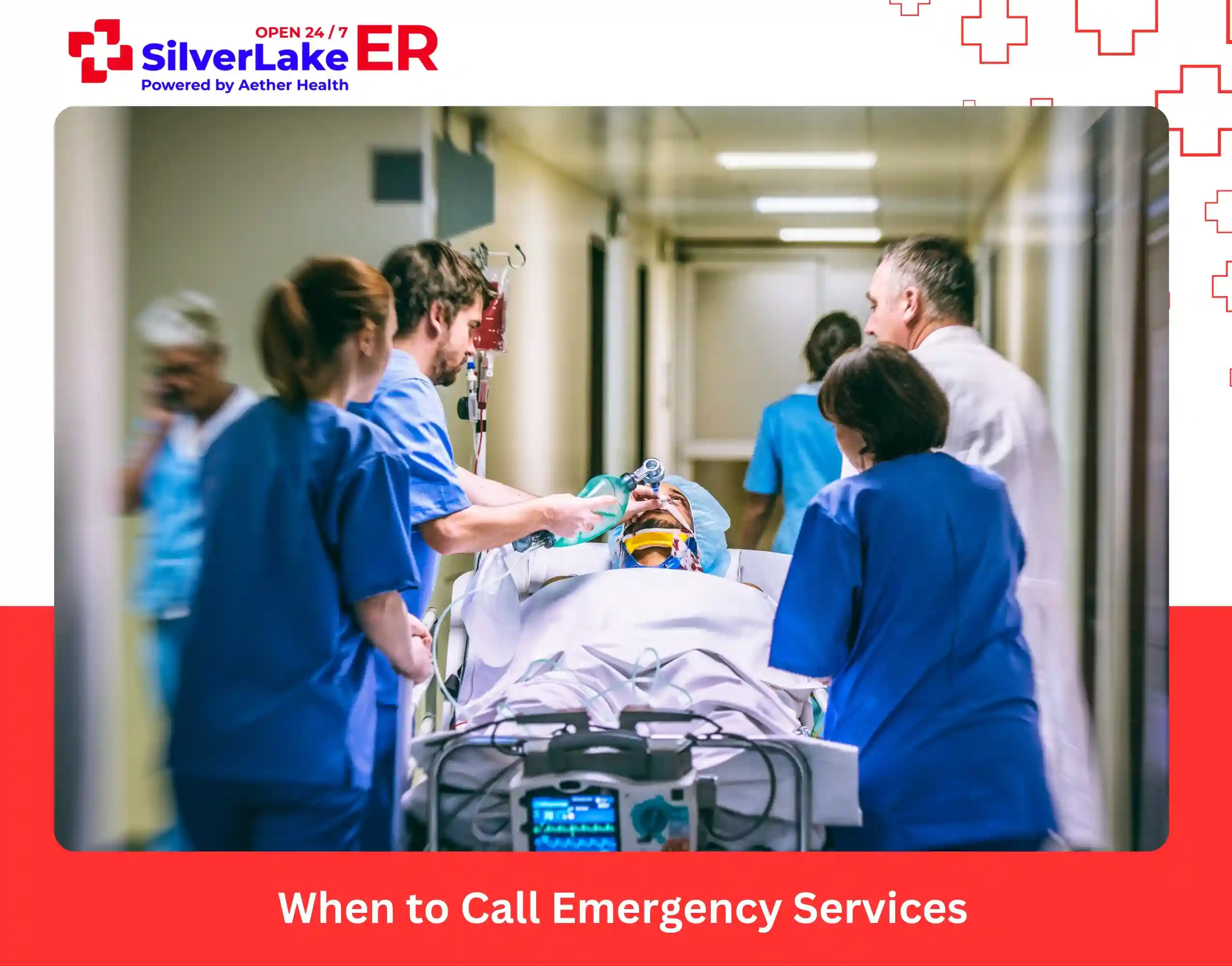
You should immediately take them to the nearest emergency room or a hospital, if:
- The person cannot breathe or speak.
- The blockage does not clear quickly.
- The person loses consciousness.
- You are unsure how to proceed.
Even if the object is removed, medical evaluation is important to check for injuries or complications.
Why Acting Quickly Matters
The brain can begin to suffer damage within minutes without oxygen. Fast and correct action can:
- Restore breathing.
- Prevent brain injury.
- Save the person’s life.
Delays, even short ones, can significantly increase the risk of serious complications.
Final Thoughts
So, what to do when someone is choking?
Act immediately, use proper first aid techniques, and do not hesitate to seek emergency help. Quick and confident action can make the difference between life and death.
Recognize the signs early and respond without delay as every second counts.
FAQs
What is the first step when someone is choking?
Quickly confirm they cannot breathe or speak, then act immediately.
When should you use the Heimlich maneuver?
When the person cannot cough, speak, or breathe effectively.
Can coughing stop choking?
Yes, strong coughing can sometimes clear a partial blockage.
What if the person becomes unconscious?
Start CPR immediately and call emergency services.
Is choking always an emergency?
Severe choking is always a life-threatening emergency requiring immediate action.