
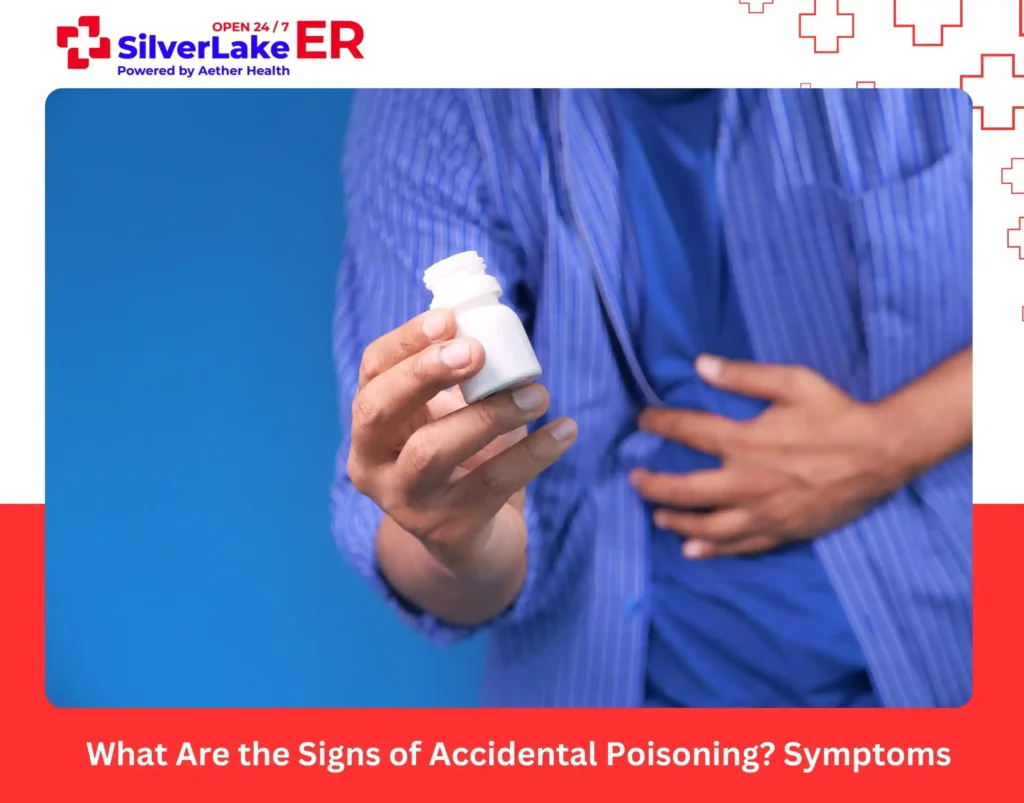
The signs of accidental poisoning include nausea, vomiting, dizziness, confusion, breathing difficulty, seizures, unusual drowsiness, and unconsciousness. Other warning signs include burns or redness around the mouth, abnormal breath odor, unexplained sweating, irregular heartbeat, and skin discoloration. Symptoms vary depending on the substance involved and how it entered the body, and some serious poisonings have delayed symptoms that don’t appear until hours after exposure.
Recognizing these signs quickly is one of the most important things you can do — accidental poisoning is the leading cause of injury-related deaths in the United States, and many cases are missed because the symptoms look like other illnesses. This guide breaks the signs down by body system, route of exposure, and time course so you can recognize poisoning fast in real-life situations. At Aether Health – Silverlake ER in Pearland, TX, our board-certified emergency physicians treat poisoning emergencies 24/7.
1. Why Recognizing Poisoning Signs Is So Hard
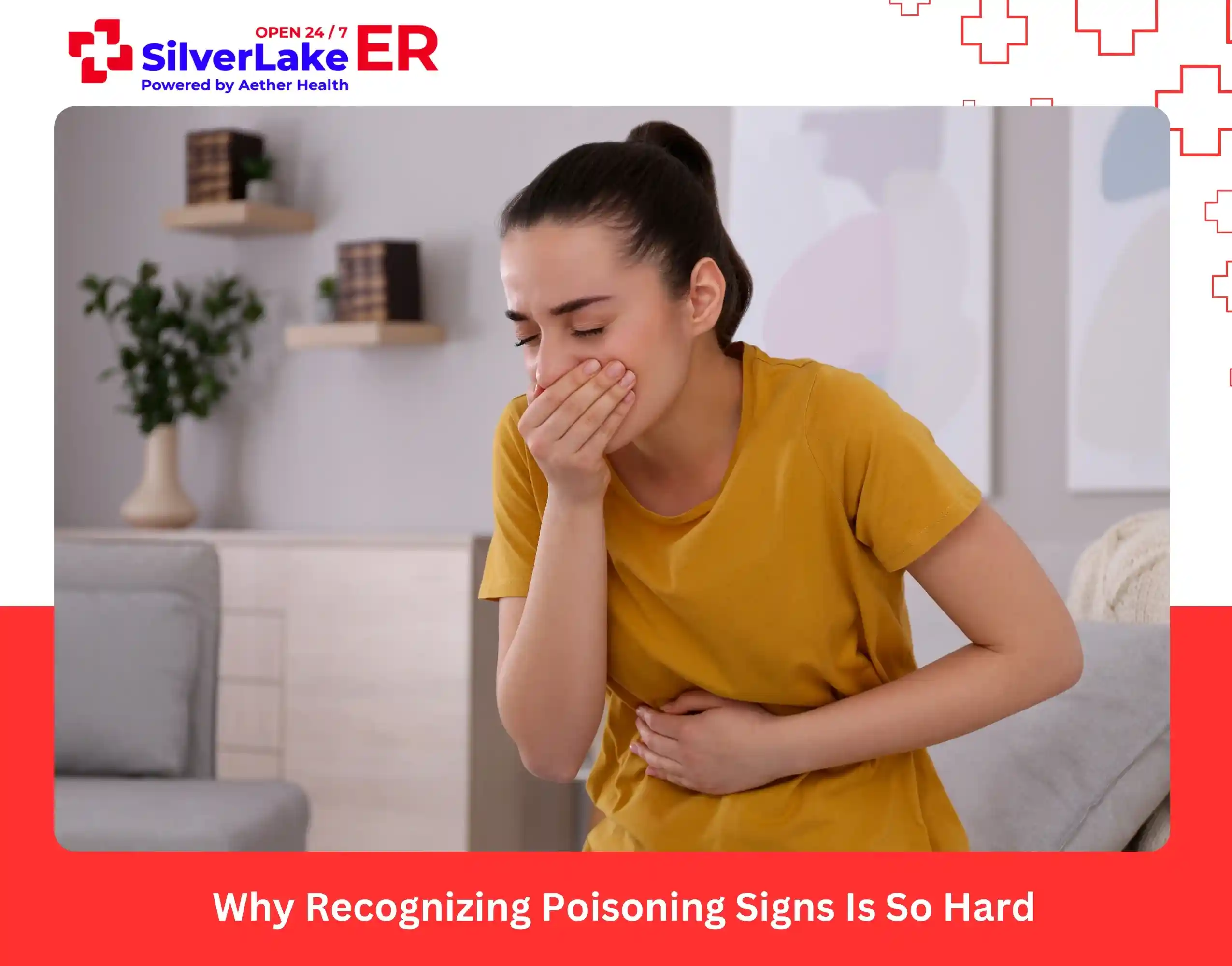
Accidental poisoning is sometimes called the great medical impostor. Its symptoms mimic the flu, food poisoning, anxiety attacks, stroke, dehydration, and even drug intoxication. Most people who eventually arrive at an ER with a serious poisoning have dismissed earlier symptoms — sometimes for hours.
A few reasons poisoning is hard to spot:
- Many substances cause vague, flu-like symptoms in the early stages
- Some poisons — like carbon monoxide and acetaminophen — have delayed onset, sometimes by 12 hours or more
- Symptoms can be intermittent, making them easy to dismiss when they ease
- Children and elderly patients often can’t describe what happened
- People may not realize they were exposed in the first place — gases, contaminated water, or accidental medication errors
If you have unexplained symptoms after a known or possible exposure — call Poison Control (1-800-222-1222) or get to an ER. The cost of being wrong is small. The cost of being right and waiting can be catastrophic.
2. Signs Grouped by Body System
Accidental poisoning rarely shows up as a single symptom. It typically affects several body systems at once. Watching for patterns across systems is one of the most reliable ways to identify it.
Digestive System
- Nausea and vomiting
- Diarrhea
- Stomach pain or cramping
- Difficulty swallowing
- Burns, redness, or sores around the lips or mouth
- Drooling or excessive saliva
- Unusual breath odor — chemical, fruity, sweet, or like garlic
Neurological System
- Headache, sometimes severe
- Dizziness or lightheadedness
- Confusion or difficulty concentrating
- Slurred speech
- Drowsiness or lethargy
- Loss of coordination, stumbling, or unsteady gait
- Seizures or convulsions
- Loss of consciousness
- Hallucinations or unusual perceptions
Respiratory System
- Shortness of breath
- Wheezing or coughing
- Chest tightness
- Rapid or shallow breathing
- Slow or labored breathing
- Chemical or burning sensation in the throat or chest
Cardiovascular System
- Rapid or irregular heartbeat (palpitations)
- Slow or weak heartbeat
- Low blood pressure, dizziness on standing
- Chest pain or pressure
- Cherry-red or pale skin (depending on the substance)
Skin and Eyes
- Skin redness, blistering, or burns at the point of contact
- Itching or rash spreading beyond the contact area
- Swelling at the contact site
- Severe eye pain, tearing, or vision changes
- Unusual skin color — bluish (cyanosis), grayish, cherry-red, or yellowish
Behavioral and Cognitive
- Sudden agitation, anxiety, or restlessness
- Unusual calmness, withdrawal, or unresponsiveness
- Confusion about time, place, or identity
- Memory loss for recent events
- Difficulty following simple instructions
3. Signs Grouped by Route of Exposure
The way a poison entered the body shapes which symptoms appear first. Recognizing the pattern can help you identify the route — and the likely substance — faster.
Ingested Poisons (Swallowed)
The most common route. Substances include medications, cleaning products, antifreeze, alcohol, contaminated food, and toxic plants. Early signs usually include:
- Nausea, vomiting, or stomach pain
- Burns, drooling, or pain around the mouth
- Unusual breath odor
- Difficulty swallowing
- Drowsiness or confusion
- In children: unexpected sleepiness, unexplained vomiting, or finding them near an open container
Inhaled Poisons (Breathed In)
Includes carbon monoxide, smoke, chlorine gas, ammonia, paint fumes, and pesticide vapors. Early signs often include:
- Headache (often the first sign of carbon monoxide)
- Dizziness or lightheadedness
- Shortness of breath or chest tightness
- Nausea
- Confusion or trouble concentrating
- Cherry-red skin (carbon monoxide) or bluish skin (lack of oxygen)
Important: if multiple people in the same space have the same symptoms, suspect an inhaled poison and leave the area immediately.
Skin and Eye Exposure
Includes pesticides, industrial chemicals, paint thinners, and concentrated cleaners. Signs include:
- Burning, redness, or blistering at the contact site
- Severe eye pain, tearing, or blurred vision
- Itching, rash, or hives
- Headache or nausea if the substance is absorbed into the bloodstream
Injection or Sting
Includes venomous bites and stings, accidental needlesticks, and IV medication errors. Signs include:
- Severe pain at the site
- Swelling, redness, or discoloration spreading from the site
- Rapid systemic symptoms — fast heart rate, breathing difficulty, dizziness
- Allergic reaction signs if the body responds severely
4. Signs Grouped by Time Course
Some poisons act immediately. Others have a dangerous delay. Knowing the time pattern helps explain why a person who seemed fine an hour ago can be in serious trouble now.
Immediate Signs (Within Seconds to Minutes)
Substances that cause rapid effects include cyanide, certain pesticides, and strong corrosive chemicals. Signs include:
- Sudden burning pain in the mouth, throat, or skin
- Sudden collapse, seizures, or unconsciousness
- Rapid difficulty breathing
- Sudden cardiac symptoms
Early Signs (Within 30 Minutes to 4 Hours)
Most common exposures fall in this window — household chemicals, many medications, and most ingested toxins. Signs include:
- Nausea, vomiting, diarrhea
- Headache, dizziness
- Confusion, drowsiness
- Skin reactions if topical
Delayed Signs (4–24 Hours)
Some of the most dangerous poisonings have a delayed presentation. The person may feel fine — or even seem to recover — before getting much worse. Examples:
- Acetaminophen (Tylenol) overdose: Initial symptoms are mild or absent. Severe liver damage develops 24–72 hours later. This is one of the most dangerous delayed-onset poisonings.
- Carbon monoxide: Initial symptoms can mimic flu. Continued exposure causes progressive confusion, loss of consciousness, and brain damage.
- Iron supplements: Early vomiting may improve, followed by severe organ damage 12–24 hours later.
- Certain mushroom toxins: Initial digestive symptoms can subside, only to be followed by liver failure days later.
Critical: If you know or suspect an exposure, don’t wait for symptoms to worsen. Some of the deadliest poisonings look mild at first. Call Poison Control or go to an ER even when the person seems fine.
5. Special Patterns: Children, Older Adults, and Pets
Poisoning signs can look very different depending on who’s affected. Recognizing the patterns for vulnerable groups can save lives.
Children
Roughly half of all poison control calls involve children under 6. Because young children often can’t describe what’s happening, watch for:
- Unexpected drowsiness or lethargy without obvious cause
- Unexplained vomiting, especially repeated
- Drooling or refusing to drink
- Strange smell on their breath or clothes
- Burns or redness around the mouth
- Behavior change — confusion, unusual irritability, or floppy muscle tone
- Finding them near an open container of medicine, cleaning product, or unknown substance
Older Adults
Older adults often have poisoning that’s missed because symptoms are attributed to existing conditions or aging. Watch for:
- Sudden confusion or worsening of dementia symptoms
- Unexplained weakness, falls, or balance changes
- New incontinence or bowel changes
- Drowsiness that’s out of character
- Worsening of usually stable medical conditions
- Medication errors — double dosing or wrong-medication ingestion
Pets
If you suspect a child or family member was exposed to something, also check whether pets in the home are showing signs — drooling, vomiting, weakness, or seizures. Pets sometimes show signs of household toxins before humans do, and their behavior can be an early warning.
6. Severe Warning Signs — Call 911 Immediately
These signs require an immediate emergency response. Don’t call Poison Control first — call 911 or get to an ER.
- Difficulty breathing or stopped breathing
- Loss of consciousness or unresponsiveness
- Seizures or convulsions
- Severe burns to the mouth, throat, skin, or eyes
- Chest pain or irregular heartbeat
- Severe confusion, agitation, or hallucinations
- Vomiting blood or bloody stools
- Sudden severe headache combined with other symptoms
- Skin turning blue, gray, or unusually pale
- Suspected exposure with no symptoms yet but a known dangerous substance
Important rule: If multiple people in the same space develop the same symptoms at the same time, suspect a shared exposure — most likely an inhaled toxin like carbon monoxide. Get everyone out into fresh air immediately and call 911.
7. What to Do When You Recognize the Signs
If you suspect accidental poisoning, take action in this order:
- Get to safety. If the source is still active (fumes, gas, chemical spill), move out of the area immediately.
- Check responsiveness and breathing. If the person is unconscious or not breathing normally, call 911 immediately and begin CPR if trained.
- Identify the substance if possible. Look for empty containers, spilled materials, plant parts, or distinctive odors. If safe, bring the container or label with you to the ER.
- Call the right number. For mild symptoms or unknown exposures, call Poison Control at 1-800-222-1222. For severe symptoms — trouble breathing, unconsciousness, seizures — call 911 or go directly to an ER.
- Don’t induce vomiting or give food or water. Old first-aid advice has been retired. Wait for guidance from Poison Control or medical professionals.
For a detailed step-by-step first aid guide, see the companion article “What Is Accidental Poisoning? Causes, Symptoms, and First Aid Guide.”
8. Emergency Poisoning Care at Aether Health – Silverlake ER
Accidental poisoning is one of the most time-sensitive medical emergencies. Every minute matters for stopping absorption, neutralizing the substance when possible, and supporting vital functions while the body clears the toxin. As a full-service freestanding ER in Pearland, TX, Aether Health – Silverlake ER is equipped to deliver hospital-level emergency poisoning care 24/7 — without the long waits typical of major hospital emergency departments.
Our poisoning emergency capabilities include:
- Rapid clinical evaluation by board-certified emergency physicians
- On-site laboratory for toxicology, blood chemistry, and drug-level testing
- Diagnostic imaging including CT scans and X-rays
- Activated charcoal administration under medical supervision when appropriate
- IV fluid therapy and antidote administration
- Continuous cardiac, respiratory, and oxygen monitoring
- Emergency airway management and stabilization
- Direct coordination with regional poison control specialists
- Direct hospital transfer when admission is needed
We also operate on a no balance billing policy for insured patients — because medical emergencies shouldn’t come with billing ambushes.
Frequently Asked Questions
How quickly do signs of poisoning appear?
It depends on the substance. Some — like cyanide or strong corrosives — cause symptoms within seconds. Most common exposures show signs within 30 minutes to 4 hours. Some of the most dangerous poisonings (acetaminophen, carbon monoxide, certain mushrooms) have delayed onset of 12+ hours. When in doubt about exposure, get evaluated even if symptoms haven’t appeared yet.
Can someone be poisoned and not know it?
Yes. Carbon monoxide is colorless, odorless, and tasteless. Contaminated food may taste normal. Skin absorption of pesticides may go unnoticed at first. Medication errors — wrong drug or wrong dose — can happen without the person realizing it. Pay attention to unexplained symptoms and consider whether an exposure could have occurred.
What’s the difference between food poisoning and accidental poisoning?
Food poisoning is caused by bacteria, viruses, or parasites in contaminated food. Accidental poisoning usually involves toxic chemicals, medications, or substances that weren’t meant to be consumed. The treatment is different — food poisoning is typically managed with fluids and rest, while chemical poisoning may require specific antidotes and emergency stabilization.
If someone seems to recover, is the danger over?
Not always. Some poisons cause an initial period where symptoms improve before getting worse — acetaminophen and certain mushroom toxins are examples. This “false recovery” can be misleading. Anyone with a known significant exposure should be medically evaluated even if symptoms have eased.
Should I call Poison Control even if there are no symptoms yet?
Yes, especially if you know exposure has occurred or suspect it (open container near a child, accidental medication double-dose, etc.). Poison Control specialists can help you assess whether the exposure is dangerous, whether you need to go to an ER, and what to watch for. The number is 1-800-222-1222 — free, 24/7.
Where is Aether Health – Silverlake ER located?
We’re located at 2752 Sunrise Blvd, Pearland, TX 77584, open 24 hours a day, 7 days a week. Call (713) 528-8703 or walk in anytime.
Suspect Accidental Poisoning? Get Help Immediately in Pearland, TX
If you or someone you love has been exposed to a toxic substance — or is showing signs of poisoning — don’t wait. Walk into Aether Health – Silverlake ER and you’ll be evaluated by a board-certified emergency physician immediately. No appointment, no long waits.
📞 Call: (713) 528-8703
☎ Poison Control: 1-800-222-1222 (24/7, free, nationwide)
📍 Visit: 2752 Sunrise Blvd, Pearland, TX 77584
🌐 Online: sler247.com
🕒 Hours: Open 24/7, 365 days a year