A blood clot doesn’t feel the same to everyone. What you feel depends entirely on where the clot is. A clot in your leg feels nothing like a clot in your lung. A clot in your arm feels different from a clot in your brain. This is why blood clots get missed so often, and why so many people wait too long to seek help.
The good news: each location has a specific pattern of symptoms that, once you know them, are hard to miss. This blog walks through what a blood clot actually feels like in each part of the body, when the symptoms mean an emergency, and when you can breathe easier. If you’re near Pearland and think you may have a blood clot, Aether Health – Silverlake ER is open 24/7 with on-site imaging for fast diagnosis.
The Short Answer
A blood clot most commonly feels like deep, cramp-like pain combined with swelling, warmth, and redness in one leg (deep vein thrombosis). If it travels to the lungs, it feels like sudden sharp chest pain and shortness of breath. A clot in the arm feels like heavy aching with swelling. Any sudden severe pain, swelling in one limb, chest pain, or breathing difficulty needs immediate emergency evaluation.
Blood Clot Symptoms by Location
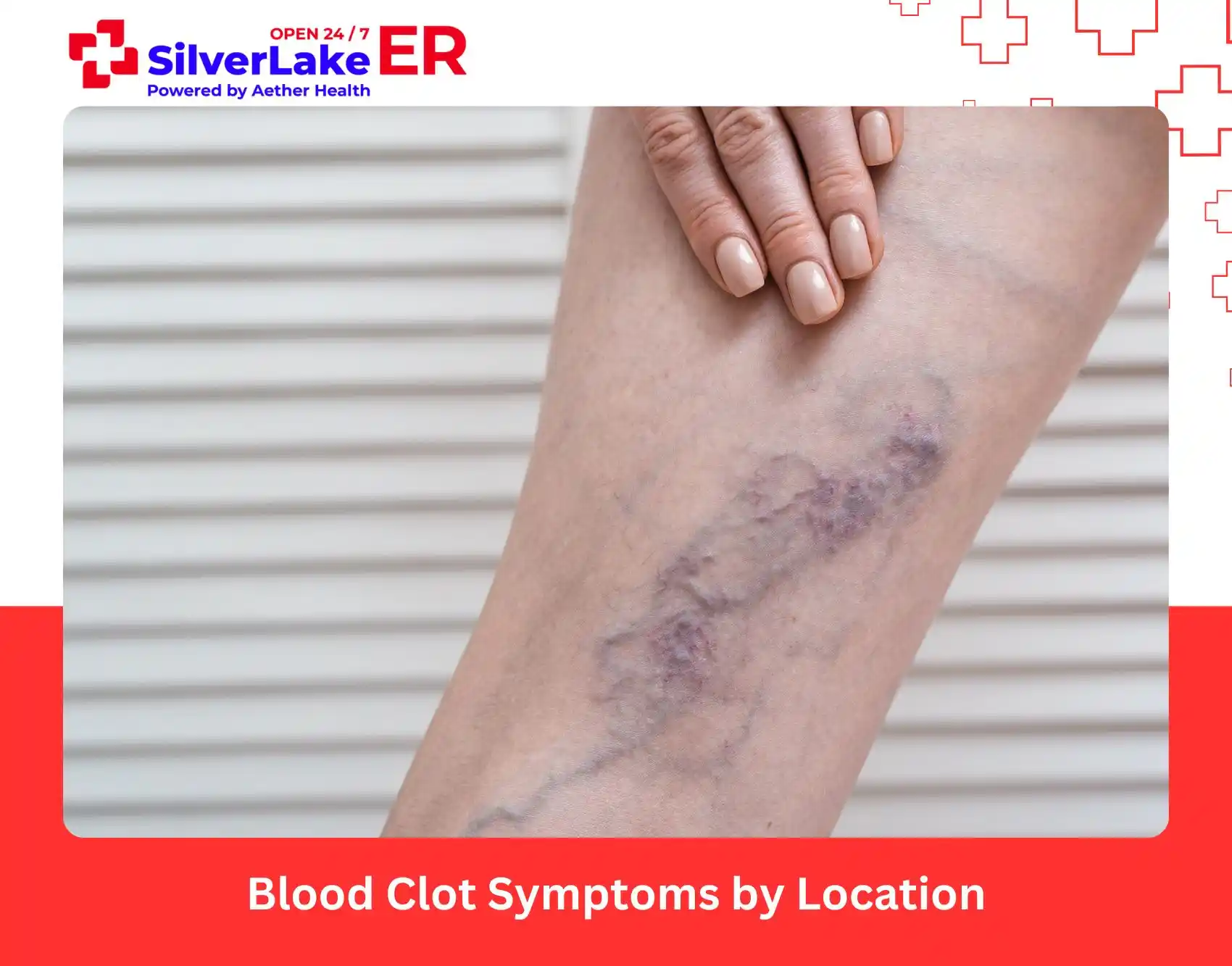
Where the clot is decides what you feel. Here’s what to look for at each of the four most common sites.
In Your Leg (Deep Vein Thrombosis / DVT)
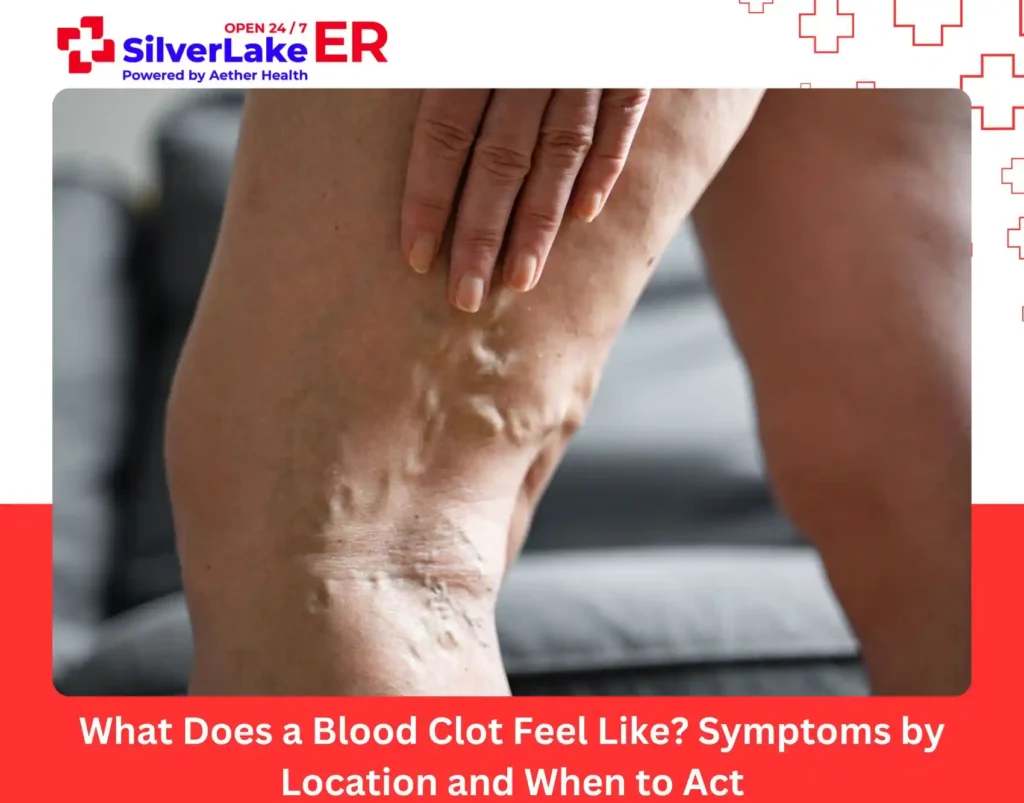
A leg clot usually feels like a deep, throbbing cramp that doesn’t go away with rest, stretching, or massage. The pain is often described as similar to a charley horse that never quite lets up. It’s most common in the calf but can affect the thigh too.
Alongside the pain, you’ll notice swelling in just one leg (this is a big clue, since muscle cramps don’t cause swelling). The skin may feel warm to the touch, look reddish or slightly bluish, and may be tender when you press on it. Walking often makes it worse, and the calf may hurt when you flex your foot upward.
In Your Lung (Pulmonary Embolism / PE)
A lung clot feels very different. The main sensation is sudden shortness of breath, often out of nowhere, with sharp chest pain that gets worse when you breathe in deeply. Some people describe it as feeling like they cannot get enough air, or like something is stabbing them from inside their chest. Our detailed guide on blood clots in the lungs covers this in more depth.
Other lung clot signs include a fast heartbeat, coughing (sometimes with blood), lightheadedness, sweating without exertion, and a feeling of impending doom. Pulmonary embolism is life-threatening and needs 911 immediately. Do not drive yourself.
In Your Arm
Arm clots are less common but still serious. They usually feel like a heavy, aching pain in one arm, with swelling that makes the arm look and feel bigger than the other. The skin may look reddish or slightly bluish, and the arm may feel warm to the touch.
Arm clots often happen after a central IV line, pacemaker placement, or from repetitive overhead motion (sometimes called “effort thrombosis” in athletes). The symptoms come on over hours to days rather than instantly.
In Your Brain (Stroke) or Heart (Heart Attack)
Clots that reach the brain cause stroke symptoms: sudden facial drooping, arm weakness, slurred speech, sudden severe headache, or sudden vision loss. Clots in the heart’s arteries cause heart attack symptoms: crushing chest pressure, pain radiating to the arm or jaw, sweating, nausea, and shortness of breath.
Both are extreme medical emergencies. Call 911 immediately if you see any of these signs in yourself or someone else. Every minute matters for outcomes.
What Blood Clots Do NOT Feel Like
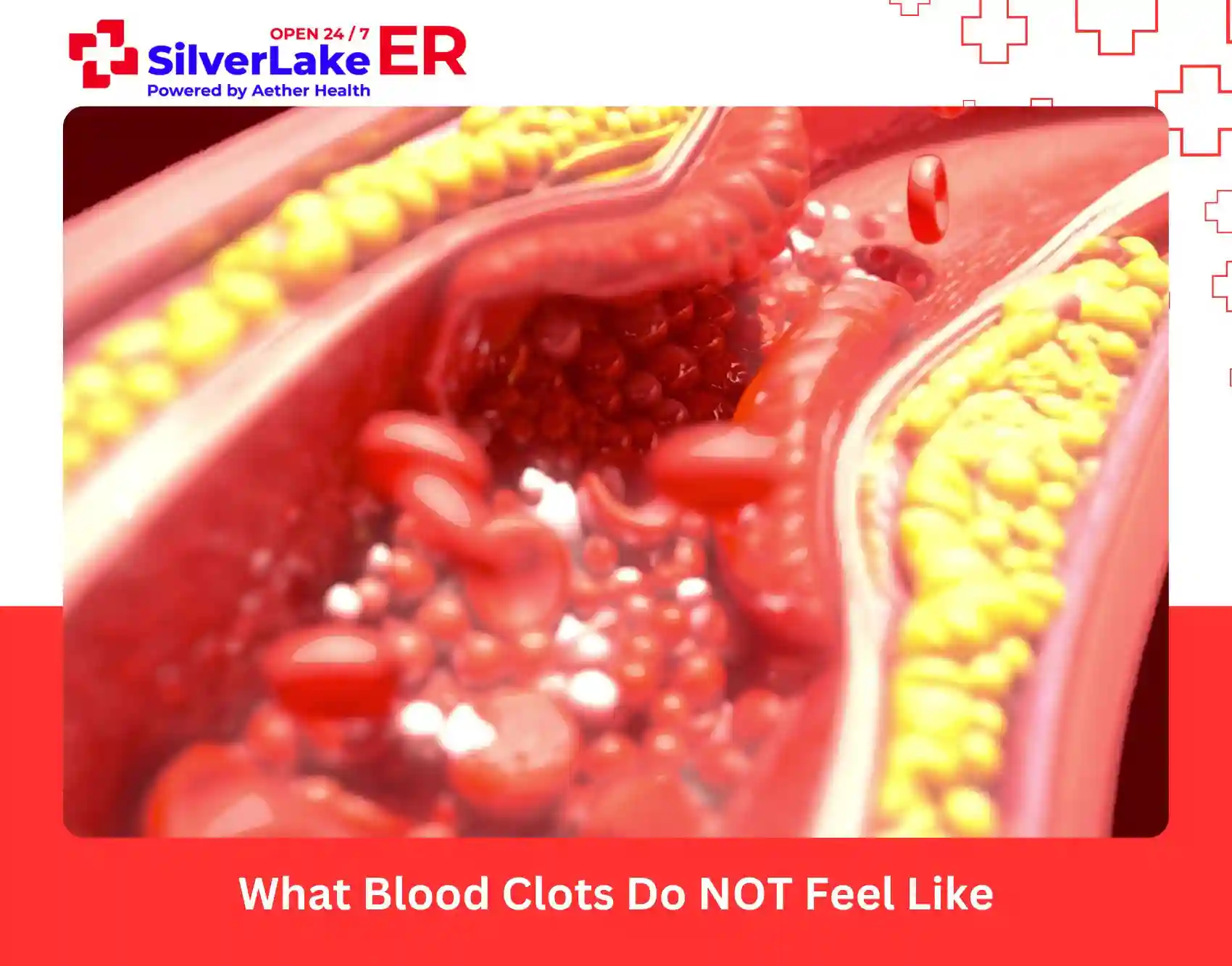
A few sensations get mistaken for blood clots all the time. A muscle cramp that resolves in minutes is not a clot. Localized soreness after exercise is not a clot. Pain that gets better with stretching is not a clot. Bruises that hurt when pressed are not clots.
The distinguishing pattern for a clot is: persistent (not fleeting), one-sided (not both legs or arms), often with swelling, and it does not improve with usual home care. If you’ve been resting for hours and one leg is aching, swollen, and warm, that is very different from cramping after a hard workout. Our companion guide on whether blood clots disappear on their own explains why waiting it out is almost always the wrong move.
When to Get Emergency Evaluation
Use this decision guide to figure out what to do next based on what you’re feeling.
| Symptom Level | What to Do |
| Sudden chest pain + shortness of breath | Call 911 immediately (possible pulmonary embolism) |
| Sudden stroke signs (face droop, arm weakness, slurred speech) | Call 911 immediately (possible clot in brain) |
| Sudden crushing chest pressure with sweating or nausea | Call 911 immediately (possible heart attack) |
| One-sided leg swelling + deep cramp-like pain + warmth | Go to the ER same day for imaging |
| One-sided arm swelling + heavy aching + skin color change | Go to the ER same day for evaluation |
| Mild soreness that resolves with rest and stretching | Likely not a clot, monitor and see PCP if it persists |
Who’s at Higher Risk for Blood Clots?
Certain factors raise the odds significantly. Recent surgery (especially orthopedic), prolonged immobility (long flights, hospital stays, extended bed rest), pregnancy and the postpartum period, hormonal birth control, smoking, obesity, cancer, and inherited clotting disorders all increase risk. The Centers for Disease Control and Prevention reports that up to 900,000 Americans are affected by DVT or pulmonary embolism each year, and up to 100,000 die.¹
Age also plays a role. Risk climbs after age 60. A personal or family history of blood clots is one of the strongest predictors of future clots. The National Heart, Lung, and Blood Institute notes that anyone with two or more risk factors should discuss prevention with their primary care provider, especially before long travel or planned surgery.²
Frequently Asked Questions
Can a blood clot feel like a pulled muscle?
Yes, and this is why so many are missed. The key difference: a pulled muscle gets better with rest and stretching within a few days. A clot stays painful, stays swollen, and often gets worse. Swelling in only one leg is the biggest tell.
How quickly do blood clot symptoms come on?
It varies. Leg and arm clots often develop over hours to a few days. Pulmonary embolism and stroke from a clot can come on within minutes. Sudden severe symptoms in the chest, brain, or breathing pattern always warrant 911.
Does a blood clot hurt when you touch it?
Yes, most deep vein clots hurt when you press on the area. The skin may also feel warmer than the surrounding skin. However, some clots (especially small pulmonary emboli) can be silent, which is why swelling and unexplained symptoms should never be ignored.
Can you have a blood clot without pain?
Yes. Roughly half of DVT cases have no symptoms at all until the clot causes a complication like pulmonary embolism. This is called silent DVT. If you have risk factors, don’t wait for pain. Talk to your doctor about screening.
Is it safe to walk if I think I have a blood clot?
If you strongly suspect a clot, minimize movement and get to the ER. Walking can dislodge a leg clot and send it to the lungs. Do not massage the area. Do not apply heat or ice. Get evaluated first, then follow medical guidance.
Suspect a Blood Clot Near Pearland?
Blood clots need imaging and rapid clinical evaluation to diagnose. Our blood clot emergency care team provides on-site ultrasound, CT imaging, and lab testing 24/7 at 2752 Sunrise Blvd, Pearland, TX 77584. Call +1 (713) 528-8703 or walk in anytime for evaluation.
Call 911 immediately for sudden chest pain with shortness of breath, stroke signs, or crushing chest pressure. These can indicate a life-threatening clot in the lungs, brain, or heart. Do not drive yourself.
External References Links :