
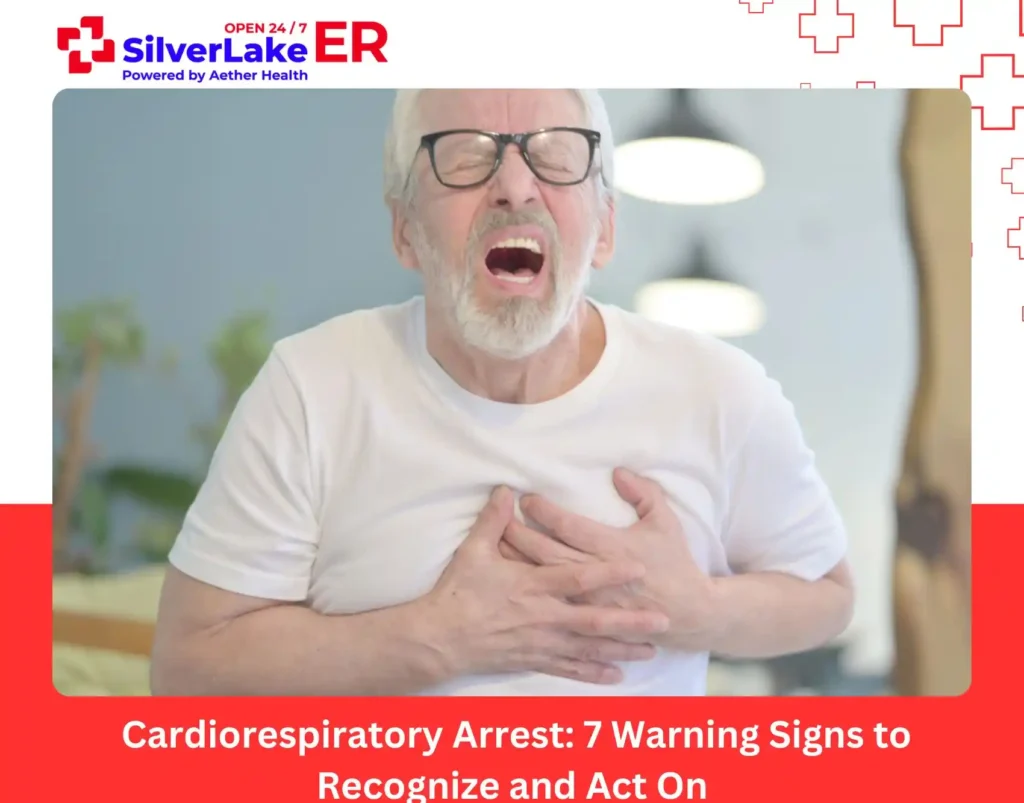
Cardiorespiratory arrest is what happens when a person’s heart and lungs fail together. The heart stops pumping. Breathing stops. Consciousness is gone within seconds. Without immediate action, brain damage begins in 4-6 minutes and death follows shortly after.
The signs of cardiorespiratory arrest look dramatic, but they can be mistaken for fainting, seizure, or drug overdose if you don’t know what to look for. This blog covers all 7 warning signs, how they typically appear together in the first minute, and the exact steps to take before paramedics arrive. If you’re near Pearland, Aether Health – Silverlake ER is open 24/7 for post-event evaluation and for cardiac symptoms that need immediate assessment.
What Is Cardiorespiratory Arrest?
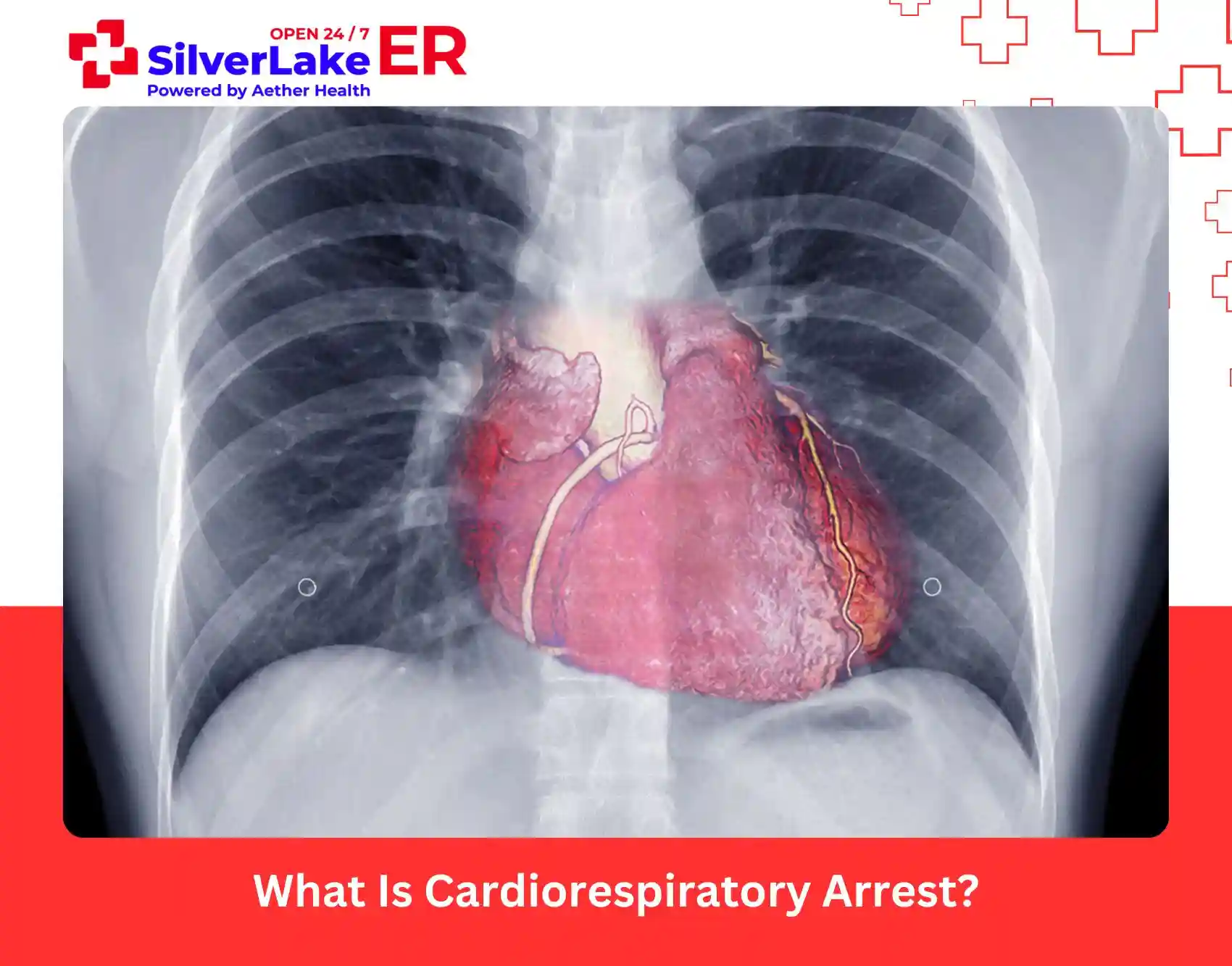
Cardiorespiratory arrest is the simultaneous failure of both the heart and the lungs. The heart stops beating effectively, so blood no longer circulates. Breathing stops or becomes ineffective, so no oxygen enters the blood. Every organ in the body starts to shut down within minutes.
This is different from cardiac arrest alone (only the heart stops) or respiratory arrest alone (only breathing stops), though the three often blur together in real emergencies. Our guide on what happens when you have a cardiac arrest explains the underlying mechanics of how the heart’s rhythm collapses.
The 7 Signs of Cardiorespiratory Arrest
These signs of cardiorespiratory arrest usually appear together within the first 60 seconds. Recognizing any two of them means it’s time to call 911 and start CPR immediately.
| Warning Sign | What You’ll See | Why It Matters |
| 1. Sudden collapse | Person drops without warning, no time to sit down | Signals immediate loss of cardiac output |
| 2. Unconsciousness | No response to shouting, shaking, or pinching | Confirms the brain isn’t receiving oxygen |
| 3. Absent breathing | No visible chest rise, no air felt from nose or mouth | Confirms respiratory arrest |
| 4. Agonal gasping | Slow, irregular gasps that sound like snoring or gulping | Not real breathing, brainstem reflex only |
| 5. No detectable pulse | Carotid or wrist pulse cannot be felt | Confirms cardiac arrest |
| 6. Cyanosis (bluish skin) | Lips, fingertips, and face turn blue-gray or ashy | Confirms circulation has stopped |
| 7. Dilated pupils | Pupils appear large and unresponsive to light | Late sign, indicates brain oxygen deprivation |
How the 7 Signs Unfold in the First Minute
The signs of cardiorespiratory arrest don’t appear in a random order. There’s a rough sequence, and knowing it helps you act faster.
First 10 seconds: sudden collapse and unconsciousness. The person drops and doesn’t respond. This is the moment most bystanders see.
10-30 seconds: breathing stops or becomes agonal. You’ll notice the chest isn’t rising, or you’ll hear slow gasping sounds. This is the moment most bystanders wait too long. Don’t wait.
30-60 seconds: pulse becomes undetectable and skin color starts to change. Lips turn blue-gray, then fingertips, then the face. This is when circulation has stopped completely.
Beyond 60 seconds: pupils dilate as brain oxygen runs out. By this point, every second without CPR is causing more damage. The National Heart, Lung, and Blood Institute reports that survival drops roughly 10% for every minute without CPR or defibrillation.¹
Cardiorespiratory Arrest vs. Cardiac Arrest vs. Respiratory Arrest
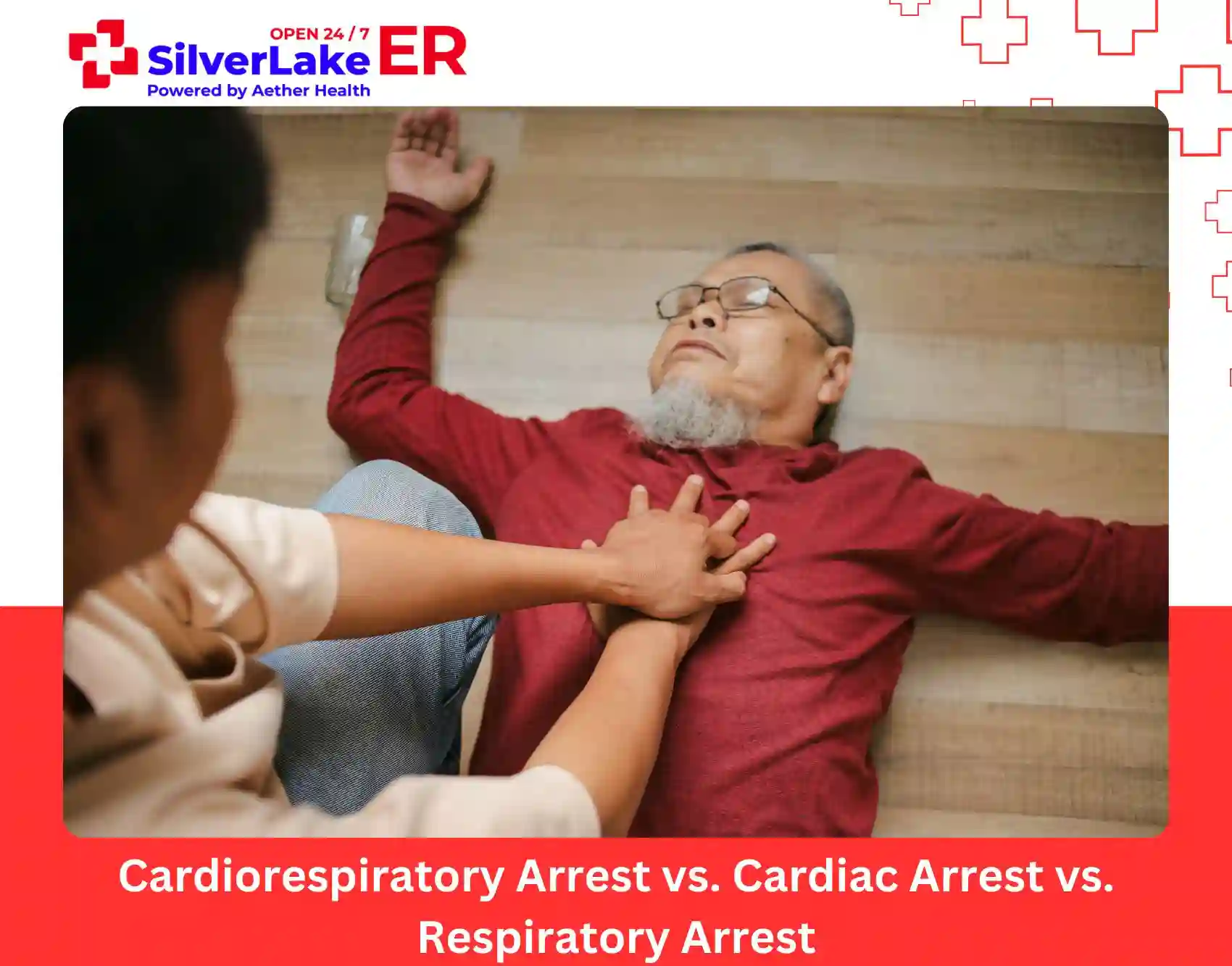
These three terms get used interchangeably in casual conversation, but they mean different things. Understanding the distinction helps you recognize what’s happening and respond correctly.
Cardiac arrest is when only the heart stops. The person is unconscious and has no pulse, but breathing may continue for a very short time before it also fails. Almost always progresses to cardiorespiratory arrest within a minute.
Respiratory arrest is when only breathing stops. The person may still have a heartbeat and pulse for a few minutes. Common causes include drug overdose, choking, drowning, and severe asthma attacks. If breathing isn’t restored quickly, cardiac arrest follows.
Cardiorespiratory arrest is when both systems have failed. This is what bystanders usually witness, because cardiac arrest and respiratory arrest almost always merge together within seconds. Our article on why cardiac arrest happens covers the underlying medical causes that lead to this collapse.
When Every Second Counts: What to Do
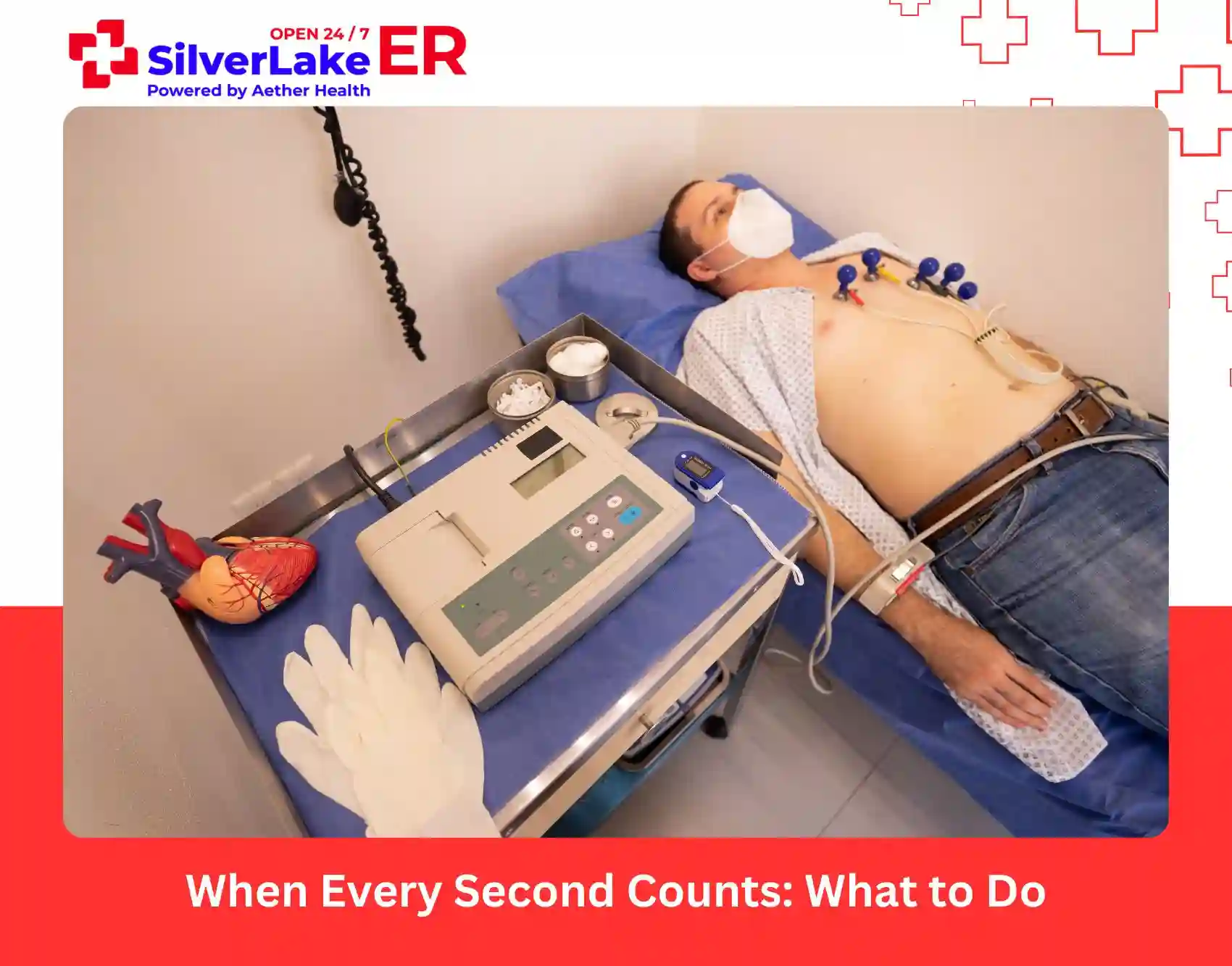
If you recognize any of the signs of cardiorespiratory arrest, follow these four steps in exact order. Nothing else matters until help arrives.
- Call 911 or shout for someone to call. Put the phone on speaker. The dispatcher will coach you through CPR.
- Start hands-only CPR immediately. Push hard and fast in the center of the chest, at a rate of 100-120 compressions per minute. Push down at least 2 inches.
- Get an AED if one is available. Send someone to grab it. Public buildings, gyms, offices, and schools usually have one nearby. Turn it on and follow the voice prompts.
- Do not stop until paramedics arrive. Continue compressions without breaks. Only stop if the person starts breathing normally on their own, an AED tells you to pause, or emergency responders take over.
The American Heart Association’s CPR guidance confirms that even untrained bystanders can save lives with hands-only chest compressions. You do not need certification. You do not need to give rescue breaths. Compressions alone keep oxygenated blood moving to the brain, which is what buys time until defibrillation.²
Frequently Asked Questions
What is the difference between cardiorespiratory arrest and cardiac arrest?
Cardiac arrest is when the heart stops. Cardiorespiratory arrest is when both the heart and breathing have stopped together. Cardiac arrest almost always leads to cardiorespiratory arrest within about a minute.
Can a person survive cardiorespiratory arrest?
Yes, but survival drops sharply the longer treatment is delayed. With immediate bystander CPR and defibrillation within a few minutes, survival rates can reach 40% or higher. Without any intervention, survival is under 5%.
How do you check for a pulse during cardiorespiratory arrest?
Press two fingers gently on the side of the neck just below the jawline. If you’re not trained, skip this step and start CPR based on collapse and absent breathing alone. Pulse checks waste time and are unreliable in emergencies.
What is agonal breathing and why does it fool people?
Agonal breathing is slow, irregular gasping produced by a dying brainstem. It looks and sounds like breathing but delivers no oxygen. Bystanders often wait because they think the person is still breathing, which costs precious minutes.
What causes cardiorespiratory arrest in otherwise healthy people?
Common triggers include severe electrolyte imbalances, drug overdose, drowning, electrocution, severe trauma, choking, and undiagnosed structural heart abnormalities. In young athletes, hidden congenital heart conditions are the leading cause.
If You’re Facing a Cardiorespiratory Emergency Near Pearland
Cardiorespiratory arrest is always a call-911 situation. Paramedics can begin advanced airway management and cardiac care in the ambulance. For evaluation after a resuscitated event, for cardiac symptoms that need immediate assessment, or for anyone worried about cardiorespiratory risk factors, our cardiac arrest emergency care team is on-site 24/7 at 2752 Sunrise Blvd, Pearland, TX 77584. Call +1 (713) 528-8703 or walk in anytime.
Call 911 immediately for any suspected cardiorespiratory arrest. Start CPR before the ambulance arrives. Every minute without CPR reduces survival chances by about 10%.
External References links :
-
- https://www.nhlbi.nih.gov/health/cardiac-arrest
- https://cpr.heart.org/en/resources/what-is-cpr