A person collapses in front of you. They don’t respond when you call their name. Their chest isn’t rising the way it should. What you do in the next 60 seconds can double or triple their chance of survival.
Cardiac arrest kills over 350,000 Americans outside of a hospital every year, and survival rates drop about 10% for every minute without help. Knowing which signs point to cardiac arrest, and which point to something else, is the difference between acting fast and freezing up. This is a life-skill worth having, whether you work in an office, live with an older parent, or coach a kids’ soccer team. If you ever face this moment near Pearland, Aether Health – Silverlake ER is open 24/7 at 2752 Sunrise Blvd.
The Direct Answer
Cardiac arrest is indicated by five key signs: sudden collapse, complete unresponsiveness, absent or abnormal breathing (including gasping), no detectable pulse, and bluish or gray skin color. Any one of these signs, especially combined with sudden collapse, means the heart has stopped effectively pumping blood. Call 911 immediately and begin CPR.
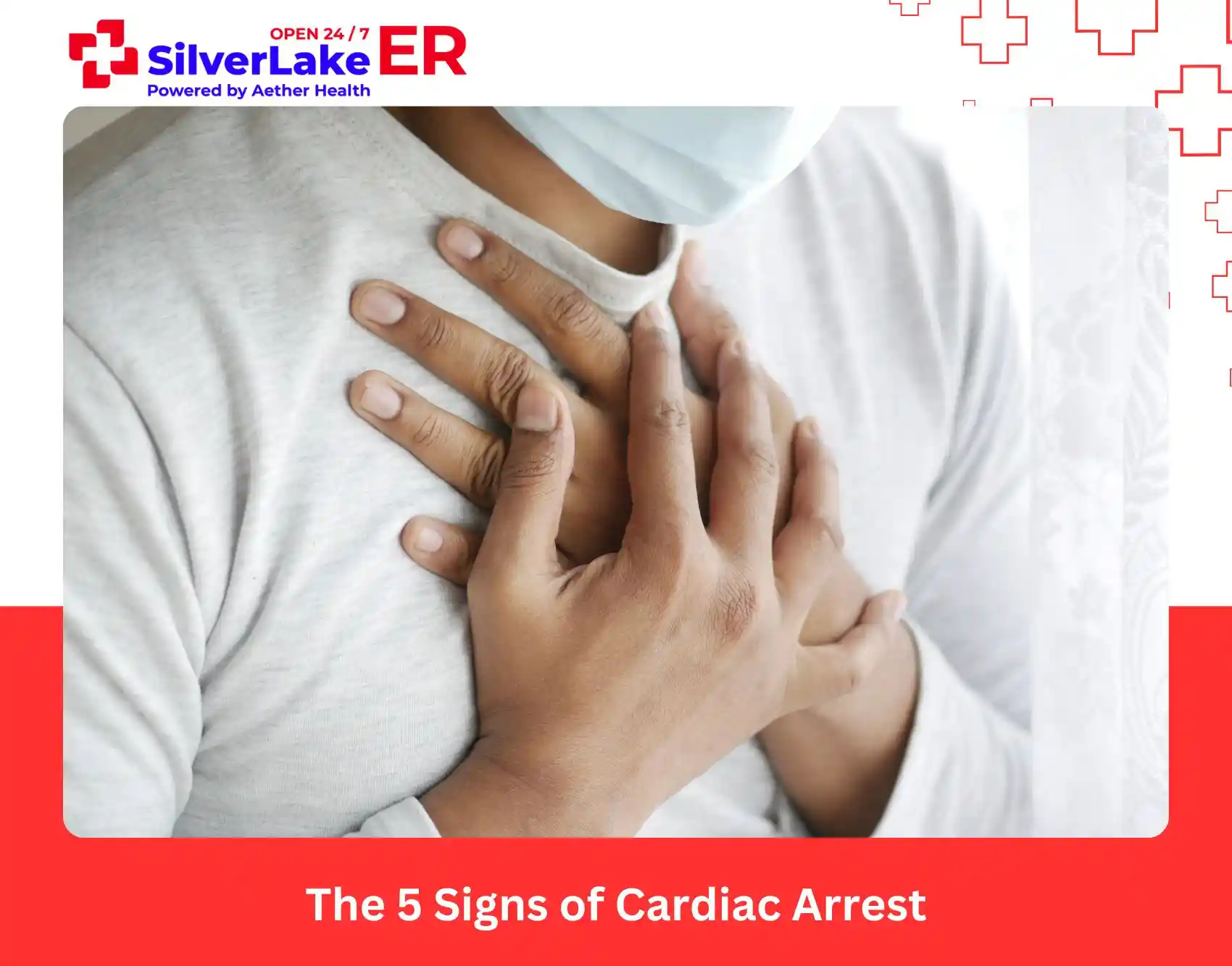
The 5 Signs of Cardiac Arrest
1. Sudden Collapse
The person drops without warning. There’s usually no gradual weakening, no time to sit down, no reaching for something to hold on to. One moment they’re standing or sitting normally, the next they’re on the floor. This is often the first thing bystanders notice, and it’s the single most recognizable cardiac arrest sign.
2. Complete Unresponsiveness
They don’t respond to your voice, a firm shoulder tap, or any attempt to wake them up. This isn’t fainting, from which someone typically comes around within seconds. Cardiac arrest unresponsiveness is total and it doesn’t resolve on its own. If you shake their shoulder and shout their name and get nothing back, treat it as an emergency.
3. Absent or Abnormal Breathing
Their chest isn’t rising and falling normally. Some people stop breathing entirely. Others make slow, irregular gasping sounds called agonal breathing, which can look like they’re still breathing but actually indicates the brain isn’t getting oxygen. Agonal gasps often fool bystanders into waiting, which costs precious minutes. The Centers for Disease Control and Prevention notes that any breathing that looks labored, gasping, or absent should be treated as a sign to start CPR.¹
4. No Detectable Pulse
If you’re trained to check for a pulse, you won’t find one, or it will be very weak and irregular. Most bystanders shouldn’t waste time trying to find a pulse. If someone has collapsed, isn’t responsive, and isn’t breathing normally, assume cardiac arrest and act. Pulse checks slow down response time and give false reassurance when the pulse is faint.
5. Bluish or Gray Skin Color
Within a minute or two of the heart stopping, skin color starts to change. Lips, fingertips, and the area around the mouth may turn blue, gray, or ashy. This happens because oxygen-rich blood isn’t circulating. It’s a visible confirmation that circulation has stopped, and it usually appears alongside the other signs above.
Cardiac Arrest vs. Heart Attack: The Critical Difference
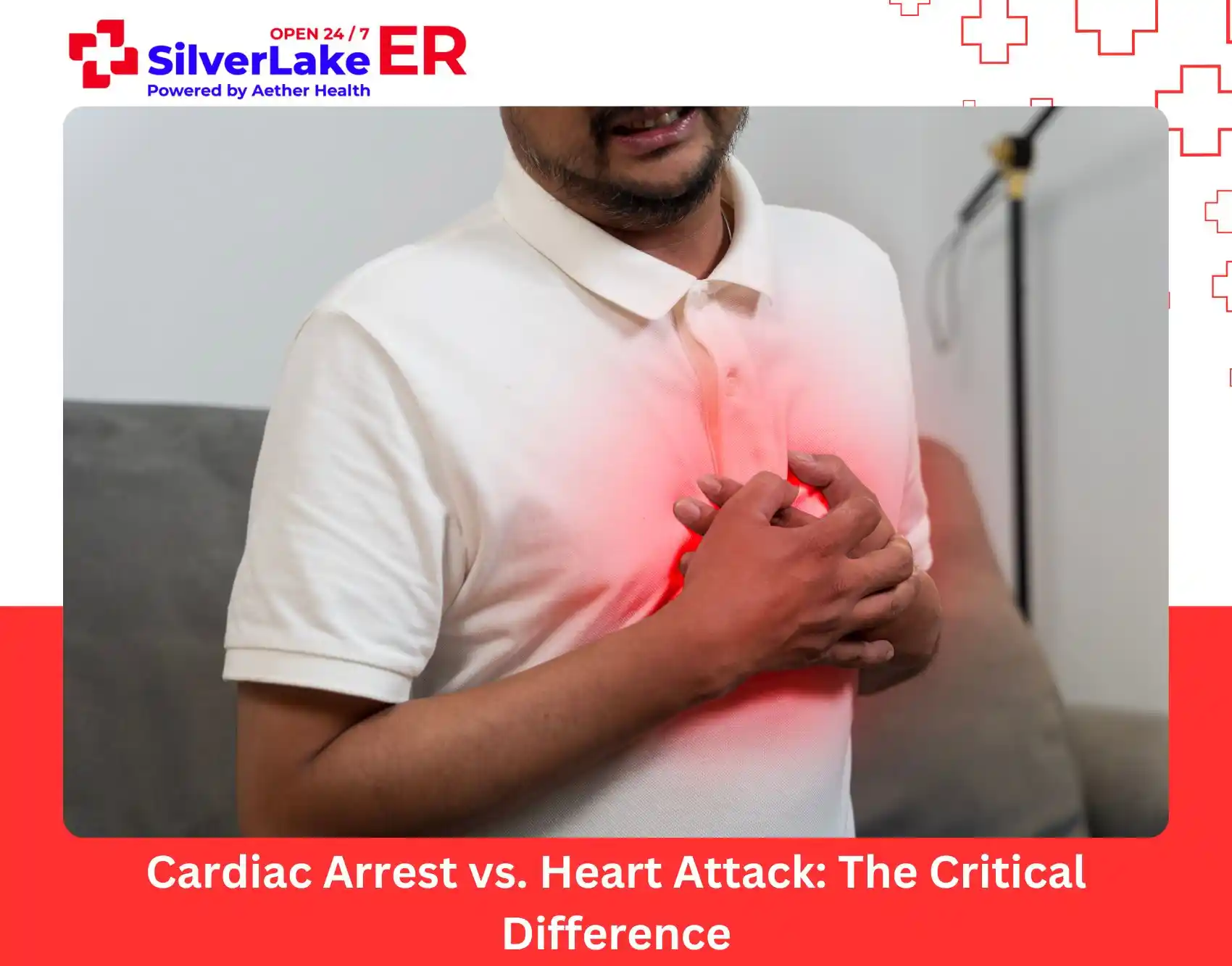
People confuse these two constantly, but they’re not the same thing. A heart attack is a plumbing problem: a blocked artery cuts off blood flow to part of the heart muscle. The person is usually awake, in pain, and breathing. Cardiac arrest is an electrical problem: the heart’s rhythm fails and it stops pumping. The person collapses and loses consciousness.
A heart attack can lead to cardiac arrest if it isn’t treated fast enough, but they require different responses. For a heart attack, get to an ER immediately. For cardiac arrest, call 911 and start CPR right away. Our companion article on what happens when you have a cardiac arrest walks through what’s actually going on inside the body during those first critical minutes.
What to Do in the First 60 Seconds
If you’ve identified any of the signs above, follow these steps in this exact order. Every second matters.
- Call 911. Or shout for someone else to call while you start CPR. Put the phone on speaker so the dispatcher can guide you.
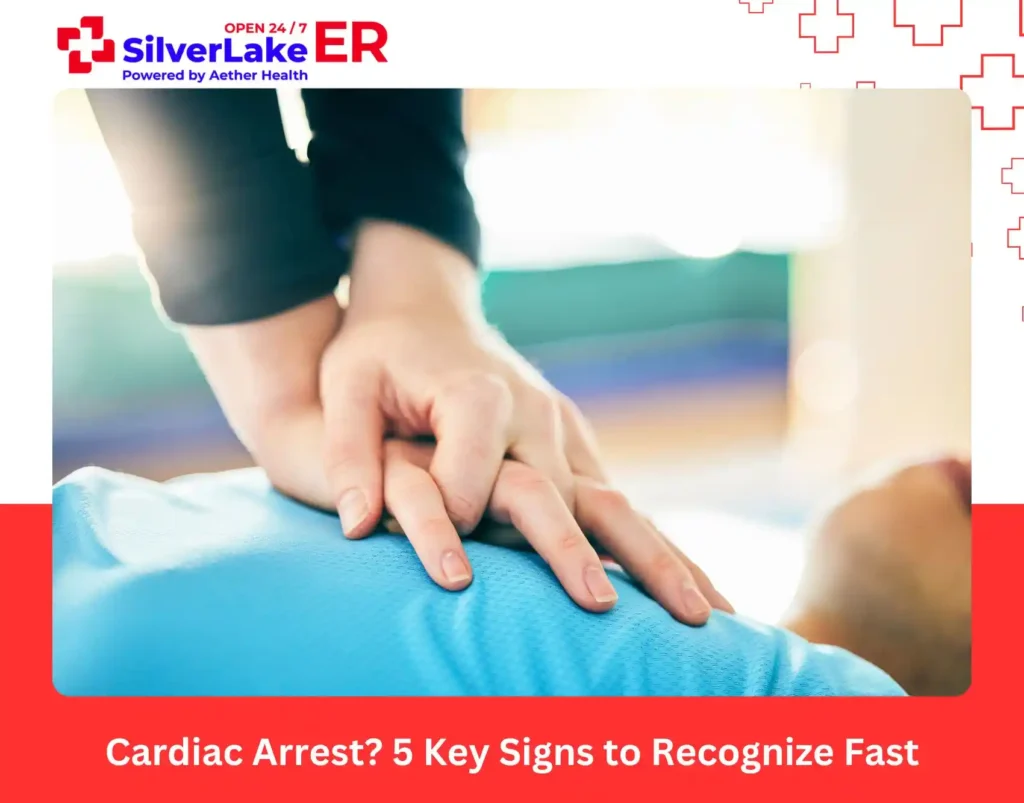
- Start hands-only CPR. Push hard and fast in the center of the chest, about 100-120 compressions per minute. Push down at least 2 inches with each compression.
- Get an AED if one is nearby. Send someone to grab it while you continue CPR. Public spaces, gyms, schools, and offices often have one. Turn it on and follow the voice prompts.
- Keep going until help arrives. Don’t stop compressions to check for signs of life. Only stop if the person starts breathing normally, an AED tells you to, or paramedics take over.
The American Heart Association estimates that bystander CPR can double or triple survival rates from out-of-hospital cardiac arrest. You don’t need to be certified to save a life. Compressions alone, done fast and hard, keep oxygenated blood moving to the brain until professional help arrives.²
Who’s at Higher Risk
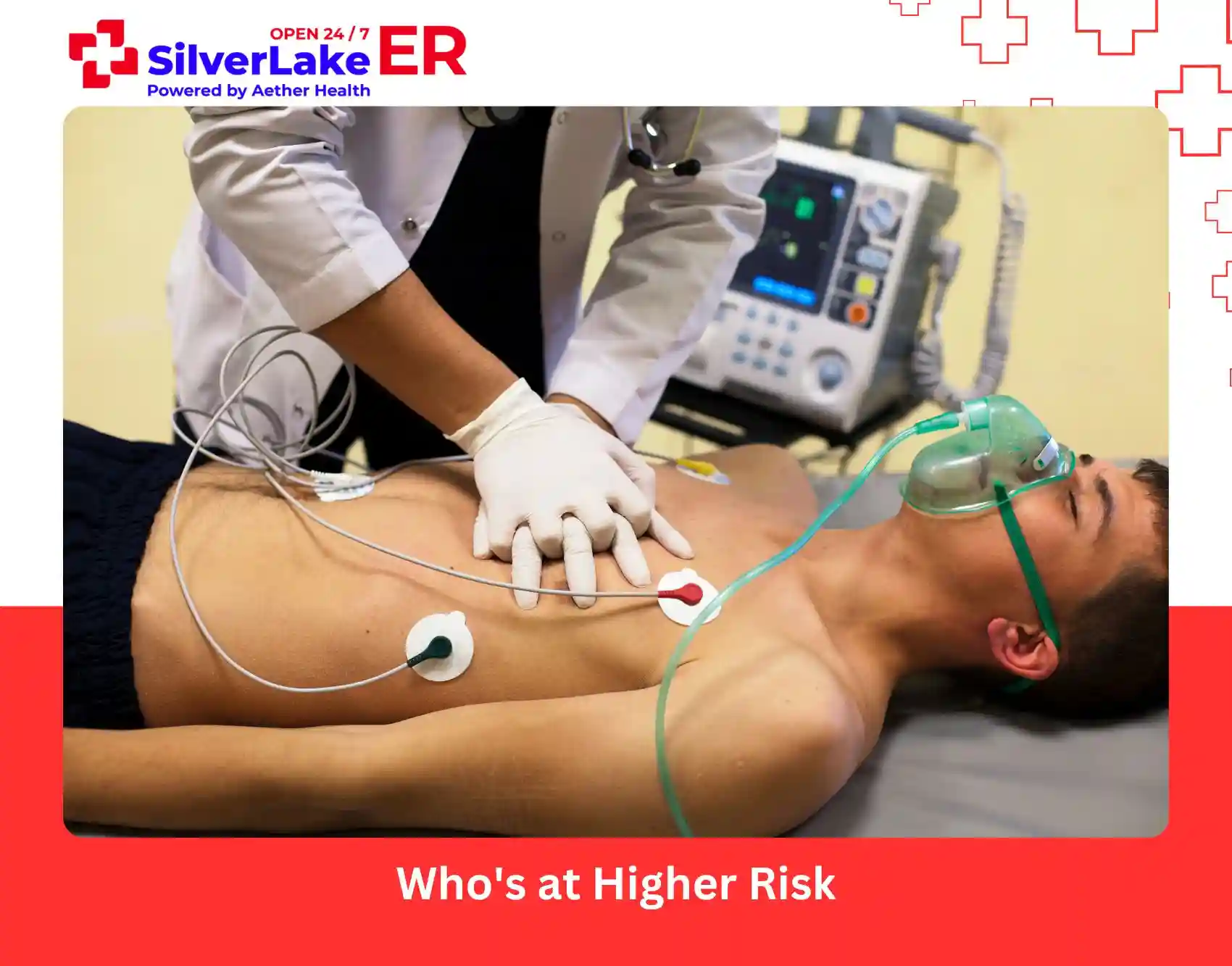
Cardiac arrest can strike anyone, but certain factors raise the odds significantly. People with existing coronary artery disease, a prior heart attack, heart failure, or an inherited arrhythmia carry the highest baseline risk. Age plays a role too, with risk climbing steeply after age 45 in men and 55 in women.
Other risk factors include family history of sudden cardiac death, use of stimulants, severe electrolyte imbalances, and certain congenital heart conditions. Younger athletes with undiagnosed structural heart abnormalities also face elevated risk during intense exertion. Our article on the 5 warning signs of cardiac arrest covers the earlier signals that sometimes appear in the days or hours before an event.
Frequently Asked Questions
Can someone survive cardiac arrest without CPR?
Survival without CPR is rare. Brain damage begins within 4-6 minutes of the heart stopping. Bystander CPR keeps oxygenated blood moving to the brain and dramatically raises the chances of a meaningful recovery.
Is gasping a sign of cardiac arrest or normal breathing?
Gasping, called agonal breathing, is a sign of cardiac arrest, not normal breathing. It happens when the brain reflexively tries to draw in air after the heart has stopped. Start CPR immediately.
Should I check for a pulse before starting CPR?
No. Unless you’re a trained healthcare provider, skip the pulse check. If the person is unresponsive and not breathing normally, start compressions. Time spent hunting for a pulse costs precious seconds.
Do warning signs happen before cardiac arrest?
Sometimes. Roughly half of cardiac arrest victims have warning signs in the weeks or hours beforehand, such as chest discomfort, unusual shortness of breath, or fainting spells. These signs are easy to dismiss but worth taking seriously.
What if I do CPR wrong?
Doing something is far better than doing nothing. Even imperfect compressions can maintain some blood flow. Broken ribs heal. A brain deprived of oxygen for 6+ minutes usually doesn’t recover. Act.
If You’re Facing a Cardiac Emergency Near Pearland
Cardiac arrest is a call-911 situation, not a drive-yourself situation. Paramedics can begin advanced care in the ambulance and get the patient stabilized on the way to the hospital. That said, for post-event evaluation, cardiac symptoms that don’t rise to arrest, or emergencies that need immediate assessment, our cardiac arrest emergency care team is on-site 24/7 at 2752 Sunrise Blvd, Pearland, TX 77584. Call +1 (713) 528-8703 or walk in anytime.
Call 911 immediately for any suspected cardiac arrest. Do not drive yourself or the patient. Every minute without CPR reduces survival chances by about 10%
External References Links :